Free Shipping on All Orders | 30-Day Easy Returns
Dog Boot Soles & Traction: Complete Footwear Guide
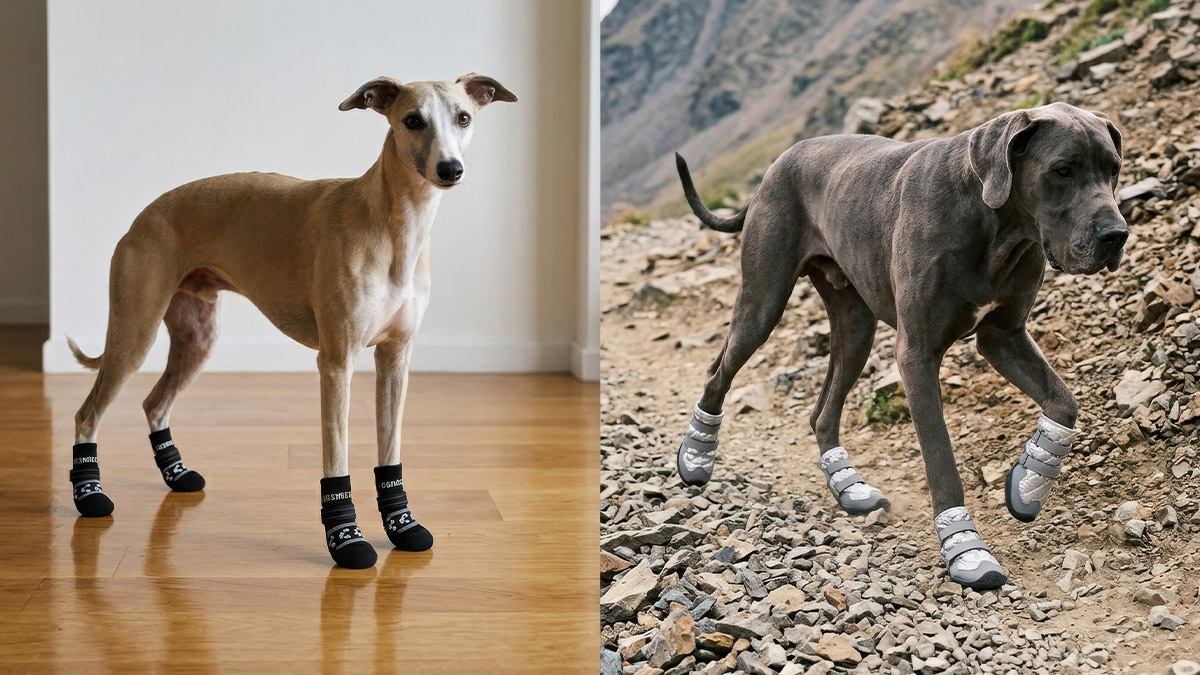
Table of Contents
Anyone who’s watched an old dog’s back legs slide out from under them on the kitchen tile — or pulled a thorn out of a paw pad after a hike — already understands why dog boot soles and traction patterns matter far more than most people assume when they’re shopping for footwear. It’s not just about looks or a snug fit. The sole is doing all the actual work.
Senior dogs often struggle just standing up on hardwood or polished tile, while active, trail-loving dogs run into an entirely different set of hazards outdoors — sharp shale, thorns, broken glass, the occasional stray nail buried in gravel. Getting the sole right, whether that’s a soft silicone micro-grip or a rugged rubber tread, comes down to finding the right balance between traction, protection, and letting the paw move the way it’s meant to.
This guide breaks down the different grip materials, walks through the actual mechanics of how dogs generate traction, covers what senior dogs specifically need, and digs into what makes an outsole genuinely effective for hiking and rough terrain.
The Biomechanics of Canine Traction: Claws vs. Hard Surfaces
Dogs evolved to move across dirt, grass, and uneven natural ground — not polished floors. Their toes, paw pads, nails, muscles, and joints all work together as one coordinated system to grip the surface and stay stable.
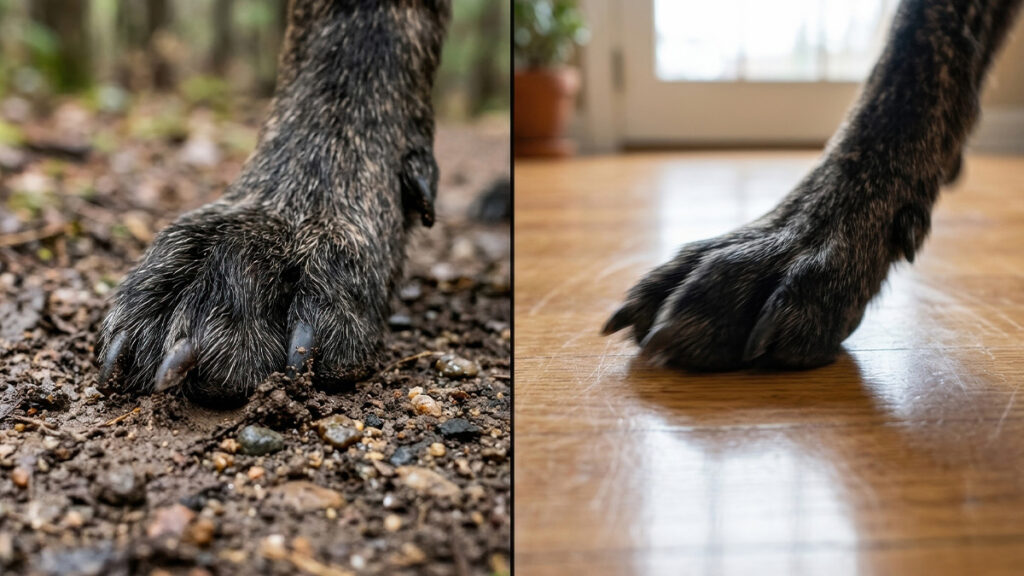
On soft ground, the claws can dig in slightly while the paw pads flex and mold around every little bump and dip underfoot. That combination gives a dog multiple points of contact at once, which is exactly what generates real forward and lateral traction.
Hardwood and polished tile flip that entire equation. There’s nothing for the nails to catch, and the paw pads simply can’t create enough friction against a perfectly smooth surface.
That’s when you get the splay — legs sliding outward mid-stance or mid-step. Watch it happen a few times, and it’s easy to see why repeated slipping wears a dog down, especially one already dealing with weaker muscles or stiffer joints. Getting up off the floor becomes a production instead of something automatic.
If you’ve been searching for how to stop dogs from slipping on tile floors, traction footwear is genuinely useful — but it works best as one piece of a bigger picture that also includes better floor grip, properly trimmed nails, and keeping paw hair from growing over the pads.
To compare how indoor socks stack up against outdoor footwear, read our complete dog paw wear guide.
For more on canine osteoarthritis and mobility issues, VCA Animal Hospitals and the American Kennel Club both offer solid veterinary-backed guidance.
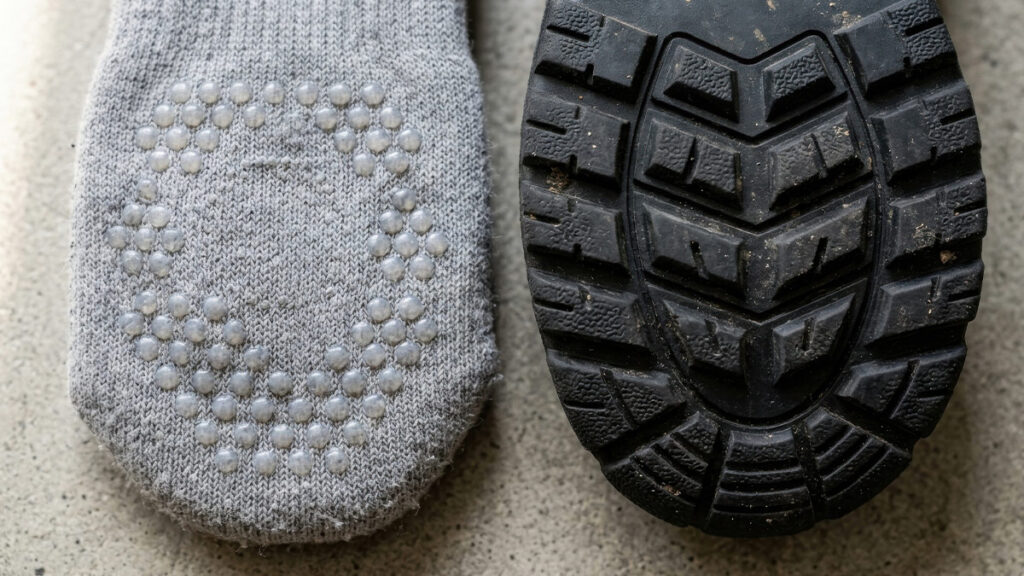
Silicone Micro-Grips vs. Molded Rubber: The Traction Showdown
There’s no single “best” sole — the right choice depends entirely on where your dog is actually going to be wearing it. Indoor traction and outdoor protection are solving two completely different problems.
A soft silicone grip works beautifully for controlled movement across your living room floor. A molded rubber outsole with directional lugs is a different animal entirely, built for gravel, dirt, mud, and trails that would chew through anything softer.
Silicone Dot Patterns (Anti-Slip Dog Socks)
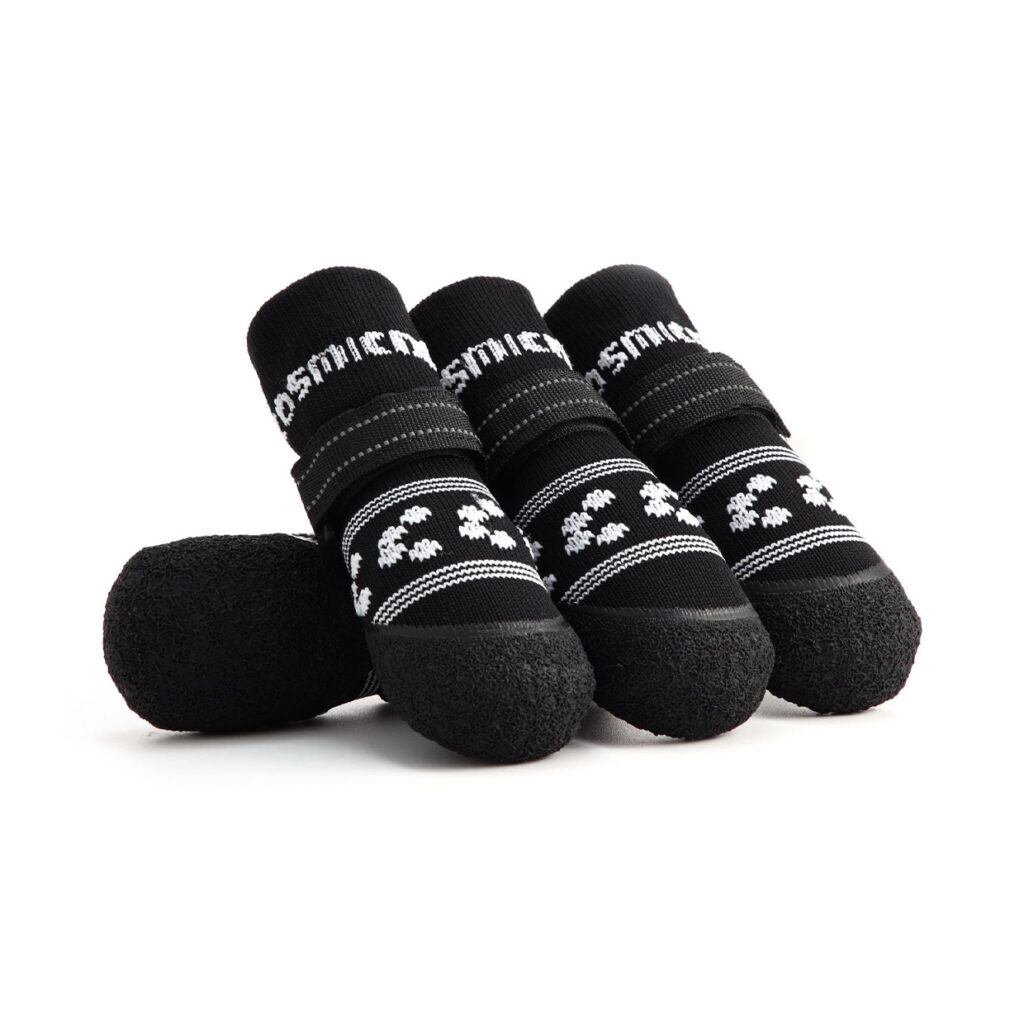
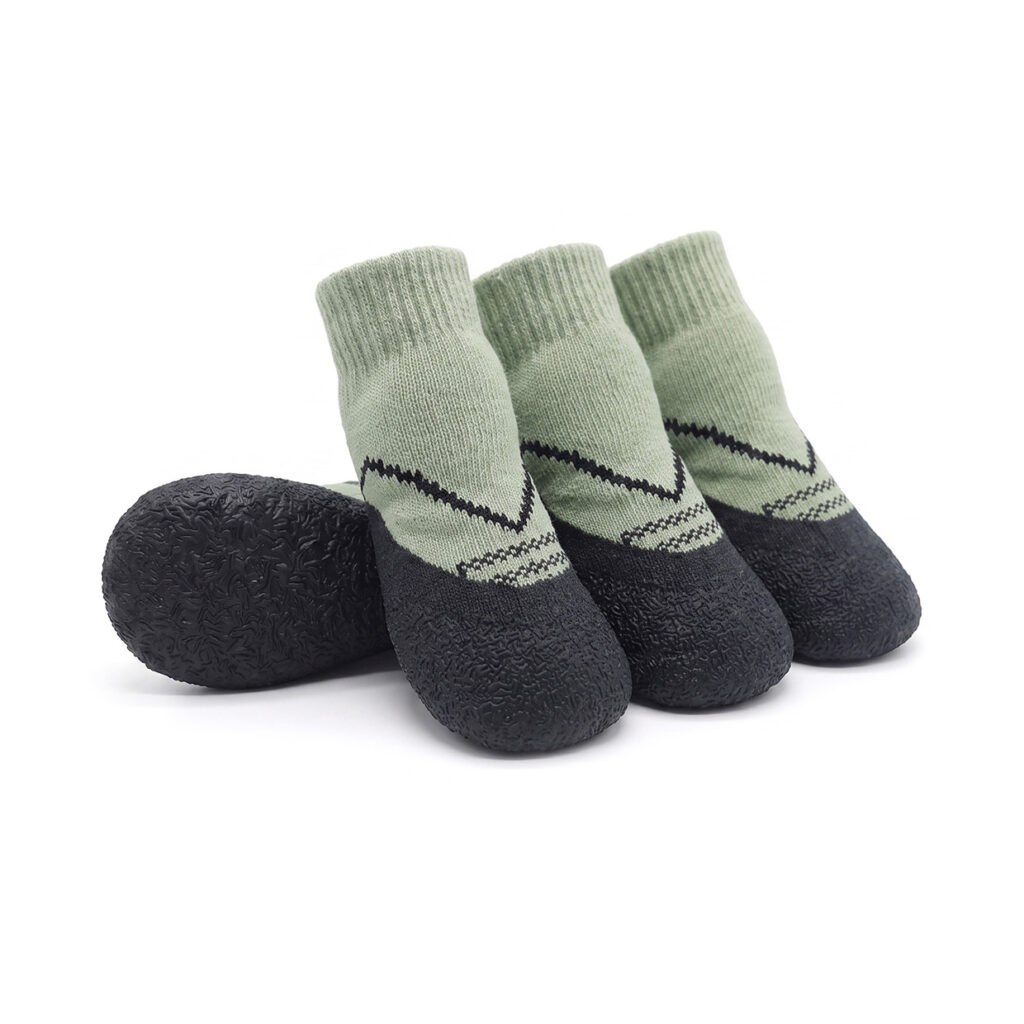
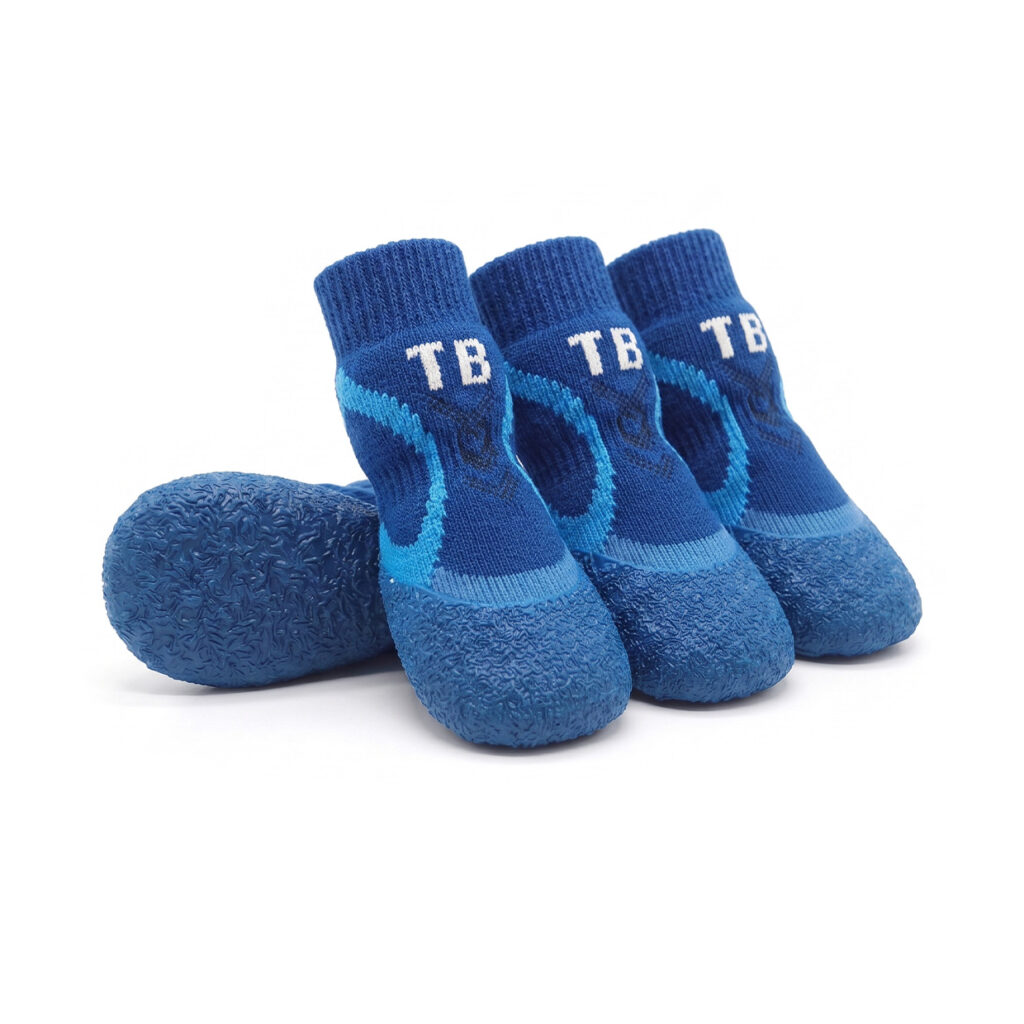
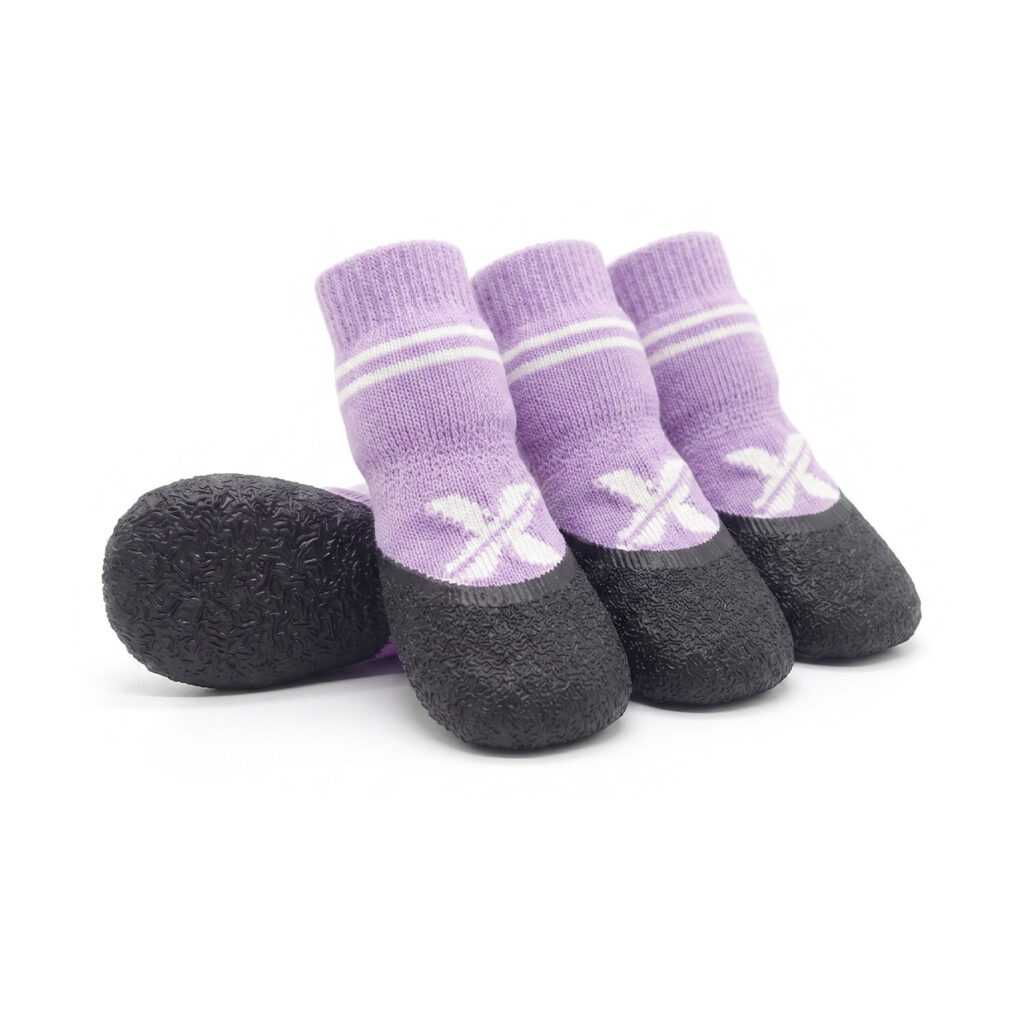
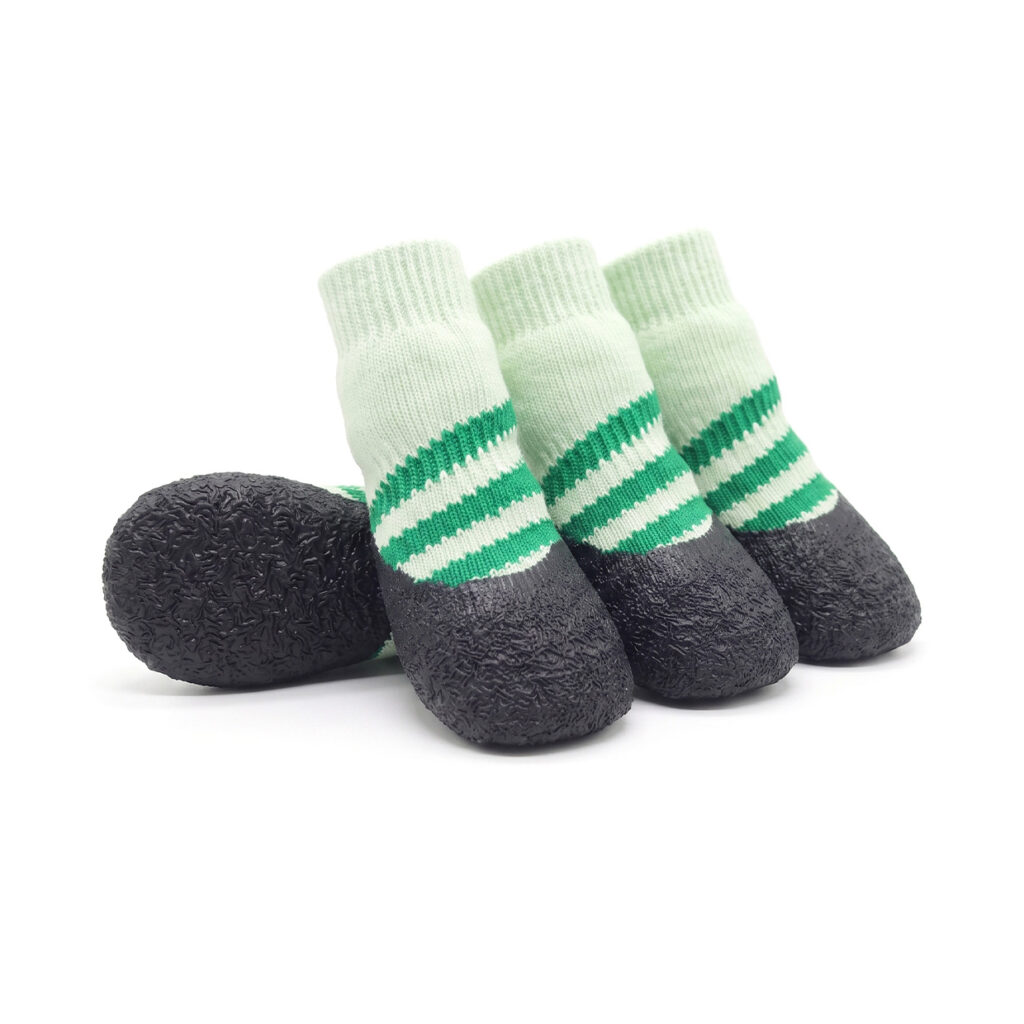
Anti-slip dog socks rely on silicone dots, strips, or textured patterns pressed into the underside of a stretchy fabric sock.
The real strength here is flexibility. A sock hugs the natural shape of the paw and moves with it, without adding the bulk or stiffness that comes with a full boot.
That makes silicone-grip socks ideal for indoor life — giving a dog extra bite when they push up off the floor, cross a stretch of hardwood, or navigate a slick tile hallway.
If you’re hunting for the best traction shoes for senior dogs on hardwood floors, a lightweight sock is often the smartest place to start, especially if indoor stability is the main concern rather than outdoor hazards.
Just don’t mistake these for outdoor gear. Silicone grip socks aren’t built to handle punctures, sharp rocks, extreme heat or cold, or rough abrasive ground — that’s simply not their job.
Anti-slip Dog Socks for Indoor Hardwood Floors
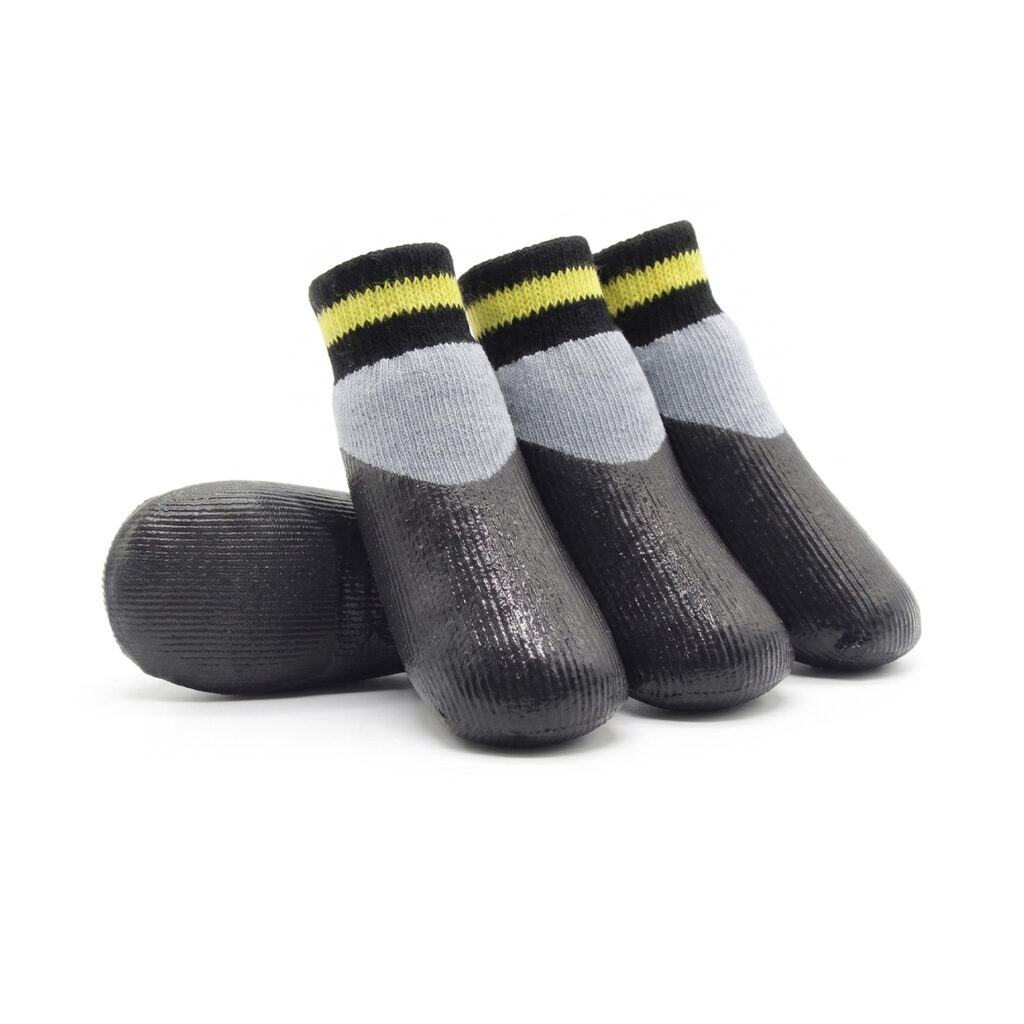
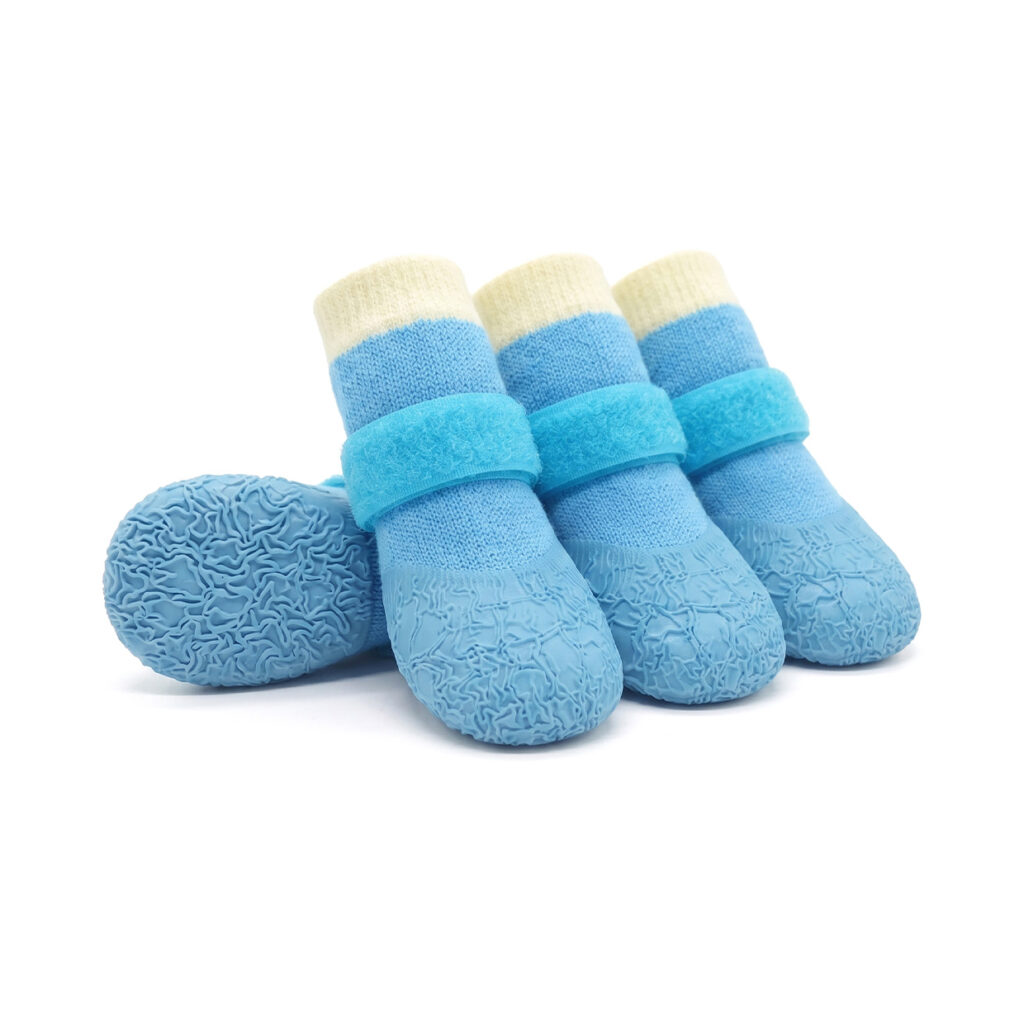
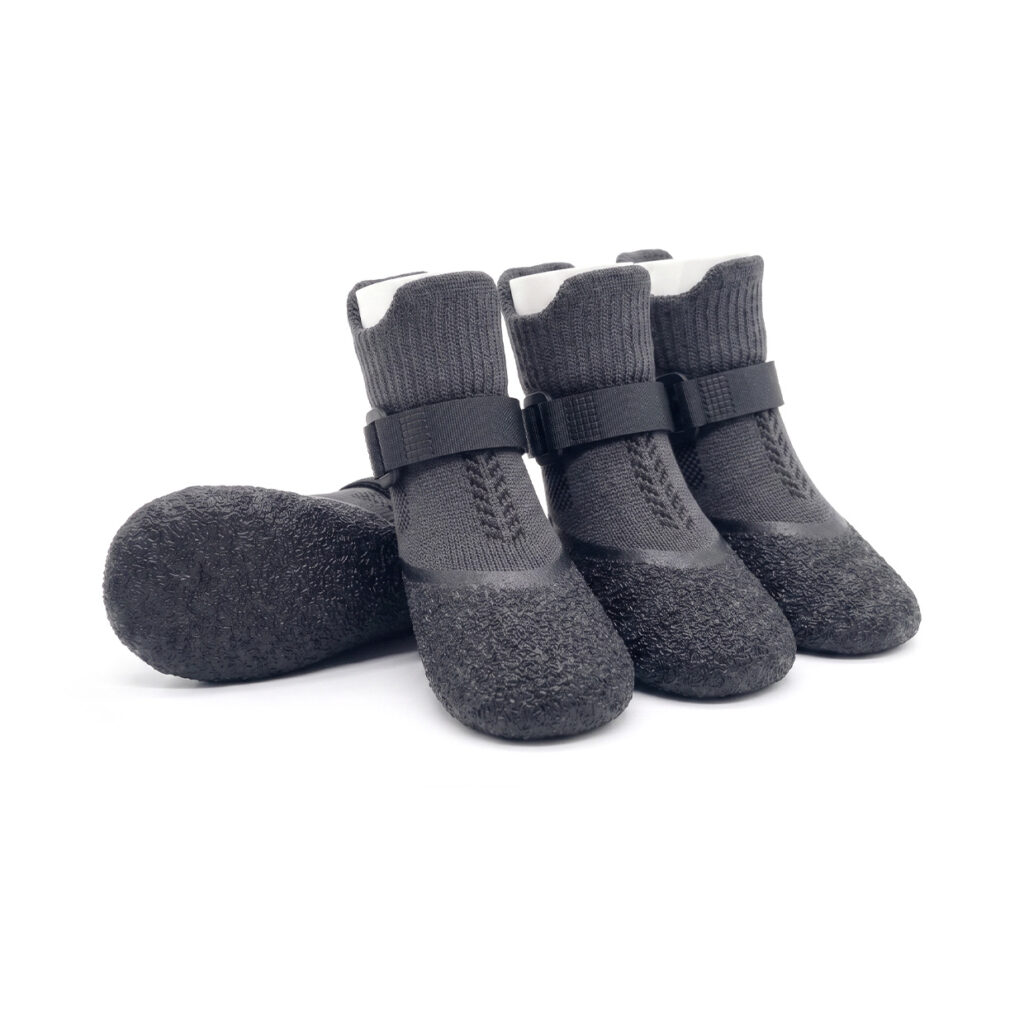
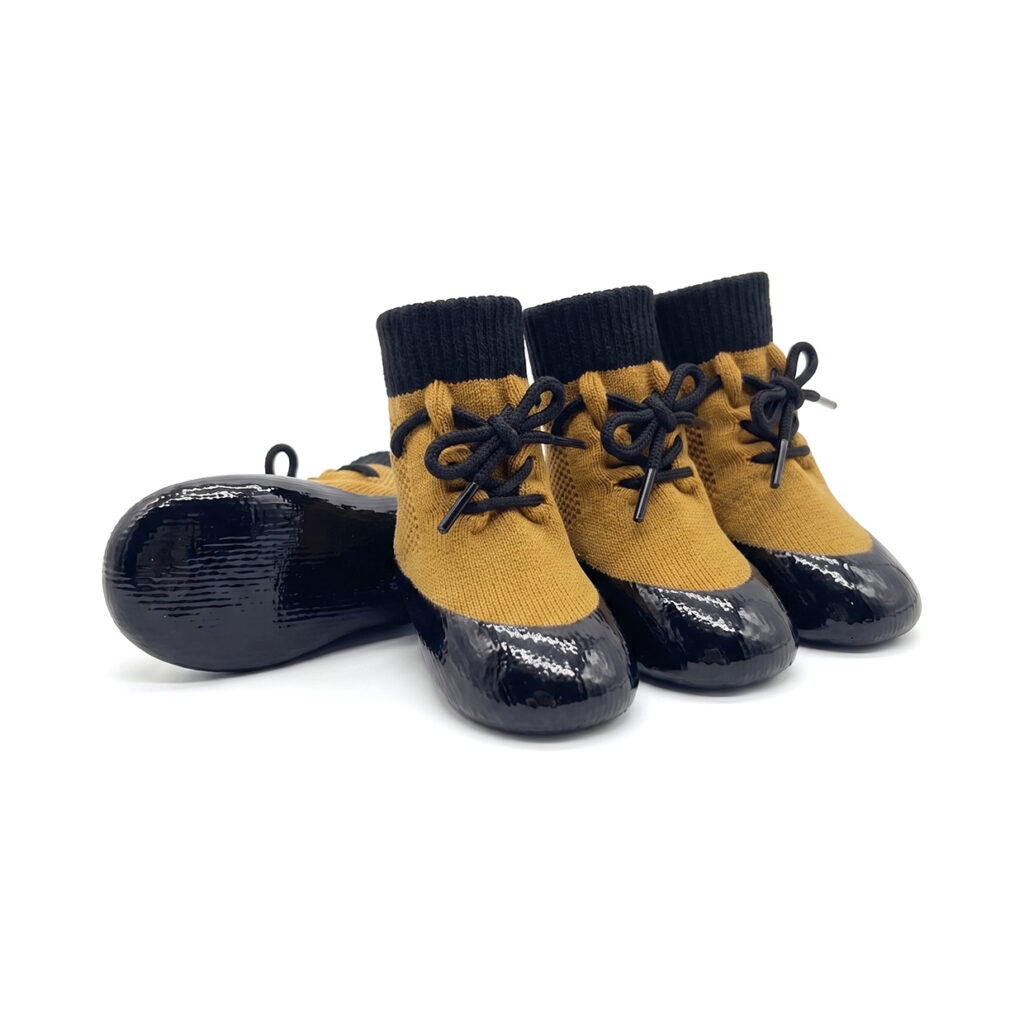
Lugged Thermoplastic Rubber Outsoles (Dog Boots & Shoes)
Outdoor dog boot soles are engineered for a completely different set of demands.
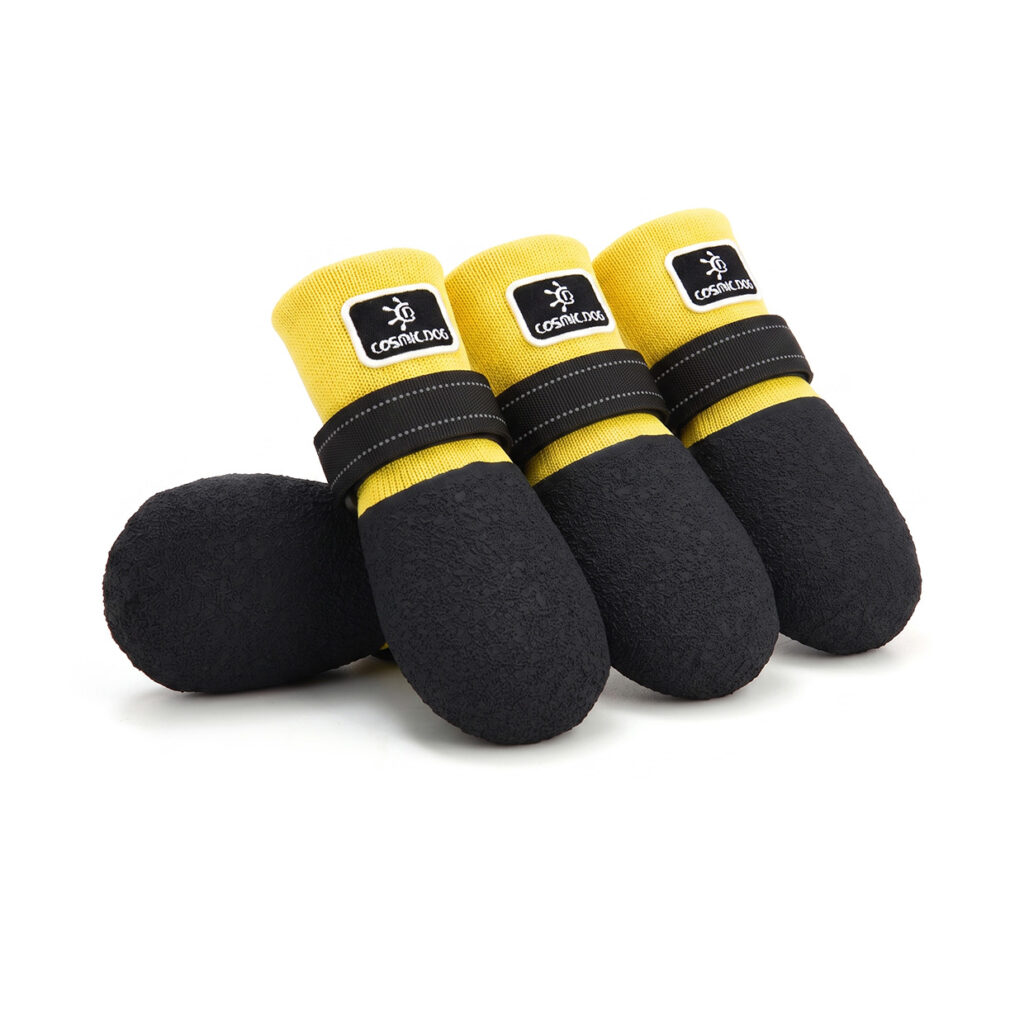
Molded rubber or thermoplastic rubber (TPR) outsoles use deeper lugs, channels, grooves, and directional patterns designed to physically grab uneven ground rather than just rest on top of it.
Tread geometry matters more than people realize. Forward-facing lugs help push the dog ahead with each stride, while multidirectional patterns keep things stable when a dog pivots, climbs, or heads down a slope.
Drainage channels earn their keep here too, moving water, mud, and loose debris away from the areas actually bearing the dog’s weight.
This is really why the rubber soles vs. silicone grip socks for dogs debate misses the point a bit — they’re not competing products. They’re solving two entirely different traction problems.
Heavy-duty Dog Boots with Rugged Soles
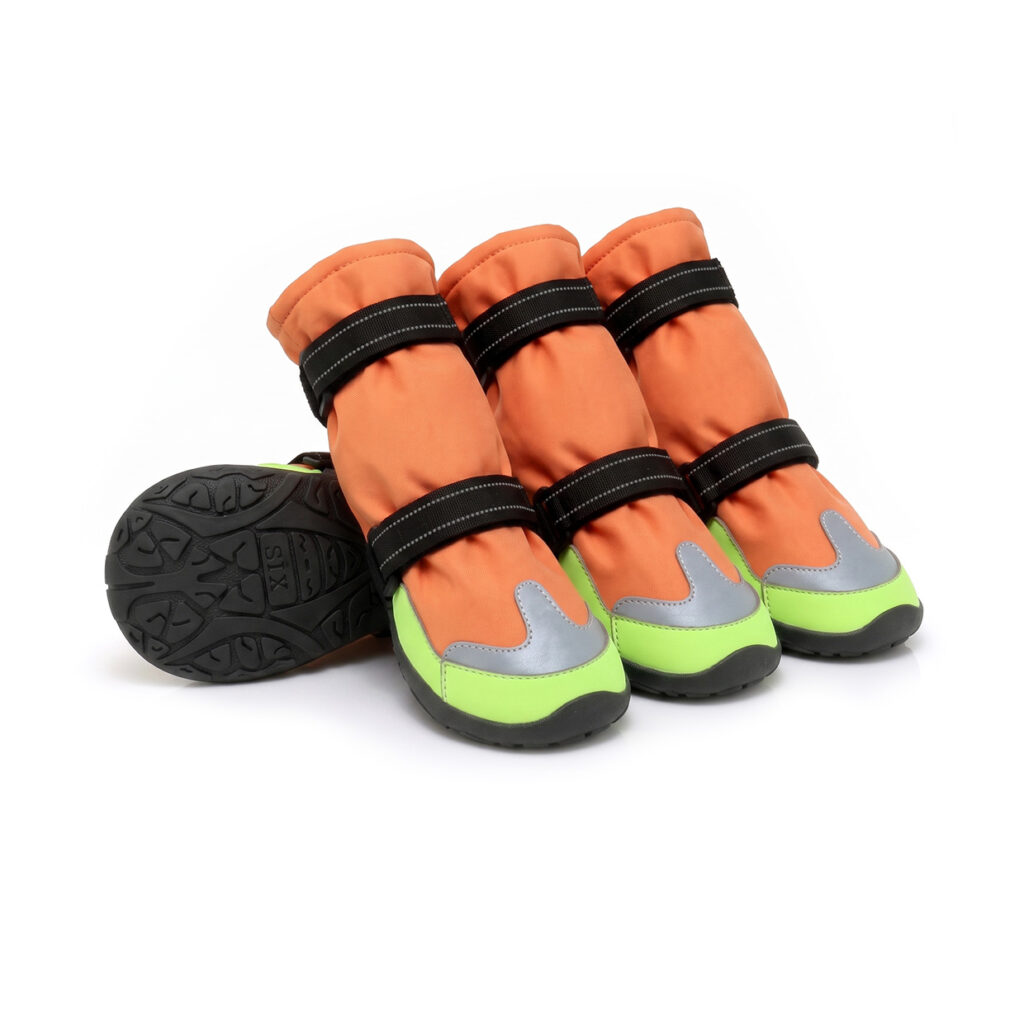
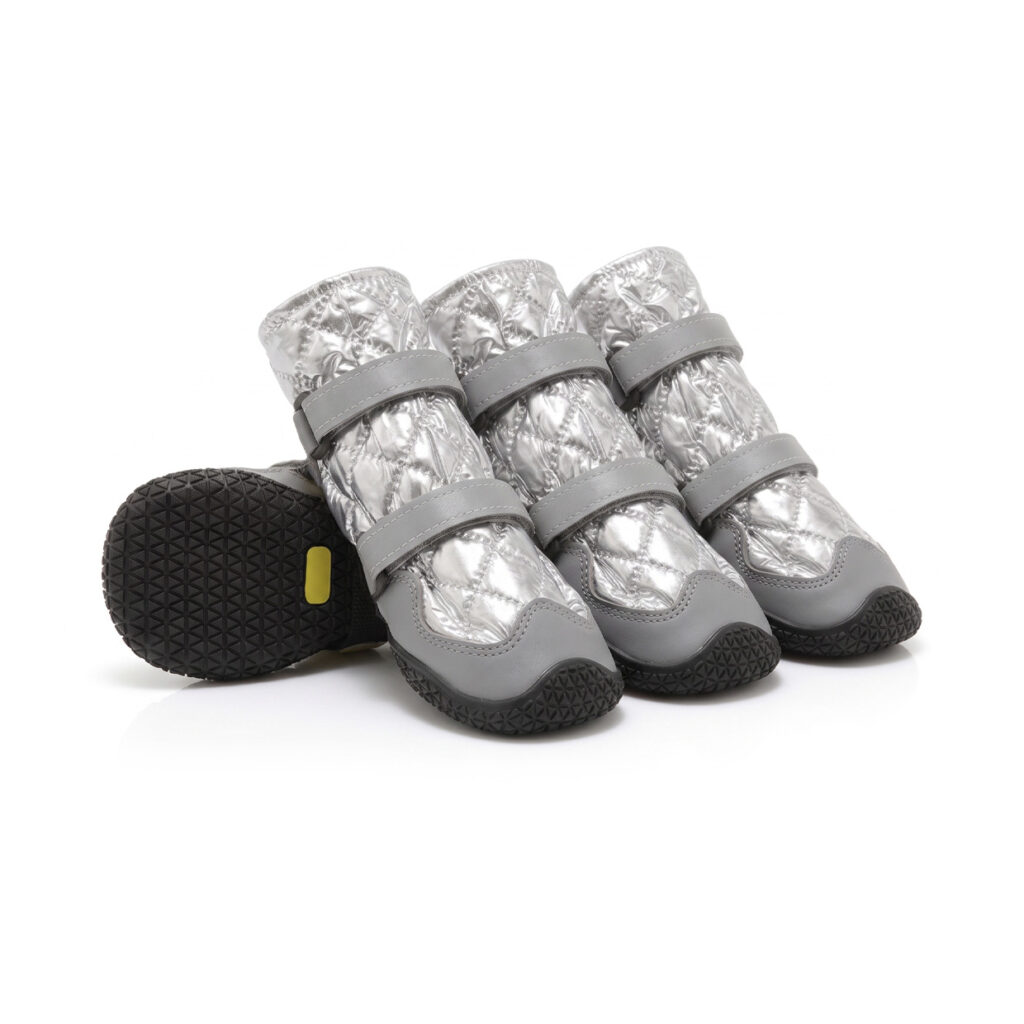
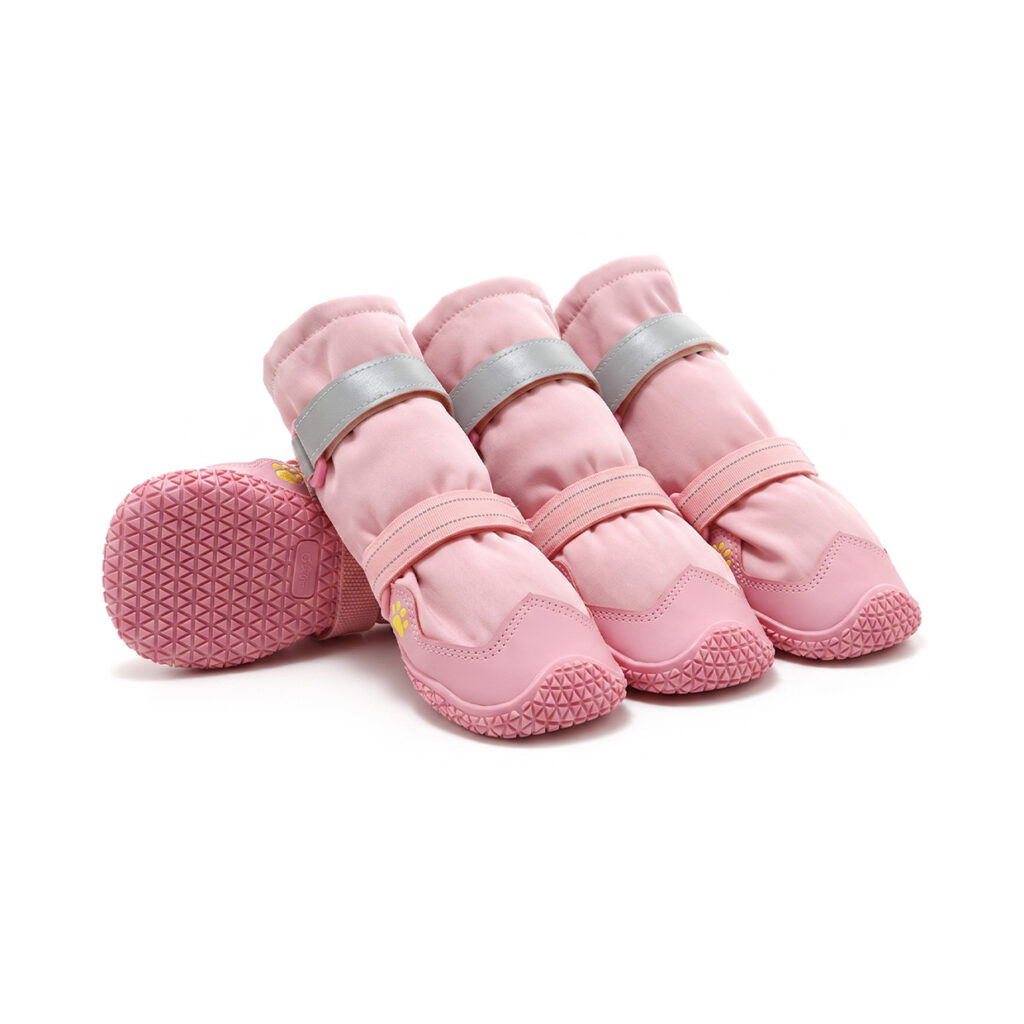
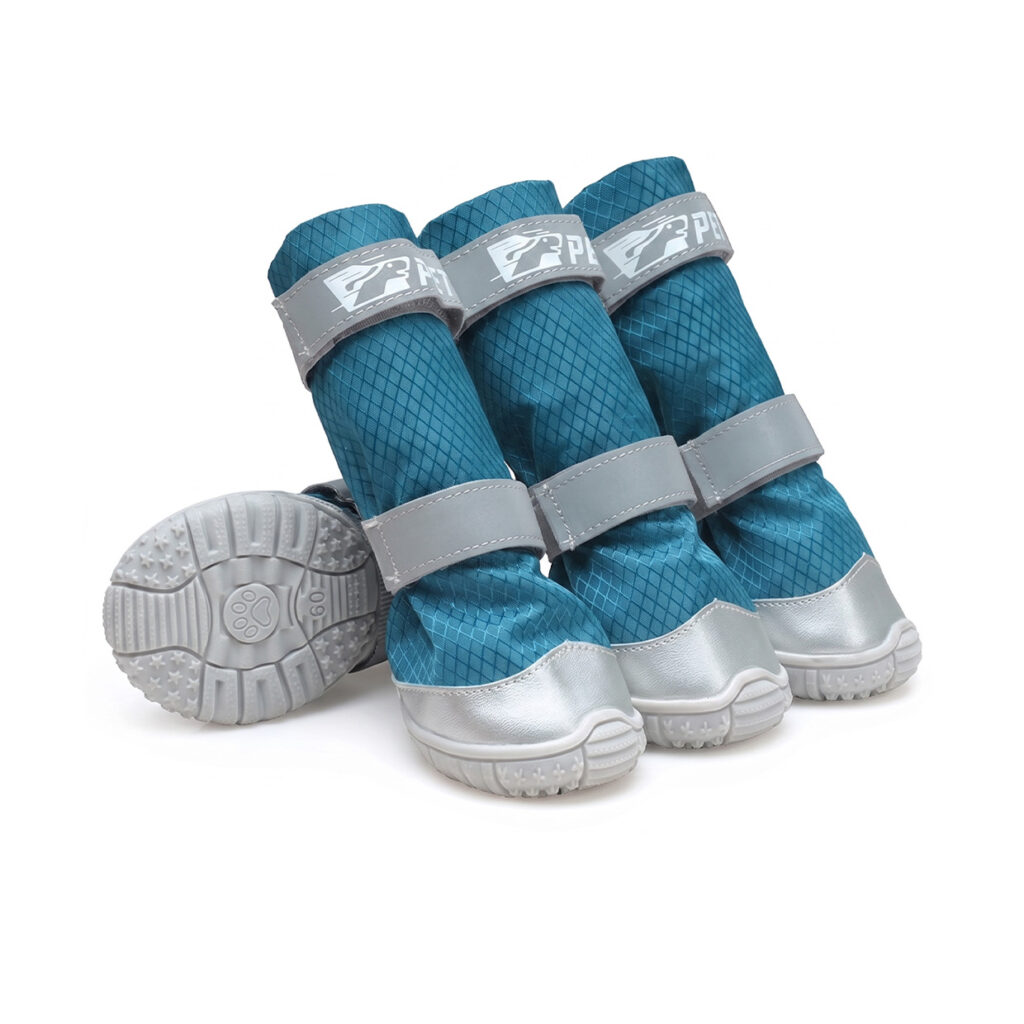
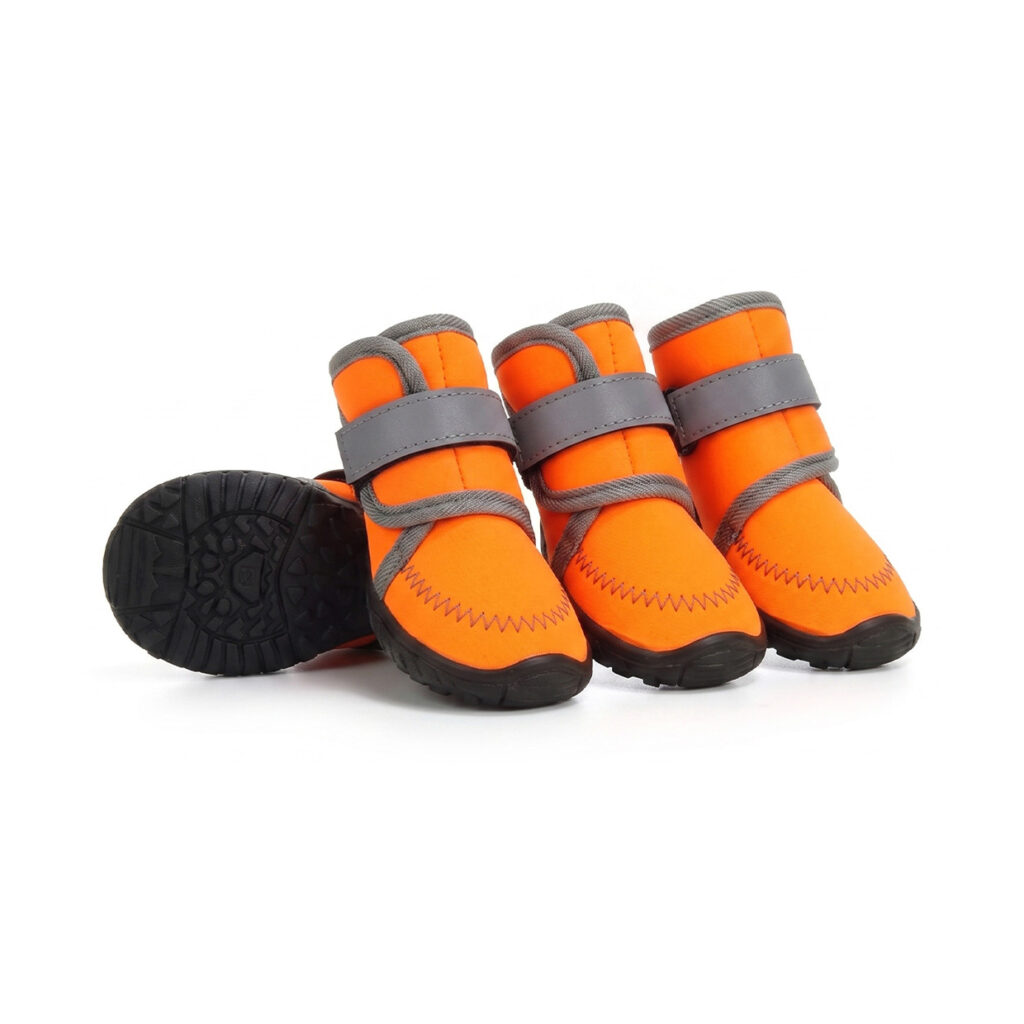
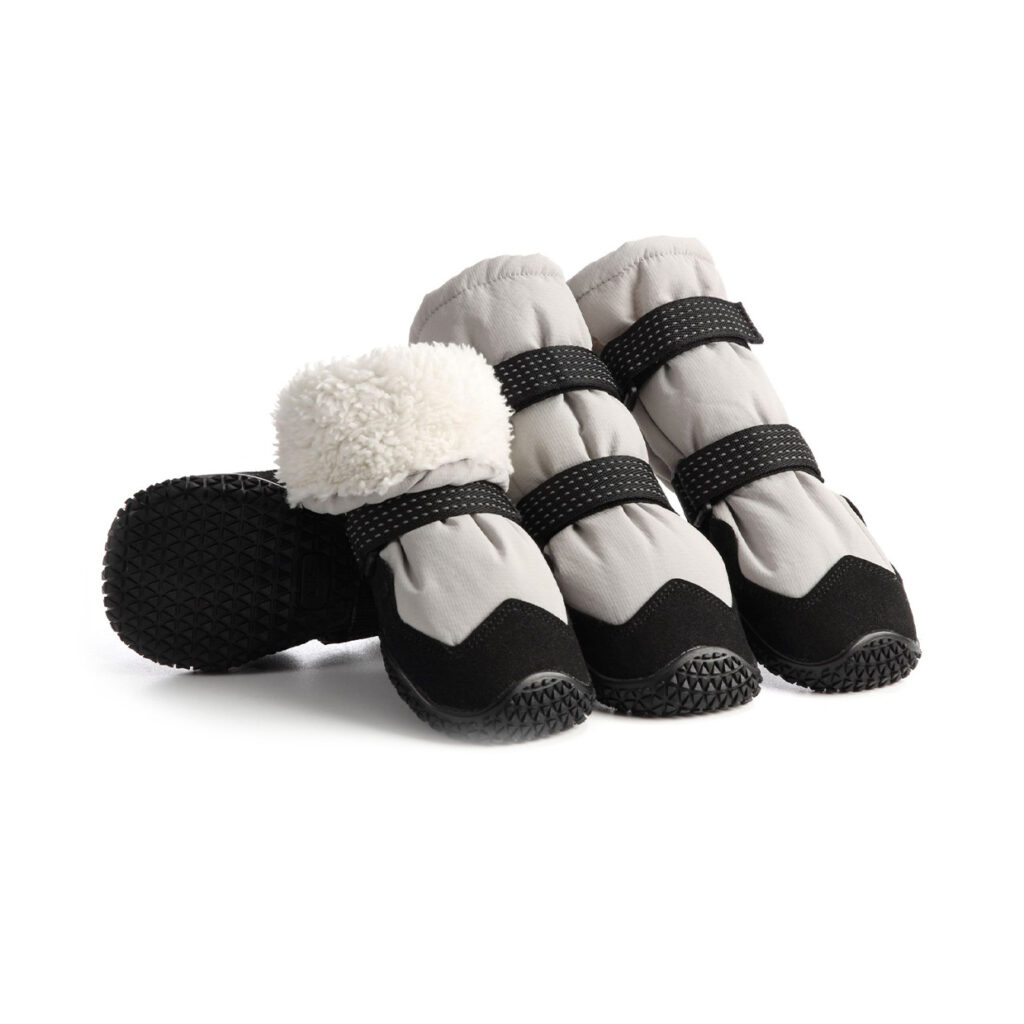
Rugged Rubber-Sole Dog Shoes
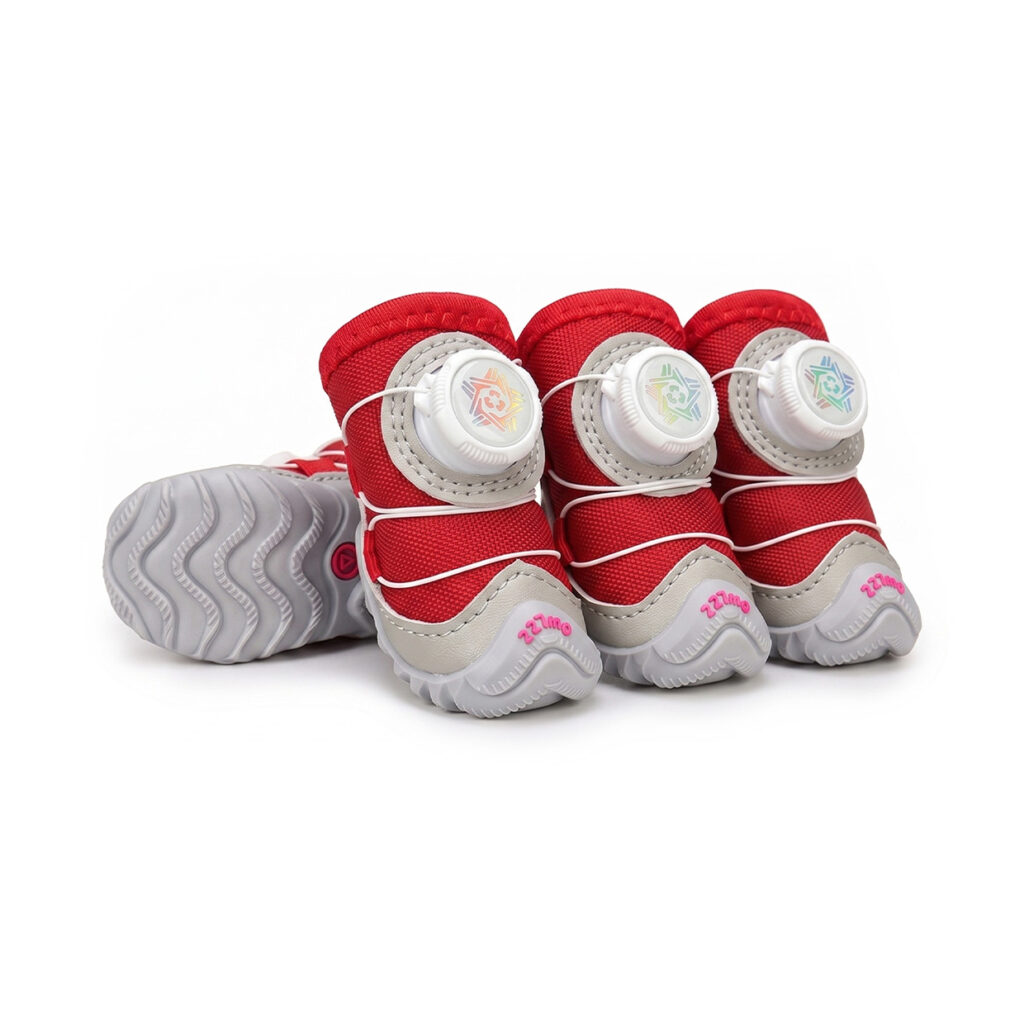
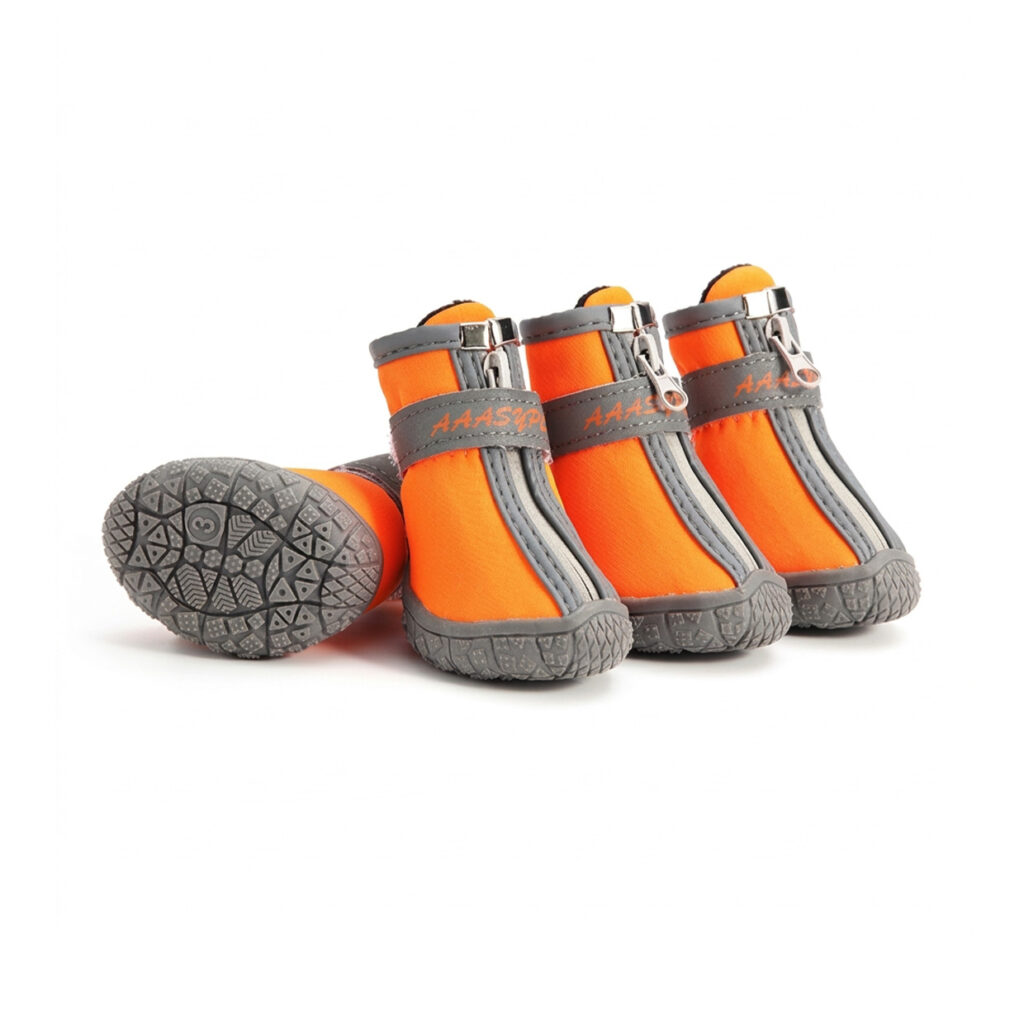
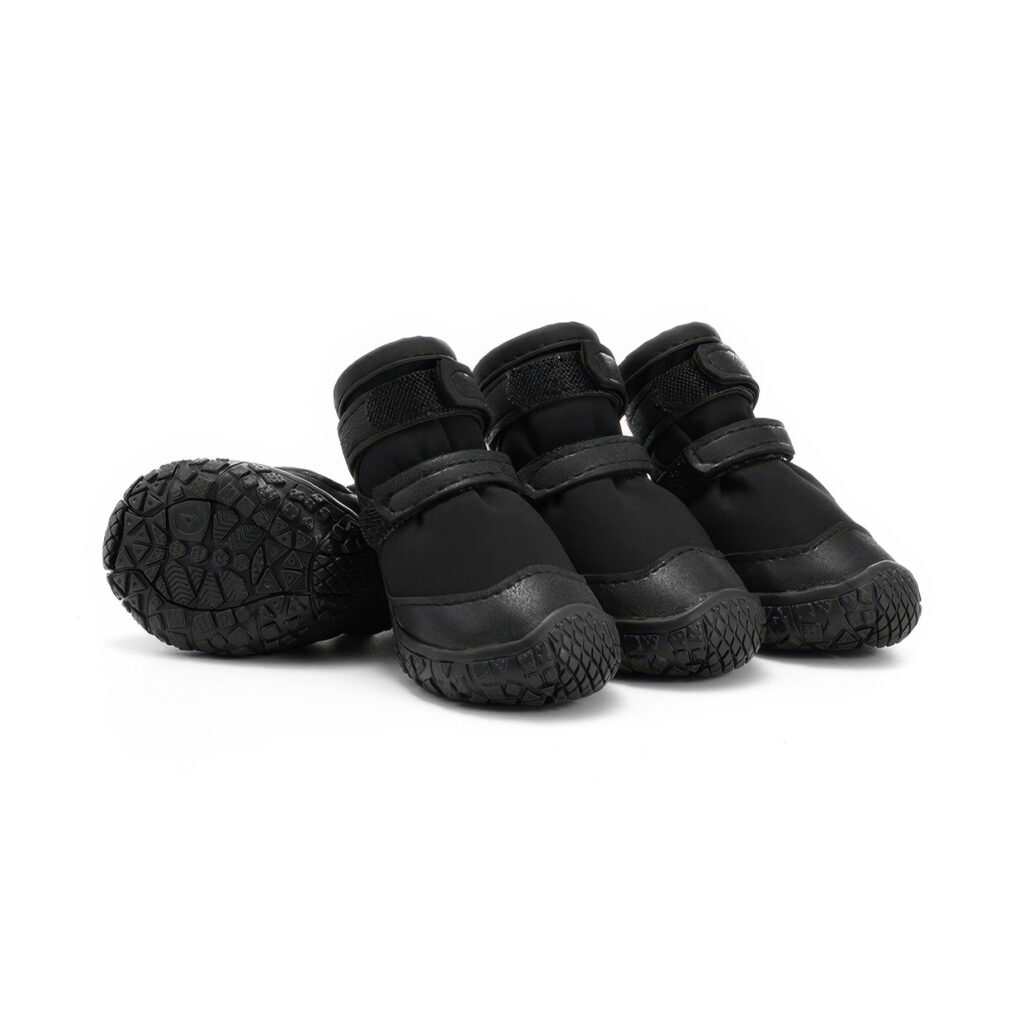
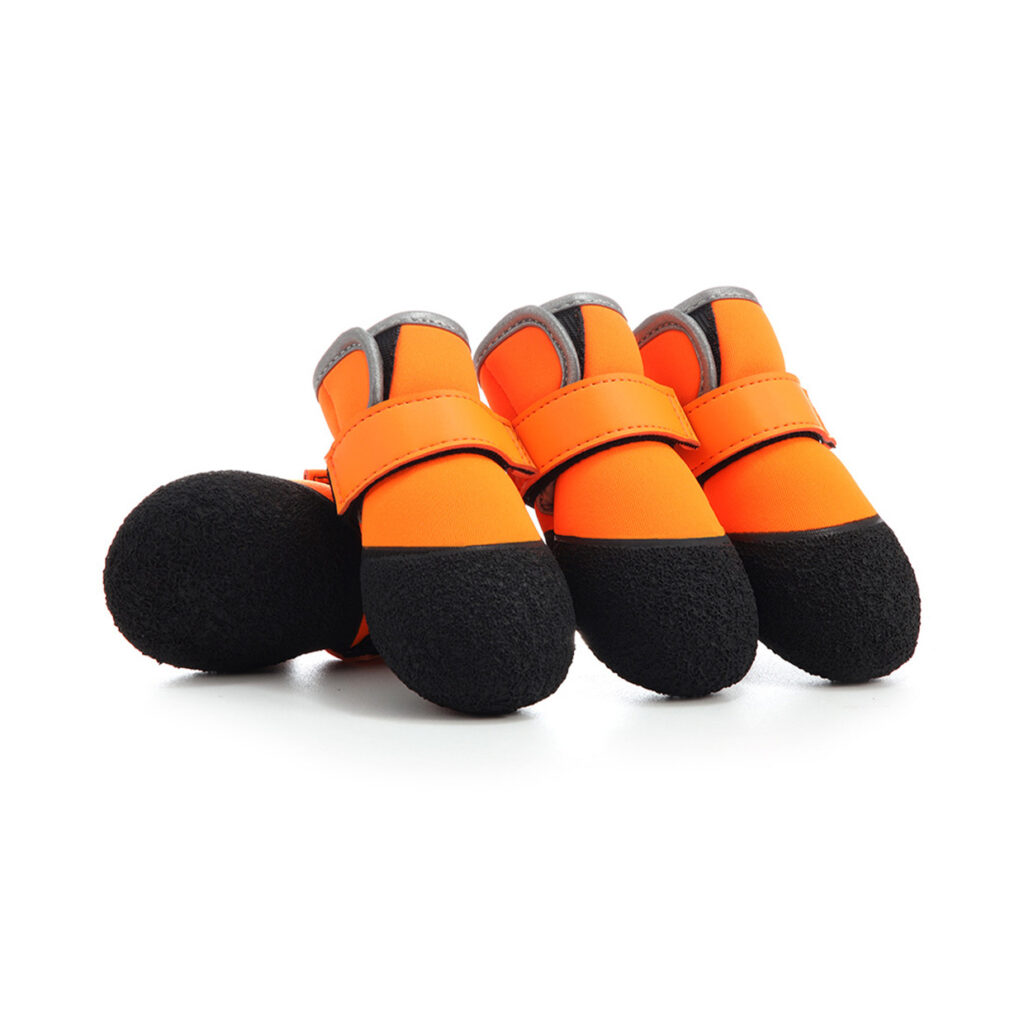
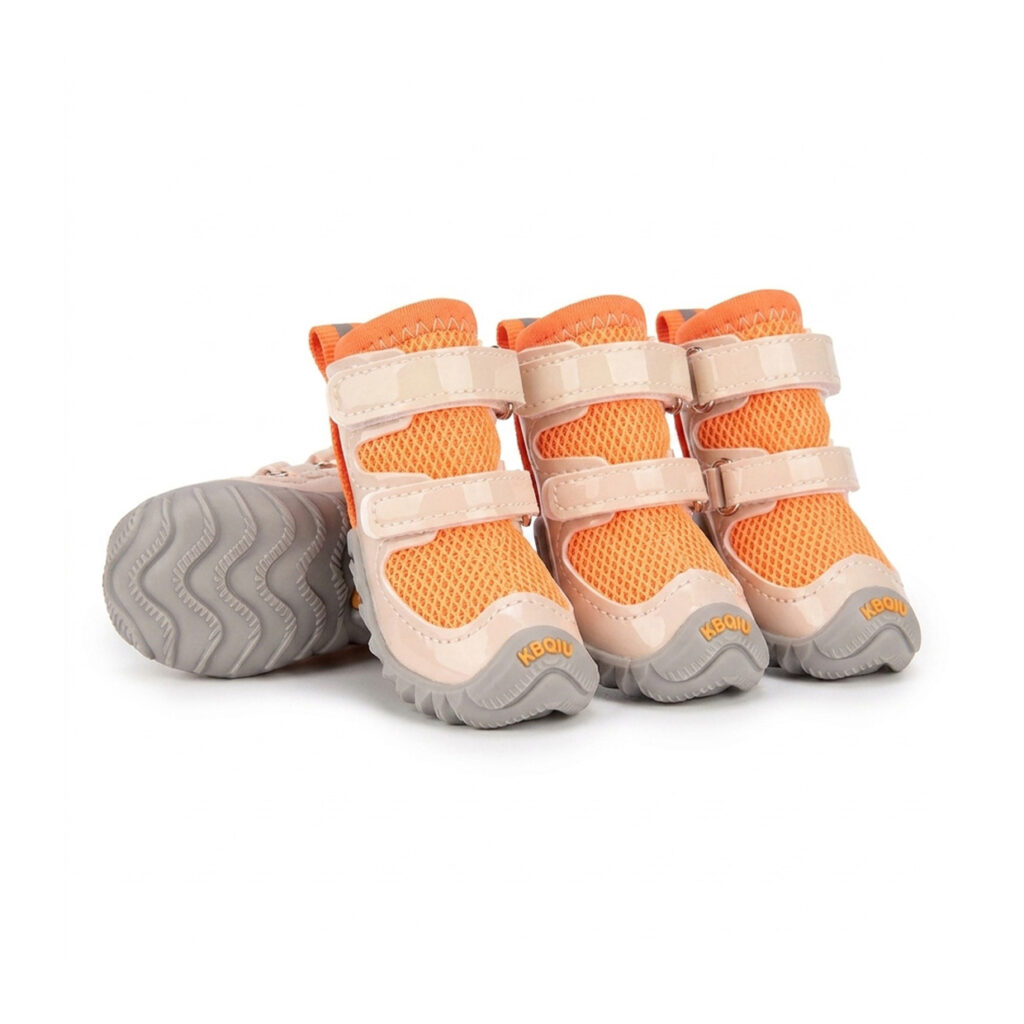
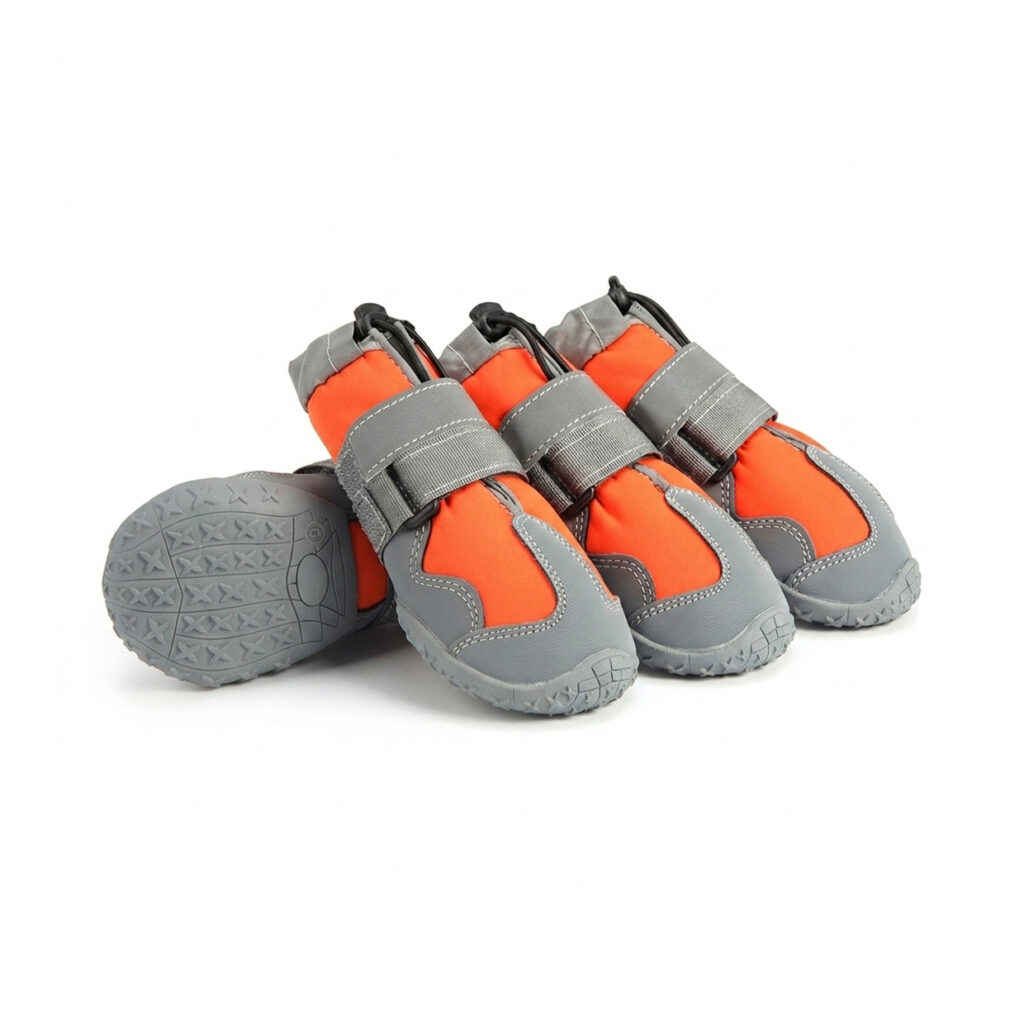
| Feature | Silicone Grip Socks | Molded Rubber Dog Boots |
|---|---|---|
| Material Composition | Flexible textile with silicone grip elements | Molded rubber or TPR outsole |
| Primary Surface | Hardwood, tile, indoor floors | Trails, gravel, pavement, mud, mixed terrain |
| Flexibility Level | Very high | Moderate to high, depending on construction |
| Puncture Defense | Low | Moderate to high, depending on outsole construction |
| Indoor Comfort | Excellent | Good, but potentially heavier |
| Outdoor Protection | Limited | Significantly better |
The smartest approach is choosing based on the surface your dog actually walks on, not grabbing whatever boot has the thickest-looking sole on the shelf.
A heavy, rigid outsole delivers excellent protection, sure — but strap that onto a dog just trying to cross the kitchen, and you’re fighting their natural paw flexion for no reason. Flip it around, and an ultra-flexible grip sock that feels perfect indoors offers next to nothing once your dog steps on a sharp rock mid-trail.
Outdoor Puncture Resistance: Shielding Against Sharp Hazards
Traction alone won’t save your dog’s paws outdoors — that’s a separate battle entirely.
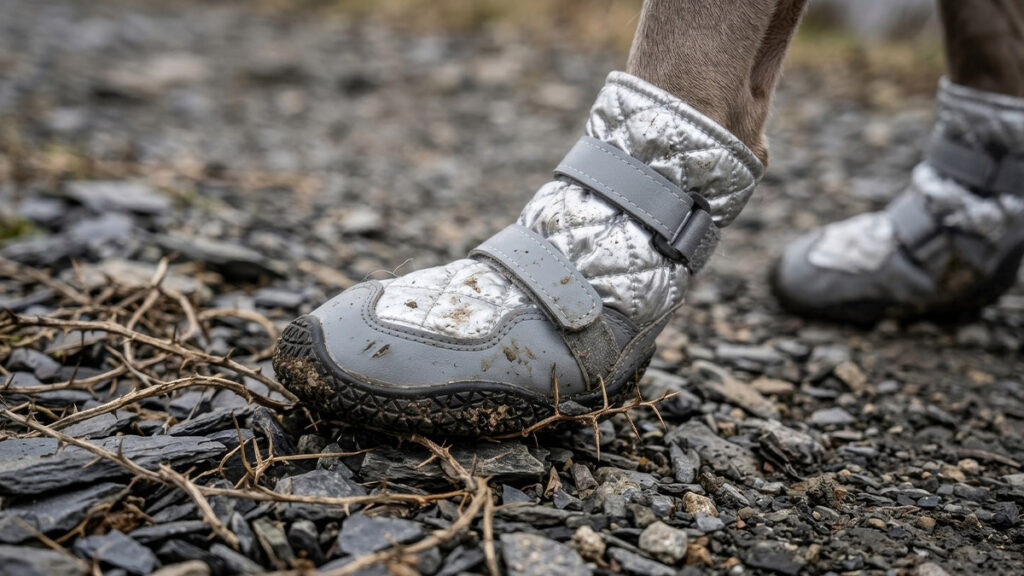
A single hiking trail can hide sharp shale, broken glass, thorns, splintered branches, cactus spines, or a rusty scrap of wire half-buried in the dirt. It only takes one bad step for a paw pad to end up with a genuinely painful puncture wound.
For dogs that hit the trail regularly, puncture resistant dog boot outsoles for hiking need to pair a tough outer layer with enough give to let the paw move the way it naturally would.
Thickness alone doesn’t tell the whole story. Material hardness, build quality, tread geometry, flex grooves, and how well the outsole connects to the upper all play a role in whether a boot actually performs. For advice on pairing durable soles with sealed or ventilated uppers, read our fabric breakdown on waterproof vs breathable dog boots to match your footwear construction to the weather.
When heading into rugged backcountry trails, equip your pup with our heavy-duty puncture-resistant dog boots.
Thicker isn’t automatically better, either. Push the stiffness too far, and you end up restricting natural paw flexion — which becomes a real problem the moment your dog needs to navigate rocky, uneven ground. If your dog hesitates or high-steps in rigid soles, follow our training guide on how to get your dog used to boots and stop the funny walk before hitting the trail.
The smarter engineering approach builds in strategic flex zones exactly where the paw needs to bend, while reinforcing the areas directly under the dog’s weight where protection matters most.
This is where canine footwear tread patterns really start to matter. Deep, well-separated lugs grip loose terrain far better than a flat sole ever could, and properly placed grooves let the sole flex naturally without sacrificing the protective structure underneath.
For everyday paw inspection and injury prevention, take a look at routine dog paw care and wound prevention.
For broader guidance on common pet injuries and veterinary care, the ASPCA’s pet care resources are a solid reference point.
Choosing the Right Traction Profile for Your Dog’s Lifestyle
There’s genuinely no universal “best” sole here. What works depends on your dog’s age, mobility, environment, and how they actually spend their day.
1. Senior Dogs and Dogs With Mobility Challenges
For indoor use, go lightweight — broad silicone grip coverage in a flexible build that moves with the paw rather than against it.
You’re not chasing maximum impact protection here. The real goal is simply more friction, less strain, and giving an older dog an easier time standing up and moving through the house with confidence.
Anti-slip Dog Socks for Indoor Hardwood Floors
2. City Dogs and Everyday Walkers
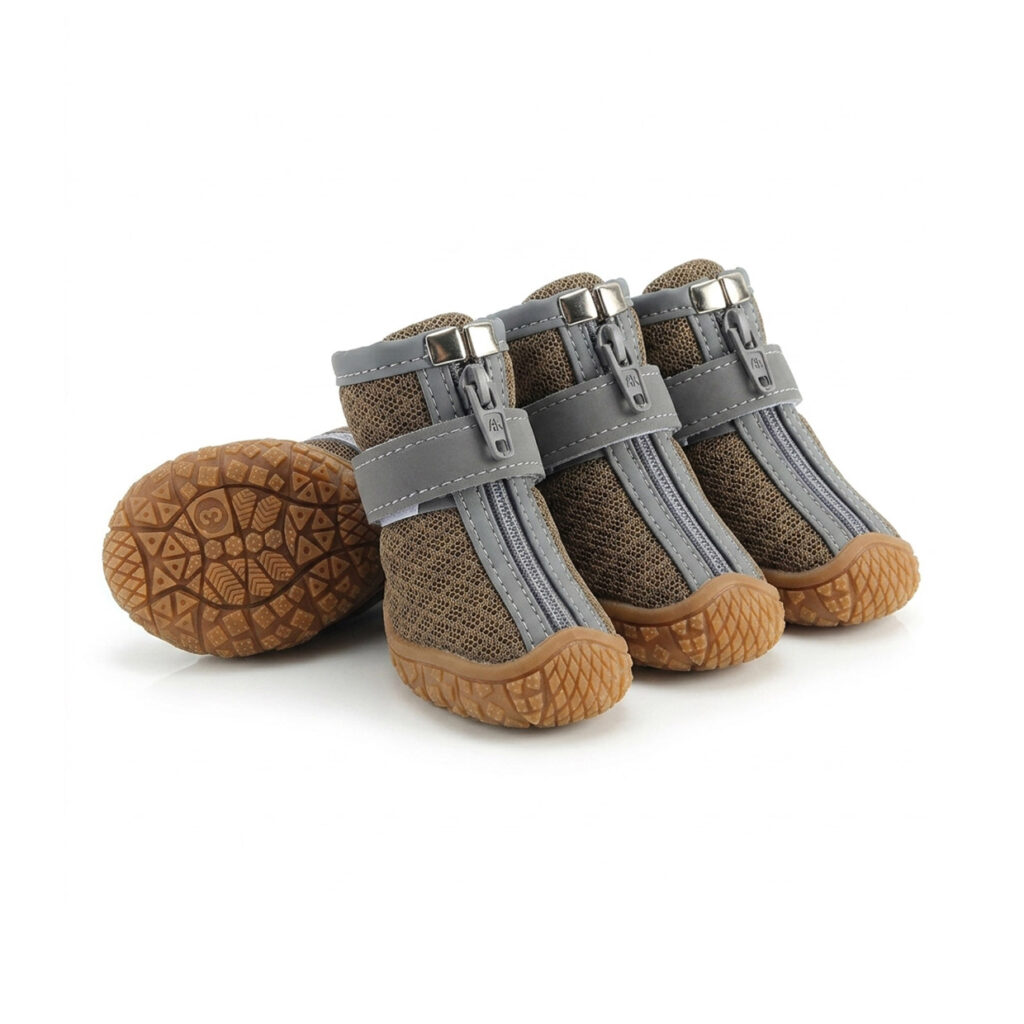
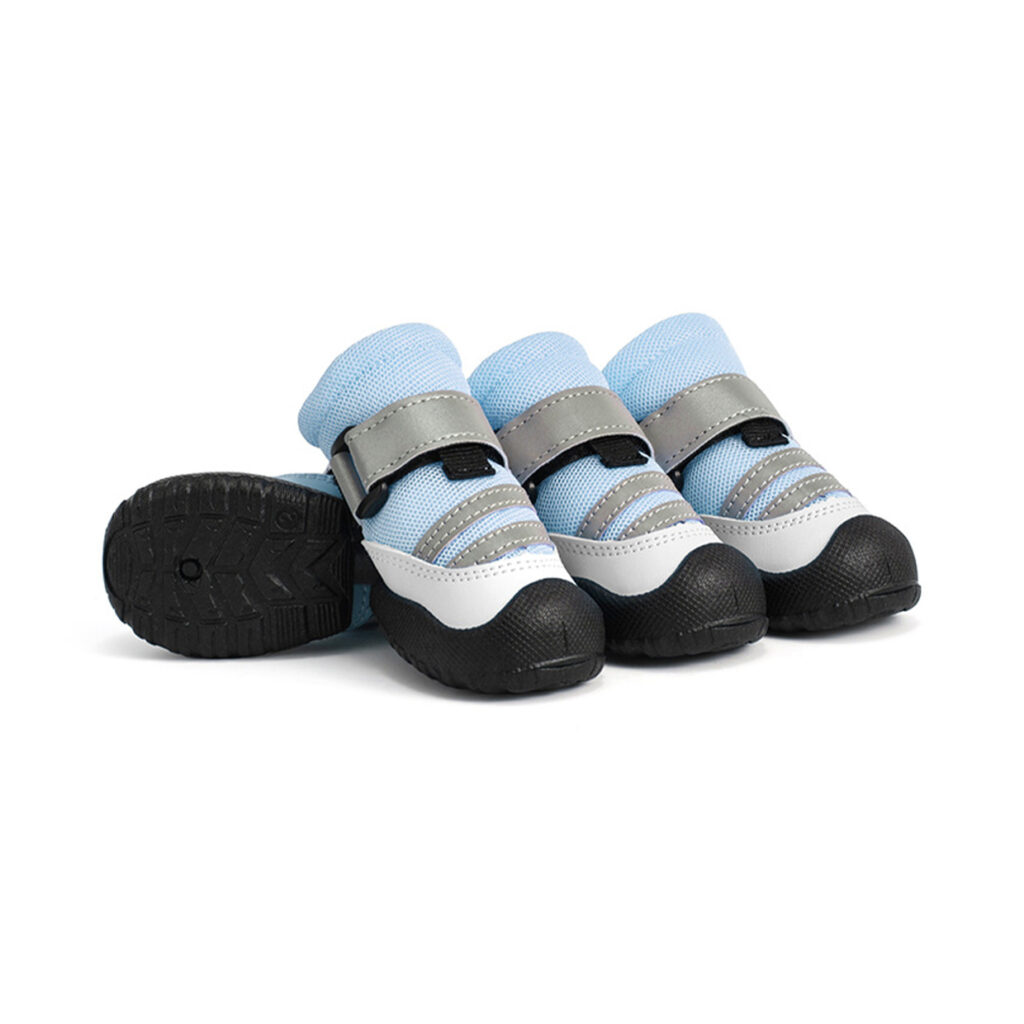
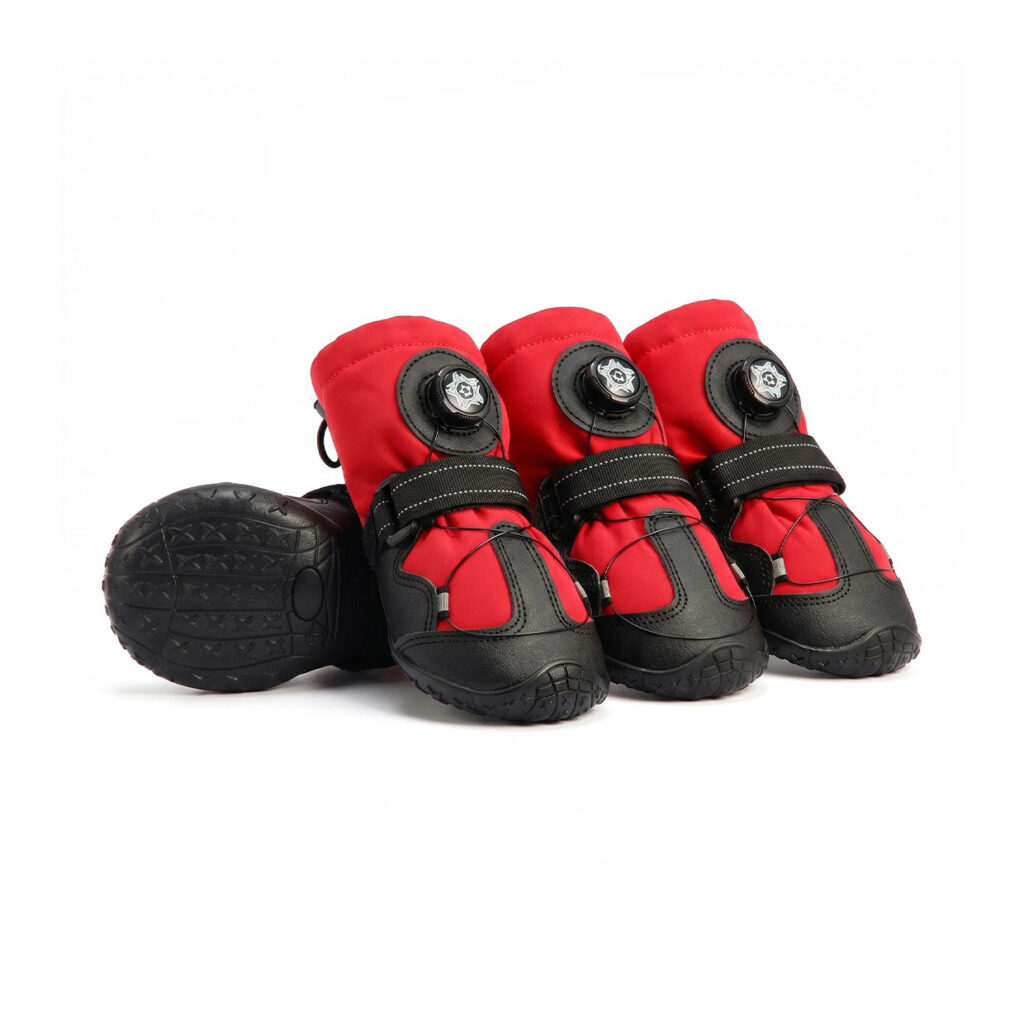
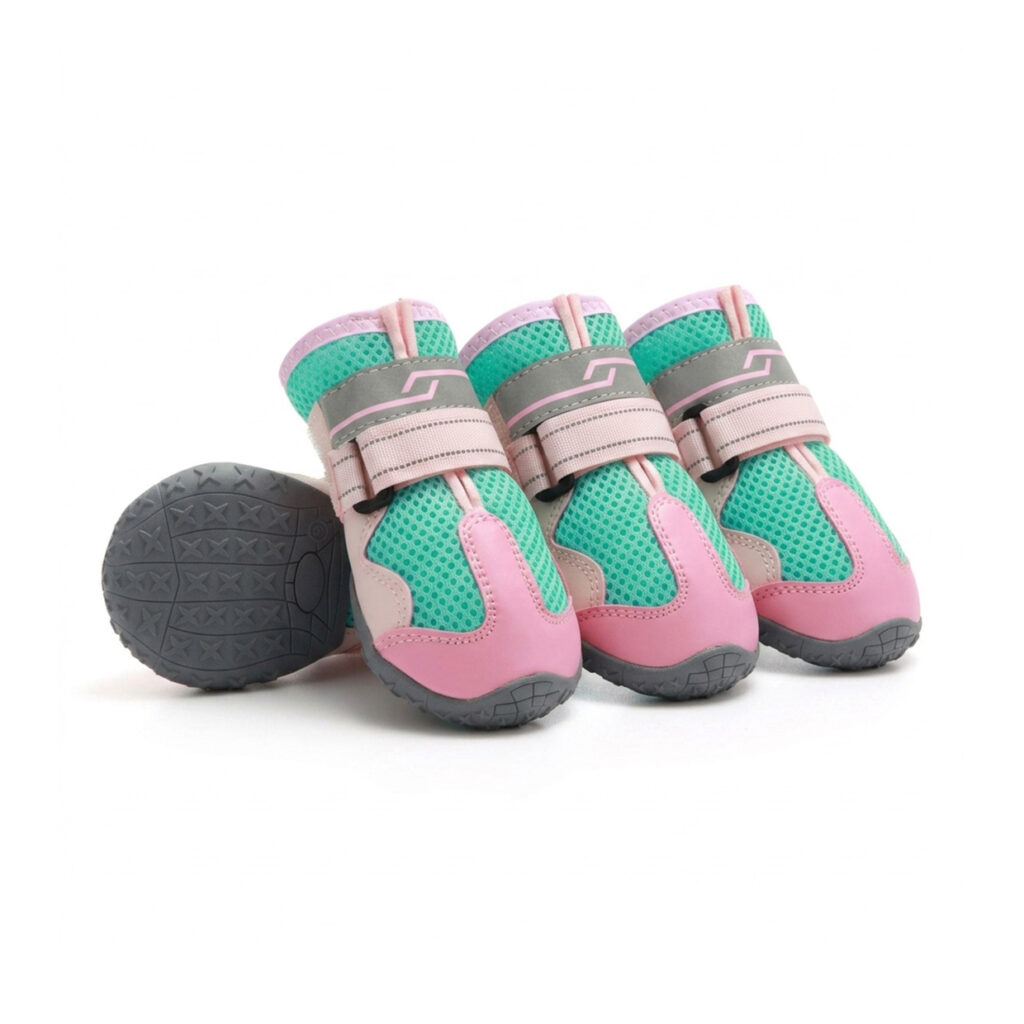
Urban dogs deal with a mix of pavement, concrete, sidewalk cracks, patches of grass, and the occasional rough surface thrown in.
A lightweight dog shoe with a flexible rubber outsole hits that sweet spot between indoor-level comfort and enough outdoor protection to matter.
Look for a tread pattern that grips reliably without turning the whole shoe into something stiff and clunky underfoot.
Flexible Traction Shoes for City Walks
3. Hiking and All-Terrain Dogs
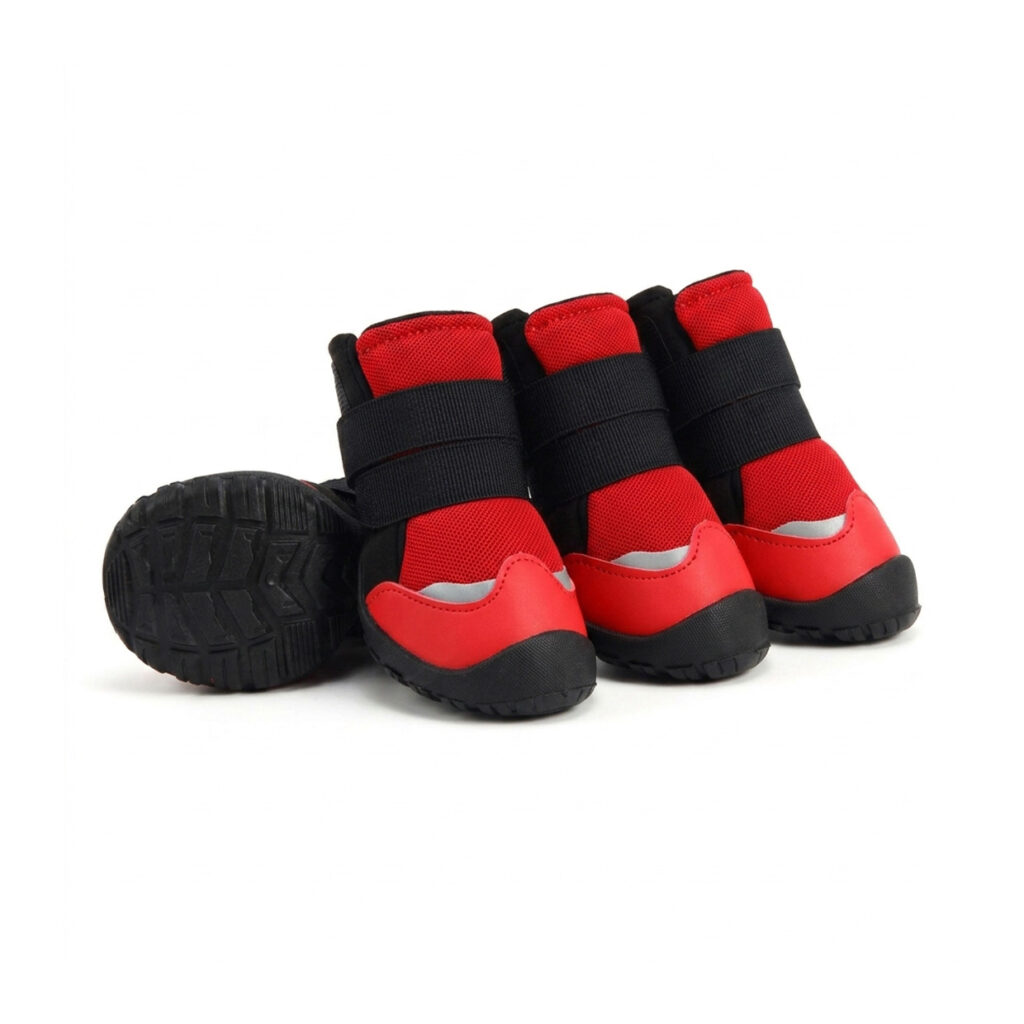
Trail dogs need considerably more armor.
Look for a durable outsole, multidirectional tread, secure fastening that won’t work loose mid-hike, and real protection against abrasion and puncture hazards. The upper matters just as much — it needs to stay locked in place whether your dog is scrambling up a rocky incline or picking their way down a steep, uneven descent.
For a closer look at how these treads and closures actually hold up on jagged scree and loose rock, our guide on dog hiking boots for rocky trails digs into what genuinely keeps paws protected on that kind of terrain.
Heavy-duty Dog Boots with Rugged Soles
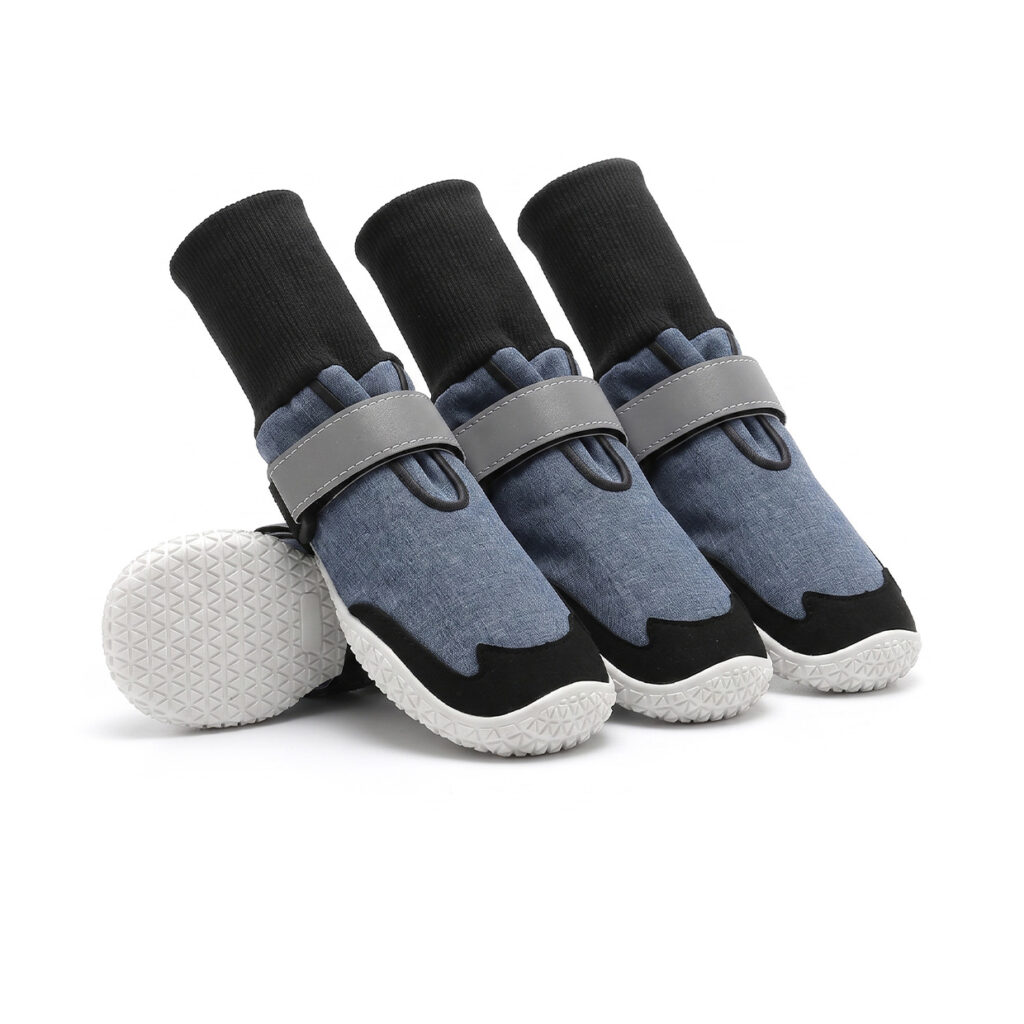
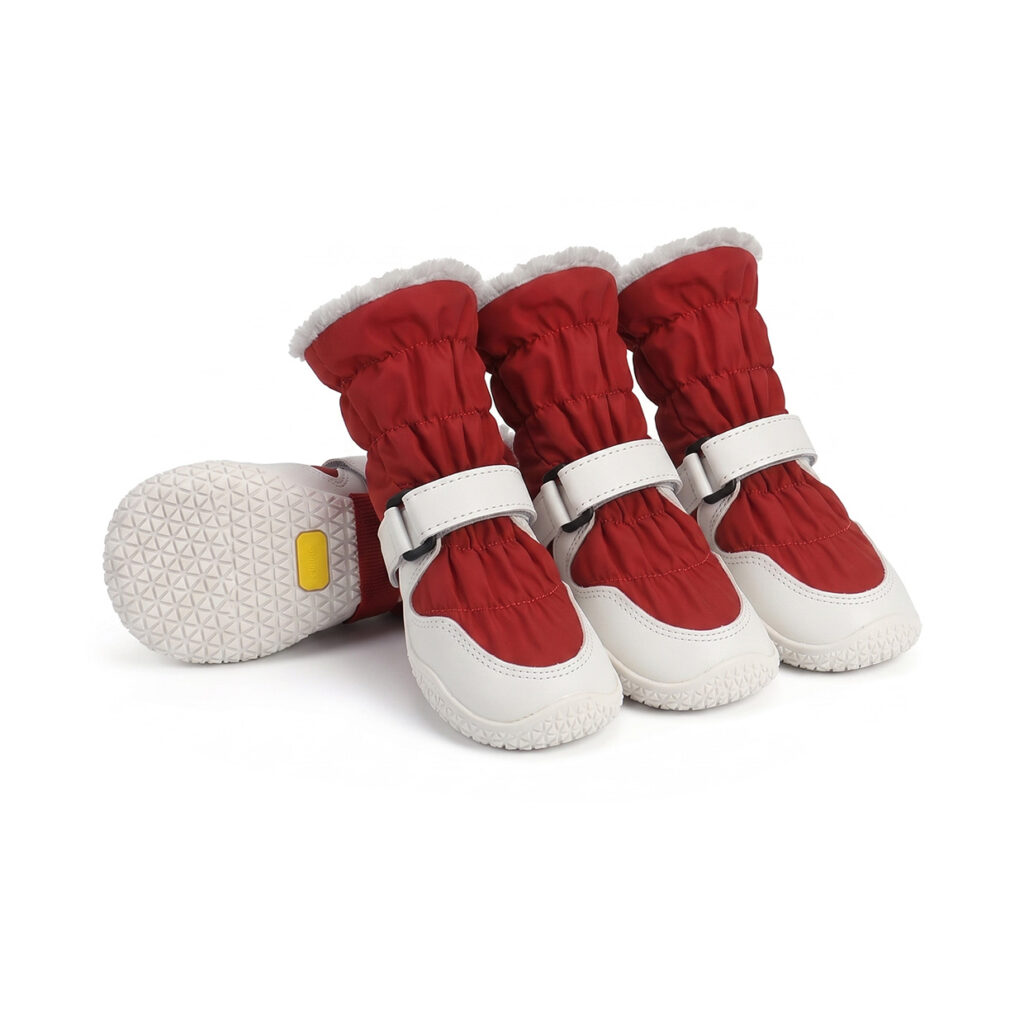
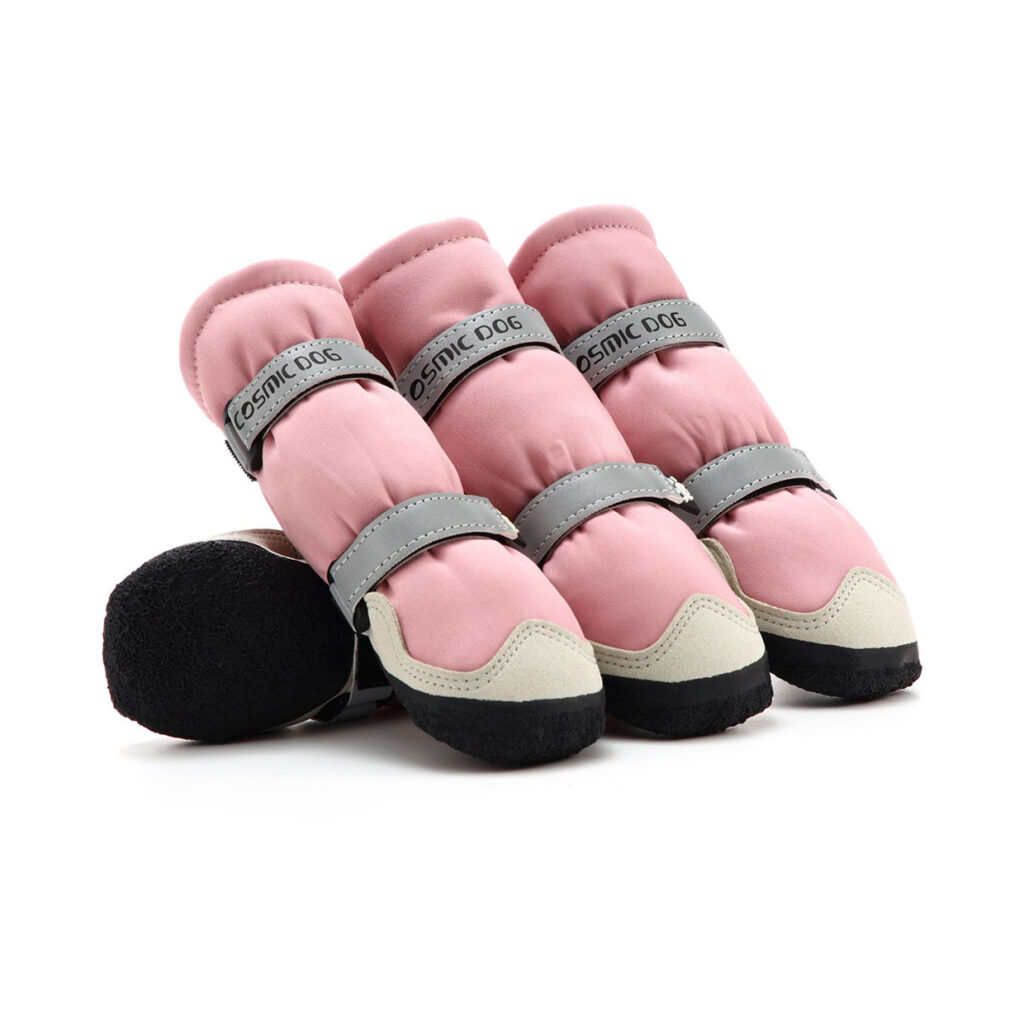
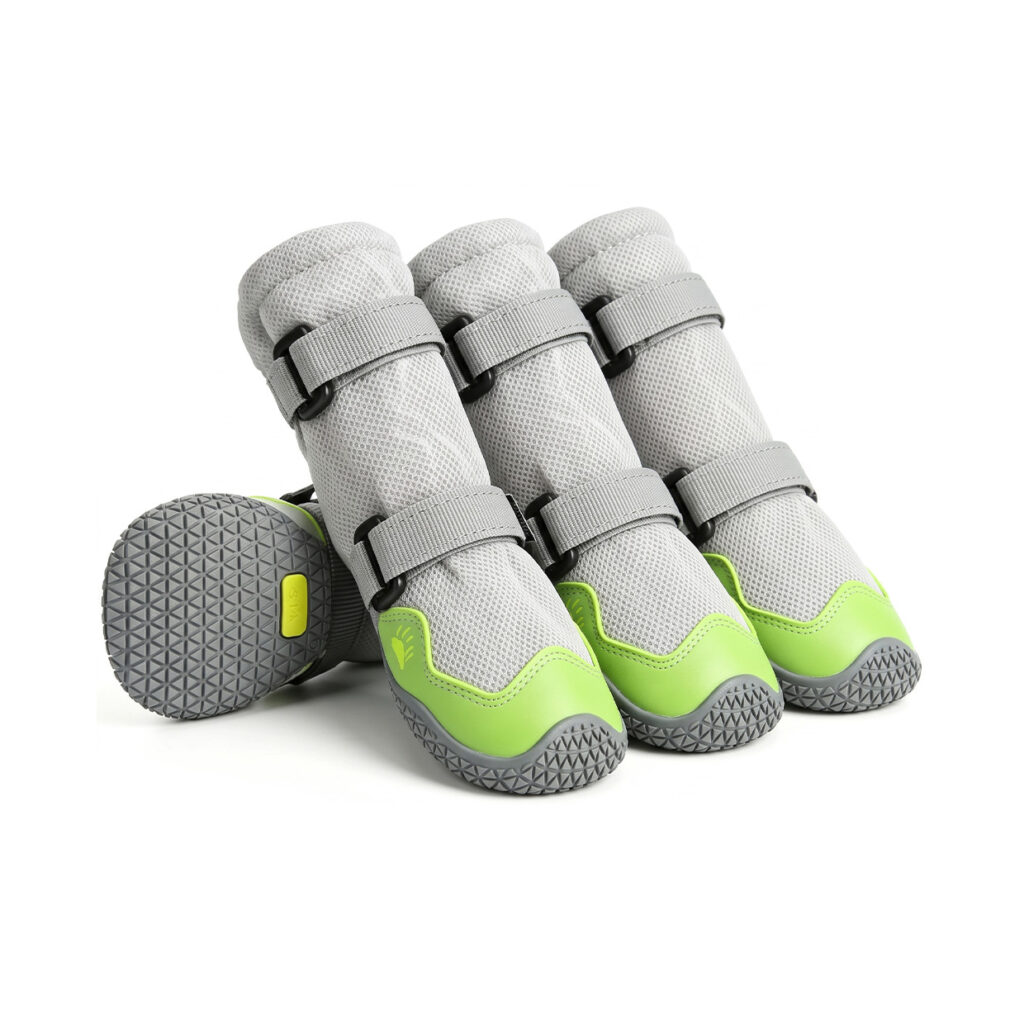
The principle underneath all of this is simple: match the traction to the terrain. Indoor grip socks are all about flexibility and friction, everyday shoes strike a balance between mobility and protection, and hiking boots exist purely to maximize durability, grip, and physical shielding.
Frequently Asked Questions
Why do senior dogs need anti-slip socks on hardwood floors?
Because aging joints and weaker muscles make slippery floors genuinely dangerous, not just annoying. When a senior dog’s paws slide out from under them, standing up or even holding a steady stance takes way more effort than it used to. Silicone-grip socks add real friction between paw and floor, which takes a lot of that strain off. Just make sure they fit snugly without squeezing — and if your dog suddenly starts struggling to stand or walk, that’s a vet visit, not a sock problem.
Can dogs wear rubber-soled boots inside the house all day?
You really don’t need to. Outdoor rubber boots tend to run heavier, less breathable, and stiffer than what you actually need for a smooth kitchen floor. For all-day indoor wear, a flexible, breathable anti-slip sock handles the slipping problem much better without weighing your dog’s paws down. Save the rugged boots for situations where their extra protection is actually earning its keep.
How thick should dog boot soles be for rugged hiking?
There’s no magic number that works across every dog and every trail. You’ll often see 3–5mm thrown around as a reference point for lightweight hiking boots, but thickness by itself doesn’t guarantee puncture resistance. Material quality, hardness, tread design, and flex zones all matter just as much. For genuinely hazardous terrain, focus on finding a purpose-built protective outsole rather than just grabbing whatever boot looks thickest on the shelf.
What tread pattern provides the best grip on wet surfaces?
Look for multidirectional lugs paired with grooves or channels that let water and debris escape instead of pooling under the paw. That combination keeps multiple contact points engaged even as your dog changes direction. That said, no tread pattern is magic — on seriously wet rock or slick, contaminated flooring, slowing down and choosing a smarter route still matters, even with good traction boots on.
How do I know if my dog’s boots have worn-out treads?
Check the outsole regularly, especially if your dog spends a lot of time on rough pavement. Watch for lugs that have gone flat or rounded off, any cracking, layers starting to separate, or large chunks of the original tread pattern simply gone. To prevent dried mud and debris from grinding down the rubber prematurely, follow our tutorial on how to clean dog shoes safely and maintain tread grip. Once a sole is physically worn flat and can’t grab the surface it’s meant for, it’s time to replace it.
Unlock Superior Grip & Puncture Defense for Every Surface!
Whether your senior dog needs steadier footing on slippery hardwood or your trail companion needs real protection against sharp, unpredictable terrain, the right sole architecture makes all the difference.
Explore our collection of Anti-Slip Indoor Socks, flexible Everyday Shoes, and heavy-duty Lug-Sole Boots — built for different surfaces, different activities, and every paw-protection need in between.
Shop Engineered Dog Soles & Traction Collection Now!
