Free Shipping on All Orders | 30-Day Easy Returns
Dog Paw Care 101: Prevent Burned, Cracked & Salted Paws
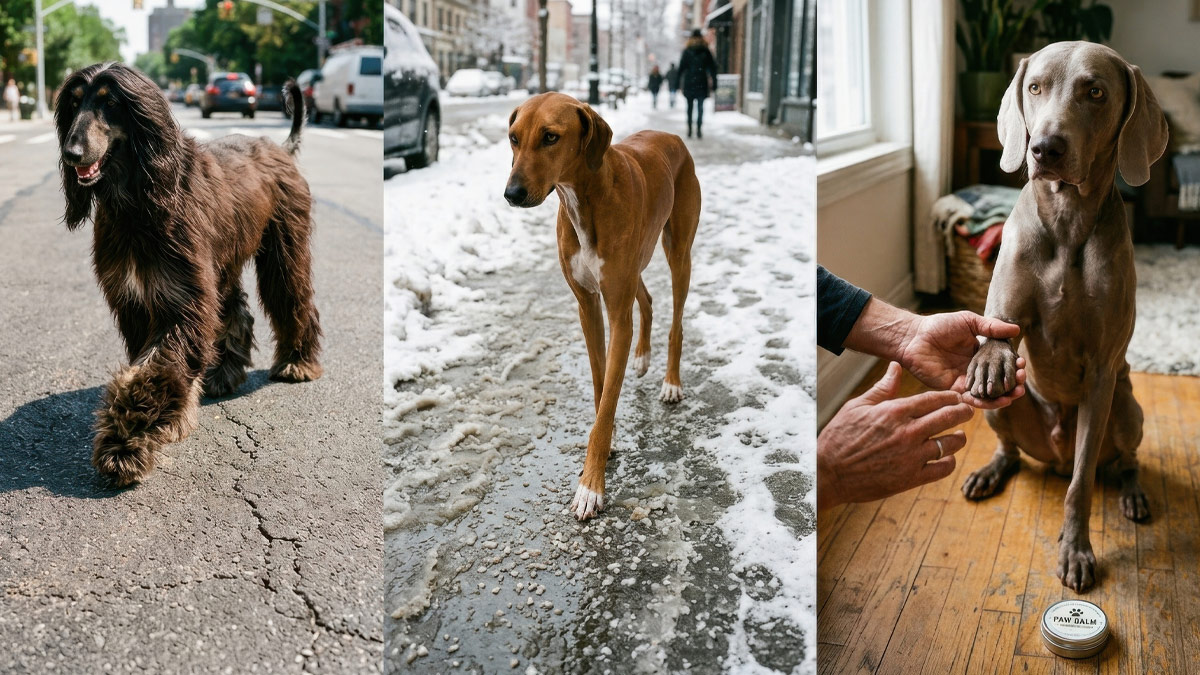
Table of Contents
Ask any longtime dog owner what surprised them most about paw care, and a lot of them will say the same thing: they had no idea how much abuse those little pads take on a daily basis. Essential dog paw care isn’t some optional extra — it’s genuinely foundational to keeping your dog comfortable, mobile, and pain-free through every season. Paw pads are tough, built for a lifetime of walking, but the environments we walk our dogs through now — hot city sidewalks, salted winter streets, gravel trails, bone-dry indoor air — push past what natural protection was ever designed to handle.
Scorching asphalt, toxic de-icing salt, sharp trail debris, dry indoor conditions — all of it adds up over a season, and the result is often burned pads, painful cracking, irritation, or a dog who’s suddenly reluctant to walk. Keeping paws healthy really comes down to a mix of things: daily habits, proper cleaning, the right moisturizing products, and knowing when protective gear actually earns its keep.
This guide walks through the seasonal dangers your dog’s paws face, the daily inspection habits worth building into your routine, prevention methods that actually work, and how to pick the right protective footwear depending on what your dog is walking through.
The Hidden Hazards to Your Dog’s Paw Pads
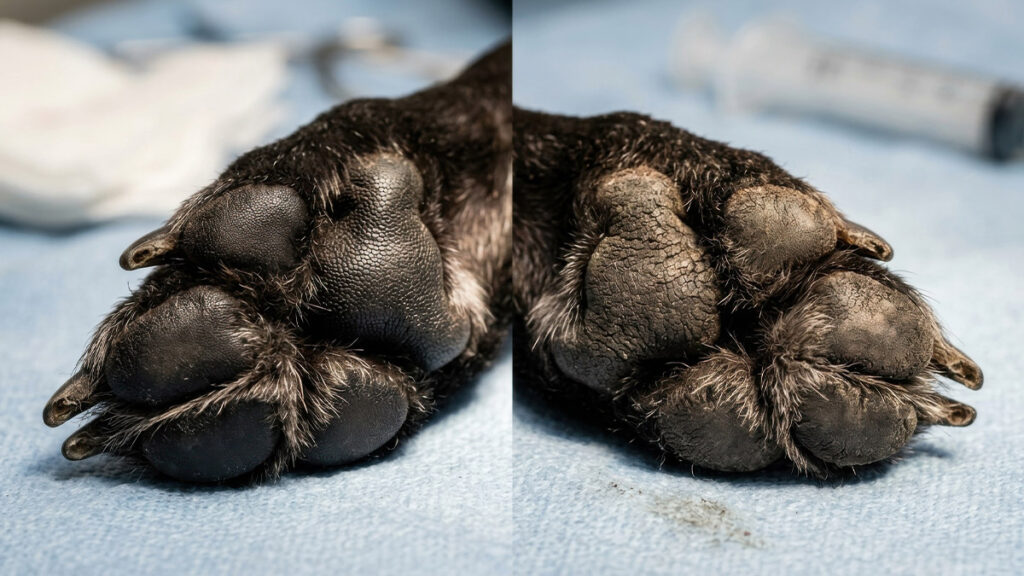
Paw pads are made of thick, layered connective tissue — nature’s version of a shock absorber, built to handle rough ground and provide grip. But “tough” has limits, and heat, cold, and chemical exposure all chip away at that natural defense over time.
Healthy paw pads should feel firm but still have some give to them — a little springy, not rock-hard or leathery. When they’re pushed past their limit by harsh conditions, you’ll start seeing dryness, cracking, burns, or chemical irritation show up on the surface.
A few of the most common culprits behind paw damage:
- Extreme heat: Hot pavement transfers heat directly into the pad tissue, and it doesn’t take long for that contact to cause an actual thermal burn.
- Freezing temperatures: Ice crystals and frozen ground create sharp pressure points and can cause small cuts or painful irritation.
- Chemical exposure: Rock salt and de-icing chemicals dry out paw tissue fast, and in bad cases, can chemically burn it.
- Rough terrain: Gravel, sharp rocks, and trail debris cause small nicks and scrapes that seem minor at first but tend to worsen with repeated exposure.
Protecting dog paw pads matters for every dog, but it’s especially important for active dogs putting in serious mileage, senior dogs with thinner, less resilient pads, and breeds known for having more sensitive feet.
That risk climbs fast on sharp scree or technical trail terrain, where hidden debris turns a routine hike into a real hazard. This is exactly where dog hiking boots for rocky trails earn their keep — creating a physical barrier between the pad and whatever’s hiding in the dirt, before a scrape or puncture ever gets the chance to happen.
Beyond environmental hazards, poorly fitted footwear can also cause physical irritation—learn how to stop dog boots from rubbing paws, chafing, and causing blisters before heading out.
VCA Animal Hospitals’ guidance on paw burns and injury symptoms is a solid resource if you want to understand exactly what a burn injury looks like versus normal wear.
Summer Dog Paw Care: Stopping Hot Asphalt Burns
Summer heat quietly causes more paw injuries than most owners expect — and the reason is that pavement temperature and air temperature aren’t nearly as connected as they seem.
Dark asphalt soaks up sunlight and holds onto that heat, often running dramatically hotter than the air above it. So a walk that feels pleasant on a summer evening — 80 degrees, maybe a light breeze — can still mean pavement hot enough to blister a paw within minutes. That gap between “feels fine to me” and “actually safe for my dog” is exactly what catches owners off guard.
Learning how to protect dog paws from hot pavement starts with a habit, not a product — knowing how to check the ground before you even clip on the leash.
The 7-Second Pavement Rule
This one’s simple, and every dog owner should have it memorized.
Press the back of your hand flat against the pavement and hold it there for seven seconds.
If it’s uncomfortable for your skin — if you’re pulling your hand away before the seven seconds are up — it’s too hot for your dog’s paws. Full stop.
Here’s the part that trips people up: dogs don’t always pull back the moment it hurts. Some will keep walking through real discomfort simply because they want to keep up with you or chase whatever caught their attention, and by the time you notice a limp, the damage is already done.
Summer Paw Protection Strategies
A few small habit changes go a long way here.
Walk during cooler hours. Early morning or after sunset, when the pavement has had time to cool. Skip the midday walk on dark asphalt if you can help it — even five minutes on scorching concrete adds up.
Stick to softer ground when you can. Grass, shaded dirt paths, mulch — these all stay noticeably cooler than bare concrete or asphalt, even on the same hot day.
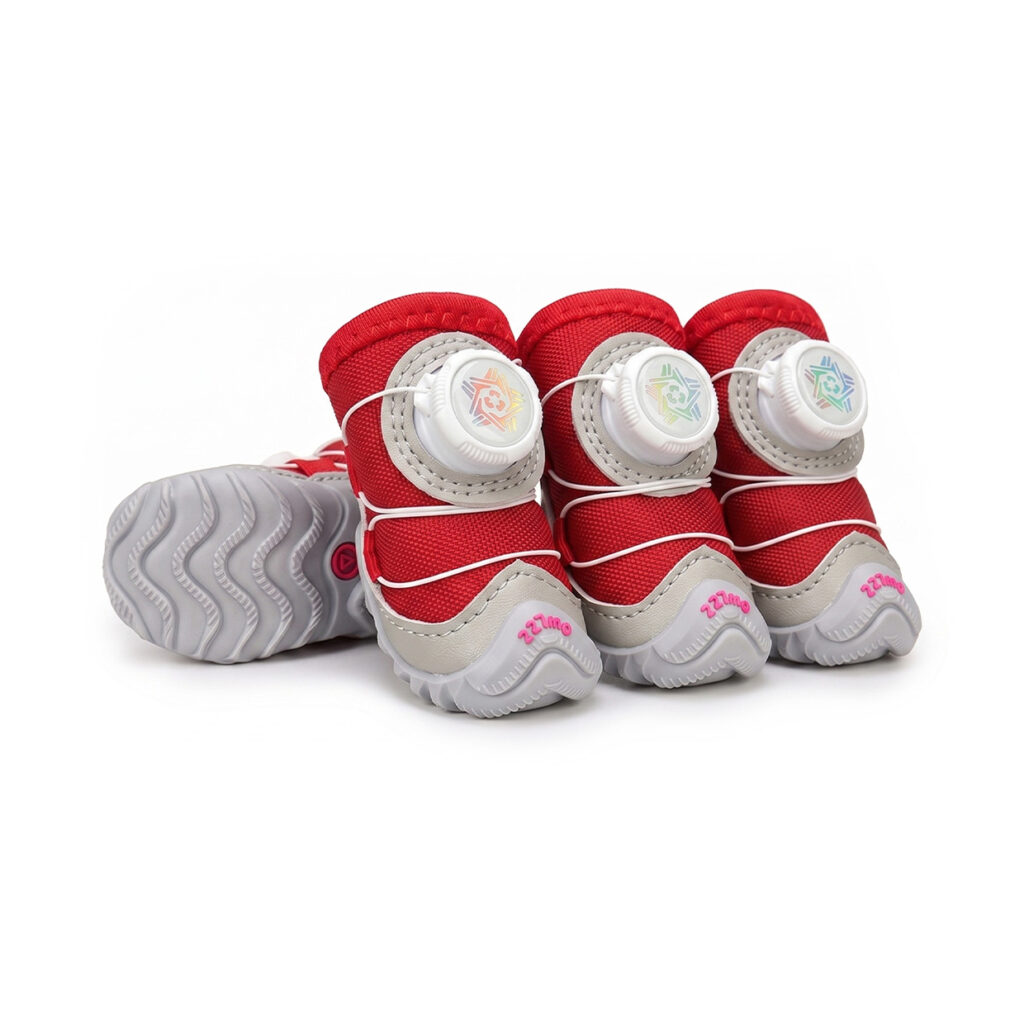
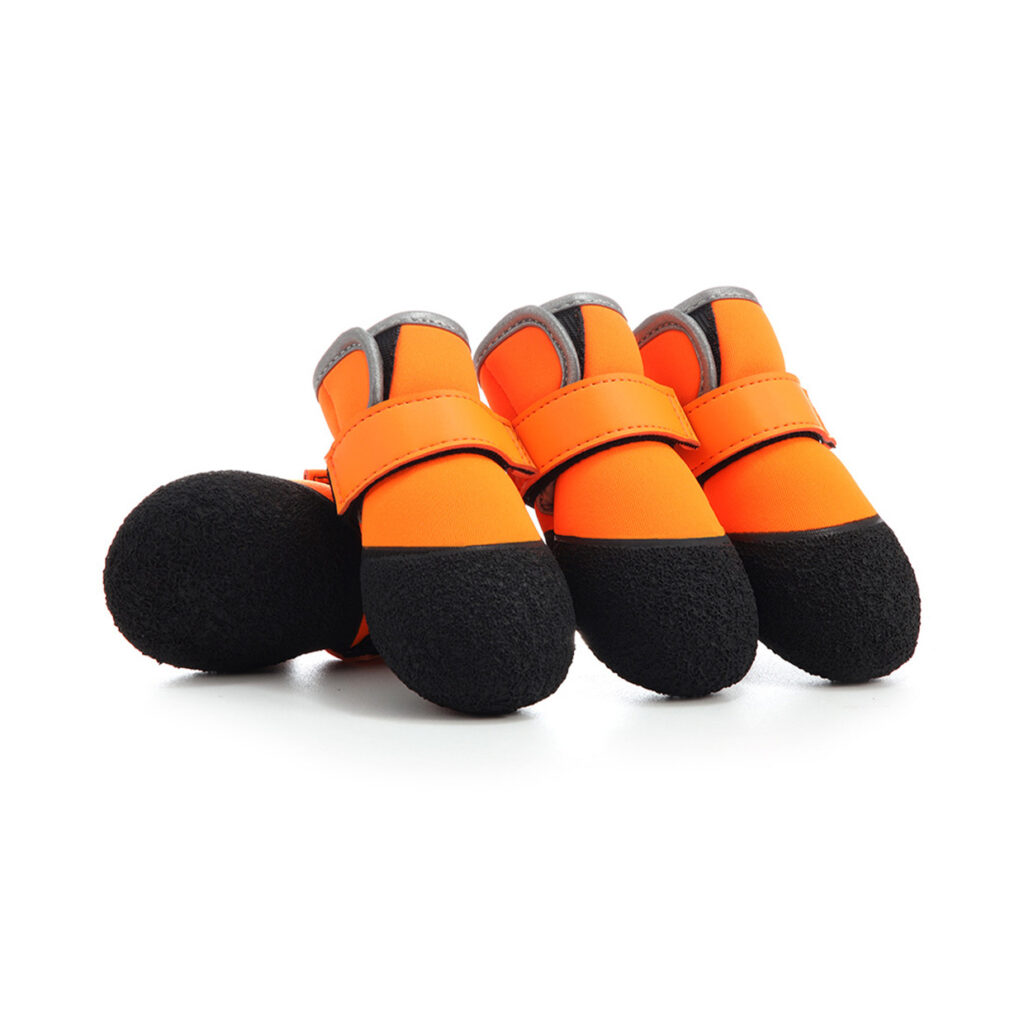
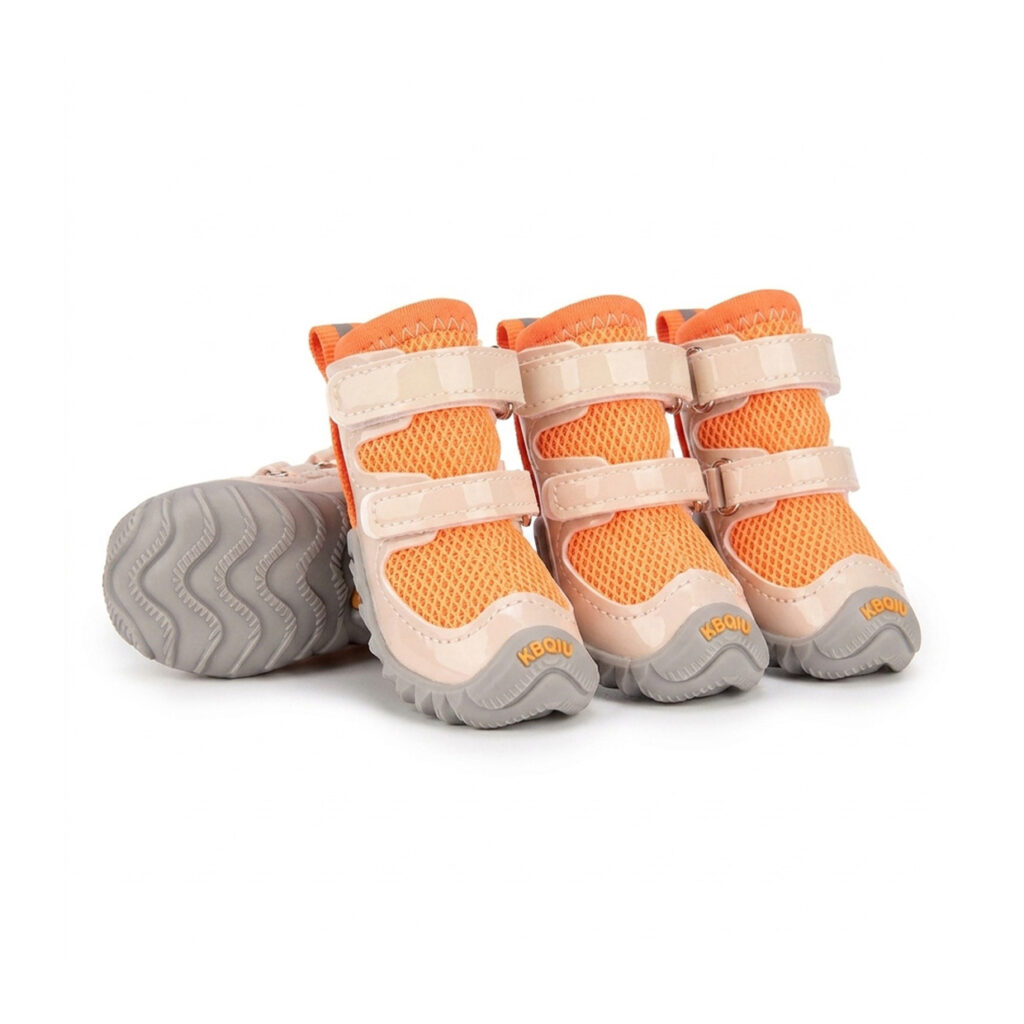
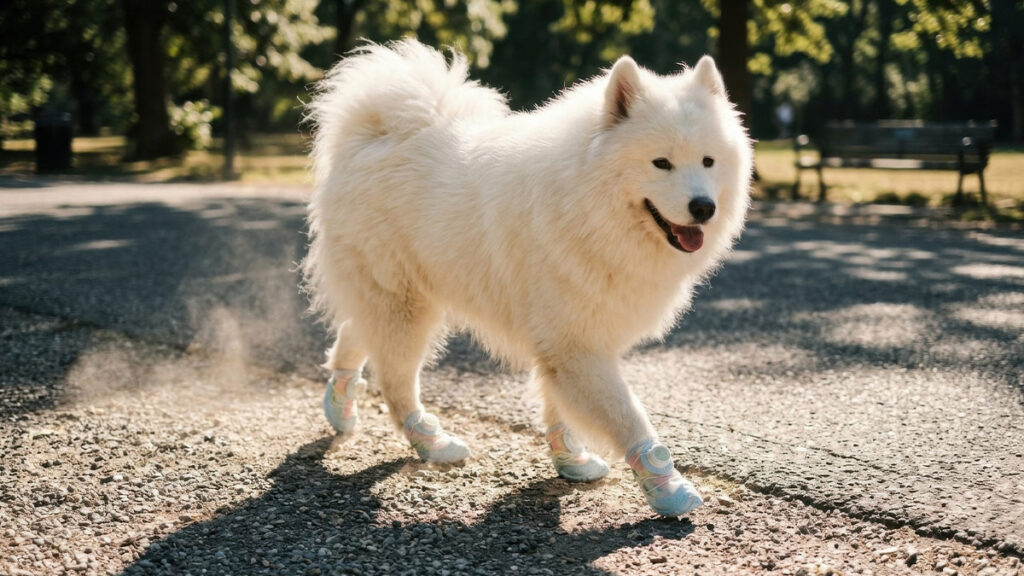
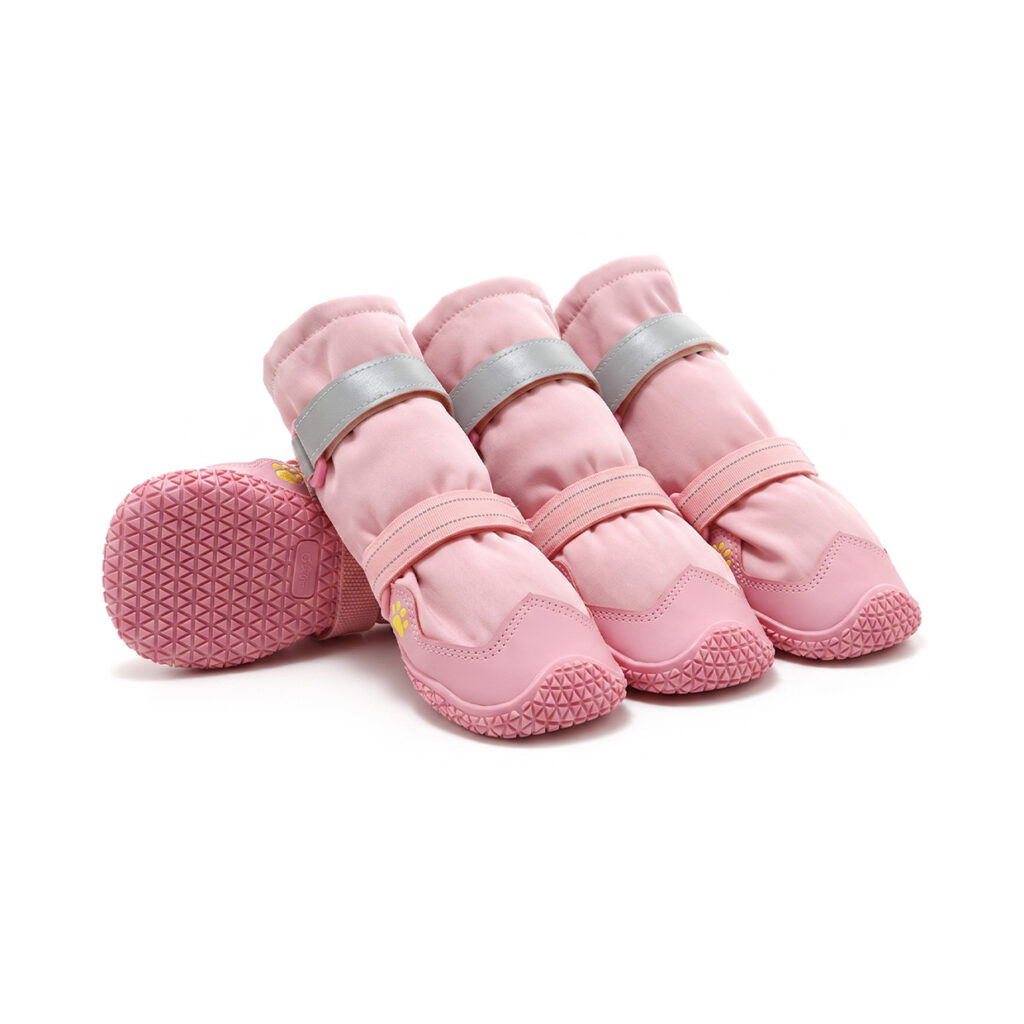
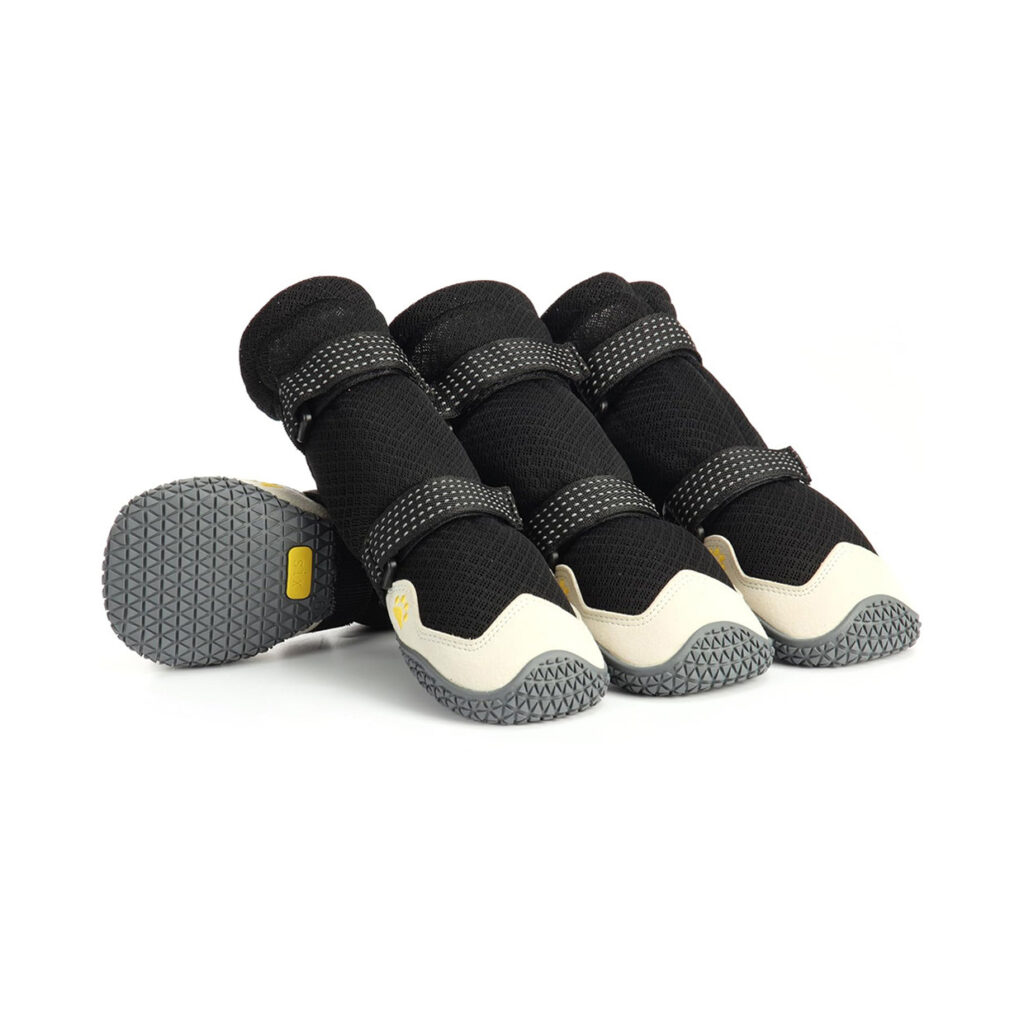
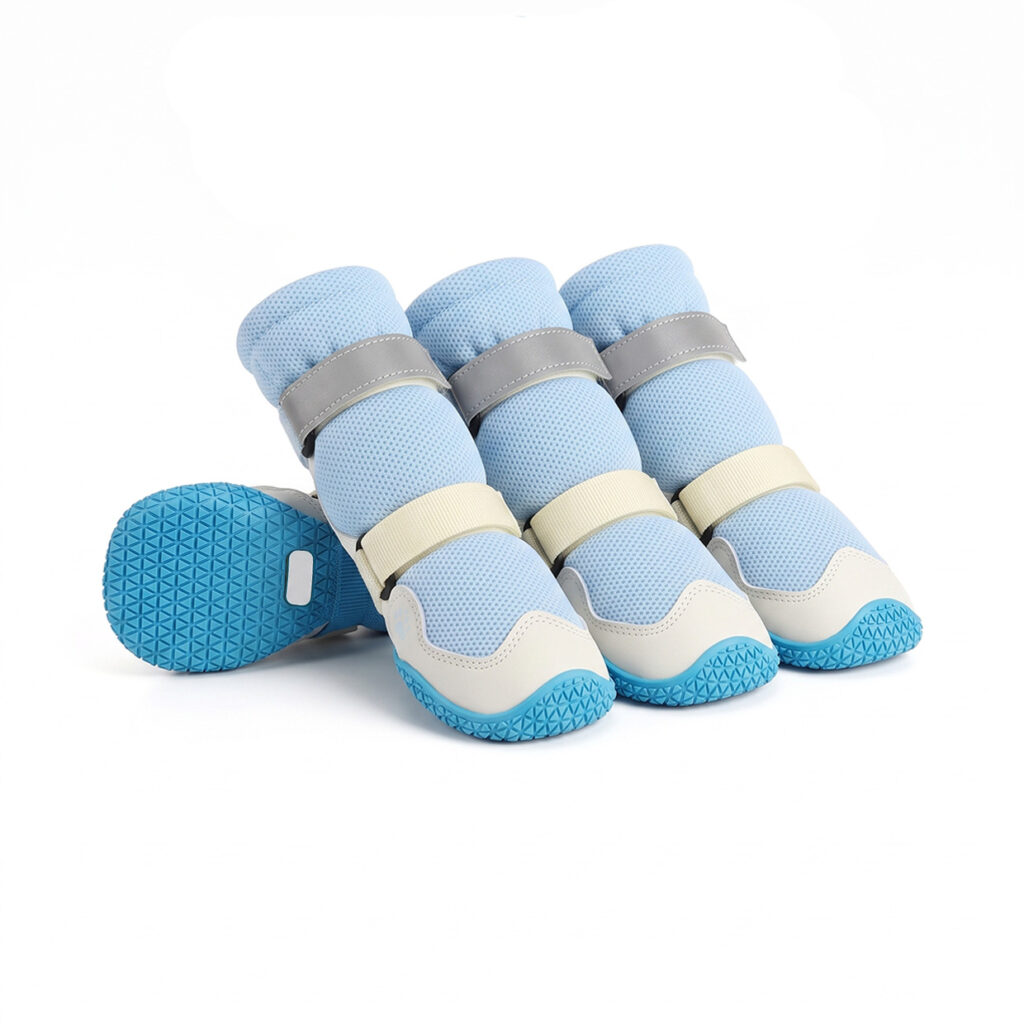
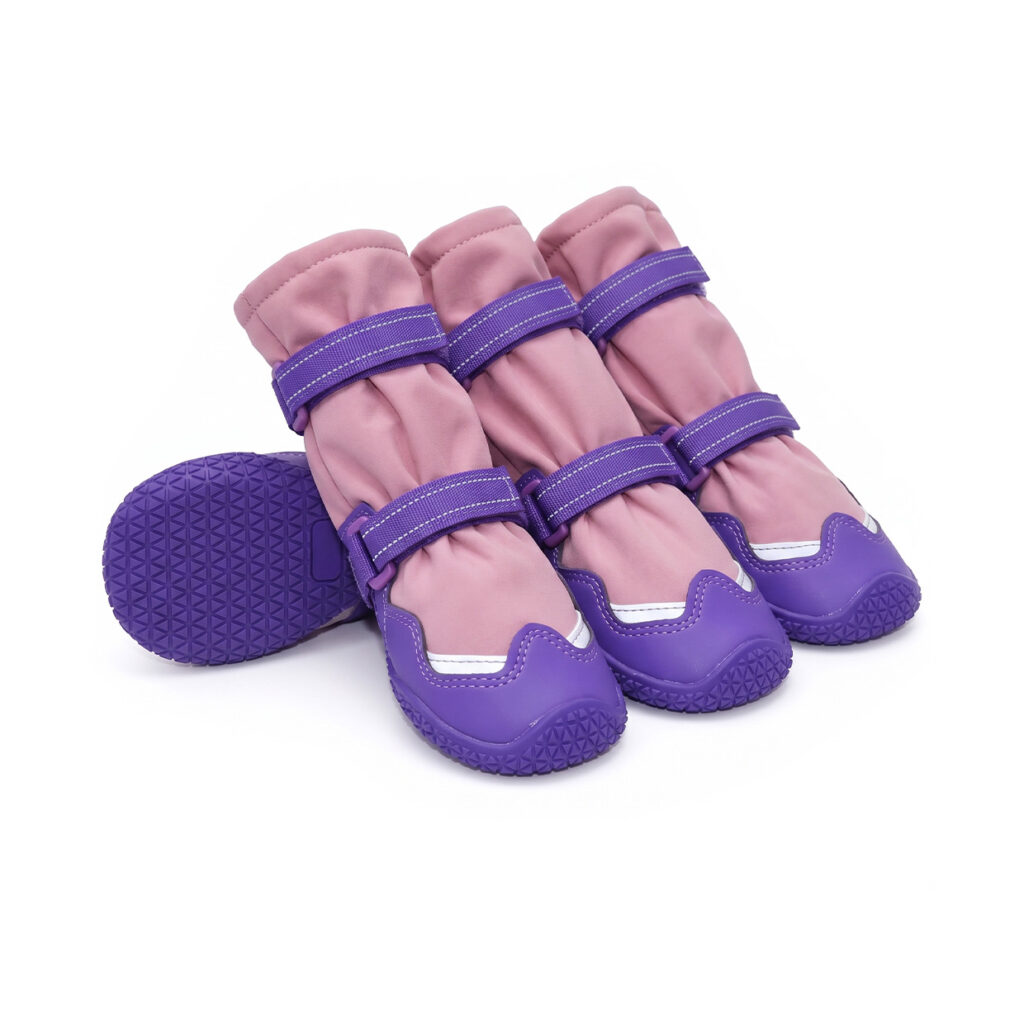
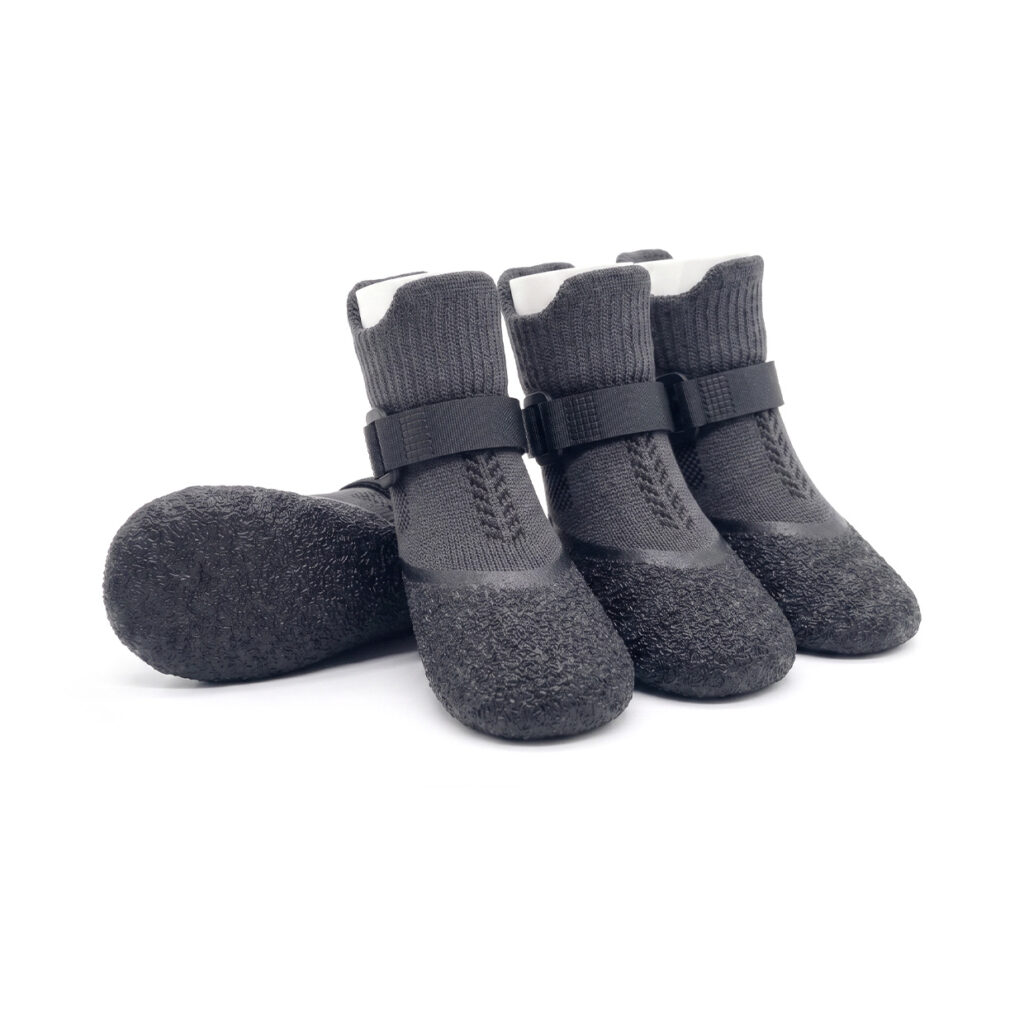
Use protective footwear. A good pair of lightweight shoes creates a real physical barrier between hot ground and sensitive pad tissue. Breathable mesh designs are especially good for summer — they block the heat transfer without turning your dog’s foot into a sweatbox.
If you need help measuring your dog’s feet for summer footwear, follow our step-by-step dog paw measuring guide.
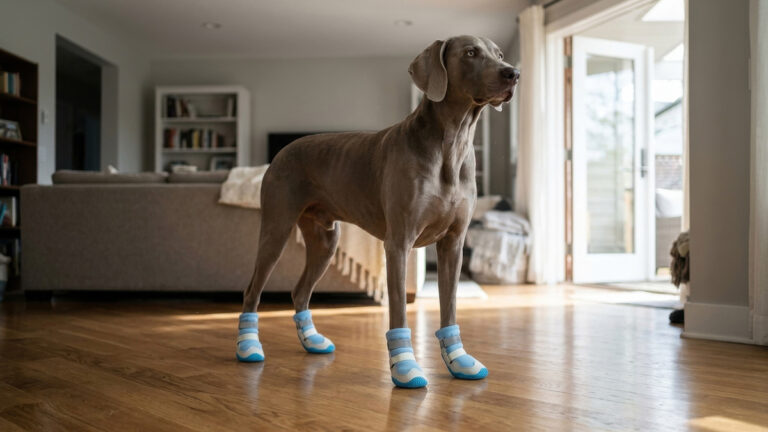
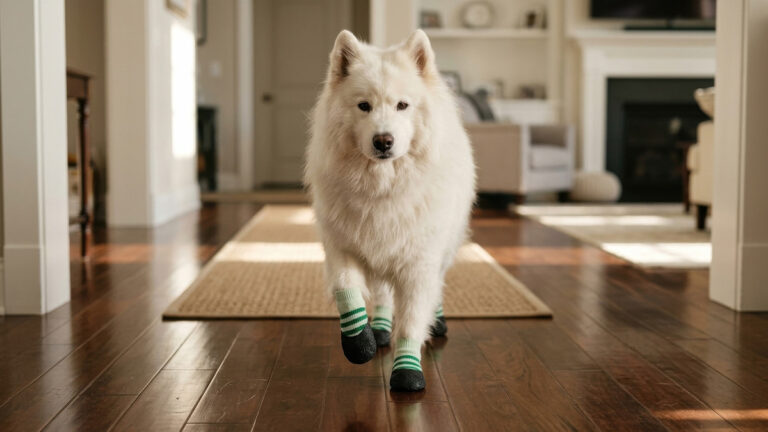
For Warm-weather Protection
Winter Dog Paw Care: Defense Against Ice and De-Icing Salt
Winter flips the script entirely, but it’s every bit as rough on paws. Snow, ice, freezing temps, and the chemical de-icers covering most sidewalks all take their own toll on sensitive tissue.
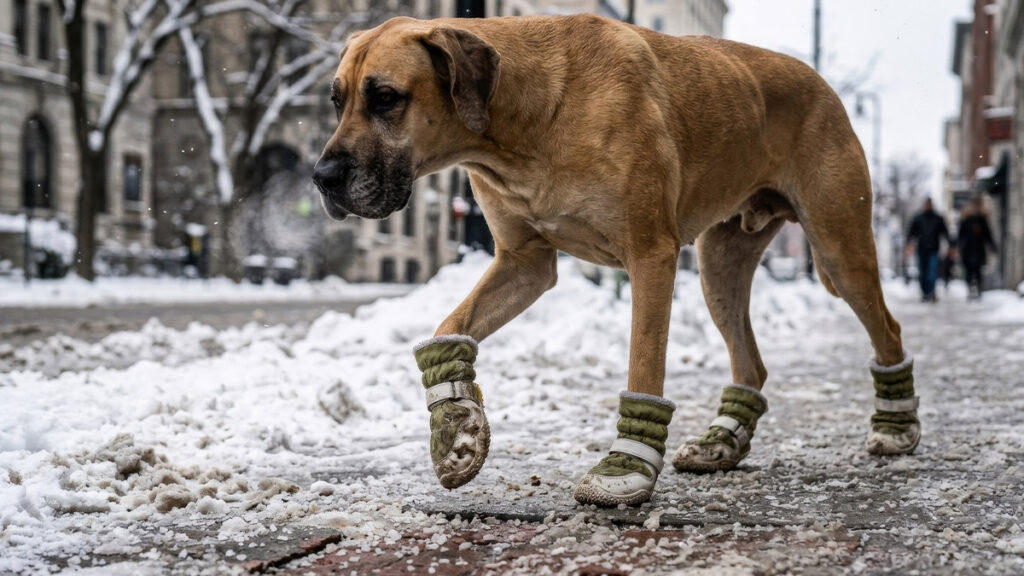
A lot of owners ask about protecting dog paws from winter salt specifically, and the honest answer is that it’s a two-part job: preventing exposure where you can, and cleaning up thoroughly after every walk when you can’t.
Dealing with Toxic Salt and Ice Balls
Rock salt and calcium chloride keep sidewalks from icing over, but they’re rough chemicals, and paw pads take the brunt of it.
Here’s what repeated salt exposure can do:
- Dry out the pad surface
- Trigger irritation and cracking
- Cause outright chemical burns in bad cases
- Turn dangerous fast if your dog licks their paws afterward — that residue doesn’t belong in their mouth
Snow brings its own headache: it packs itself into tight little ice balls between the toes and surrounding fur, and those frozen clumps create real pressure and friction with every step. Watch a dog dealing with ice balls and you’ll usually see them start limping or awkwardly shaking a paw mid-walk — that’s the tell.
After every winter walk, run through this quick check:
- Check between the toes for anything trapped there.
- Clear out any visible ice or salt residue.
- Rinse with lukewarm water if there’s noticeable buildup.
- Dry the paws completely — damp paw fur in freezing temps is its own problem.
The ASPCA’s winter pet safety guidance on de-icing salts covers this in more depth if you want the full picture on chemical exposure risks.
Winter Paw Protection Essentials
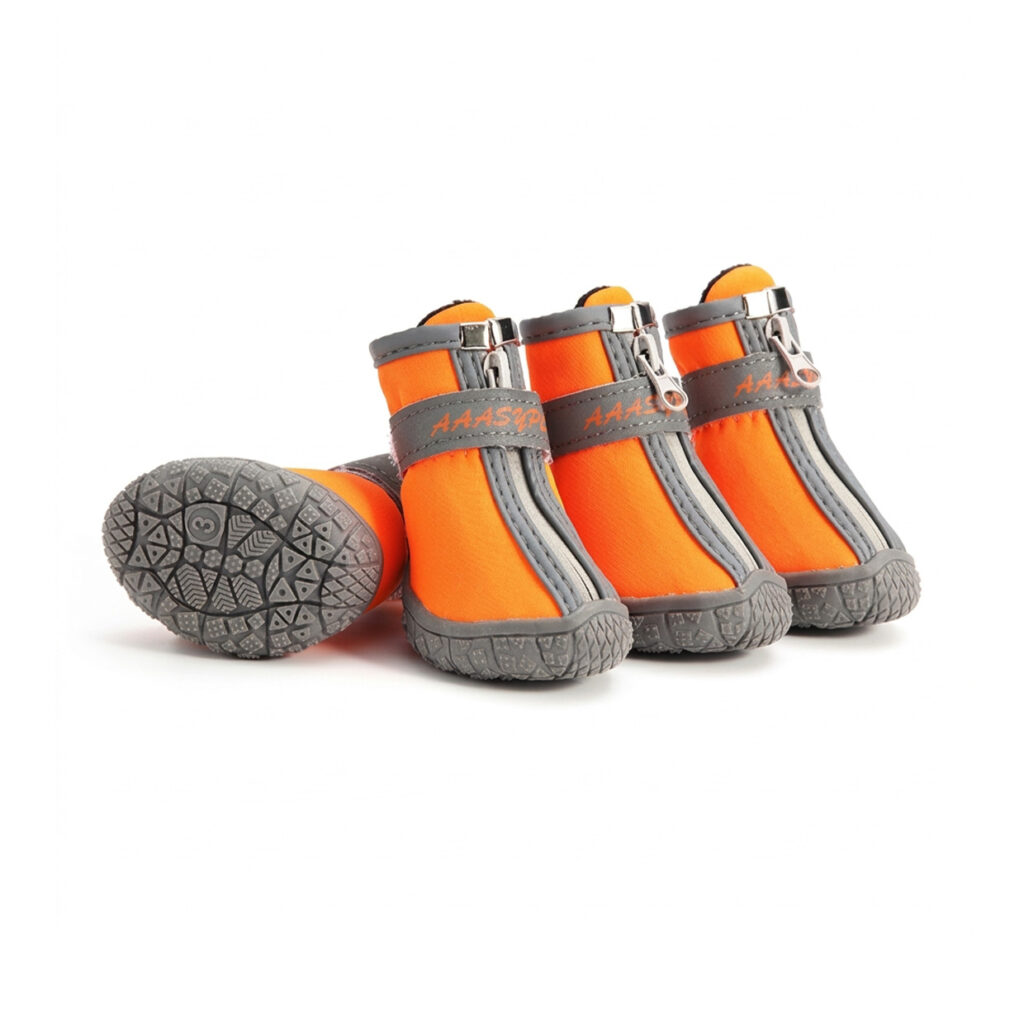
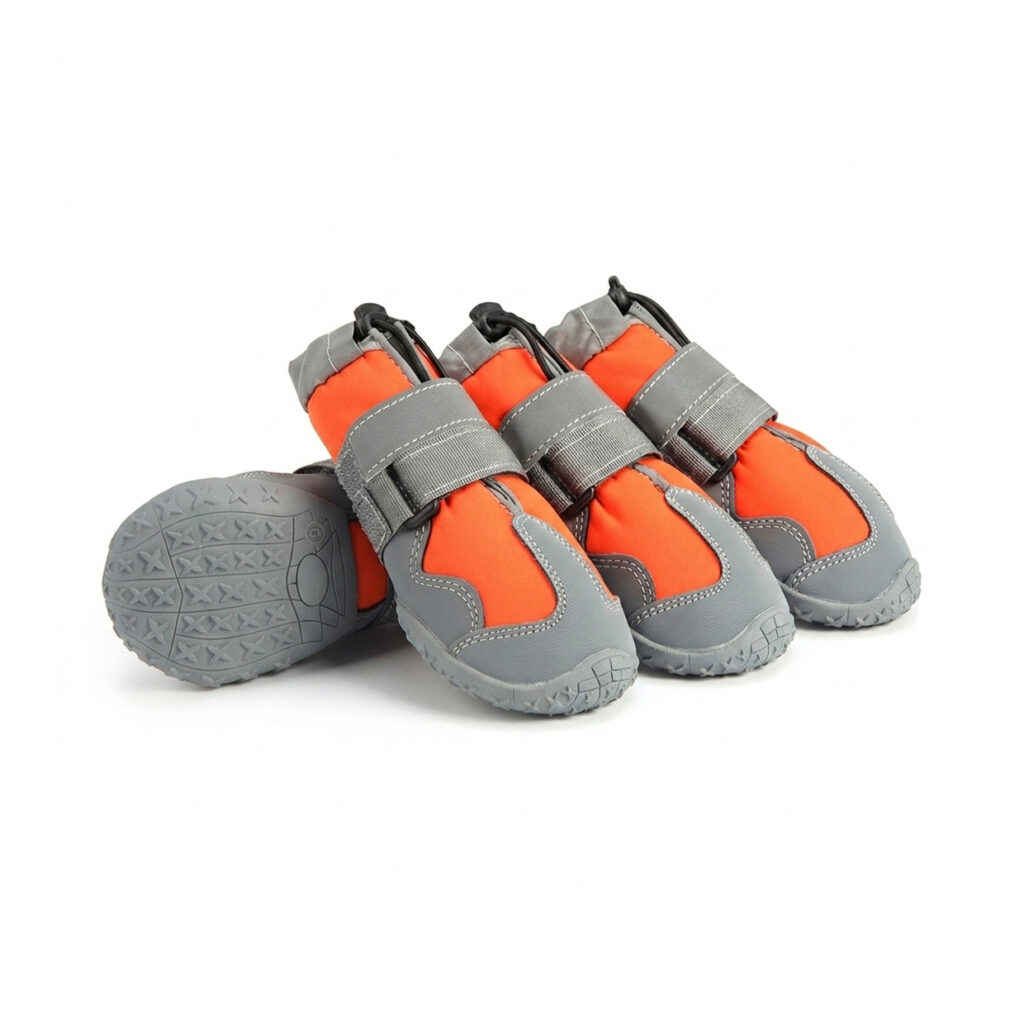
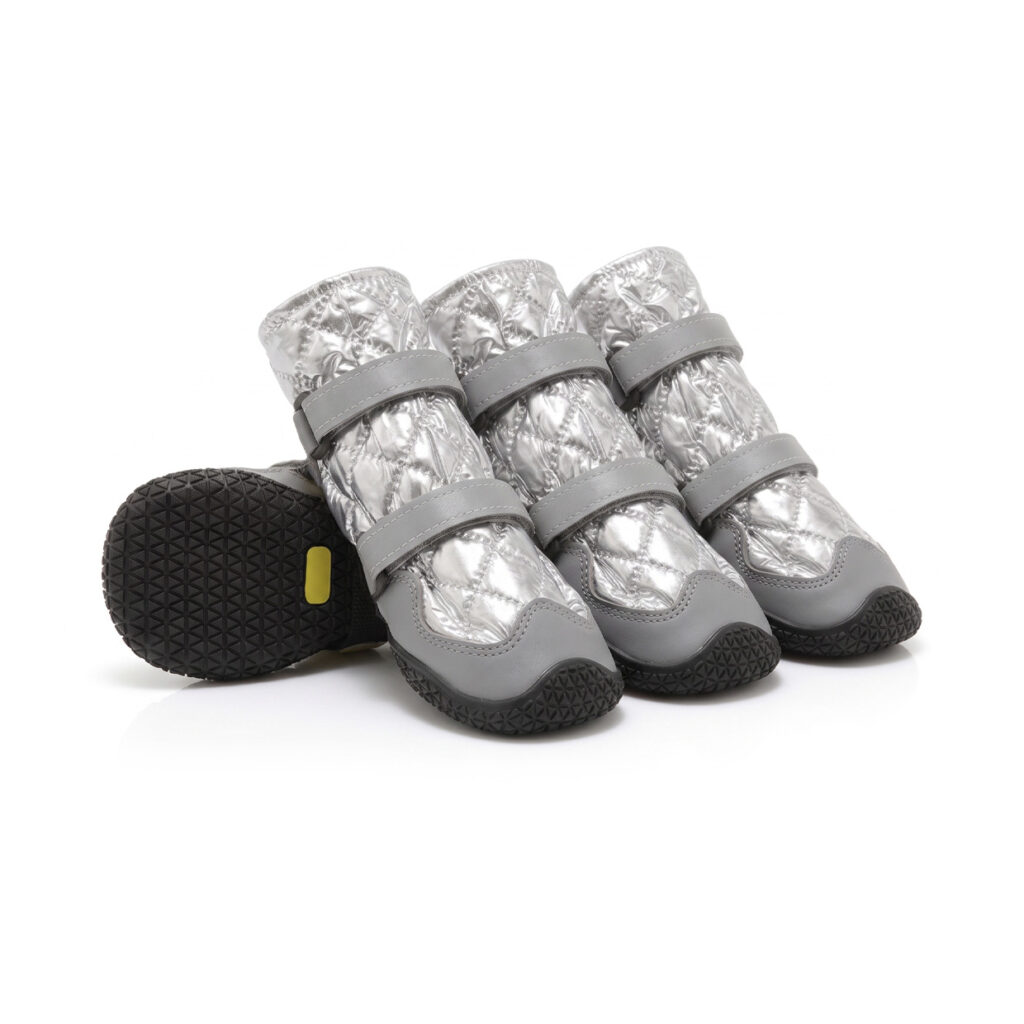
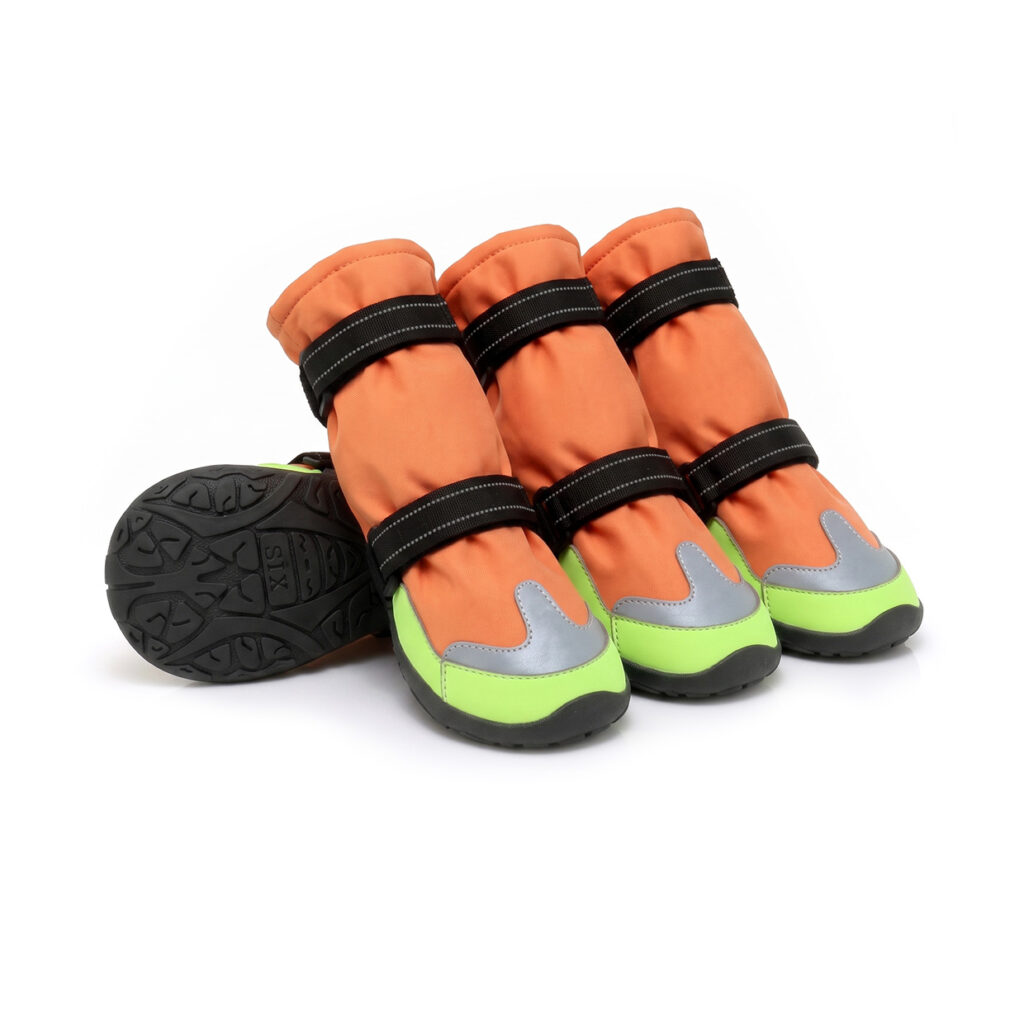
When conditions get genuinely harsh, a good pair of boots earns its price tag fast.
Look for these features in winter footwear:
- Waterproof outer shell
- Insulated lining for warmth
- Thick, grippy rubber soles
- A fastening system that stays secure without cutting off circulation
Solid winter boots do double duty — they block the cold and keep chemical residue off the pad entirely, which honestly makes the after-walk cleanup a lot easier too.
To learn more about choosing between summer shoes, winter boots, or indoor socks, check out our dog paw wear selection guide.
For Extreme Weather Protection
How to Treat and Prevent Cracked Dog Paw Pads
Dry, cracked pads show up constantly, especially as the seasons shift and humidity levels swing. Knowing how to treat cracked dog paw pads means tackling two things at once — soothing what’s already damaged and building habits that stop it from happening again.
Keep Paw Hair Trimmed
Long hair growing between the pads acts like a magnet for everything you don’t want trapped against your dog’s skin — dirt, tiny ice fragments, gravel, trapped moisture.
A regular trim keeps that area cleaner and stops debris from working its way in and causing irritation you might not notice until it’s already uncomfortable for your dog.
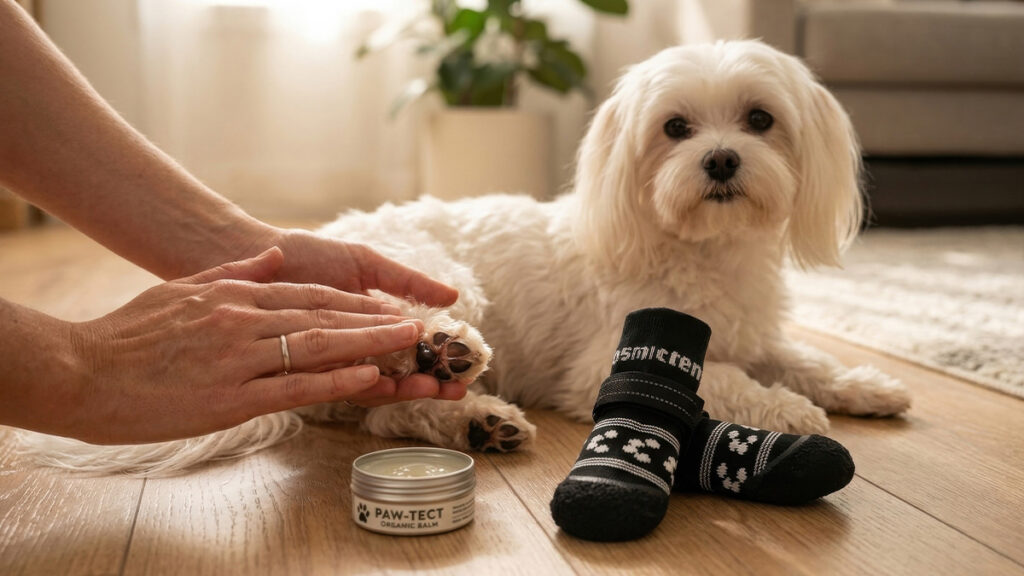
Apply a Pet-Safe Paw Balm
A good paw balm rebuilds moisture and helps restore the pad’s natural protective layer, especially after a rough season of heat or salt exposure.
Look for pet-formulated balms containing:
- Shea butter
- Beeswax
- Coconut-derived oils
Skip anything made for human skin — a lot of those products contain fragrances or preservatives that aren’t a great idea for a dog who’s inevitably going to lick their own feet within the hour.
The ASPCA’s recommendations for pet-safe topical products are worth a look before you pick a balm off the shelf.
As dogs age, severe dry pads and hyperkeratosis can cause a total loss of natural grip. Learn about the best methods to increase paw friction for senior dogs to help them stand and walk confidently on slick surfaces.
Protect Paws Indoors Too
It’s easy to assume paw problems are strictly an outdoor issue, but indoor environments play a role too. Dry indoor air — especially with heating running all winter — contributes to pad dryness, and slippery flooring adds its own strain, pushing joints and muscles to compensate for lost traction with every step.
Don’t ignore indoor hazards; learn how to prevent dogs from slipping on hardwood floors to avoid joint injuries.
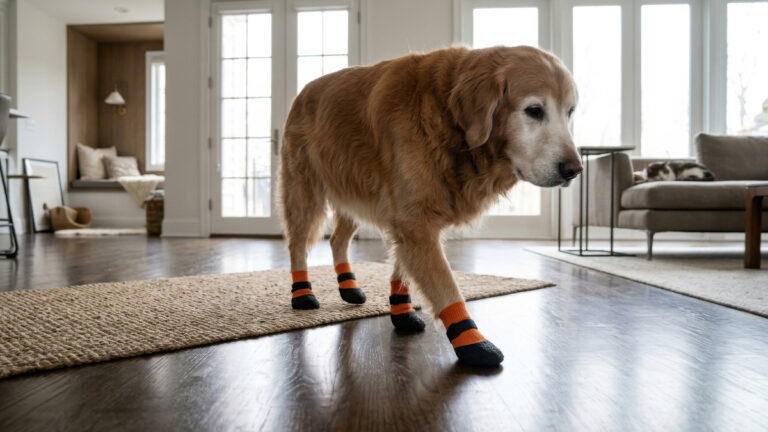
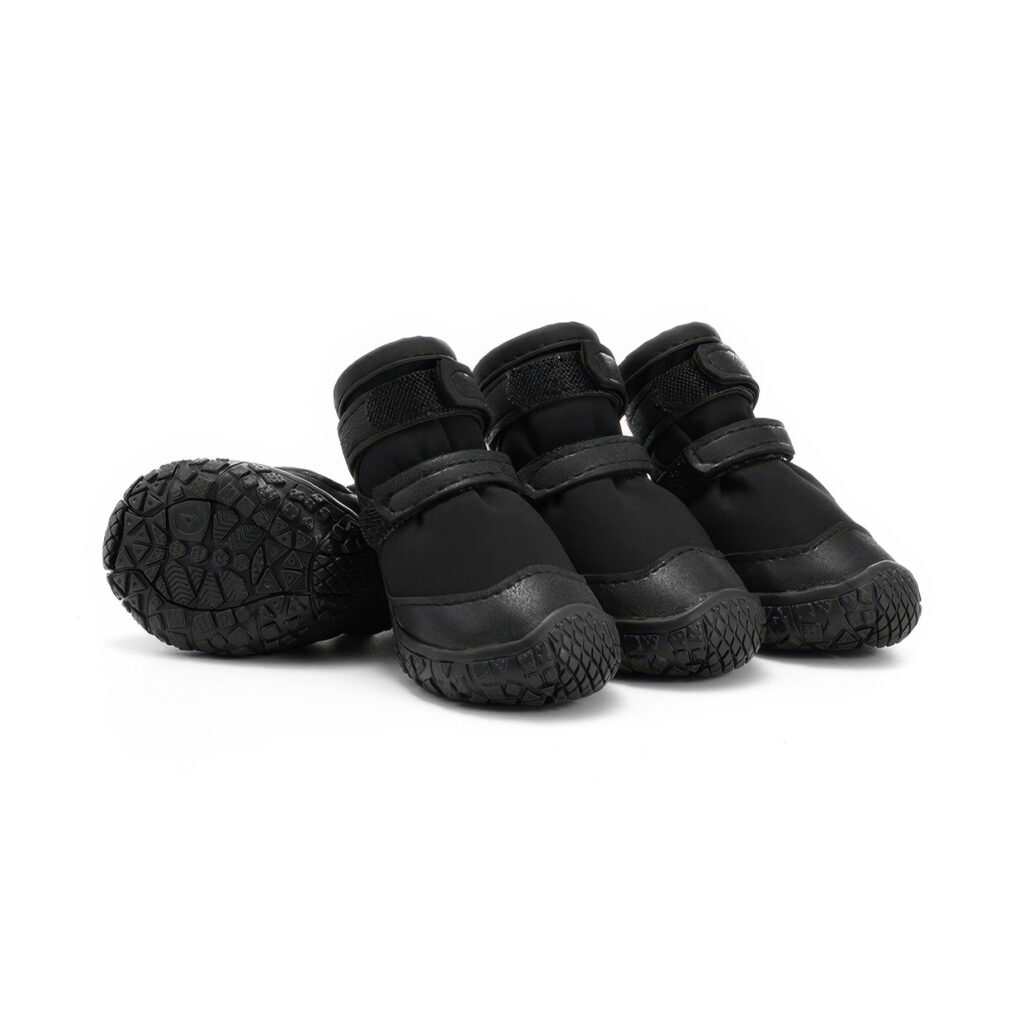
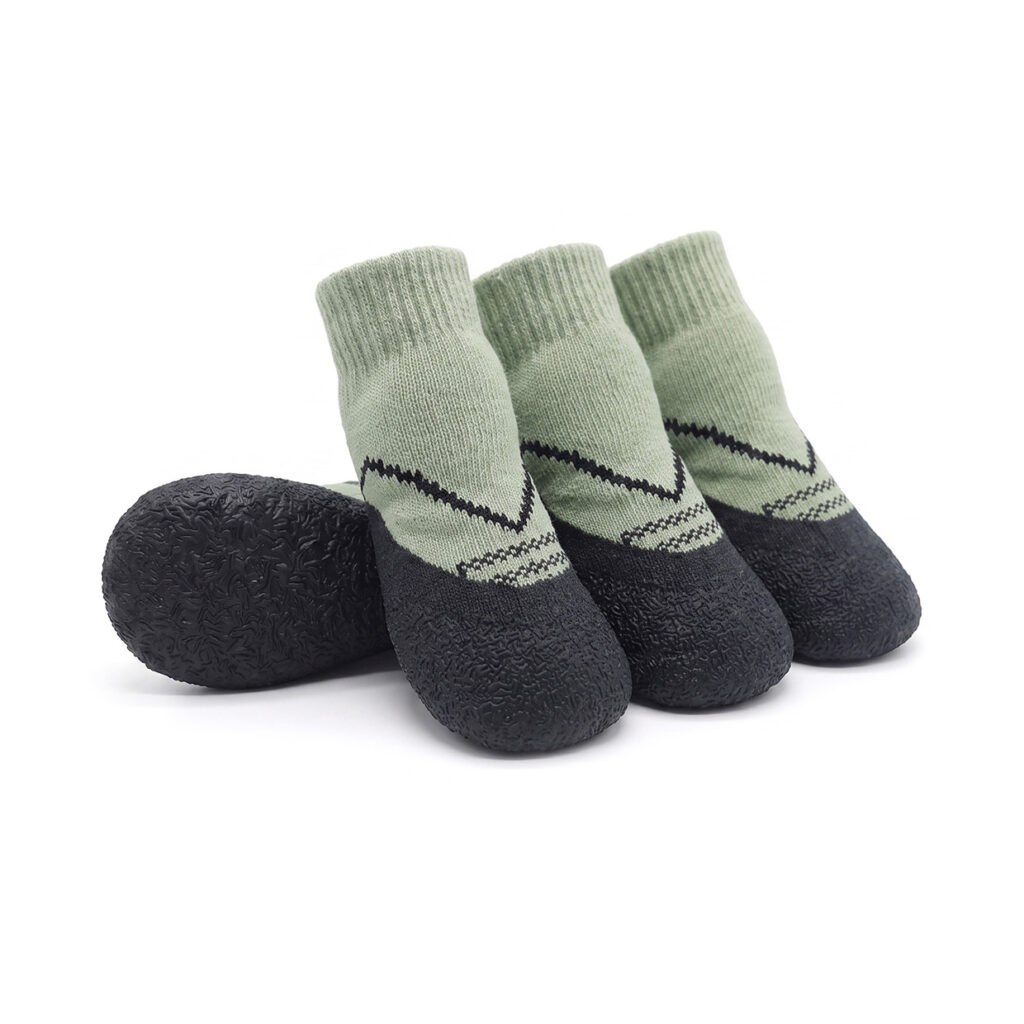
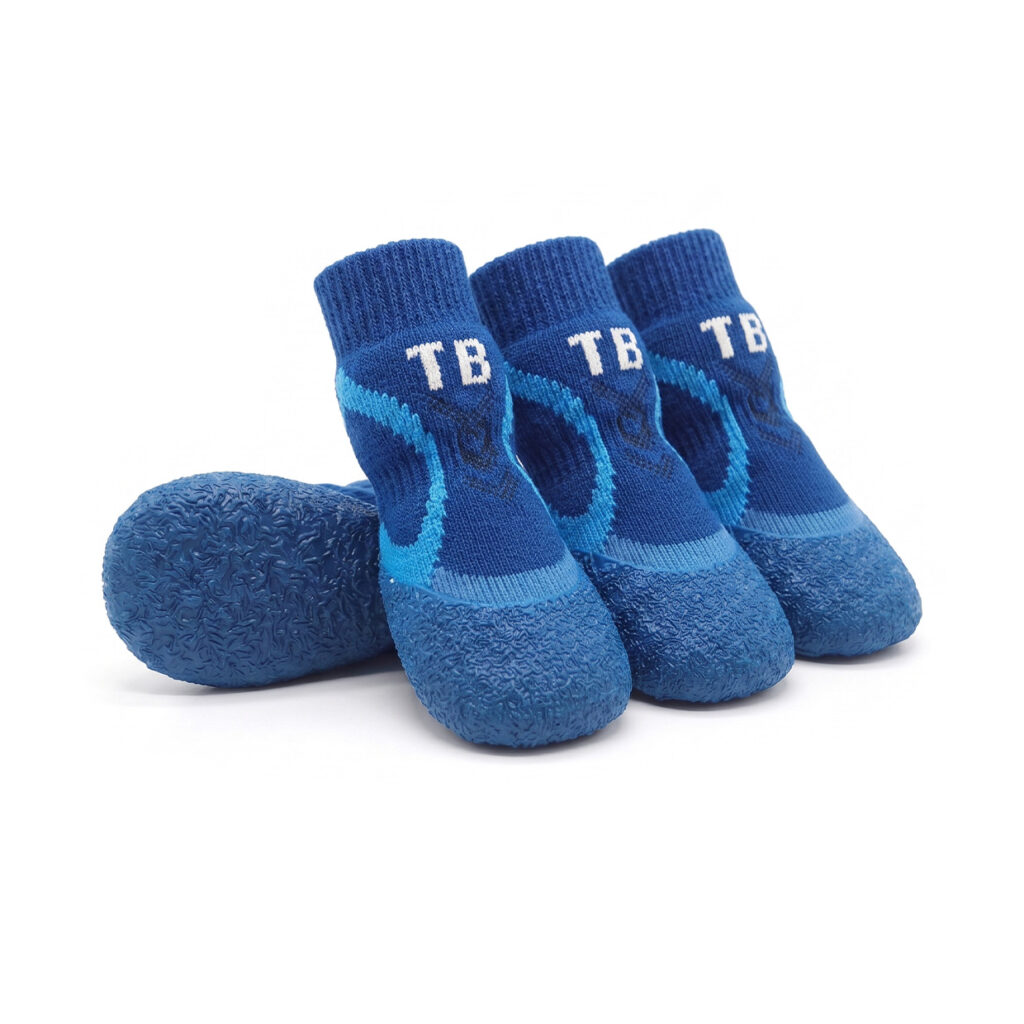
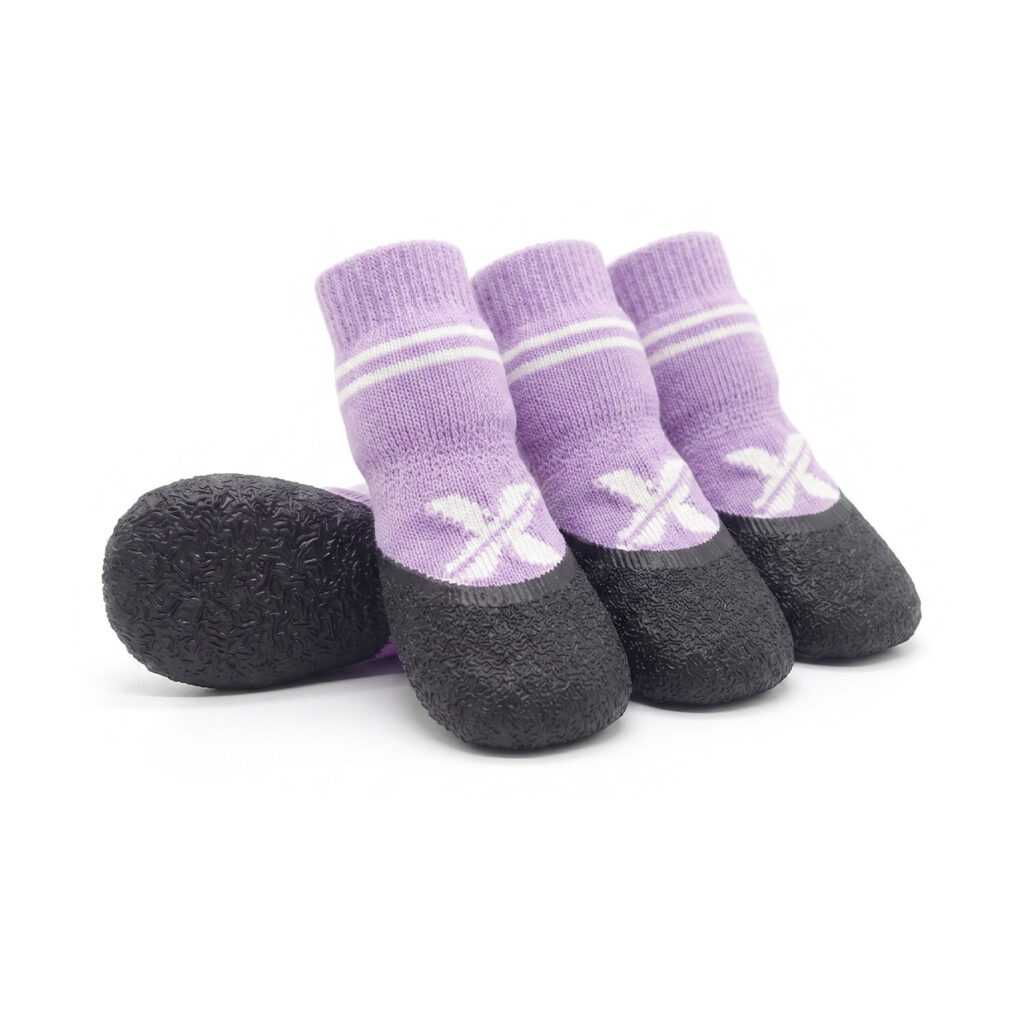
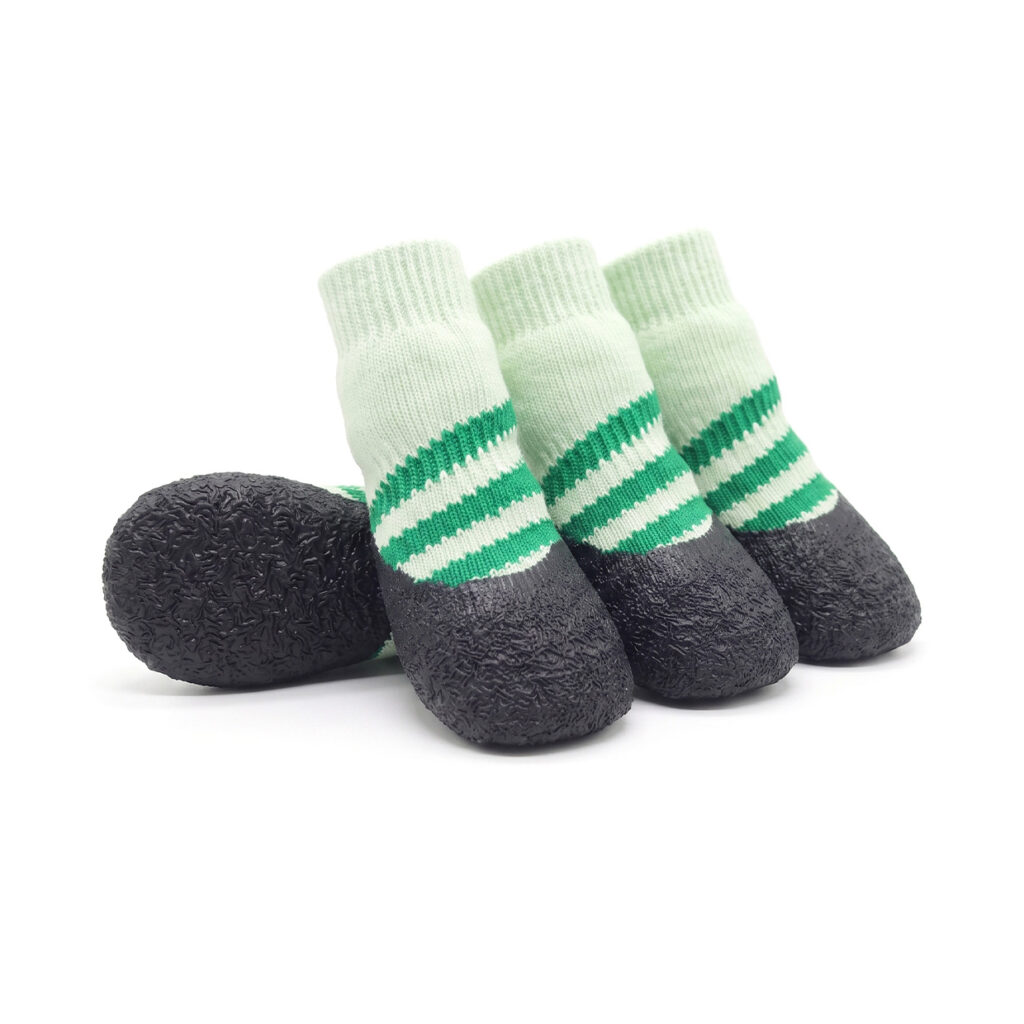
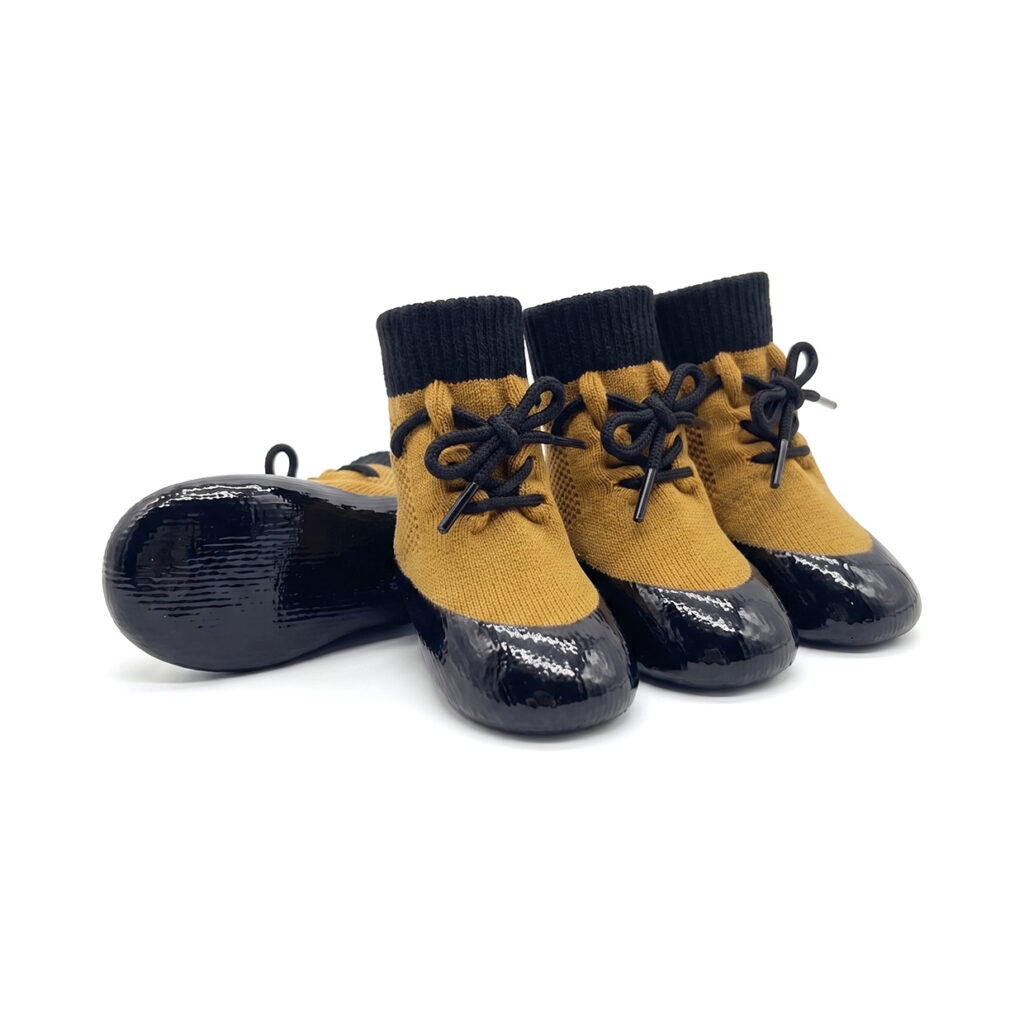
Indoor socks with silicone grip on the sole solve both problems at once: they keep paws comfortable while giving your dog real stability on hardwood or tile.
For Indoor Protection
Frequently Asked Questions About Dog Paw Care
Why does paw care matter all year, not just in summer or winter?
Because the threats change with the season but never actually go away. Summer means hot pavement and burn risk. Winter brings ice, freezing temps, and chemical salt exposure. And any time of year, regular walks and hikes expose paws to rocks, debris, and rough ground. A consistent routine — checking paws, cleaning them, staying ahead of dryness — catches small problems while they’re still small, long before they turn into a vet visit.
My dog’s paw pads already look burned or cracked — what now?
For mild dryness or light cracking, a good pet-safe paw balm applied regularly, combined with keeping your dog off harsh surfaces for a bit, usually turns things around. Breathable protective socks can help too, both by reducing friction and by discouraging obsessive licking while things heal.
That said, some signs mean it’s time to call the vet, not reach for balm: severe burns, blistering, open wounds, active bleeding, anything that looks infected, or a dog who’s suddenly limping or refusing to put weight on the paw. Those situations need a professional look, not a home remedy.
How do I actually know if the pavement is too hot?
Run the 7-second test — press the back of your hand flat against the pavement and count to seven. If you can’t keep your hand there comfortably for the full count, that ground is too hot for your dog’s paws, no question.
Don’t wait for your dog to show you it hurts, either. Plenty of dogs will keep trotting along on burning pavement because they’re excited or distracted, right up until the damage is already done. Testing the ground yourself, every time, is the only reliable way to stay ahead of it.
Is road salt actually dangerous, or is that overblown?
It’s real, and it’s worth taking seriously. Salt exposure dries out pad tissue and can lead to cracking and genuine discomfort with repeated contact. On top of that, most dogs lick their paws after a walk almost automatically — which means any salt residue left behind often gets ingested, and that’s not something you want happening regularly.
The fix is simple, though: a quick paw rinse and dry after every winter walk handles most of the risk.
Can I just use my own hand lotion on my dog’s cracked paws?
Better not to. Human lotions are built for human skin, and they often contain fragrances or preservatives that aren’t great news for a dog who’s going to lick the area shortly after application. Some can also over-soften the pad surface, which actually works against the toughness those pads need to do their job.
Stick with a product made specifically for dogs — it’s a small thing, but it makes a real difference.
Final Thoughts: Building a Complete Dog Paw Care Routine
Good paw care isn’t a one-time fix you apply when something already looks wrong — it’s a habit you build and keep up all year, through every season your dog walks through.
A solid routine covers the basics:
- Checking paws regularly, especially after long walks
- Cleaning up after outdoor time, particularly in winter
- Keeping a pet-safe moisturizing balm on hand
- Steering clear of surfaces you know are risky
- Using the right footwear when conditions call for it
Whether your dog’s biggest challenge is a scorching summer sidewalk, a salted winter street, or just the everyday wear of an active outdoor life, staying a step ahead with the right prevention habits keeps their paws healthy, comfortable, and ready for whatever the season throws at them.
Shield Your Dog’s Paws in Every Season!
Don’t let scorching pavement or icy salt trails keep your best friend stuck indoors. Give those paws real protection with gear built and tested for exactly this kind of wear — comfortable, durable, and genuinely grippy when it counts.
Discover our breathable Dog Shoes, heavy-duty Winter Boots, and indoor Anti-Slip Socks, and give your pup the paw protection they deserve.
Shop the Full Paw Protection Collection Now