Free Shipping on All Orders | 30-Day Easy Returns
How to Get Dog Used to Shoes: Stop the Funny Walk
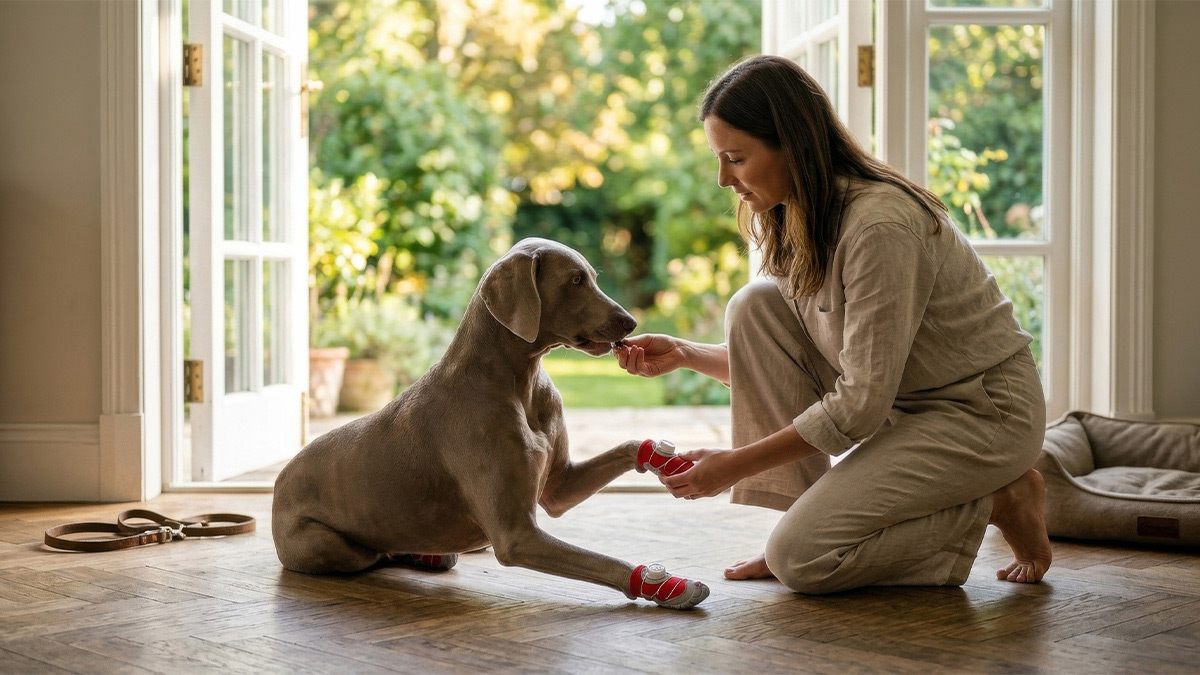
Table of Contents
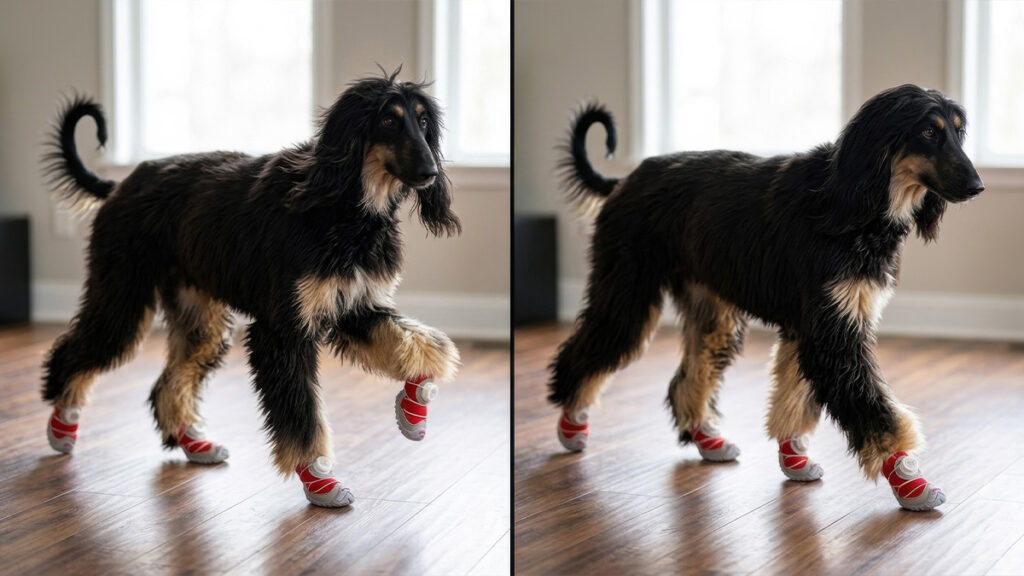
If you’ve ever put shoes on your dog for the first time and watched them freeze mid-step like they forgot how legs work, then break into that stiff, high-kicking prance across the living room — welcome to the club. Figuring out how to get dog used to shoes is really just about turning that viral “funny walk” moment into your dog casually strolling out the front door like they’ve worn boots their whole life.
That awkward high-stepping dance isn’t your dog being dramatic for no reason. It’s a completely normal reaction to a sensation their paws have never dealt with before. The good news: with a little patience, the right treats, and shoes that actually fit, most dogs get over it faster than owners expect.
Here’s what’s actually happening in that funny walk, a four-step training routine that works, what to do if your dog just plants their feet and refuses to move, and why fit matters just as much as the training itself.
The Science Behind the “Funny Walk”: Why Dogs High-Step
That classic dog funny walk in shoes isn’t your dog panicking or forgetting basic motor skills — it’s their nervous system trying to make sense of brand-new information.
A dog’s paw is packed with sensory receptors constantly feeding the brain details about pressure, texture, ground surface, and exactly where each toe is in space. The moment a shoe covers all of that, those signals get muffled or scrambled, and the brain has to essentially reboot how it reads “walking.”
This ties directly into proprioception — your dog’s built-in sense of where their own body is in space. Normally, every paw pad, toe, joint, and muscle is sending constant feedback while walking. Slide a shoe on, and that feedback suddenly changes shape. Your dog responds the only way they know how: lifting each leg dramatically higher than needed, shaking a paw like it’s covered in something sticky, freezing in place, or taking those exaggerated, stiff-legged steps while their brain catches up.
This is exactly why so many owners ask “why do dogs walk funny in shoes?” the first time they see it happen. In most cases, it’s temporary sensory confusion, not pain — your dog isn’t hurt, just confused.
That said, don’t wave off every strange gait as harmless quirkiness. If you’re seeing actual limping, your dog repeatedly trying to yank off one specific shoe, whining, or clear signs of discomfort, that’s your cue to stop and check the fit rather than push through it.
Persistent paw-shaking or chewing at a single boot often points to hidden friction—read our guide on how to stop dog boots from rubbing paws and causing blisters to inspect for rough inner seams or dewclaw pressure.
To better understand how ground feedback shapes your dog’s stride, check out the American Kennel Club’s guide to canine paw anatomy and this overview of canine proprioception and sensory awareness from VCA Animal Hospitals.
Step-by-Step: How to Train Your Dog to Wear Boots with Treats
The trick to how to get dog used to shoes is going slow — strapping all four shoes on and marching straight out the door is basically a recipe for the funny walk’s more dramatic cousin: the flat-out refusal to move.
Keep sessions short. Two to five minutes, several times a day, works far better than one long, frustrating session where everyone’s patience runs out. End on a good note, always — while your dog is still relaxed, not after they’ve hit their limit.
Step 1: Gear Familiarization & Scent Association
Don’t even attempt to put the shoes on yet.
Set the footwear on the floor a few feet away and let your dog wander over and investigate on their own terms. Resist the urge to pick up a shoe and move it toward their paw — let curiosity do the work.
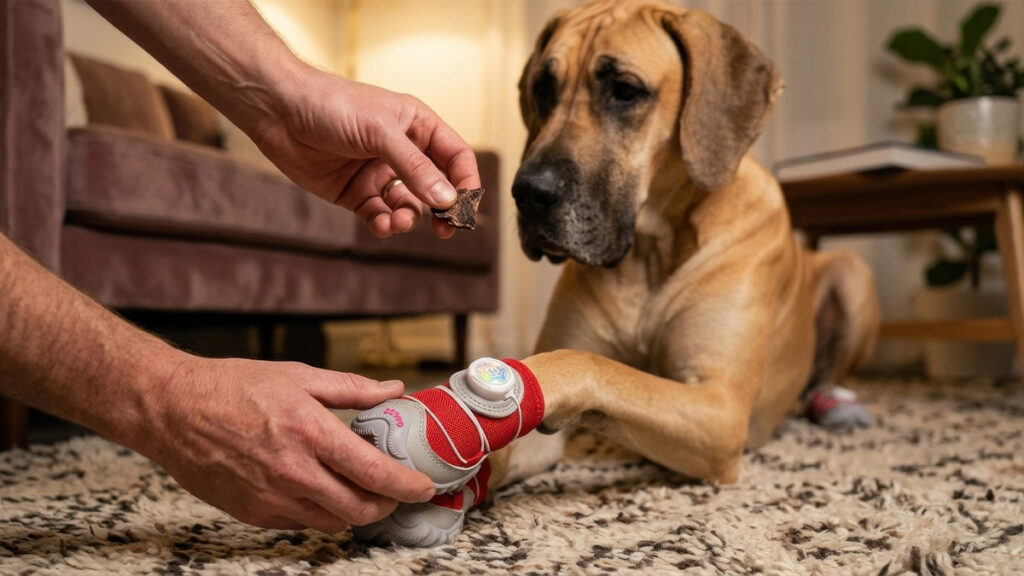
The instant your dog looks at, sniffs, or approaches a shoe, drop a high-value reward immediately. Freeze-dried liver, small bits of chicken, whatever makes your dog’s ears perk up — that’s your reward currency here.
The message you’re building is simple: shoe shows up, good things happen.
Keep repeating until your dog strolls up to the shoes without a second thought. Then you can pick one up, let them sniff it directly, and reward that calm curiosity.
Step 2: Front Paws First (One Paw at a Time)
Once the shoes themselves aren’t scary, it’s time to introduce the actual feeling of wearing one.
Start with a single front paw. Slip the shoe on, fasten it snugly (not tight — you want it secure, not squeezing), and immediately follow up with a handful of small treats.
Keep that very first wear brief — five to ten seconds is genuinely enough for round one.
Take the shoe off before your dog has a chance to get stressed about it, then try again a little later. Stretch the duration out gradually as your dog settles into the sensation.
Once one front paw feels like no big deal, repeat the same process on the other front paw. There’s no prize for rushing — some dogs need a full day or two between paws before they’re ready to move on, and that’s completely normal.
Step 3: All Four Paws & Indoor Distraction Games
Once the front shoes are a non-issue, bring the back paws into the mix.
The moment all four shoes are on, immediately shift your dog’s focus to something fun — a quick round of fetch, a few basic commands they know well, or their favorite squeaky toy. Redirecting attention works wonders, especially with dogs who tend to freeze solid the second all four shoes are on.
If that happens, whatever you do, don’t drag your dog forward on the leash. That almost always backfires and turns “unfamiliar shoes” into “scary shoes.” Instead, coax movement with treats, a toy, an enthusiastic voice, or a game they already love.
This is really the heart of how to train a dog to wear boots with treats — layering positive distraction on top of the physical exposure so your dog barely notices they’re adjusting to something new.
Step 4: Transitioning to Outdoor Distraction
Once your dog moves naturally indoors, it’s time to test things outside.
Pick somewhere quiet and familiar first — your backyard or a patch of grass your dog already knows well. Keep the first outdoor attempt short and just let them sniff around and explore at their own pace.
There’s something about the combination of familiar ground under their paws and a yard full of interesting smells that makes the shoes fade into the background fast.
From there, gradually stretch a few minutes into a full walk. How long does it take for a dog to get used to boots really depends on the dog, but most owners see real, noticeable improvement after just a handful of short, upbeat sessions.
If you’re still exploring which style of footwear best suits your outdoor terrain, check out our complete dog paw wear guide comparing shoes, boots, and socks.
For more on building this kind of positive association, the ASPCA’s resources on reward-based training are worth bookmarking.
Troubleshooting: What If Your Dog Freezes or Refuses to Walk?
Some dogs pick this up in a single afternoon. Others need real patience — and that’s fine. If your dog is still stuck and uncomfortable after several sessions, cranking up the pressure is the wrong move.
Instead, pause and figure out whether you’re dealing with a behavioral hurdle, ongoing sensory adjustment, or an actual fit problem.
1. Rule Out Sizing and Tightness Issues
If the freezing or the weird gait is still happening well into training, check the fit before assuming it’s purely behavioral.
A shoe that’s too narrow squeezes the paw and blocks natural movement. Too short, and it presses uncomfortably against the toes or nails. Too loose, and it slides around, causing rubbing and irritation with every step.
Pay close attention to the fastening zone around the ankle and dewclaw specifically — that area needs to stay snug and secure without digging in or creating pressure points. If your dog kicks frantically or tries to bite at their paws, learn why dog boots keep falling off and how to secure them to check whether straps are pinching the dewclaw or sitting too loose along the lower leg.
If it’s been a while since you last checked your dog’s measurements, this is the moment to re-measure your dog’s paws before changing anything about your training approach.
2. Choosing Flexible, Lightweight Starter Footwear
For dogs who are especially sensitive to new sensations, skip the heavy-duty rigid boot for now and start with something lightweight and flexible instead.
Soft, breathable uppers paired with a flexible sole create a much gentler sensory shift, letting your dog’s paw move closer to how it normally would. If your dog completely freezes in thick outdoor boots, try starting their training indoors with lightweight indoor non-slip dog socks to build their confidence. Once they’ve built up some tolerance, you can graduate to something more rugged for snow, rough trails, or harsher terrain.
Take a look at lightweight breathable dog shoes for that initial adaptation phase, or flexible outdoor dog boots once your dog is ready for more serious protection.
If you’re specifically dealing with what to do if dog freezes when wearing shoes, the answer is almost always the same: go back a step to whatever stage your dog was last comfortable with, rather than pushing forward.
Frequently Asked Questions
Why do dogs do the funny walk when wearing shoes for the first time?
It’s your dog’s proprioception system getting confused by brand-new sensory input. Shoes cover the exact parts of the paw that normally feed information to the brain, so for a bit, your dog’s nervous system is basically working with static instead of a clear signal. That’s what causes the dramatic leg-lifting, paw-shaking, or stiff, awkward gait. As they adjust, it smooths out on its own. If it doesn’t — or looks painful rather than just clumsy — stop and check for rubbing, pressure points, or sizing issues.
How long does it usually take for a dog to adapt to boots?
Most dogs settle in within 2 to 5 short, positive sessions, though some take a few days longer depending on personality and past experience with anything touching their paws. Short, upbeat sessions with great treats consistently beat forcing a dog to just “wear it out” for an hour straight. Let your dog’s comfort level set the pace, not a calendar.
What should I do if my dog freezes and refuses to take a single step?
Never pull the leash to force movement — that almost always makes things worse. Instead, place a favorite treat or toy just a step or two ahead and reward any voluntary movement, even a single paw shift forward. Build from there. If your dog is completely locked up and won’t budge at all, take the shoes off, back up to an easier stage, and double-check that nothing’s too tight, too loose, or rubbing somewhere uncomfortable.
Is it better to put boots on all four paws at once?
Not usually, no. For dogs on the more sensitive side, starting with one front paw at a time keeps the amount of new sensory information manageable instead of overwhelming. Once the front paws feel routine, bring in the back shoes. Some naturally confident dogs breeze through all four at once without issue, but going one paw at a time is the safer bet if you’re not sure how your dog will react.
Can poor sizing cause the funny walk to last permanently?
It can absolutely drag things out — and turn what should be temporary confusion into a real aversion to shoes altogether. A shoe that’s too narrow, too short, too loose, or fastened too tight creates ongoing pressure and rubbing. At that point, the strange gait isn’t sensory adjustment anymore, it’s your dog reacting to actual discomfort. Always check both length and width against the size chart, and glance at the fit again after a few minutes of walking to make sure nothing’s shifted out of place.
Help Your Dog Step Out in Comfort and Style!
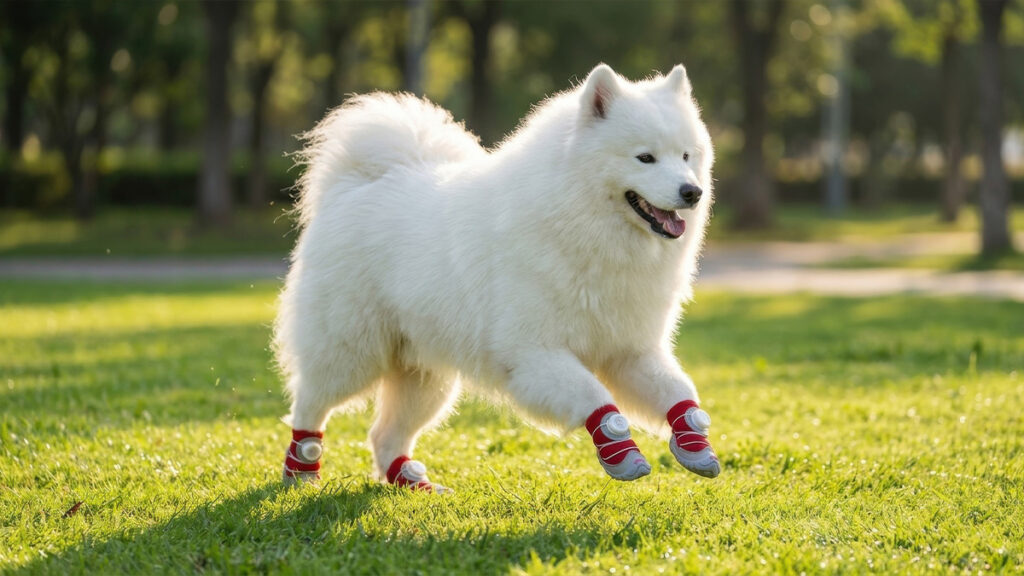
Say goodbye to the awkward high-stepping shuffle and hello to confident, everyday walks. With a little gradual training, plenty of treats, and shoes that actually fit right, most dogs learn to treat footwear as just another normal part of getting ready to head outside.
Check out our ergonomic, easy-on Dog Shoes and ultra-flexible Dog Boots — built with soft linings and non-restrictive sole grips designed to make that whole adaptation process a whole lot smoother.
Shop Comfortable Dog Shoes & Boots for Easy Adaptation Now!