Free Shipping on All Orders | 30-Day Easy Returns
Dog Boots Keep Falling Off? 5 Ways to Stop Slipping
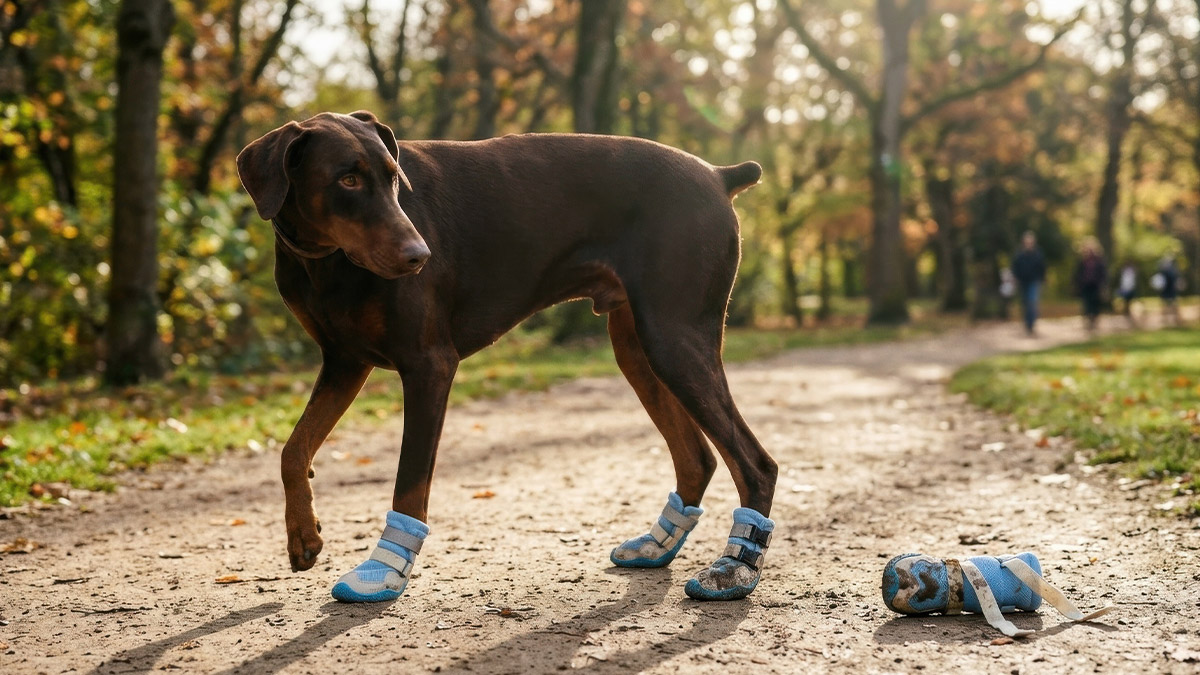
Table of Contents
Three steps. That’s often all it takes before a brand-new dog boot goes flying into the grass while your pup stares at you like you’ve personally betrayed them. If this sounds painfully familiar, you’re not alone—it’s one of the most common frustrations dog owners run into when introducing protective footwear, whether you’re gearing up for a winter walk, a rocky trail hike, or just trying to protect paws from a scorching summer sidewalk.
Constantly pausing to chase down a kicked-off bootie is annoying enough on its own. But it also leaves sensitive paw pads exposed to hot asphalt, ice balls, sharp gravel, thorns, and all the other hazards boots are supposed to guard against in the first place. Here’s the reassuring part: in most cases, the boot itself isn’t defective. The real issue usually traces back to inaccurate sizing, a strap sitting in the wrong spot, not enough tension, or your dog’s very normal reaction to wearing something weird on their feet.
The good news? Nearly every loose-boot problem has a fix. Below, we’ll walk through exactly why dog boots keep falling off, how to keep dog boots on securely for good, and what to adjust when you’re dealing with snow, mud, slick indoor floors, or a particularly energetic dog who treats every walk like a sprint.
The Real Reasons Your Dog Boots Keep Falling Off
One of the biggest culprits is simple anatomy. A dog’s lower leg tapers as it moves down toward the paw—unlike a human ankle, which flares out at the foot. That tapering shape means a boot that isn’t secured well can slide right down and off during a normal trot, run, or even just an enthusiastic zoomie session across the yard.
Where the strap sits matters just as much as the boot size printed on the box. If a strap is positioned too close to the paw, or lands somewhere that doesn’t give the boot real anatomical support, every flex, bound, and shake works it a little looser—until eventually it’s gone.
Another mistake we see constantly: assuming all four paws are identical. They’re usually not. Front and rear paws on the same dog can differ noticeably in shape and size, so grabbing one measurement and ordering four matching boots often means two fit perfectly and two are a size off.
And here’s one worth repeating to every well-meaning dog parent: cranking the straps as tight as they’ll go is not the fix. Overtightening around the lower leg can cause real discomfort and may interfere with normal circulation. Good dog shoe fit and adjustment is a balance—secure enough to stay put, gentle enough to stay comfortable.
For more on canine limb structure and paw anatomy, veterinary resources like the American Kennel Club’s canine anatomy guide and VCA Animal Hospitals’ veterinary guidance offer a helpful deeper dive.
5 Secrets on How to Keep Dog Boots On Securely
If you’re wondering how to make dog boots stay on, resist the urge to immediately return the boots and buy a different brand. Nine times out of ten, the fix lives in sizing, positioning, fastening technique, or a little patient training—not in the product itself.
1. Verify Accurate Paw Width (Weight-Bearing Sizing)
Bad sizing is the very first thing to rule out when dog boots keep falling off. Here’s a detail most owners miss: measuring a paw while it’s lifted off the ground gives you a smaller, less accurate number than measuring it while your dog is standing naturally with full weight on it. Paws splay out under weight—so a “hanging paw” measurement can quietly set you up for a too-tight or too-loose fit.
Set a sheet of paper down, let your dog stand comfortably on it, and trace or mark the widest points of the paw. Measure according to the boot manufacturer’s specific sizing chart (they’re not all identical, unfortunately).
Width matters more than people expect. A boot can be the correct length and still be loose enough to rotate or shift sideways with every step. If you notice that twisting motion mid-walk, it’s a strong signal to recheck both width and length—not just length alone.
If you have any doubt about your original measurements, it’s worth going back to basics: re-measure your dog’s paws with standard methods before ordering a replacement size.
2. Master the “Two-Strap Lock” & Proper Tension
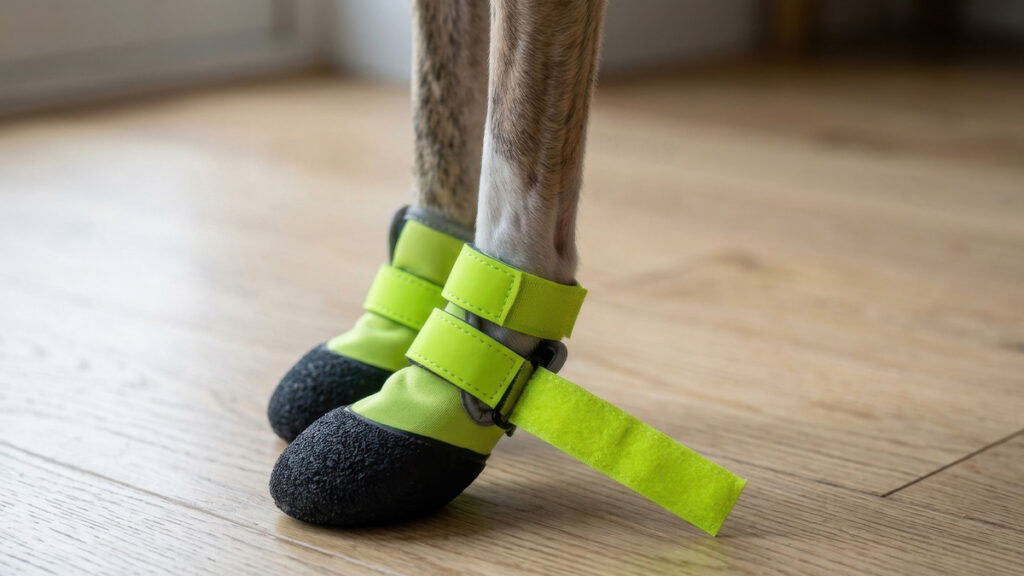
Dual-strap boots tend to outperform single-strap designs simply because they spread the holding force across two points instead of one. Picture it like a backpack with two shoulder straps versus one across the chest—more contact points, more stability, less shifting.
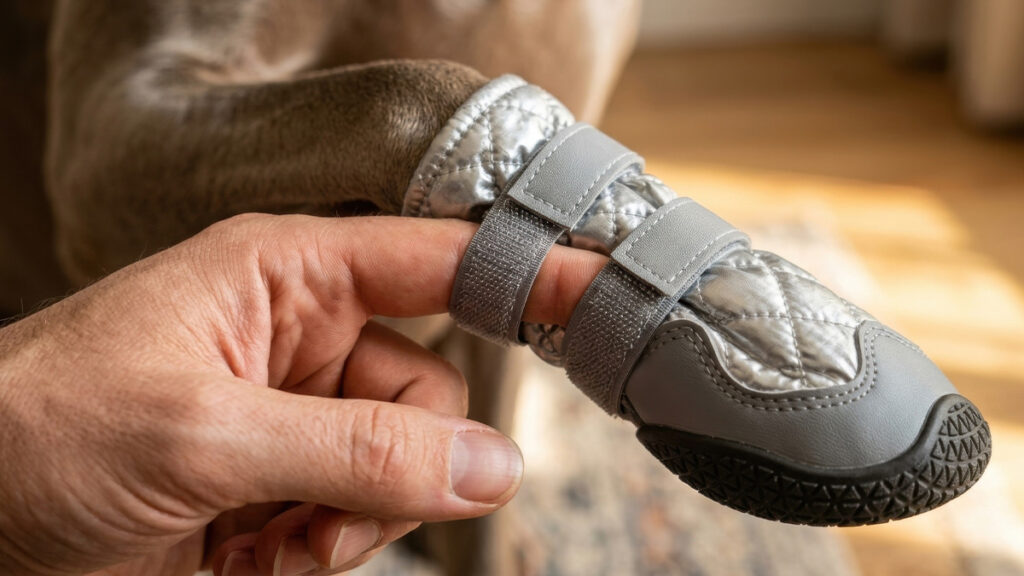
When you’re fastening Velcro straps, aim for snug contact, not a death grip. The easiest gut-check is the one-finger rule: after fastening, you should be able to slide one finger between the strap and your dog’s leg without having to force it in.
Once secured, gently tug the boot upward or try rotating it by hand—it shouldn’t budge easily, but your dog should still be able to move that limb naturally, without stiffness. Here’s the part almost everyone skips: check the fit again after five or ten minutes of walking. Straps loosen as the boot flexes with each stride, so what felt perfect at the front door can feel completely different halfway down the block.
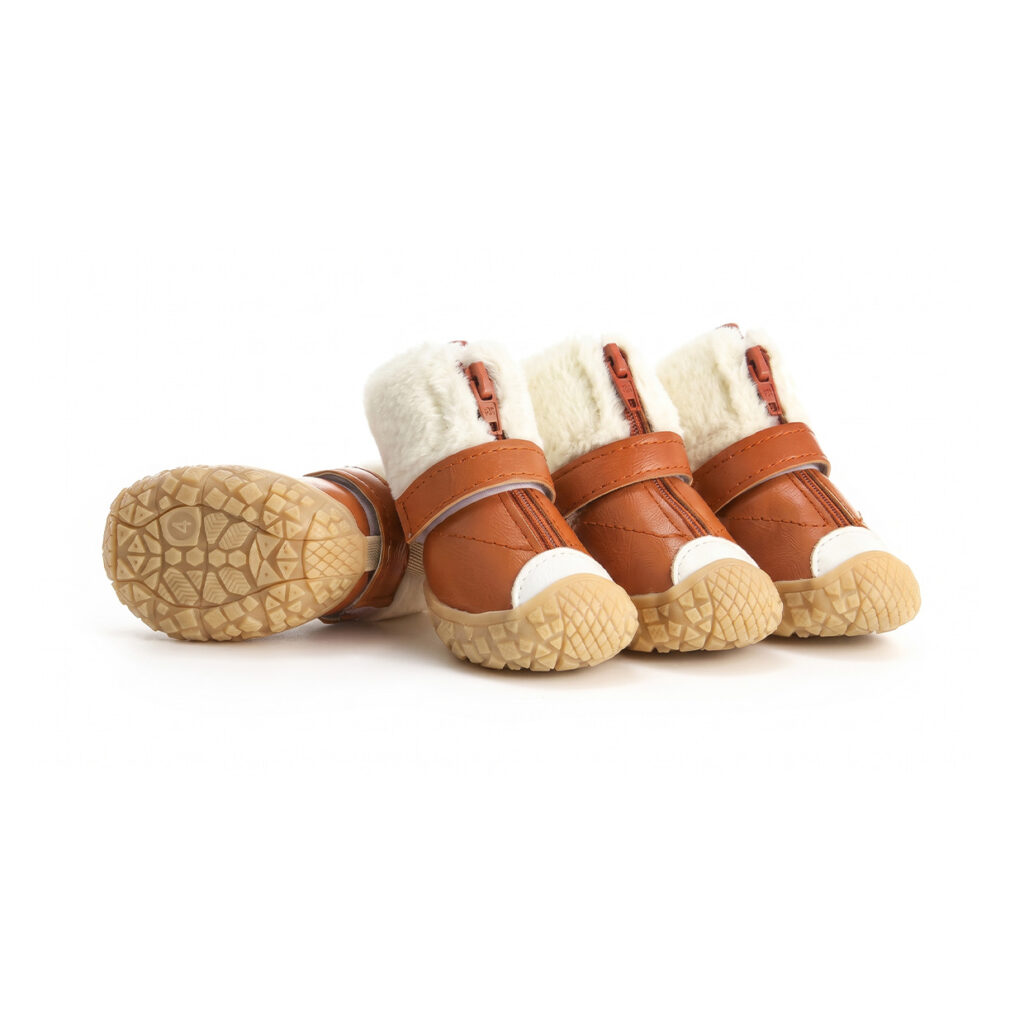
If you’re regularly hitting trails, running, or navigating uneven ground, it may be worth exploring dual-strap outdoor dog boots built specifically for that kind of movement and terrain.
Dual-strap Outdoor Dog Boots
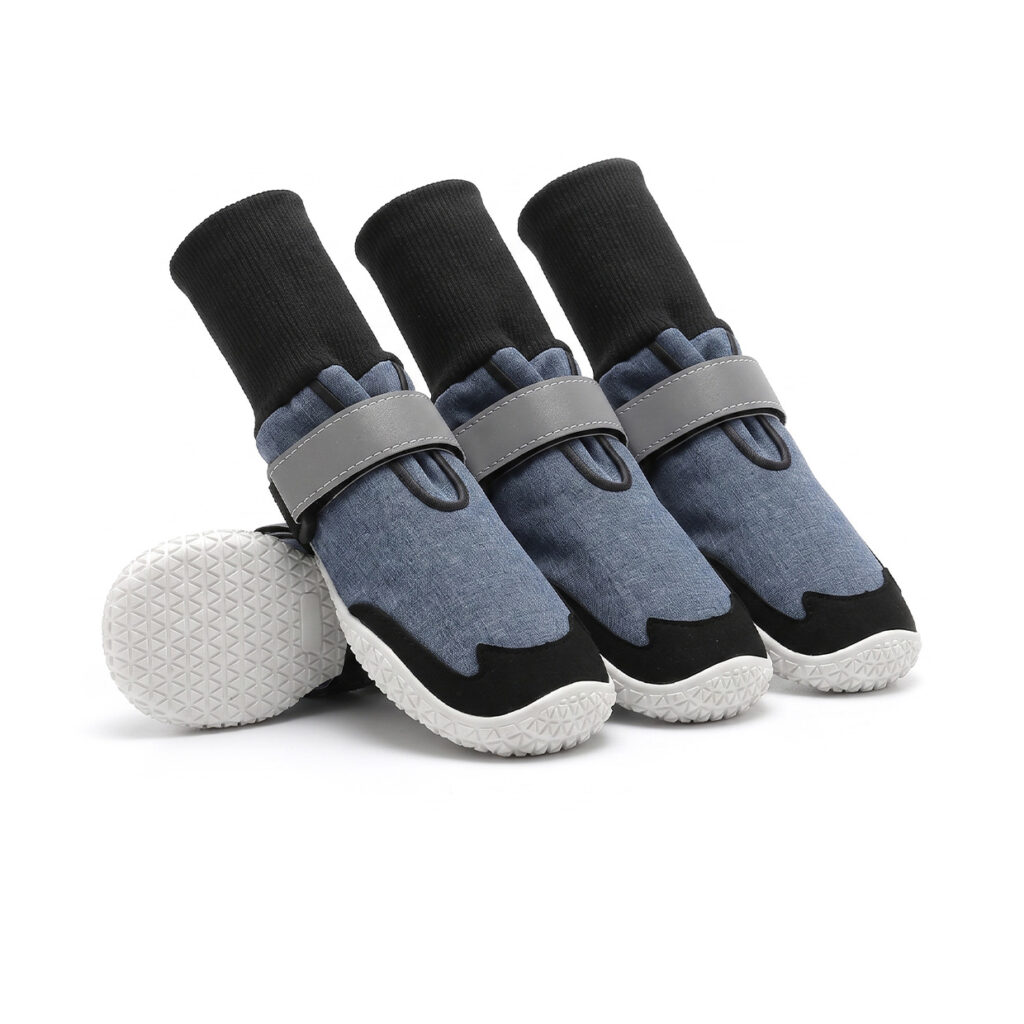
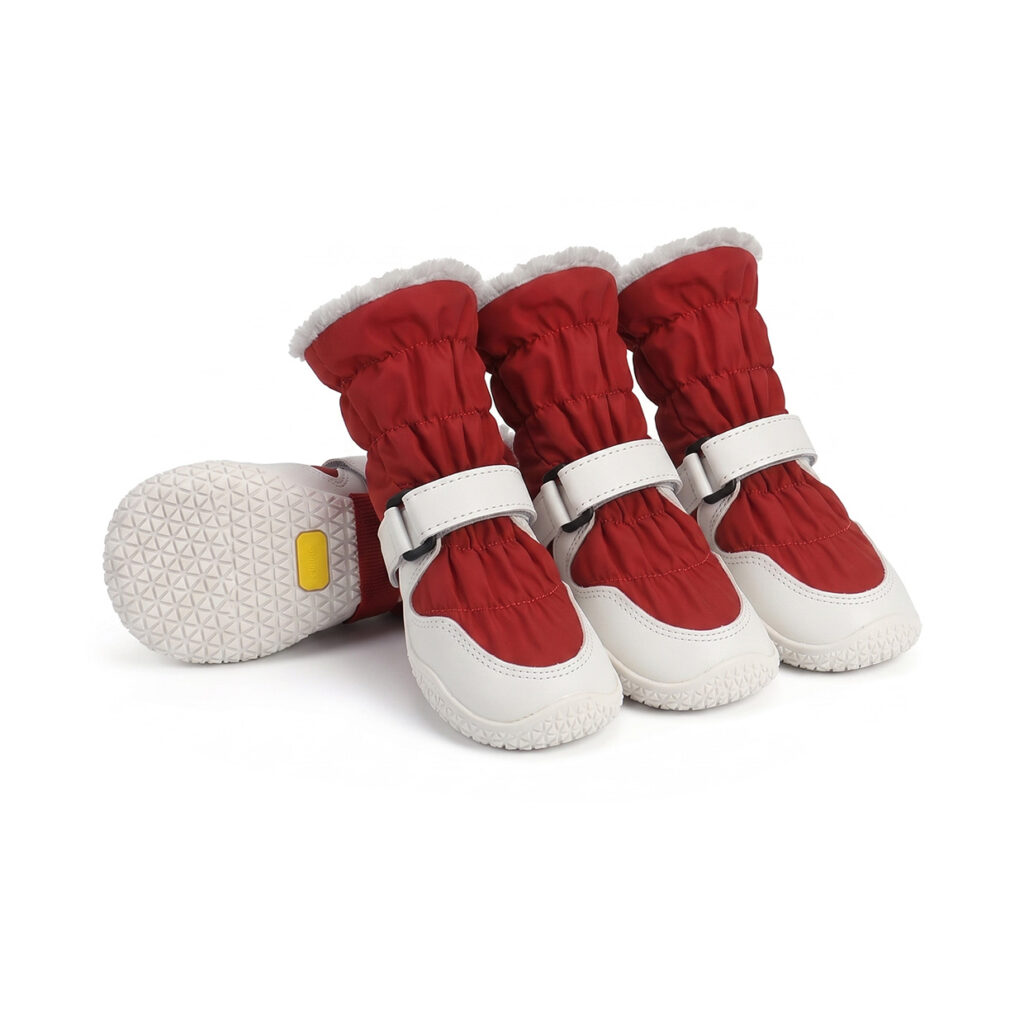
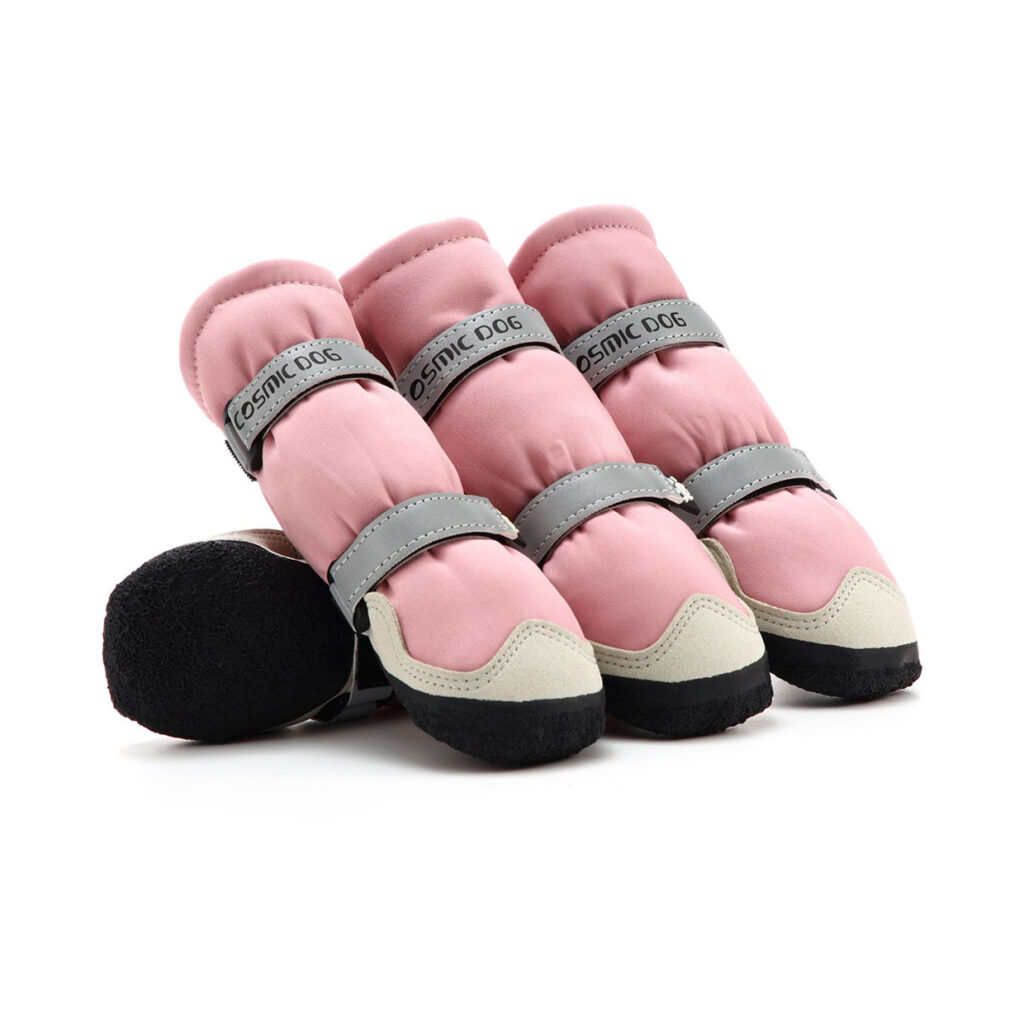
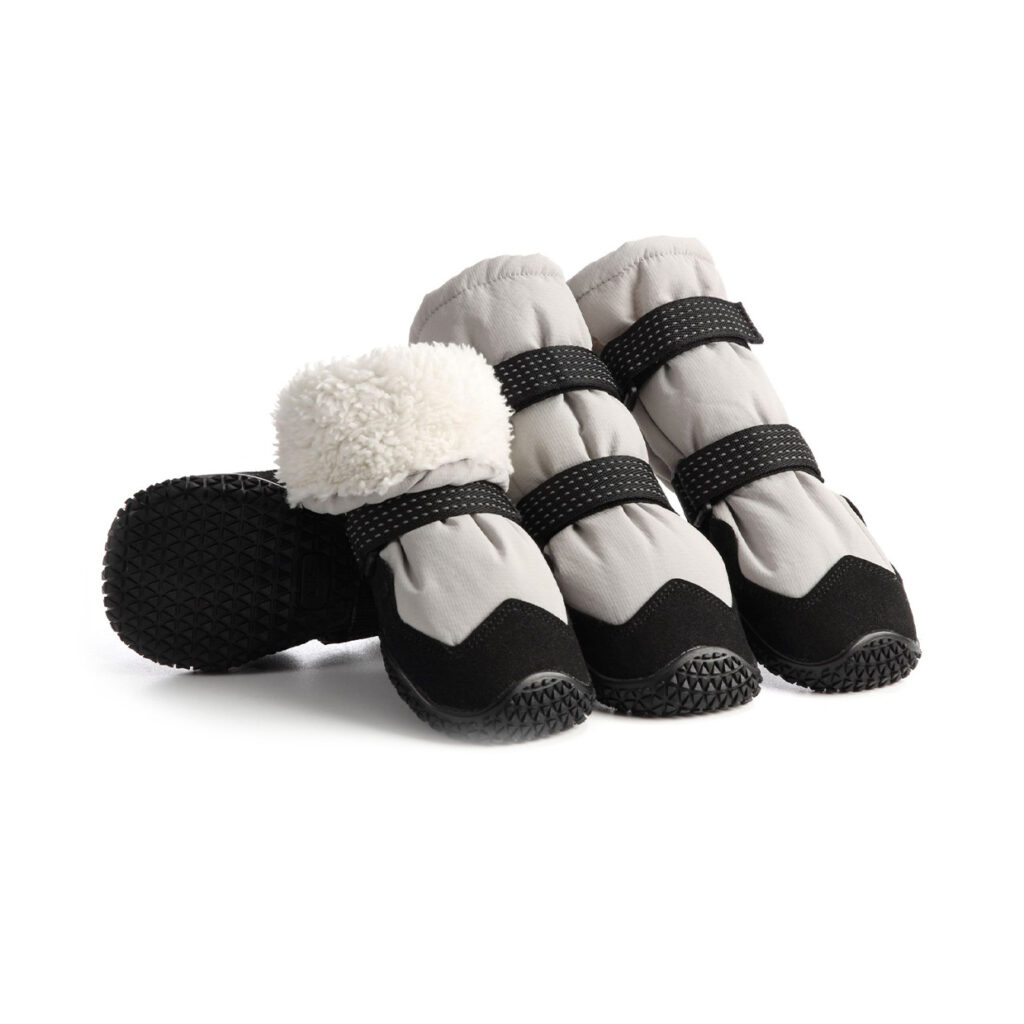
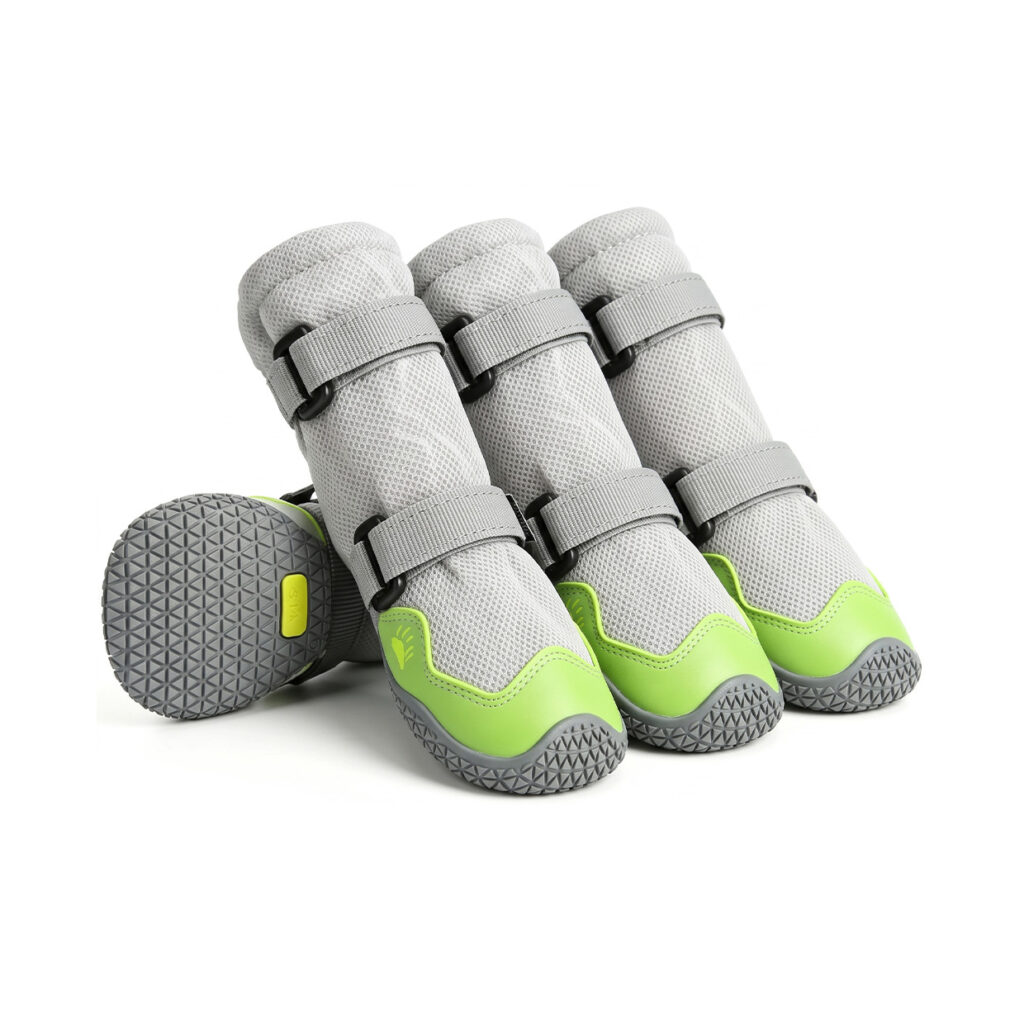
This is really the heart of the answer to how tight should dog boots be strapped: tight enough that nothing shifts, but never so tight that you see a visible indentation, redness, or any sign your dog is uncomfortable.
3. Add Dog Socks as a Friction Buffer
Here’s something that surprises a lot of owners: dog fur can be surprisingly slick against certain boot linings, almost like socks on a hardwood floor. If there’s extra room inside the boot, the paw can slide around in there even when the outer strap looks perfectly tight from the outside.
A thin dog sock adds a layer of friction between paw and boot interior. It also soaks up a little of that excess internal space, cutting down on the sliding.
One important caveat: socks are a fine-tuning tool, not a rescue plan for a boot that’s genuinely too big. If you find yourself layering on two or three thick socks just to make a boot stay put, that’s your sizing telling you something—time to size down, not sock up.
For dogs who tolerate the extra layer without fuss, this small trick can make a real difference in how to get dog booties to stay on during those longer walks or hikes.
4. Push the Paw All the Way to the Toe Cap
This one’s easy to miss and surprisingly common: the paw simply isn’t seated all the way inside the boot. Some owners hesitate to push firmly, worried it’ll bother their dog—totally understandable instinct, but it usually backfires.
Instead, open the boot as wide as it’ll go and guide the paw straight in, toes first. You want the toes reaching the front of the boot, not curled under or squished—there’s a clear difference between “snug” and “cramped,” and your dog will tell you which one it is by how they hold their paw.
Only fasten the straps once the paw is fully seated. If you strap a boot down while the foot is sitting too far back, you’re locking in extra empty space at the toe—space that lets the whole boot shift and eventually work its way off.
It’s a small adjustment, but it makes a real difference in overall dog shoe fit and adjustment, especially with boots that have a deeper toe box design.
5. Stop the Fling: Desensitize to Prevent Habitual Kicking
Sometimes the boot is sized right, strapped right, and still ends up in the bushes—because your dog is doing it on purpose. Some dogs shake, kick, or flick their leg deliberately simply because the feeling of something on their paw is foreign and, frankly, a little annoying to them at first.
This shows up most in that classic “funny walk”—the exaggerated, high-stepping shuffle dogs do the first few times they wear boots, like they’re walking on hot coals made of confusion. It’s not pain, usually. It’s just novelty.
Skip the temptation to hold your dog still or drag them forward until they “get used to it.” That approach almost always backfires and builds negative associations instead. Positive reinforcement works far better: put the boots on for a short stretch, immediately follow with high-value treats, and ease into movement using a favorite toy or a simple game indoors first.
For a full step-by-step routine, check out desensitization training to stop the funny walk.
The goal is simple—teach your dog that boots mean good things are about to happen. Once the novelty wears off, most dogs stop the theatrical kicking on their own within a few short sessions.
Deep Snow and Mud: Extreme Weather Lock-Down Tips
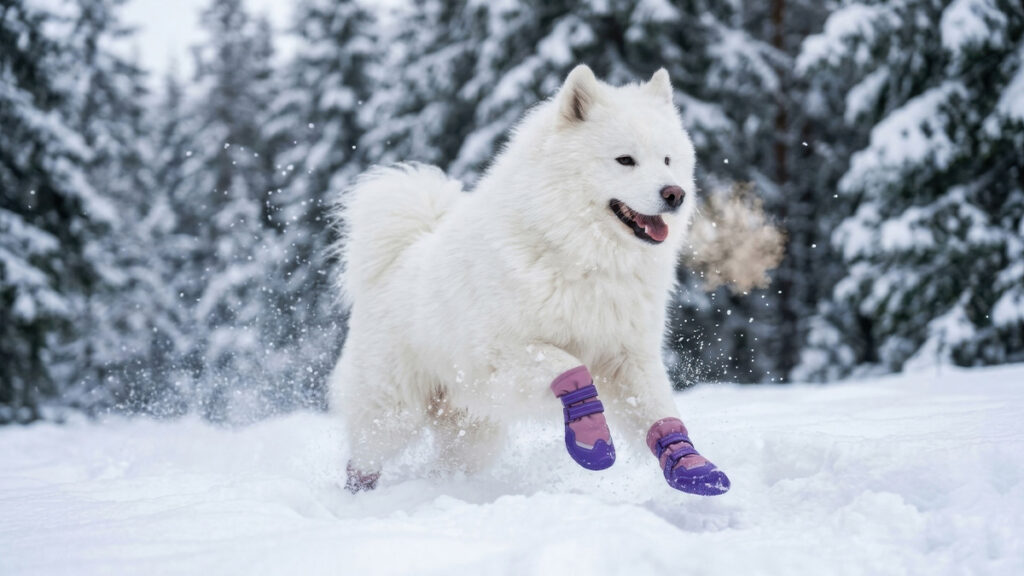
Harsh conditions throw extra challenges at boot retention that dry-weather walks never test for. Deep snow packs in around the boot opening, and moisture makes fur and fastening areas slicker than usual.
If you’re trying to figure out how to keep boots on dogs in deep snow, look for a higher boot shaft, sturdy fastening points, and an opening designed to keep snow from working its way in. Gaiter-style boots are worth considering if your dog regularly plows through deep powder—that extra coverage up the leg makes a genuine difference.
Before heading into deep snow, make sure the fastening system is clean and fully dry beforehand. Wet Velcro is a magnet for snow, fur, and debris, and once it’s clogged, it loses a good chunk of its grip.
Mud plays by different rules entirely. Thick mud clings to the outsole and creates real suction with every step your dog lifts—that pulling force works directly against the boot staying on.
On muddy trails, look for an outsole with deep, pronounced traction channels designed to release mud rather than trap it—as detailed in our dog hiking boots trail guide. And check the boots periodically throughout the walk, especially right after crossing deep mud or standing water—problems tend to show up fast in those conditions.
If a boot keeps disappearing in extreme conditions despite correct sizing and proper fastening, it might simply be time to consider a higher-cut design better matched to how your dog actually spends their time outdoors.
When to Switch: Indoor Floors vs. Outdoor Boots
Outdoor boots are built for a completely different world than your living room floor. A rugged outsole engineered to survive rocks, mud, and rough trails can feel bulky, heavy, and honestly kind of clumsy on polished hardwood or tile.
If your dog struggles to walk normally indoors, or keeps kicking off thick outdoor boots the second they’re inside, it’s probably time for footwear designed specifically for that environment. Lightweight, breathable socks with silicone traction patterns can give solid grip without adding unnecessary bulk.
This matters especially for senior dogs navigating slick hardwood or tile floors—confidence on their feet becomes a bigger priority than rugged protection indoors. In these situations, friction-enhancing anti-slip dog socks often makes more sense than heavy-duty outdoor boots.
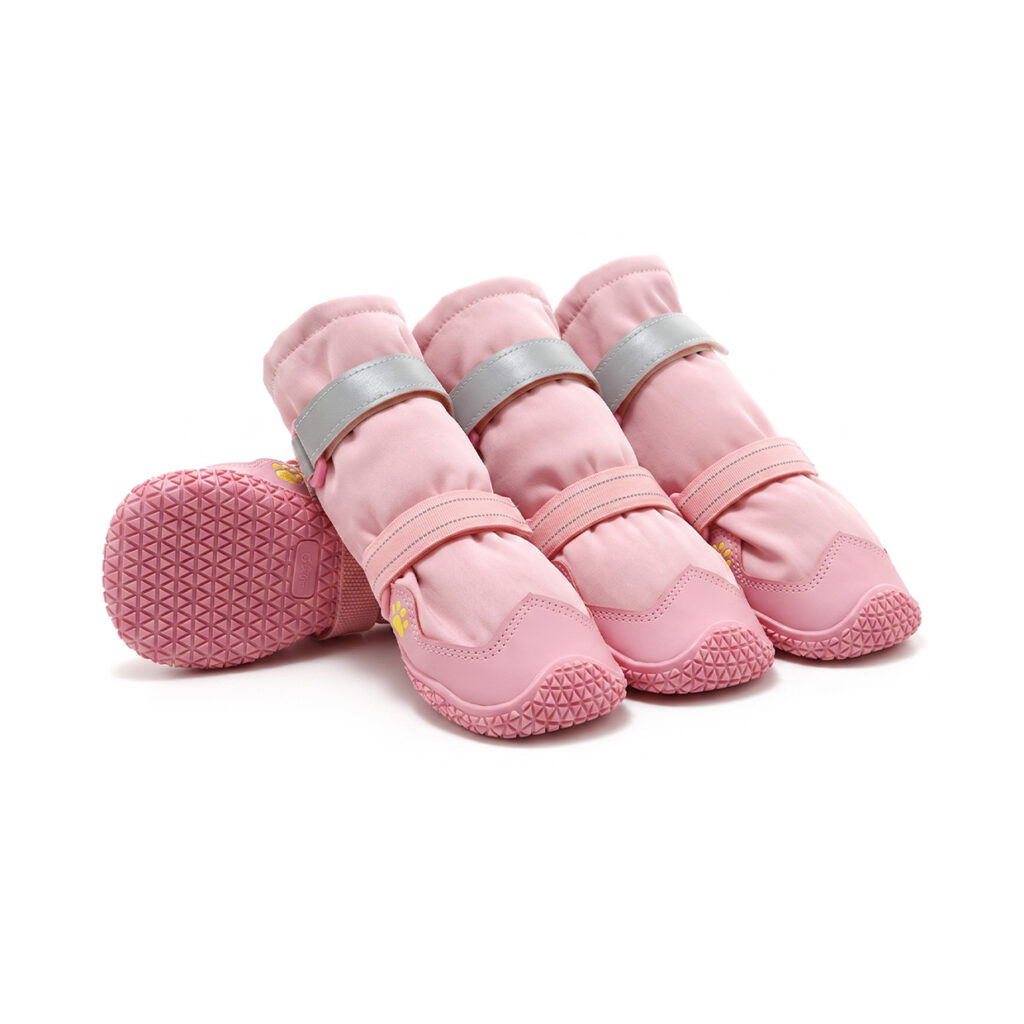
For everyday walks that need more protection than socks alone provide, but don’t require full trail-grade armor, lightweight breathable dog shoes with a flexible outsole and reliable fastening system tend to hit the sweet spot.
Lightweight Breathable Dog Shoes
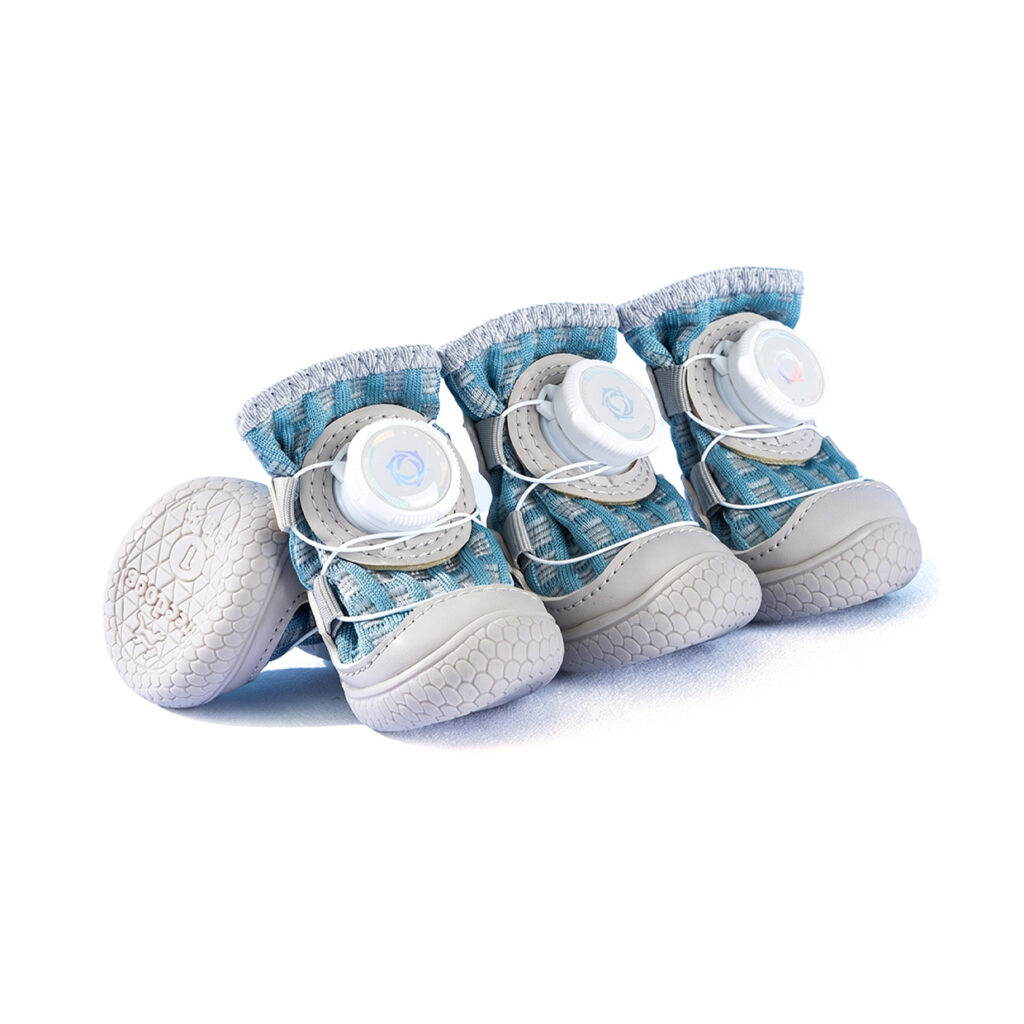
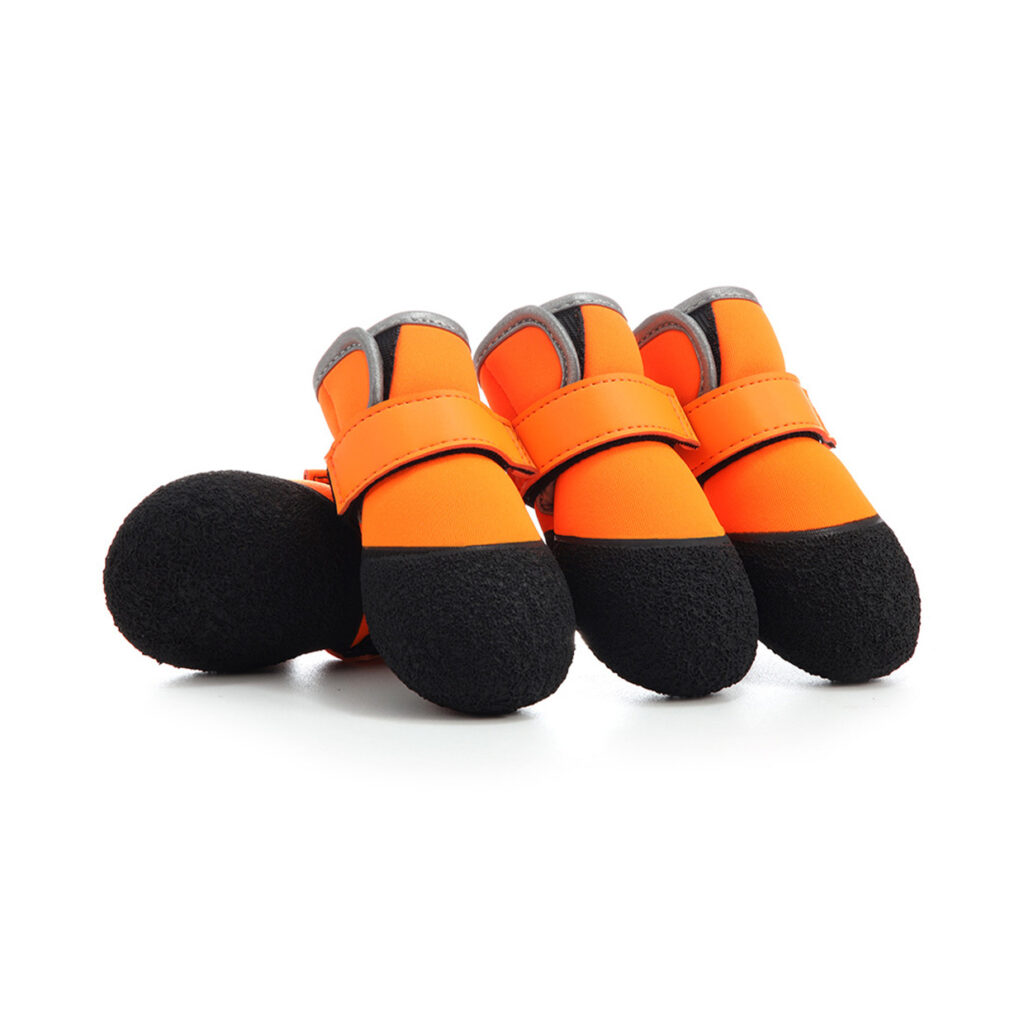
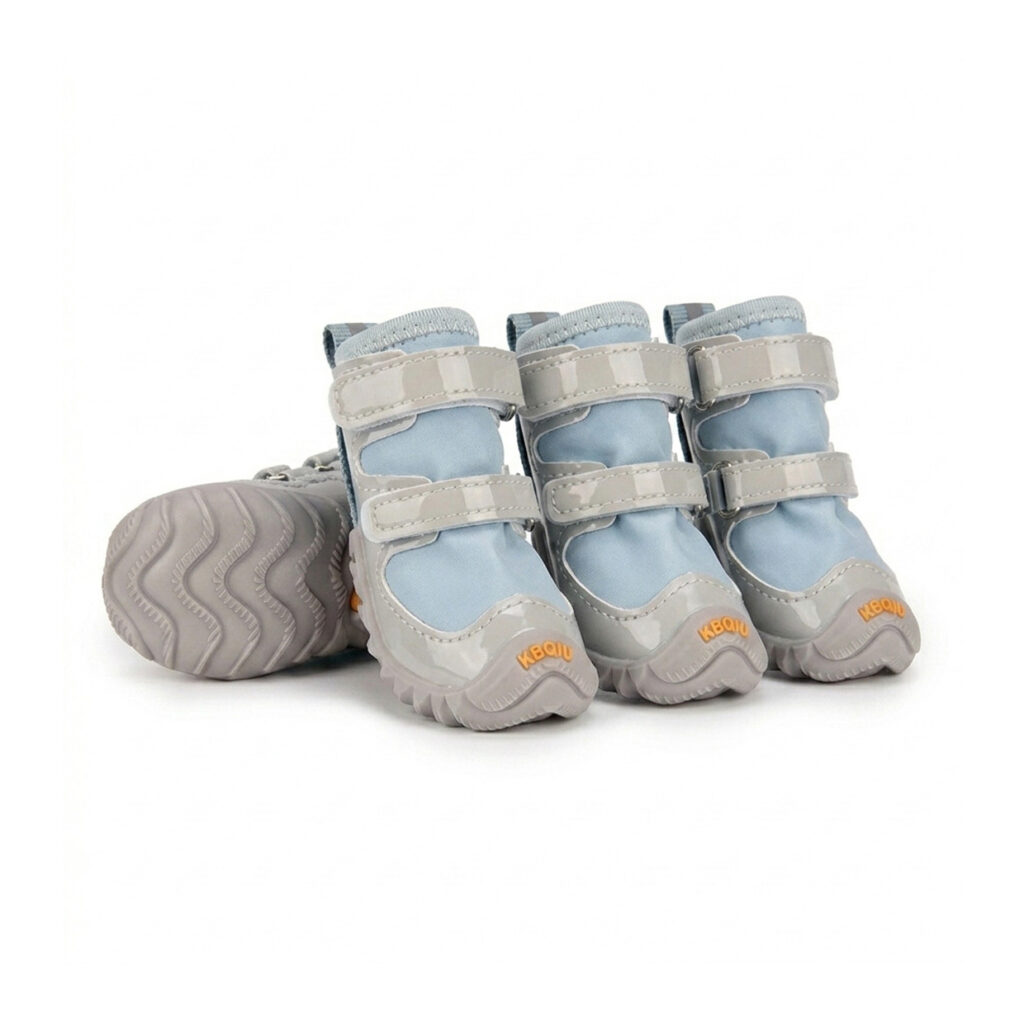
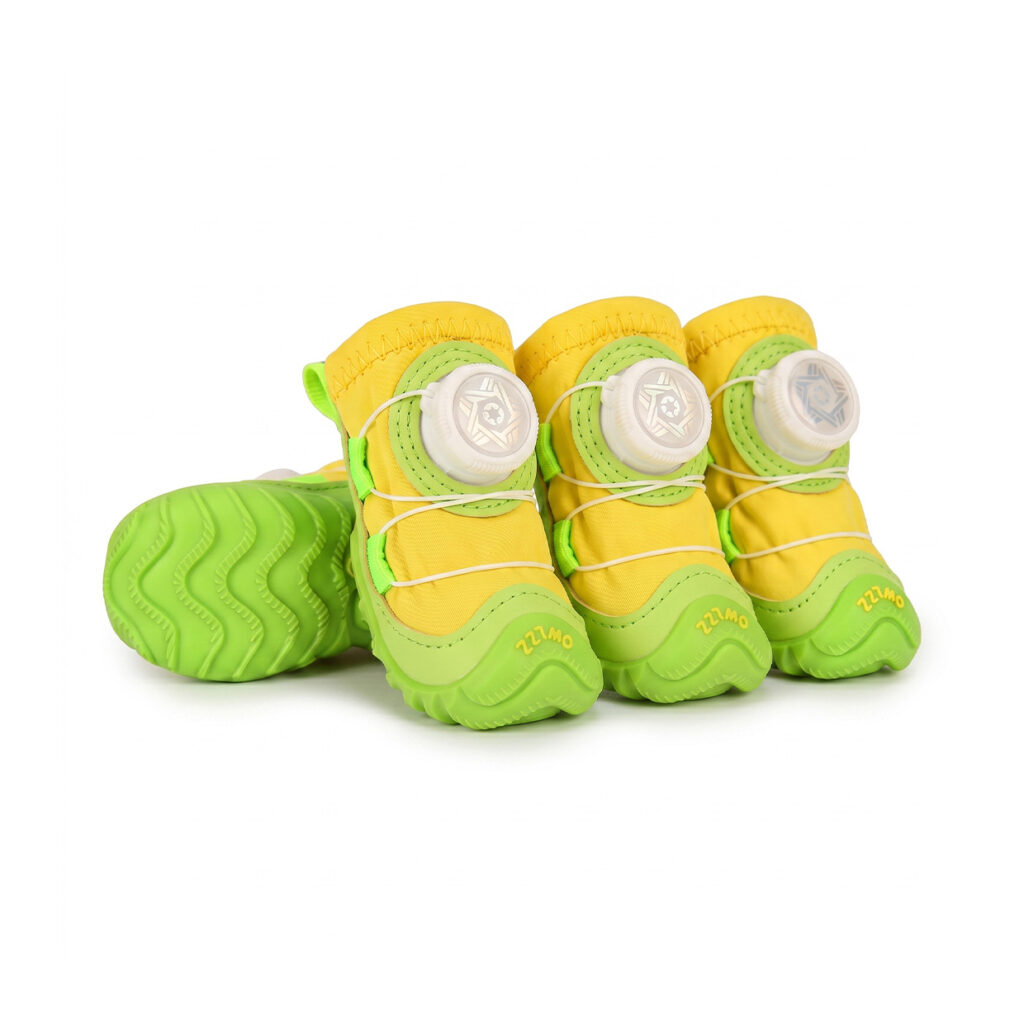
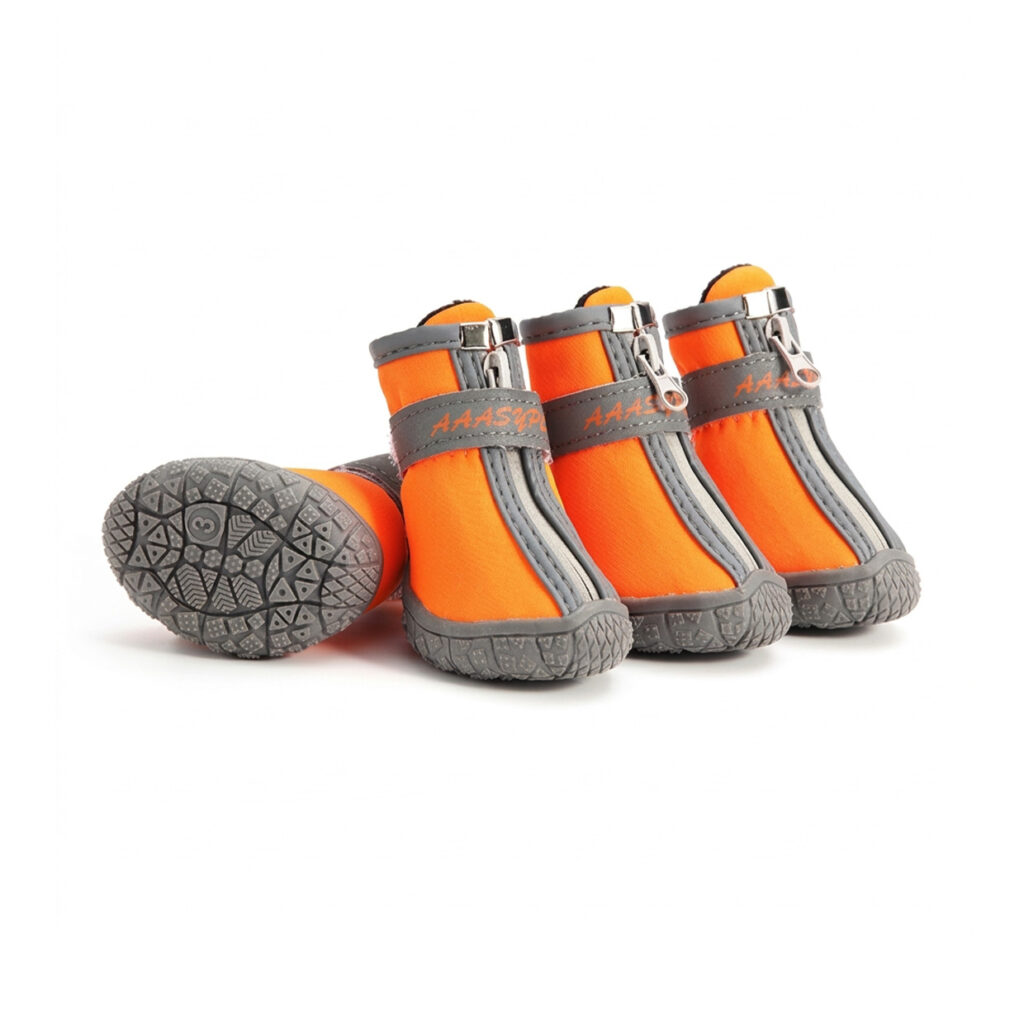
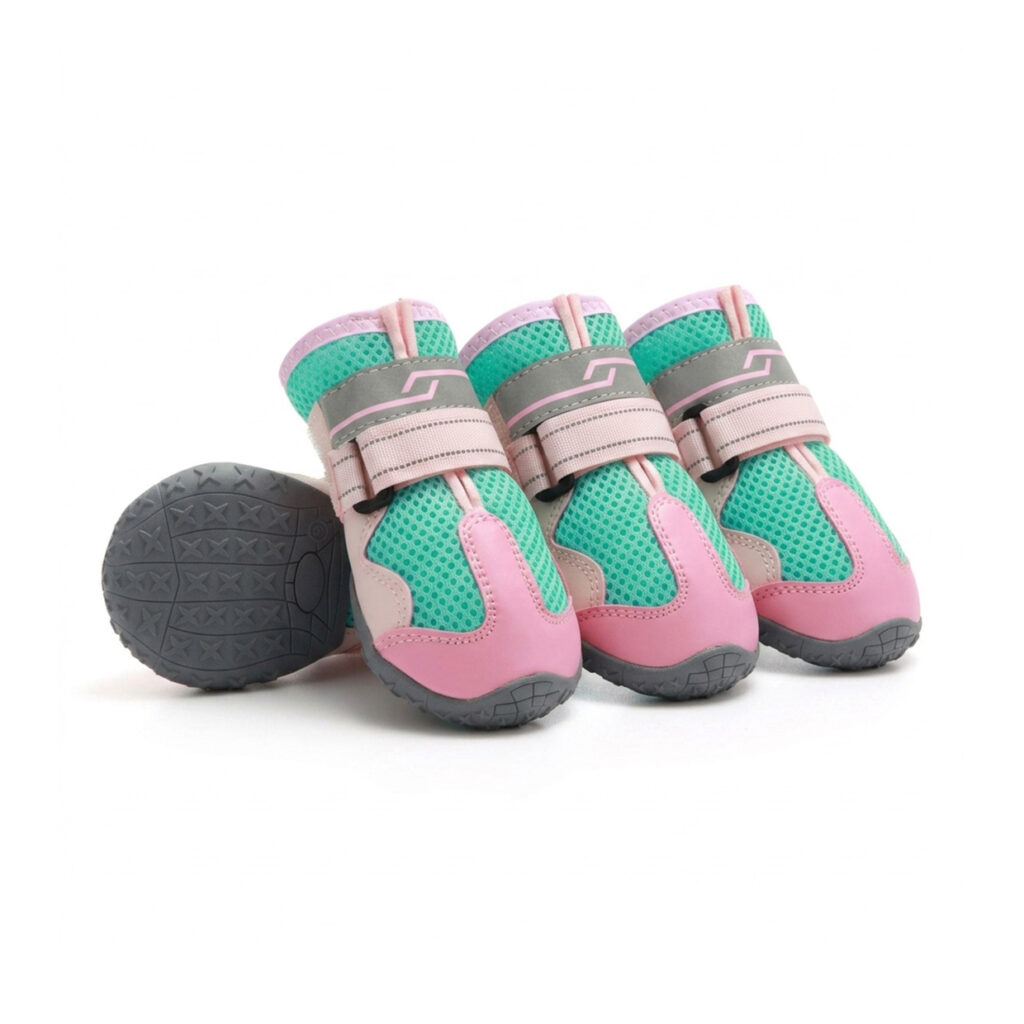
The real takeaway here: match the footwear to the surface. Indoor traction, everyday sidewalk protection, and technical trail durability are three different jobs, and expecting one boot to nail all three is setting yourself up for disappointment.
Frequently Asked Questions (FAQ)
Why do my dog boots keep falling off within minutes of walking?
Nine times out of ten, it’s either sizing or strap placement. A boot that’s even slightly too big shifts around inside, and a strap sitting too low on the leg lets the whole thing slide down that natural taper toward the paw.
Start with a weight-bearing measurement of your dog’s paw. Then watch closely during a walk—is it sliding downward, twisting sideways, or is your dog actively kicking it off? Each pattern points to a different fix.
How tight should I pull the Velcro straps on dog boots?
Firm enough that the boot doesn’t slide or spin during a normal walk—but not so tight it looks like a tourniquet. The one-finger rule is your best friend here: you should be able to slip one finger between the strap and your dog’s leg without a struggle.
Once fastened, take a quick look for indentation, redness, swelling, or any sign your dog seems uncomfortable. Any of those show up, loosen it and start over.
Can putting socks under dog boots keep them from sliding off?
Yes, and it works better than you might expect. A lightweight sock adds friction between the paw and the boot’s interior, and takes up a bit of that extra wiggle room that lets the paw slide around inside.
Just don’t lean on socks as a permanent workaround for a boot that’s genuinely too big. Stack on too many thick layers and you risk overheating the paw or creating pressure points instead of solving the actual problem.
Why does my dog intentionally kick off their back boots?
Rear paws often get a stronger reaction simply because the weight and sensation feel more foreign back there. That rapid kicking or shaking is usually a sensory response—not defiance, and definitely not your dog being “difficult” on purpose.
Short training sessions with high-value treats work wonders here. Build up wearing time gradually, and if your dog freezes up or resists moving forward, don’t pull them along—pause, reassure, and try again in a minute.
Do high-top dog boots stay on better than low-cut booties?
Generally, yes—more surface area around the lower leg means more room for secure fastening, which really helps in snow, mud, or rough terrain where boots take a beating.
That said, height alone won’t save a bad fit. The boot still needs to match your dog’s actual paw dimensions, have straps positioned correctly, and allow natural movement without squeezing too hard.
Keep Boots Locked On & Adventures Moving Forward!
Stop spending your hikes combing through the brush for a missing bootie. Your dog deserves footwear that stays exactly where you put it—through rocky trails, deep mud, and those joyful, unpredictable sprints across the yard.
Explore our ergonomic Dual-Strap Dog Boots and flexible All-Terrain Dog Shoes, built with non-slip ankle contours, heavy-duty Velcro locks, and a secure-fit design made for real dogs doing real adventures.
Shop Secure-Fit Dog Boots & Shoes