Free Shipping on All Orders | 30-Day Easy Returns
Dog Walking at Night Safety: Why Reflective Boots Matter
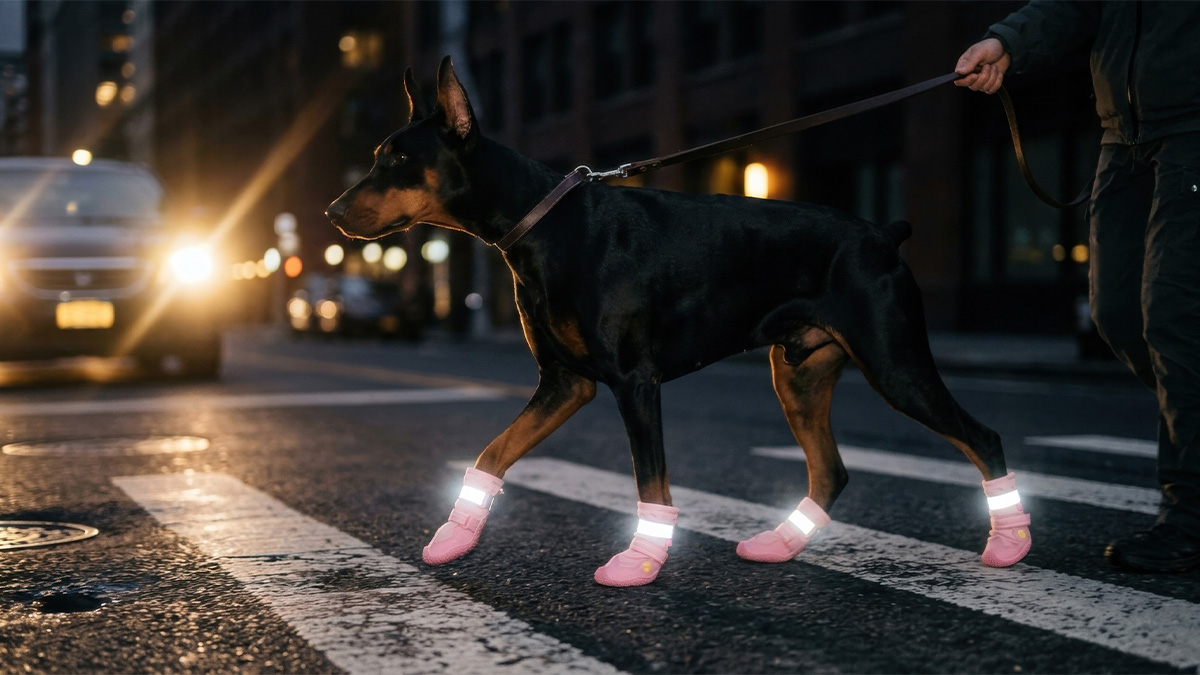
Table of Contents
If you’ve ever clipped on the leash after dinner and stepped outside into a street with maybe two working streetlights, you already know how different nighttime walks feel. Dog walking at night safety isn’t some optional add-on for the extra-cautious — it’s the thing standing between a calm evening loop around the block and a genuine scare with a car, a bike, or a hidden shard of glass.
Once the sun drops, everything changes. Drivers, cyclists, and other pedestrians simply have less time to spot a dog moving near the road, and a lot less margin for error if they do.
Darkness also has a way of swallowing hazards that would be obvious in daylight — broken glass, sharp gravel, uneven pavement, puddles hiding potholes, random debris blown into the gutter. Layer together the right reflective gear, some active lighting, a leash you actually trust, and a route you know well, and you cut that risk down dramatically.
This guide walks through why reflective paw wear actually works, how to build a practical nighttime gear setup, and five simple rules that make evening walks noticeably safer.
The Hidden Dangers of Walking Dogs After Dark
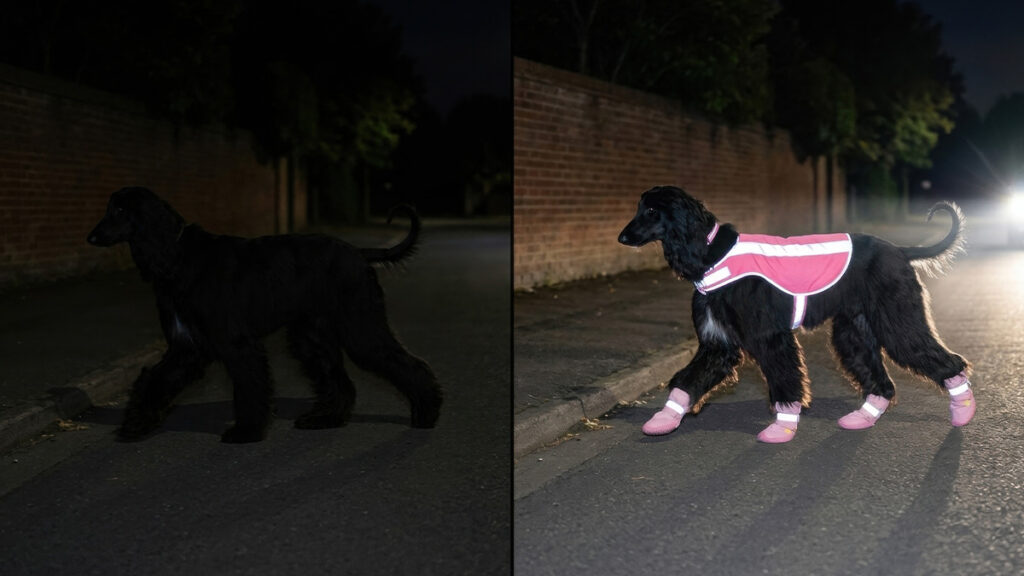
The number one hazard at night is simple: nobody can see your dog. A dark-coated dog can practically vanish against a poorly lit sidewalk, a shadowy driveway, or a dim residential street — you can be standing right next to your own dog and still lose track of them for a second.
Drivers get the short end of this deal too. If a dog steps toward the road near a parked car, a driveway, or a stretch with spotty street lighting, the driver may have almost no time to react.
This is exactly why how to keep dogs safe on night walks always starts with visibility, not obedience or leash skills. Reflective materials, LED lights, and bright gear give other people on the road the extra second or two they need to register your dog’s position before it becomes a problem.
Then there’s the paw problem. Broken glass, metal shavings, sharp gravel — none of it announces itself in the dark. Plenty of dog owners have learned this the hard way, coming home to find a limping dog and a shard of glass wedged in a pad that was completely invisible ten minutes earlier under a streetlight.
For broader context on visibility and pedestrian risk after dark, it’s worth reading the NHTSA’s guidance on pedestrian visibility and nighttime safety.
One thing worth flagging honestly: skip any claim that reduces reflective visibility to a single magic number like “500 feet.” Real-world detection distance depends on headlight strength, the quality of the reflective material, vehicle speed, weather, background contrast, and the angle everything is at. Anyone promising a fixed distance is oversimplifying physics.
Biomechanics of Visibility: Why Paw-Level Reflection Saves Lives
Reflective gear isn’t magic — it’s just physics doing something useful. Retroreflective material bounces incoming light straight back toward its source, so when a car’s headlights hit a reflective strip, a lot more of that light gets sent right back at the driver than would ever bounce off plain dark fabric.
Here’s the part most people don’t think about: paw-level reflection matters because a dog’s legs never stop moving while walking. That constant motion is actually an advantage — a moving reflective point catches the eye far more easily than something static sitting on the roadside.
Car Headlight Beam Physics
Headlights are engineered to light up the road surface ahead, not to shine straight out at eye level. That means anything reflective sitting low on your dog’s body — like a boot or paw wrap — sits right in the sweet spot of that beam.
This is exactly why reflective boots earn their place in a nighttime setup, especially alongside a reflective collar, harness, or vest. But they’re a layer, not a substitute. Reflective footwear should never replace a leash, active lighting, or just walking on the safer side of the road.
Motion-Induced Biological Movement
Every step your dog takes creates repeated, rhythmic movement in the legs. Reflective strips positioned on those moving legs create a shifting, blinking-style visual signal rather than one flat, stationary reflection.
This is really the honest answer to do dogs need reflective shoes at night — paw-level reflection adds visibility exactly where a collar or vest can’t reach, low to the ground, right in a driver’s direct line of sight.
For a deeper look at when footwear actually earns its keep beyond nighttime visibility: do dogs really need shoes for protection.
Must-Have Night Time Dog Gear: From Boots to Lighting
Good dog walking safety gear for low light isn’t one product — it’s a combination. Passive reflection, active lighting, real paw protection, and equipment you can actually control your dog with, all working together.
No single item covers everything. A layered setup is just more realistic for anyone walking a dog through an actual neighborhood after dark.
1. High-Visibility Reflective Dog Boots & Shoes
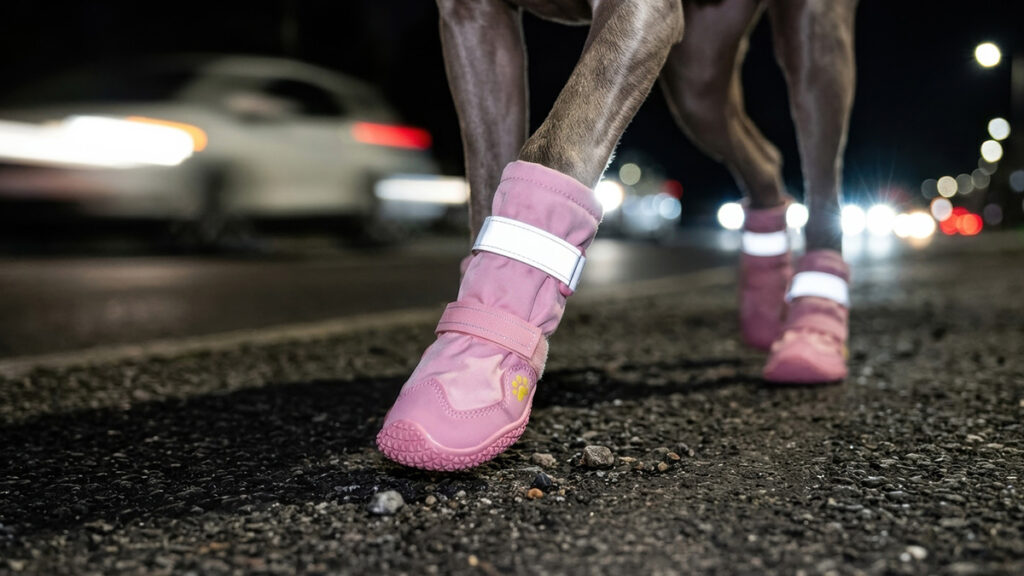
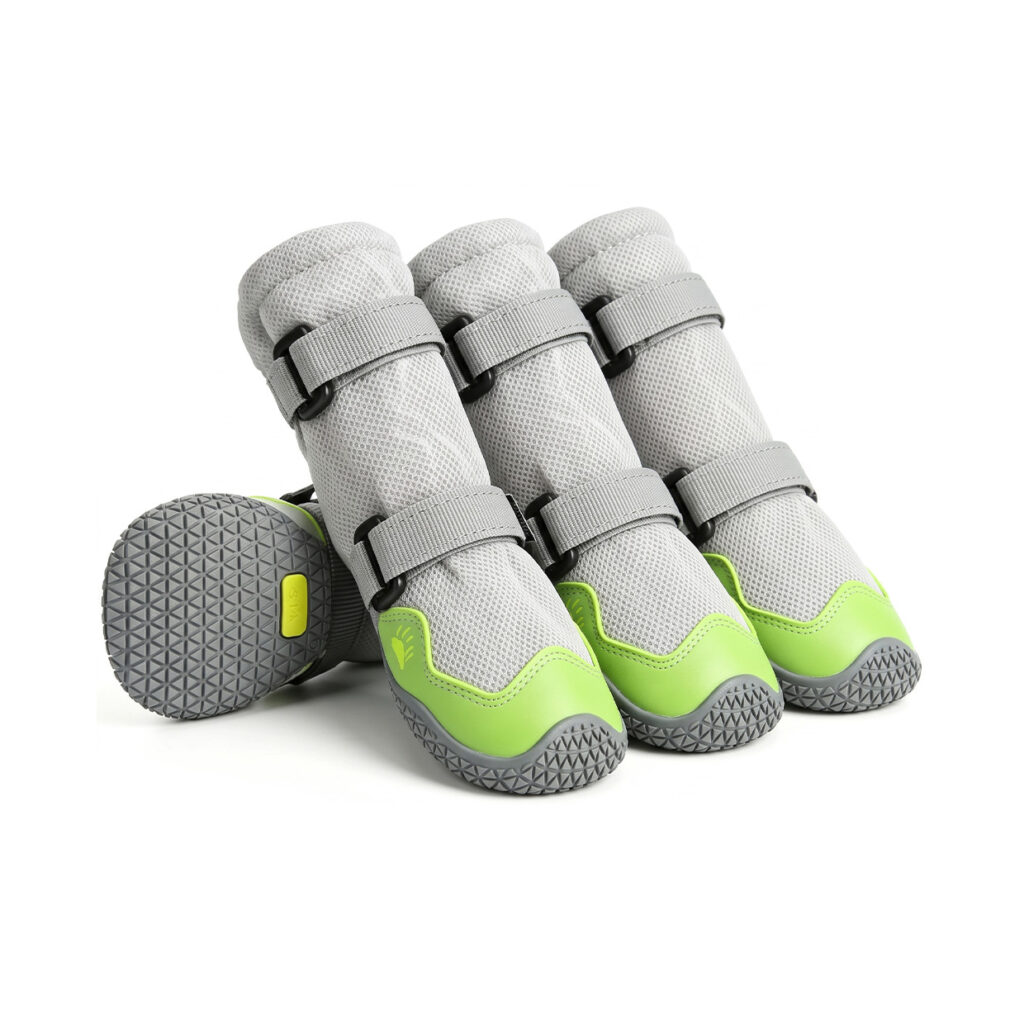
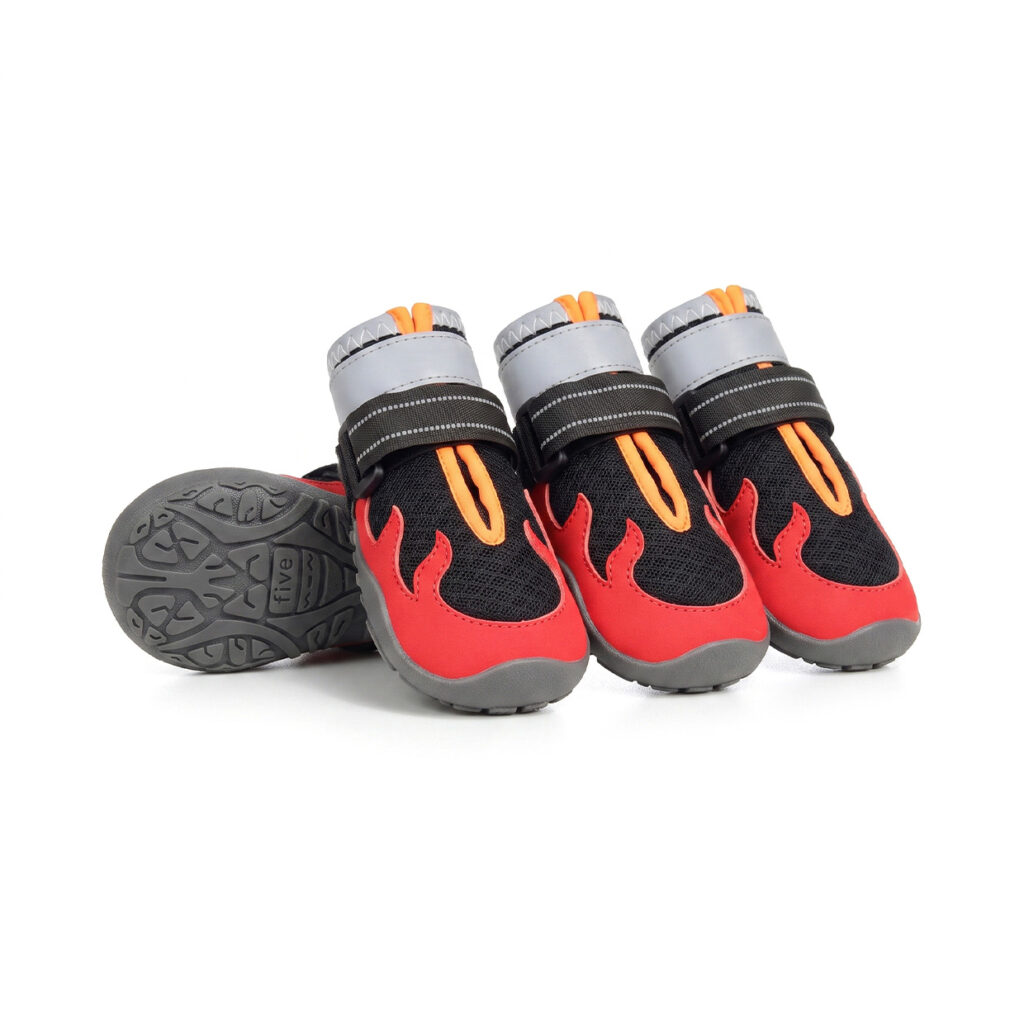
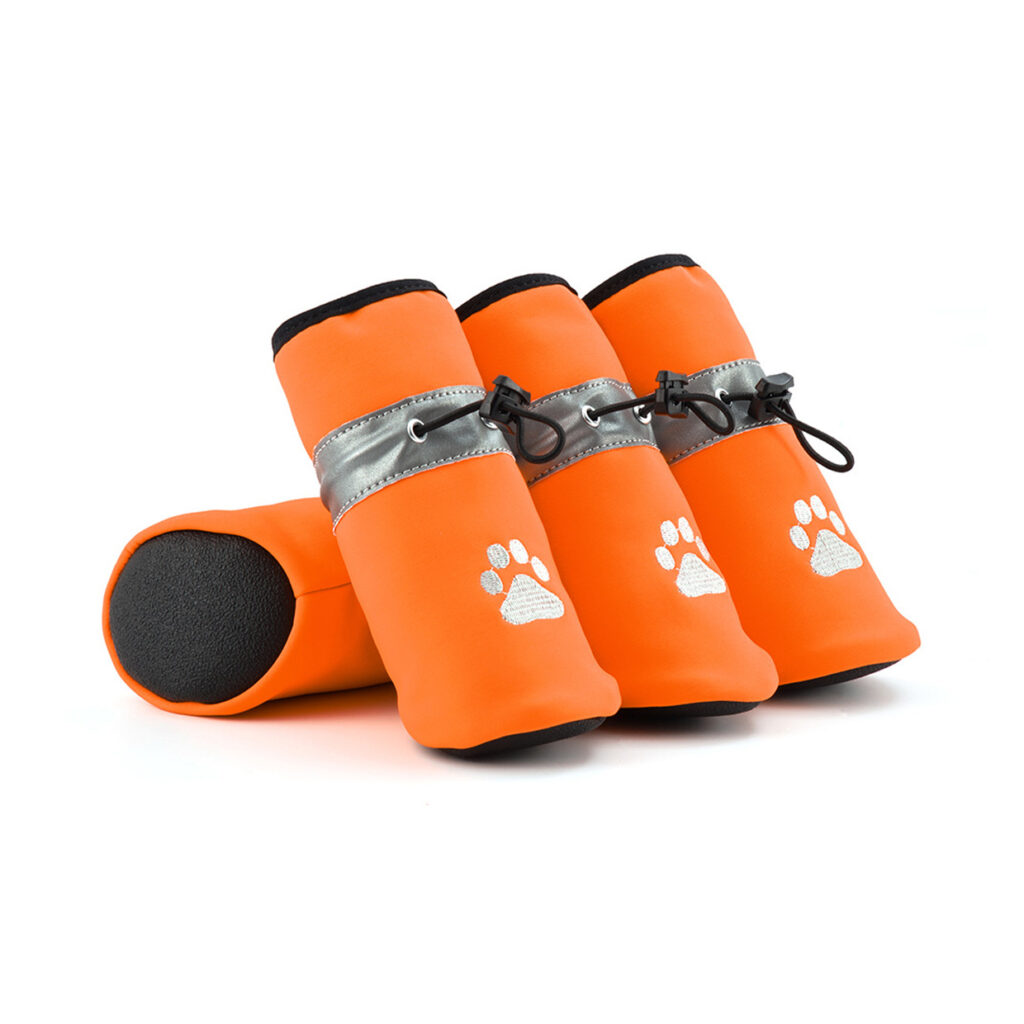
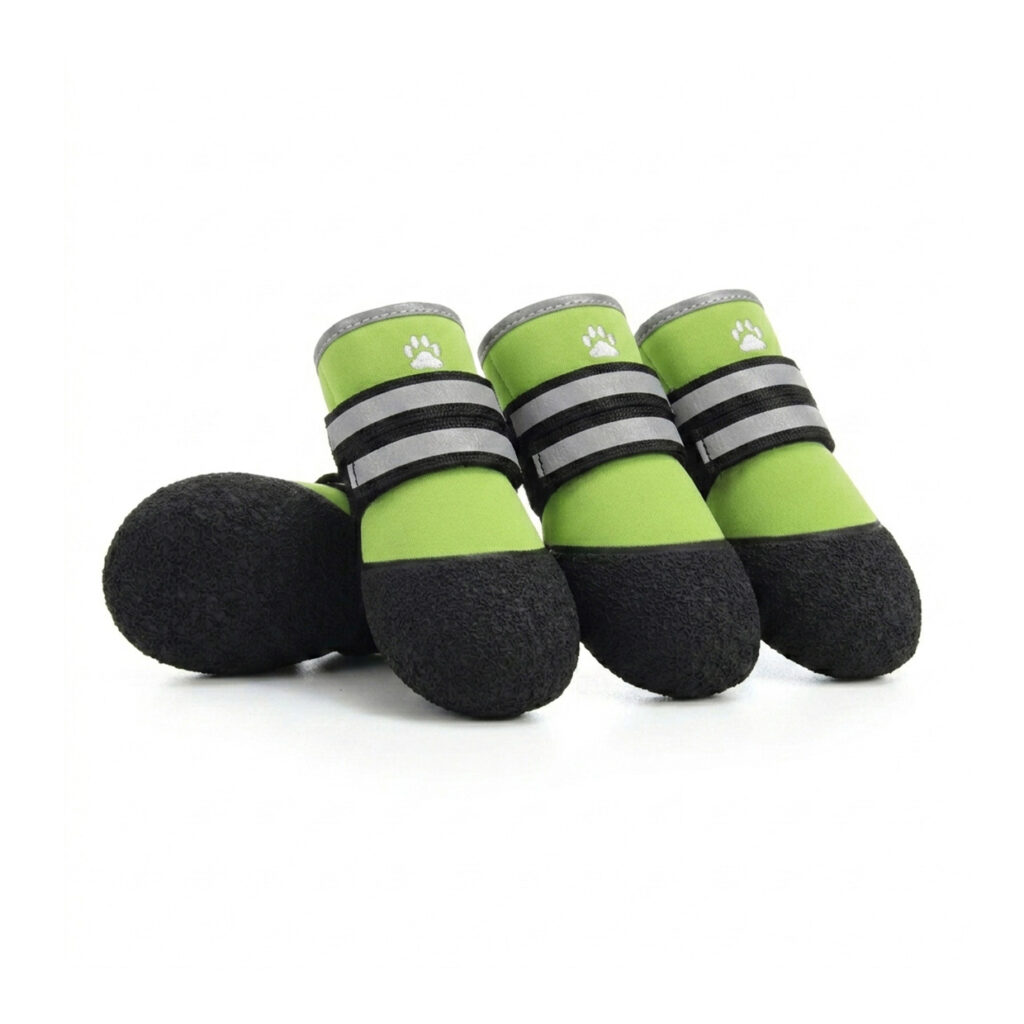
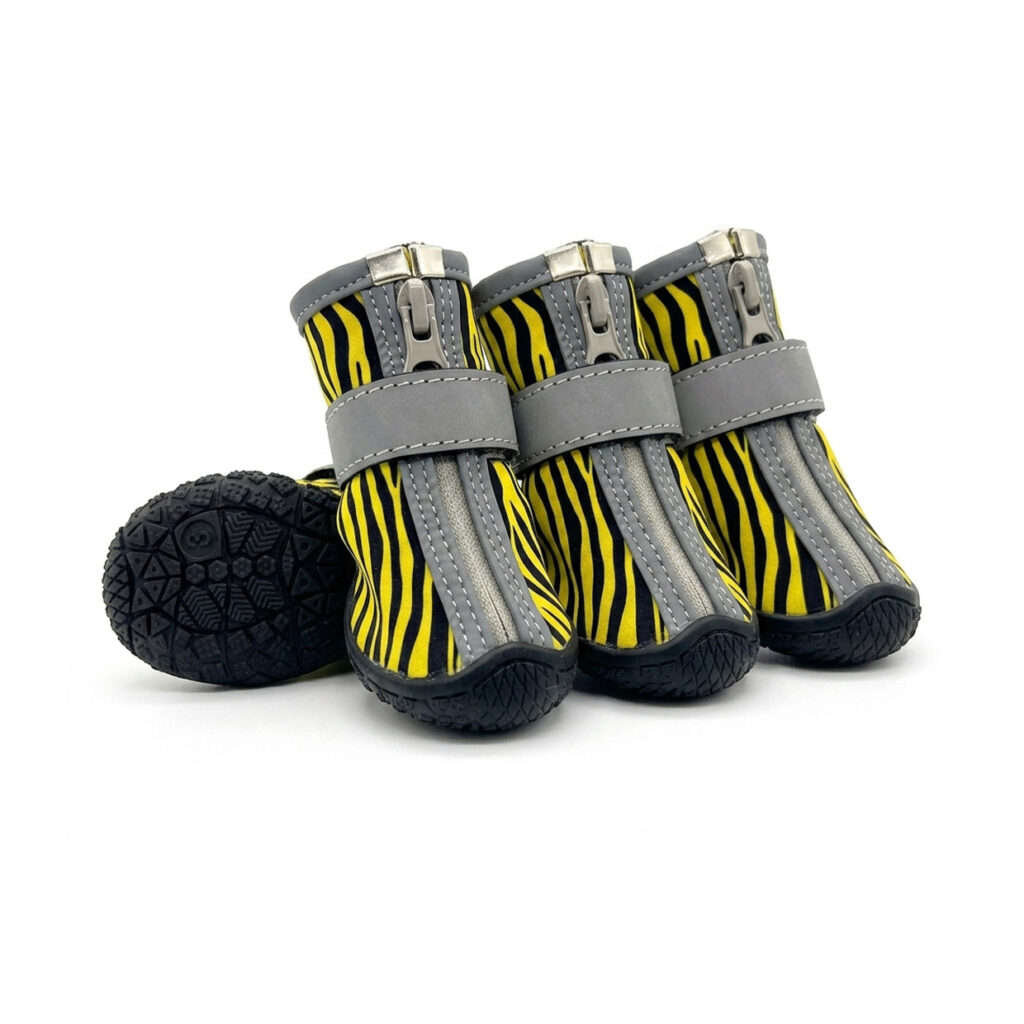
Reflective boots do double duty: they protect the paws and they make your dog visible, all in one piece of gear.
A sturdy outsole shields against sharp debris your dog would never see coming, while reflective straps or panels wrapped around the lower leg light up under headlights.
When choosing dedicated gear for low-light walks, explore our collection of reflective dog boots engineered with multi-angle high-visibility straps. Check for secure closures that won’t work loose mid-walk, comfortable materials that won’t rub, and specialized boot outsoles with reliable traction to prevent dangerous slips on damp, dimly lit pavement.
For Colder or Rougher Terrain




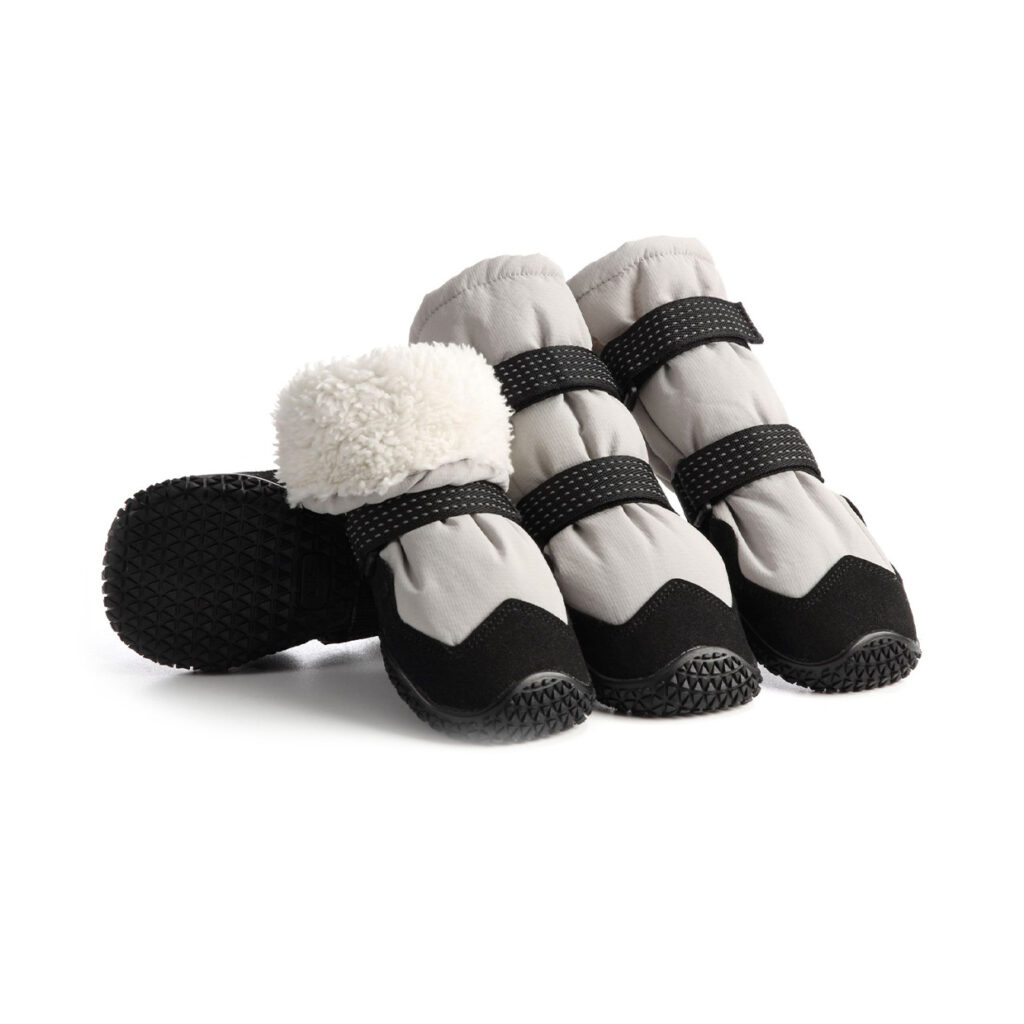
Everyday Walks Where Breathability Matters


And if you’re not sure what your dog’s paws actually need before reflection even enters the picture: comprehensive dog paw wear guide.
2. Illuminated LED Collars and Leash Attachments
LED collars and clip-on lights work differently than reflective gear — they generate their own light instead of borrowing it from a passing car’s headlights.
That makes them especially valuable on trails, in parks, or on dark residential streets where there simply isn’t much incoming light for a reflective strip to bounce back in the first place.
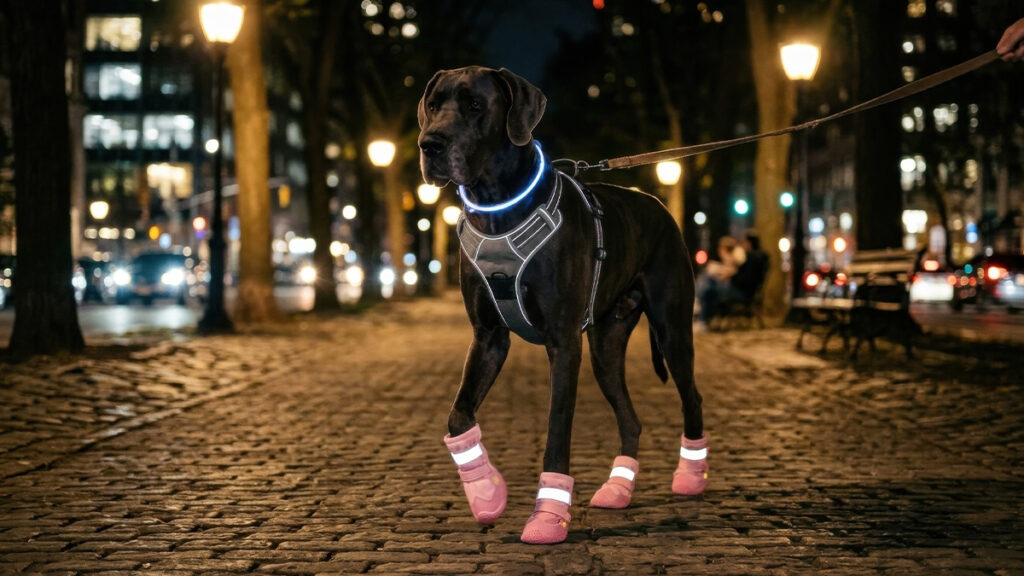
The smartest setup pairs both technologies: an LED collar keeps your dog visible constantly, while reflective boots or a vest light up dramatically the moment headlights hit them.
3. Reflective Vests & Hands-Free Leashes
A reflective vest covers a much larger surface area across your dog’s back and sides. Paired with reflective boots and an LED collar, you end up with visible points from nearly every angle a driver or cyclist might approach from.
For control, a standard fixed-length leash usually beats a fully extended retractable one near roads or busy areas — it gives you the kind of immediate, physical control that matters when something unexpected happens fast.
Real dog safety in the dark comes down to this: visibility and control have to work together. A dog wrapped in reflective gear from nose to tail can still end up in trouble if a long leash lets them wander into the street before you can react.
5 Practical Rules for Safe Night Walks
1. Walk Facing Traffic When There Is No Sidewalk
If you’re stuck walking along a road with no sidewalk, stay on the side facing oncoming traffic. It gives you a real chance to see a car coming and react, instead of relying on a driver spotting you from behind.
Keep your dog on the side away from the travel lane, as far from the road as the space allows, and stay genuinely alert to approaching vehicles — not just glancing occasionally.
Whenever a sidewalk or separated path exists, use it. It’s not worth the shortcut.
2. Keep the Leash Short in the Dark
This is the one rule most owners skip, and it’s the one that matters most. Don’t let your dog roam out to the end of a long retractable leash near roads, driveways, intersections, or parking lots.
A shorter leash means you can actually react when a cyclist appears out of nowhere, a car pulls out of a driveway, another dog rounds a corner, or something unexpected shows up in your dog’s path.
It also keeps your dog from wandering somewhere you genuinely can’t see — which, in the dark, can be closer than you think.
3. Stick to Lit Paths
Choose sidewalks, parks, and routes with reliable lighting whenever you can, even if it means a slightly longer walk.
Skip the poorly lit shortcut through overgrown bushes, a construction zone, an uneven trail, or anywhere broken glass could be hiding. It’s just not worth the risk to save two minutes.
A familiar route is almost always a smarter choice after dark than a new one — you already know where the tricky crossings, cracked pavement, and blind corners are.
4. Stay Alert and Skip Headphones
Night walking demands more from your ears, not less. Leave the noise-canceling headphones at home — you need to hear an approaching car, a bike coasting up behind you, a runner, or another dog before you see them.
Pay attention to engine sounds, footsteps, and shifts in your surroundings, especially anywhere near traffic.
Your dog is also a walking early-warning system. If they suddenly stop, stare, pull hard, or go unusually alert, trust it — they may have noticed something you haven’t yet.
5. Check Secure Fit Before Leaving
Before every single nighttime walk, take thirty seconds to check the boots and fastening system. It’s an easy step to skip, and the one that causes the most mid-walk frustration when you do.
Make sure the reflective straps face outward (not twisted underneath), Velcro is fully closed, and nothing is loose enough to spin or slip off. At the same time, don’t overtighten — straps should stay snug without ever cutting into circulation.
If your dog is new to wearing boots, walk them a few steps around the living room first. You’ll see it immediately — that stiff-legged, high-stepping shuffle dogs do the first few times — and you’ll have a chance to fix a poorly seated boot before you’re both out on the street.
For more on leash handling and safe control, the ASPCA’s guidance on safe dog handling and leash use is a solid reference.
Frequently Asked Questions
Why is dog walking at night safety more critical in winter and fall?
Because there are simply fewer daylight hours — walks that used to happen in full sunlight now happen at dusk or in complete darkness. Add wet pavement, rain, fog, snow, or ice into the mix, and visibility drops even further while footing gets trickier. Reflective gear, active lighting, secure boots, and a route you trust matter more in these months, not less.
Are reflective dog boots better than LED clip-on lights?
Neither one wins outright — they’re built for different jobs and honestly work best as a team. LED lights actively glow, so they’re visible even with zero passing headlights, which makes them great for trails and dark parks. Reflective boots only light up when something illuminates them, but they make your dog’s legs pop dramatically under a car’s headlights. Run both together and you cover the gaps either one leaves on its own.
How visible are reflective straps to drivers at night?
Genuinely visible — good retroreflective material lights up impressively once headlights hit it directly. That said, ignore any claim that promises a fixed visibility distance like “500 feet.” Real detection depends on the car’s headlights, the angle, weather, road conditions, and how much contrast there is against the background. Use reflective gear to boost contrast, but keep the leash, lighting, and safe route as your real safety net.
What should I do if my dog is fearful or reactive during night walks?
Don’t push straight into a long night walk if your dog is already anxious after dark. Start small — short sessions in a familiar, well-lit area, with plenty of high-value treats for calm behavior. Build up the distance and darkness gradually as your dog gets comfortable. A properly fitted boot can also help by preventing that distracting flopping or slipping feeling that spooks some dogs. If the fear or reactivity is severe or doesn’t improve, a certified behavior professional or veterinary behaviorist is worth bringing in.
Can my dog wear reflective shoes for both day and night walks?
Absolutely, and it’s actually a great way to get more mileage out of one purchase. During the day, the same boots protect against hot asphalt, rough trails, mud, or sharp debris. After sunset, the reflective panels do double duty for visibility. Just match the boot to the season — lightweight, breathable shoes for warm weather, and insulated or waterproof boots when snow or ice show up.
Build a Safer Night-Walking System
Dog walking at night safety was never about one product doing all the work. The setups that actually hold up combine several layers: reflective boots, an LED collar or clip-on light, a visible vest, a leash you can trust, gear that fits properly, and a route you already know well.
Reflective elements earn their keep by working with a car’s headlights, while LED lighting fills in the gaps where there’s no headlight around to reflect off in the first place.
Treat all of this equipment as backup for good handling, not a replacement for it. Keep your dog close, stay off the road whenever there’s an alternative, keep your senses tuned in, and take a second look at the ground before letting your dog walk through anywhere poorly lit.
Light Up the Dark & Protect Every Evening Stride!
Don’t let low visibility be the reason a nighttime walk goes wrong. Gear up with technical footwear built for visibility, traction, and real paw protection.
Check out our lineup of Reflective Dog Shoes and all-weather High-Visibility Dog Boots — reflective straps, non-slip traction soles, and built for the kind of evening walks you actually take.
Shop High-Visibility Reflective Dog Boots & Shoes Now.
