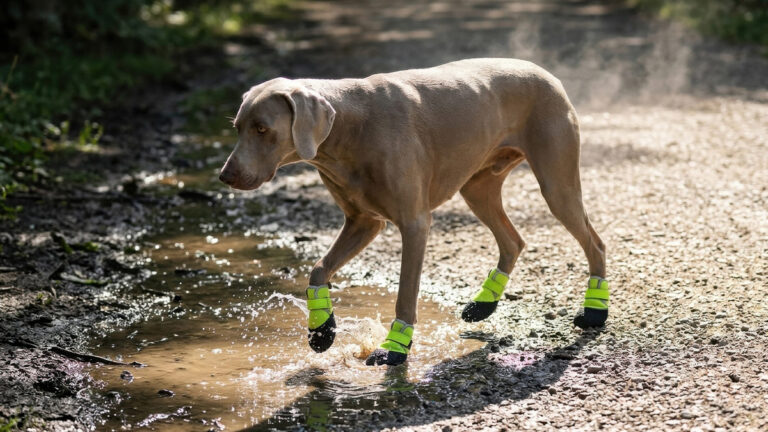
Free Shipping on All Orders | 30-Day Easy Returns
Secure Dog Boot Design: Anatomy of Gear That Stays On
Table of Contents
Understanding the engineering behind secure dog boot design is the fastest way to stop losing boots and cutting walks short.
Most of us have been here. You buy boots, strap them on carefully, and fifty yards later one is twisted sideways with the sole facing out. Or your dog takes off after a snowball, and you spend the next ten minutes kicking through a snowbank looking for a red boot. It’s frustrating, and it gets expensive.
Your dog’s gait is rarely the problem. Usually the issue is how five things work together:
- Paw shape
- Leg anatomy
- Boot shape
- Strap tension
- Movement
Dog legs don’t give a shoe much to hold onto. People have a heel bone that sticks out at the back of the foot, and it keeps a shoe from sliding off. Dogs walk on their toes, and the leg above the paw is slim, fairly straight, and has no heel bump. Dogs also flex their wrists, toes, and hocks constantly as they walk, run, jump, and turn.
So secure dog boot design is about more than a stronger Velcro strap. A well-built boot controls movement without squeezing. It stays lined up with the paw, resists twisting, follows the shape of the lower leg, and stays comfortable through thousands of flexes.
This guide covers:
- Why dog boots fall off so easily
- The three design features that help boots stay on
- How dog suspender boots compare with independent strap systems
- How to combine secure construction with correct sizing and comfort
The Conical Ankle Dilemma: Why Ordinary Dog Boots Fall Off
The main challenge in dog footwear is that a dog’s lower leg doesn’t behave like a human foot.
The front leg has the carpus, the dog’s wrist. The back leg has the hock, which is the true heel and sits well above the ground. Below both joints, the leg narrows into a slim pastern that leads down to the paw. That narrowing shape is why “conical ankle” is a useful way to picture the problem.
The joint angles change with every stride, and the paw moves through several positions during each step. On a slow walk, the boot mostly goes along for the ride. When your dog runs, jumps, pivots, or scrambles up a rock, the boot gets pulled hard in different directions.
That’s why the answer to why do dog boots fall off so easily usually has more to do with the boot’s whole structure than with the strap.
The problem with simple tube-shaped openings
A basic boot can look secure while your dog is standing still in the kitchen.
But if the opening is a loose tube wrapped around a narrowing leg, every stride pulls the boot down a little or twists it a little. Fur makes this worse, because it acts like a slippery layer between the boot and the skin.
Once a boot starts to twist, it gets worse quickly:
- The sole slides out from under the paw.
- The strap moves off its intended spot.
- Your dog starts the stiff-legged flick, as if they stepped in a puddle.
- The boot comes off.
If you’re shopping for dog boots that stay on, look past the tread and the strength of the Velcro. The parts that hold the boot on matter as much as the sole.
Why rubber, balloon, and disposable booties behave differently
Stretchy rubber dog boots are popular for good reasons. They’re light, flexible, waterproof, and quick to pull on. Well-known stretch-rubber designs such as Pawz rubber dog boots show the appeal: a thin rubber shell that keeps out wet pavement, slush, and mud without the bulk of a hiking boot.
A stretch-rubber boot stays on mostly through its elastic opening and grip against the leg. That works well for many short outings. It’s a different retention method from a structured boot with separate fastening points.
The same goes for disposable dog booties, balloon booties for dogs, and other thin latex covers. A snug band at the top does most of the work. They’re handy for quick, temporary protection. Keep a few things in mind:
- They don’t breathe, so paws can come out damp after longer wear.
- The band can be hard to roll on.
- The band can leave a ring on the leg if it’s too tight.
They’re simple, and simple is fine for short jobs. Just don’t expect them to hold on like a performance boot.
A structured outdoor boot has more ways to control movement, because its sole, upper, cuff, and straps are designed to work together.
For more background on how a dog’s legs are built and how they move, see resources from the American Kennel Club and VCA Animal Hospitals.

The 3 Engineering Pillars of Secure Dog Boot Design
The best secure dog boot design doesn’t depend on one magic feature. It spreads the holding job across several features so no single strap, seam, or panel takes every force.
Three features matter most:
- Independent fastening zones
- Anatomical shaping
- A well-built cuff
1. Dual Independent Tension Straps: The Mechanical Locking System
A single strap really does one thing. It squeezes evenly around the opening. That’s enough when the boot fits well and your dog is strolling.
When your dog is running, one fastening point usually can’t stop both sliding down and twisting. Two straps divide the work:
- The lower strap keeps the boot steady around the paw and the lower opening.
- The upper strap controls movement higher up the shaft, so the cuff doesn’t flop when the wrist flexes.
That’s why dual strap dog boots that stay on tend to stay steadier on active dogs than single-closure designs.
It also explains why well-made velcro dog booties can work better than you’d expect. The hook-and-loop needs to be wide enough to grip, adjustable enough to fine-tune, and placed on a boot that fits. You’ll hear the familiar thwip every time you put them on, but the closure itself isn’t the weak point. Poor placement and poor sizing are.
One rule matters most here: the strap should steady the boot, not act like a tourniquet. More tension isn’t automatically better.
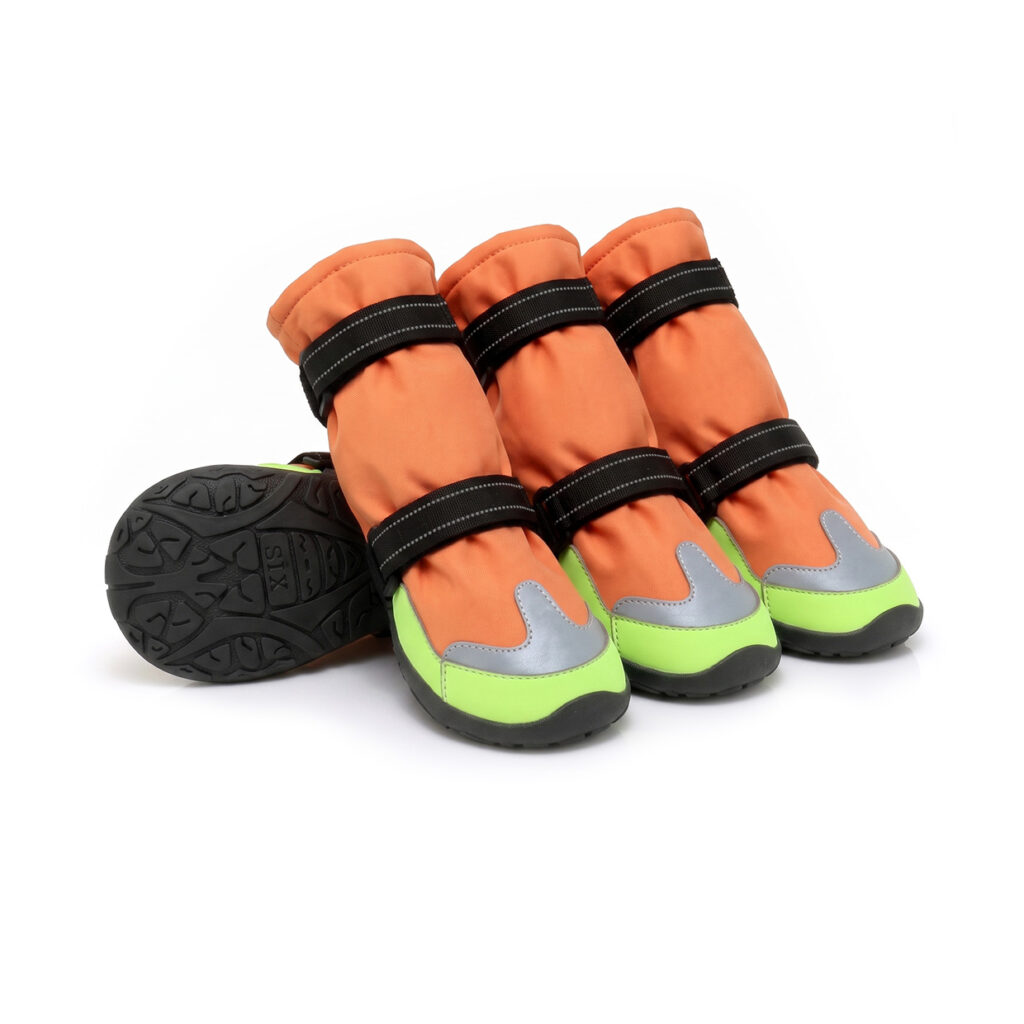
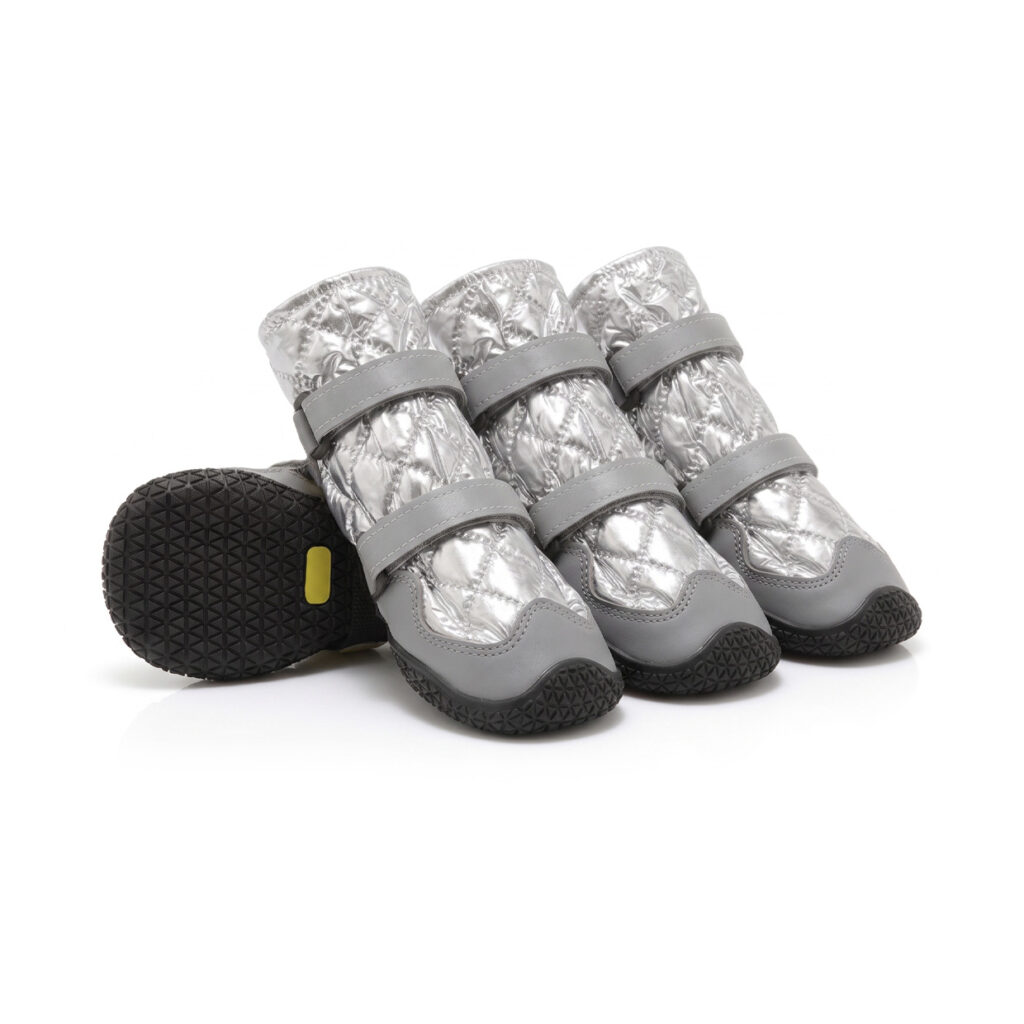
Engineered Dog Boots That Stay On
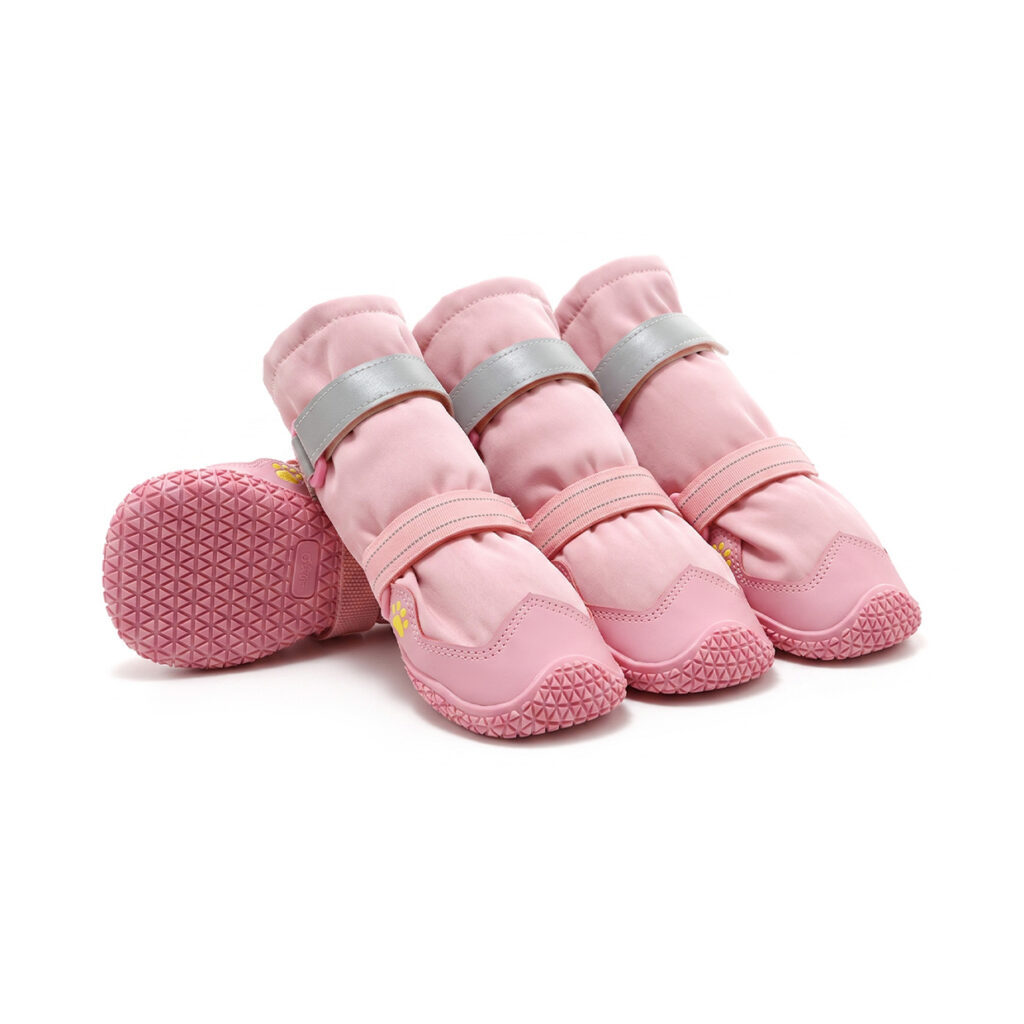
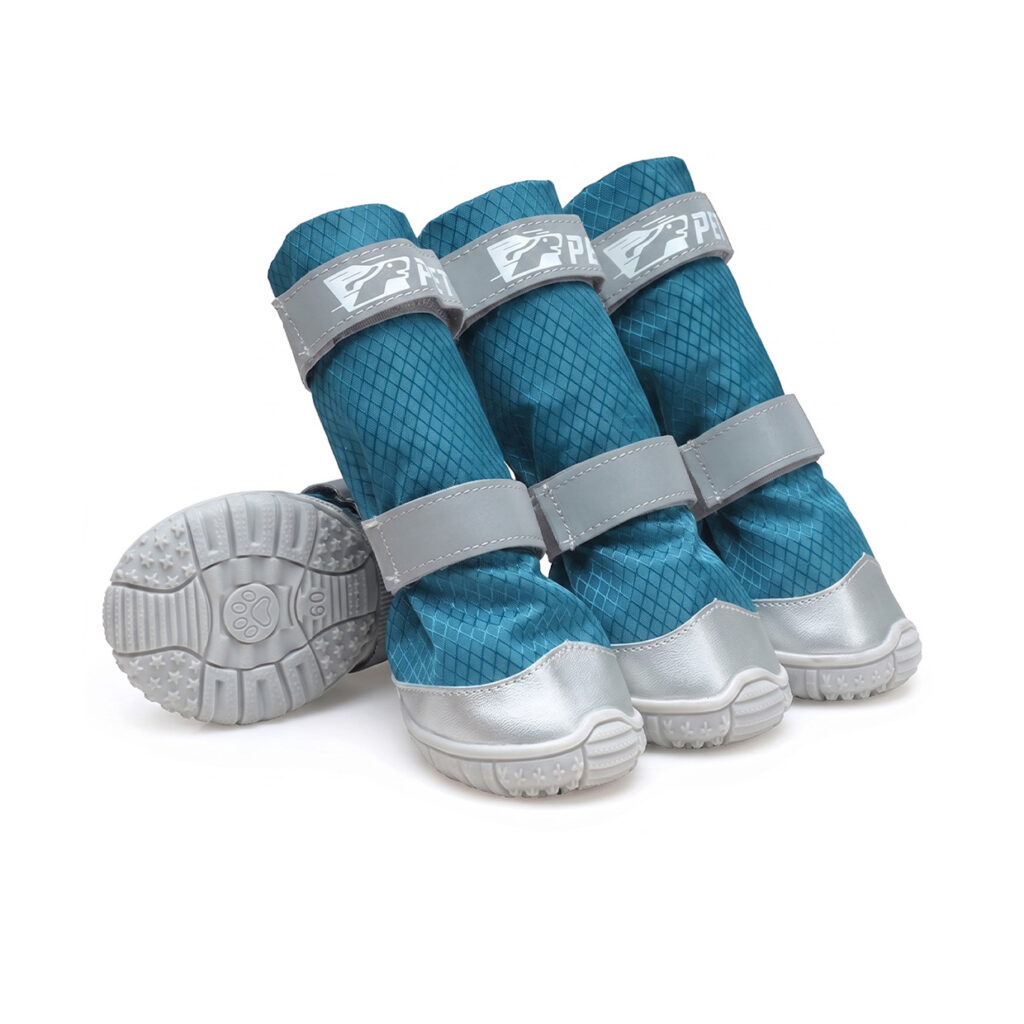
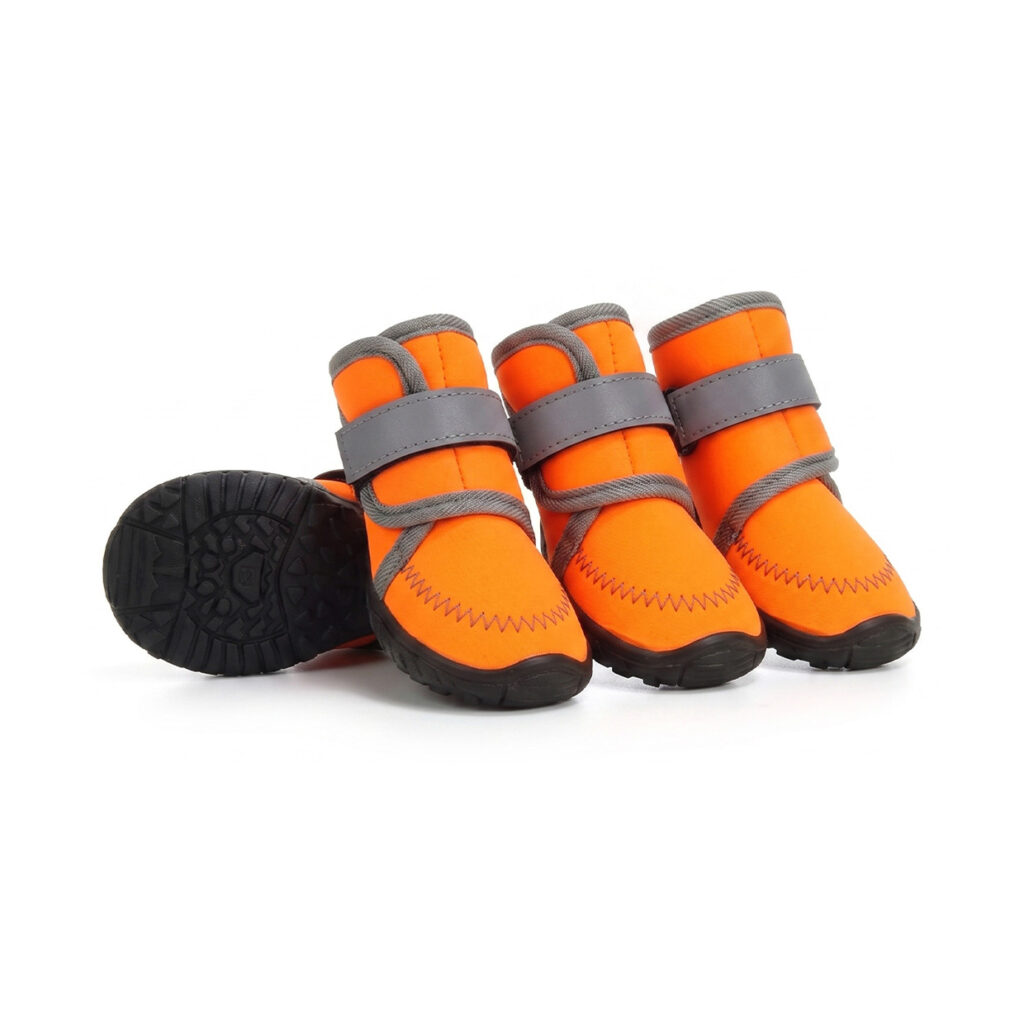
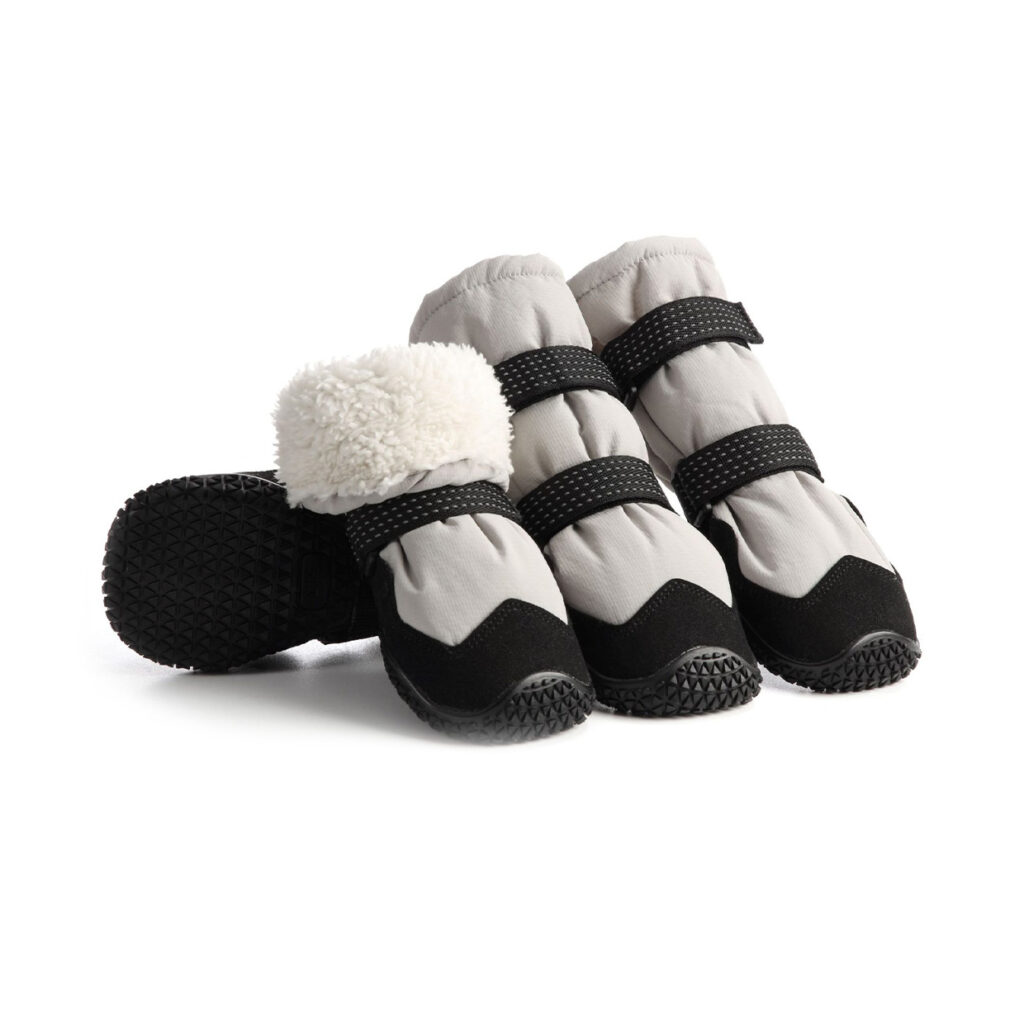
2. Anatomical Heel and Rear Contouring
A dog boot doesn’t need to copy a human heel counter. It just needs to follow the dog’s actual leg shape instead of acting like a perfectly symmetrical tube.
Look at your dog’s leg from the side. The pastern isn’t perfectly straight up and down; it sits at a slight angle. On the front leg there’s a small carpal pad behind the wrist. A boot with a shaped back panel, or a pre-angled shaft, sits along those lines instead of fighting them.
Instead of shifting freely around the leg, a shaped boot has more contact with the dog’s anatomy. This matters most when your dog speeds up and slows down repeatedly:
- Charging downhill
- Hopping over logs
- Climbing rocks
- Cutting hard after a ball
Each of those puts far more force on a boot than a slow lap around the block. A well-shaped back helps the boot move with the leg instead of sliding against it.
3. Gaiter-Height Cuffs and Snow-Resistant Openings
Keeping a boot on is part of the job. Keeping snow, mud, and grit out is the other part.
A taller cuff gives dogs more coverage in deep snow, mud, brush, or wet ground. For winter, an elastic or adjustable snow-resistant opening reduces how much snow packs in at the top.
This affects whether the boot stays on. Snow that collects inside melts, refreezes, and adds weight. Wet mud does the same, and it also makes the inside slippery. A heavy, slick boot is much more likely to slide off.
Higher isn’t always better, though. A cuff that rides too far up the leg, or fits badly, can get in the way of joint movement or press where it shouldn’t. The right height depends on:
- The activity
- The boot’s construction
- Your dog’s build
- The weather
That’s the difference between the best dog boots that don’t fall off and a boot that simply has a tall shaft.

Dog Footwear Types Compared: How Each One Stays On
Different footwear holds on in different ways. This table shows how the most common types compare.
| Type | What Holds It On | Best For | Watch Out For |
|---|---|---|---|
| Balloon / disposable booties | Tight latex band | Short wet or salty walks, vet visits, quick clean-ups | Little airflow, a band that can be too tight, limited durability |
| Rubber socks for dogs / grip shoes | Stretch fit plus textured grip | Indoor traction, light outdoor use | Can twist on very active dogs |
| Fleece dog booties | Soft cuff, sometimes with a strap | Cold, dry snow and cozy around-the-house wear | Absorb water, often fit loosely |
| Velcro dog booties (single strap) | One hook-and-loop strap | Everyday walks | One fastening point, so less control while running |
| Dog suspender boots | Straps connected to a harness | Dogs who lose boots despite a correct fit | Extra straps that can snag, twist, or rub |
| Structured dual-strap boots | Two straps, shaped shaft, cuff | Hiking, rough terrain, active dogs | Must be sized correctly and broken in |
If your main concern is grip on slick floors rather than keeping a boot on outdoors, no slip dog booties and non slip booties for senior dogs are their own category. They focus on traction and easy wear, which suits older dogs with stiff joints. See Mobility and Traction Dog Boots: Arthritis & IVDD Guide.
Boots vs. Suspenders: Structural Ergonomics vs. Quick Fixes
The popularity of dog suspender boots says something: plenty of ordinary boots don’t stay on, and owners are understandably fed up.
Suspenders fix the problem by tying the footwear to another part of the dog’s body. That can work, but it changes how the whole setup behaves.
How dog suspender boots work
A dog suspender system uses straps or elastic cords that run from each boot up to a harness or another anchor point. Some brands make dog sock suspenders that work the same way for socks, and dog snow suspenders with heavier straps for winter gear. Search for dog shoe suspenders and you’ll find all of these.
The system doesn’t rely only on the paw and lower leg to hold the boot. It adds an outside anchor. That can help a dog who keeps losing boots even with the right size and careful fastening.
Every extra strap is something else that can:
- Catch on branches or brush
- Twist or tangle
- Shift as the dog moves
- Need readjusting mid-walk
- Rub where it crosses the leg or body
For a dog crashing through underbrush, think that through carefully before choosing suspenders.
Dog suspender boots vs. secure strap boots
The dog suspender boots vs secure strap boots question really comes down to this: where should the holding force come from?
- A good independent boot handles it locally, through its sole, upper, cuff, shape, and straps.
- A suspender system moves part of that job outside the boot, onto the harness and body.
Neither is right for every dog.
For regular walking, hiking, and running, a well-fitted independent boot is usually simpler. Each leg moves freely, and there’s nothing running up the body to snag. For dogs with unusual retention problems, suspenders are a reasonable option, as long as the straps don’t limit movement, rub, or create a snag hazard. After the first few outings, check under every strap point for flattened fur or pink skin.
If a boot keeps falling off, fix the fit before adding more hardware.
Read our troubleshooting guide on why dog boots keep falling off and 5 ways to stop slipping for the fitting and fastening routine to try before moving to a more complicated system.

The Dewclaw & Comfort Safeguard: Zero-Pinch Architecture
A secure boot should never be designed on the idea that tighter means safer. The goal is controlled retention: the boot resists sliding and twisting while leaving room for the paw and leg to move naturally.
Why the dewclaw needs special attention
The dewclaw sits on the inner side of the leg, usually right where a strap or cuff edge wants to land.
- A strap pulled across it concentrates pressure on one small spot.
- A rough cuff edge rubs the same patch with every stride.
The early signs are easy to miss unless you look:
- Flattened fur
- A faint pink mark
- Your dog stopping to lick the inside of one front leg
The fix isn’t necessarily a looser boot. Look for a design whose straps steady the boot without crossing directly over the dewclaw. Some boots also use padding, softer materials, or shaped cutouts around common contact points. Construction varies from boot to boot, so check the specific design you’re considering.
Secure doesn’t mean extremely tight
This distinction matters a lot:
- A boot loose enough to twist isn’t secure.
- A boot cranked down hard isn’t safe.
The right tension holds the boot in place without visibly squeezing the leg. After every early session, take the boots off and look closely:
- Normal: A light strap impression that fades within a few minutes.
- Needs a refit: Deep grooves, swelling, redness, fur loss, or a spot your dog flinches about.
Start with the correct size
Even the best secure dog boot design can’t make up for the wrong size.
Measure each paw while your dog stands with weight on it, because toes spread under load. Follow the manufacturer’s measuring instructions. Sizing isn’t universal; it varies between brands and even between models from the same brand. Always compare your measurements with the chart for the specific boot you’re buying.
Breed is only a rough starting point:
- Poodle boots often need a narrower cut, because Poodles tend to have small, oval feet with well-arched toes. A boot that’s too wide will spin.
- Dog shoes for golden retriever feet usually need a rounder, roomier toe box, and the feathered fur between the toes takes up space too.
- K9 shoes for working dogs are a separate category, built for hard use and long shifts.
Whatever the breed, trust the tape measure over the label—follow our Dog Boot Sizing and Fit Guide to measure your dog’s weight-bearing paw accurately.
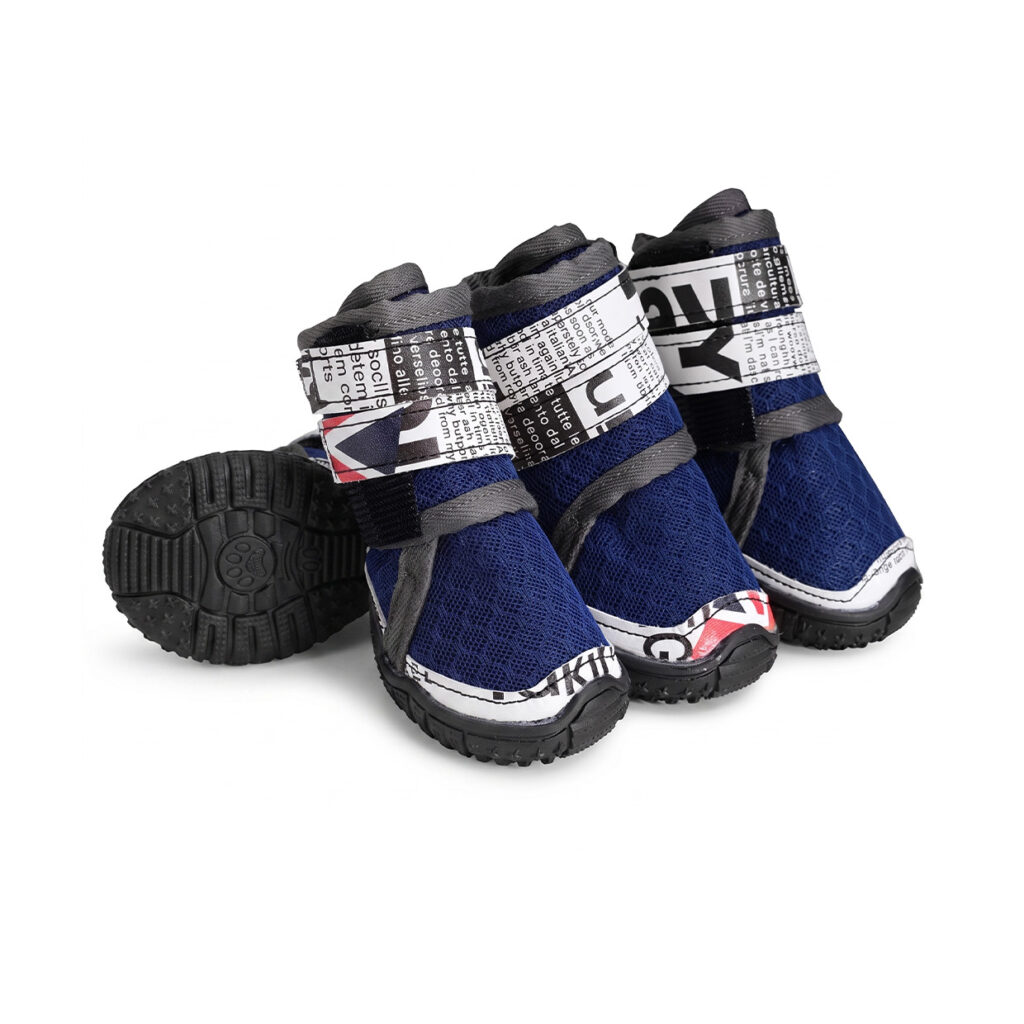
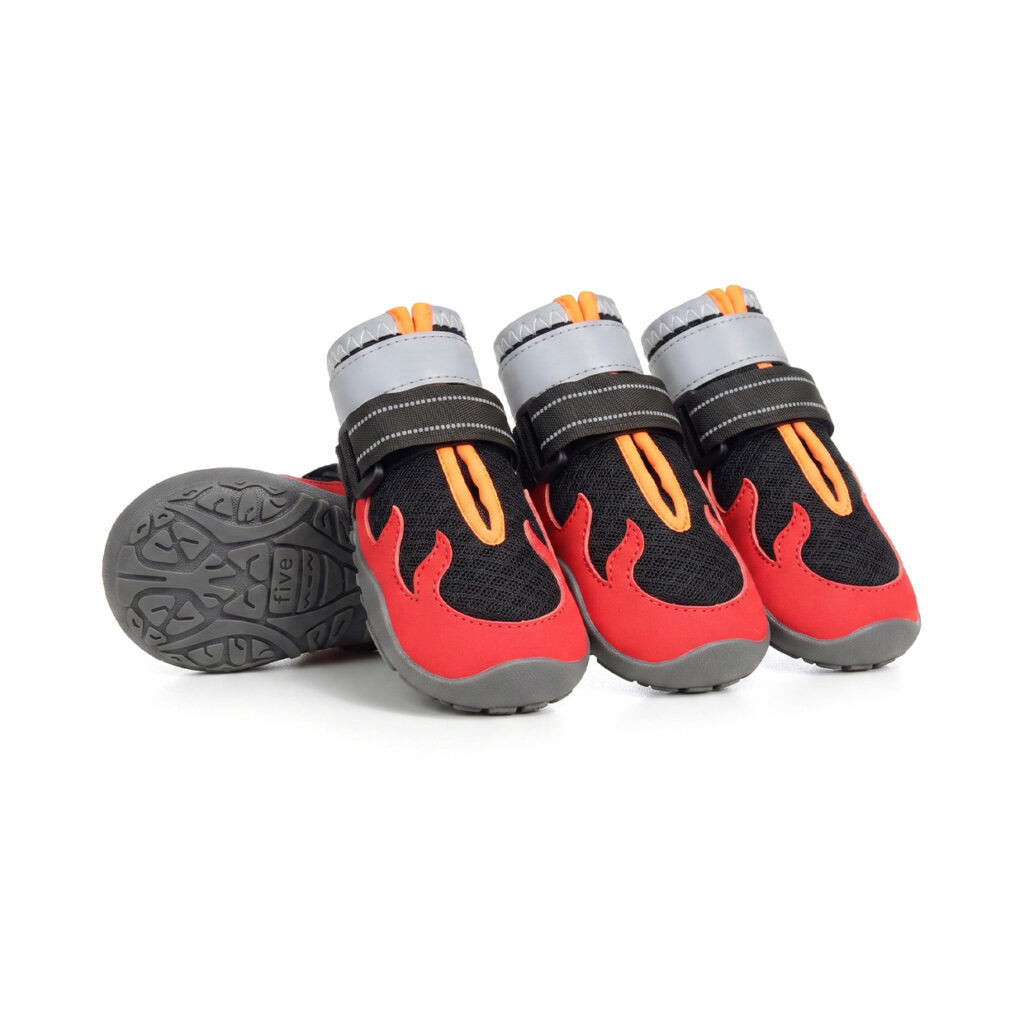
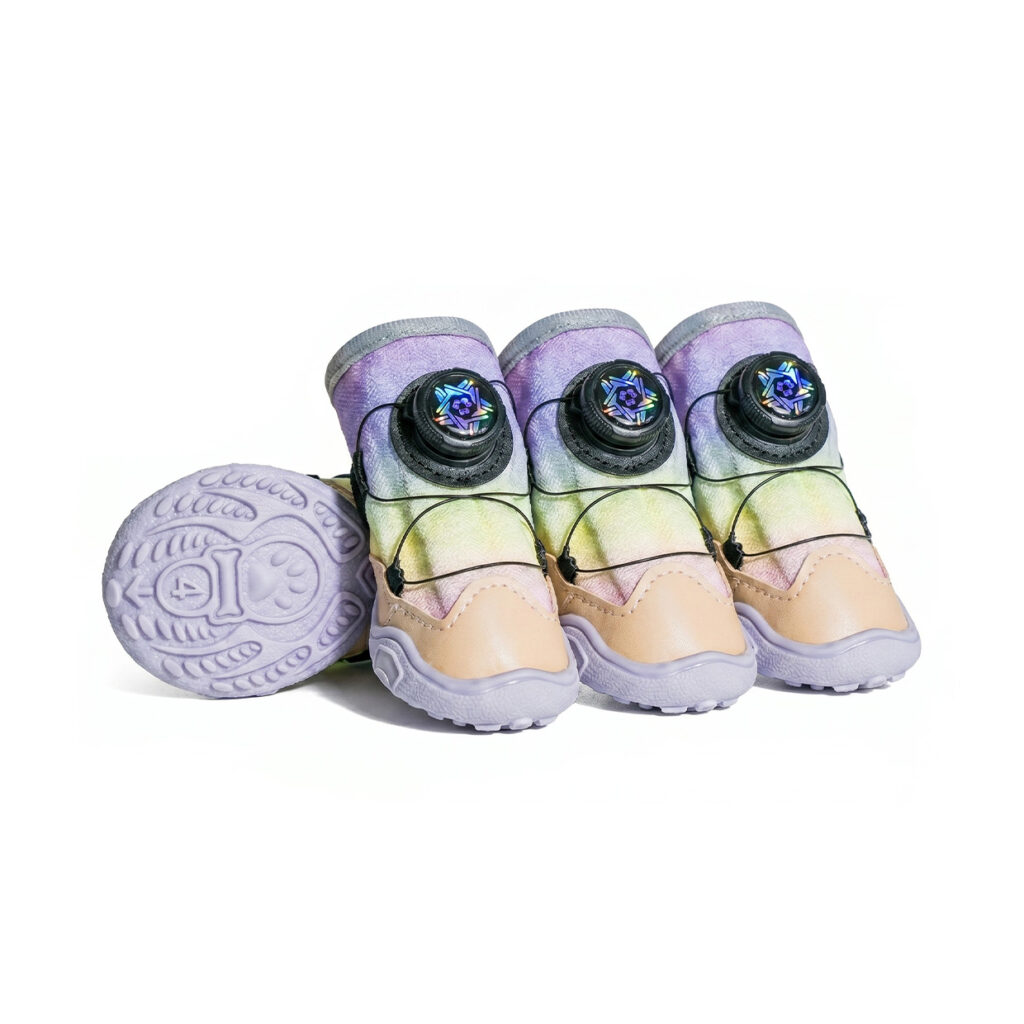
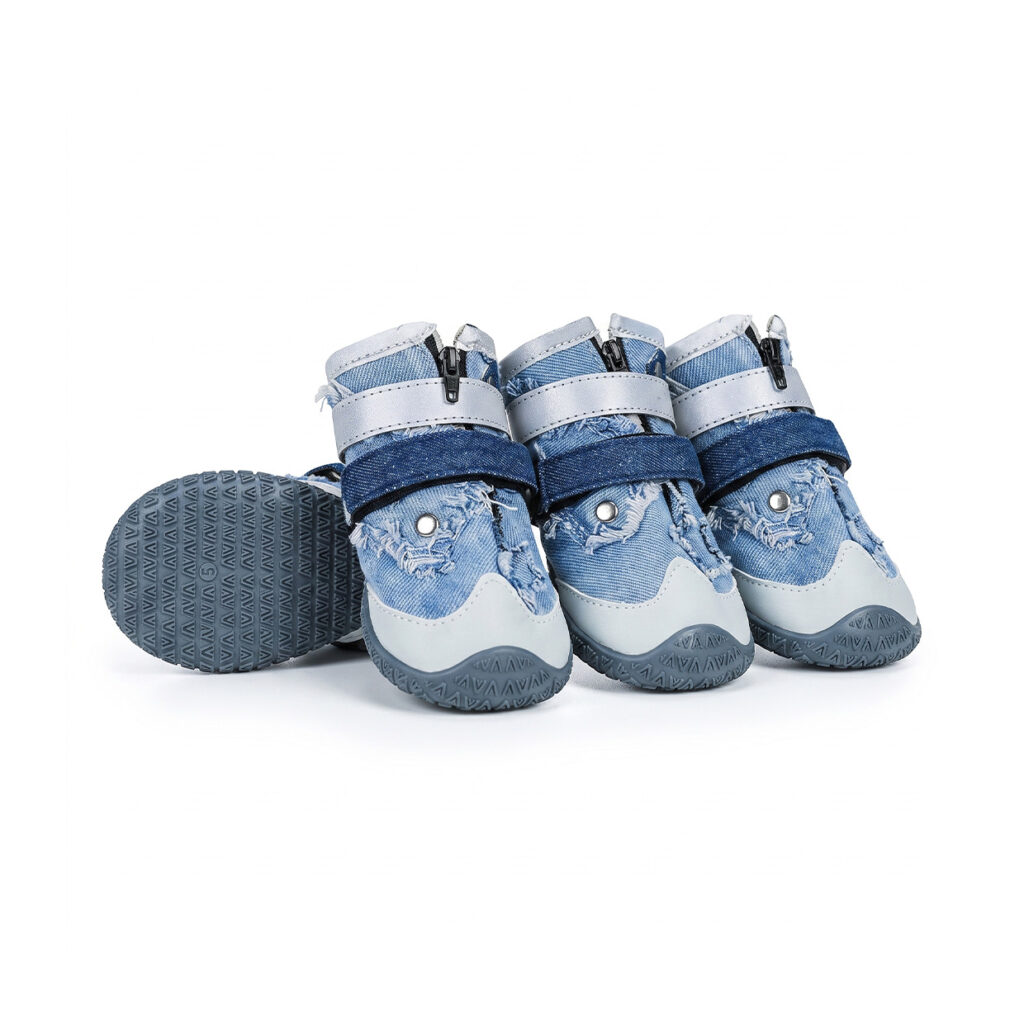
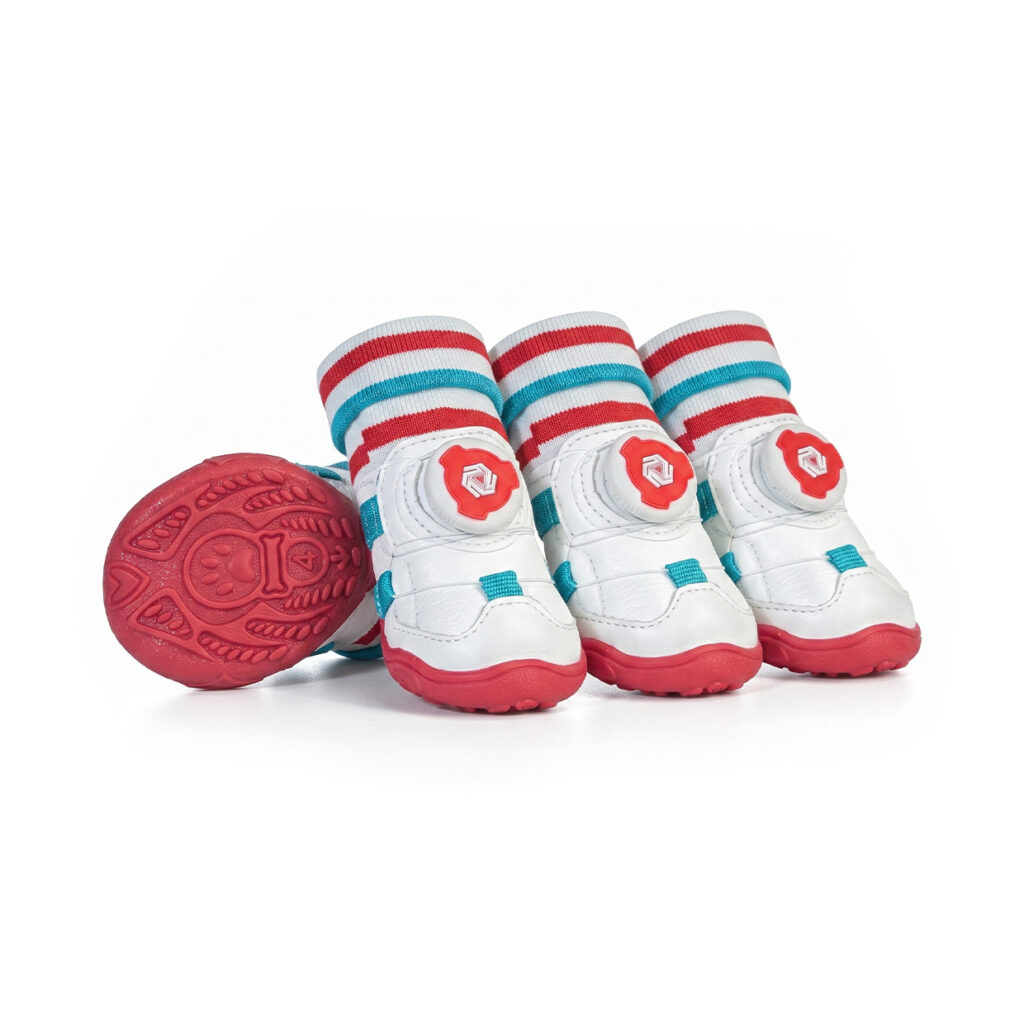
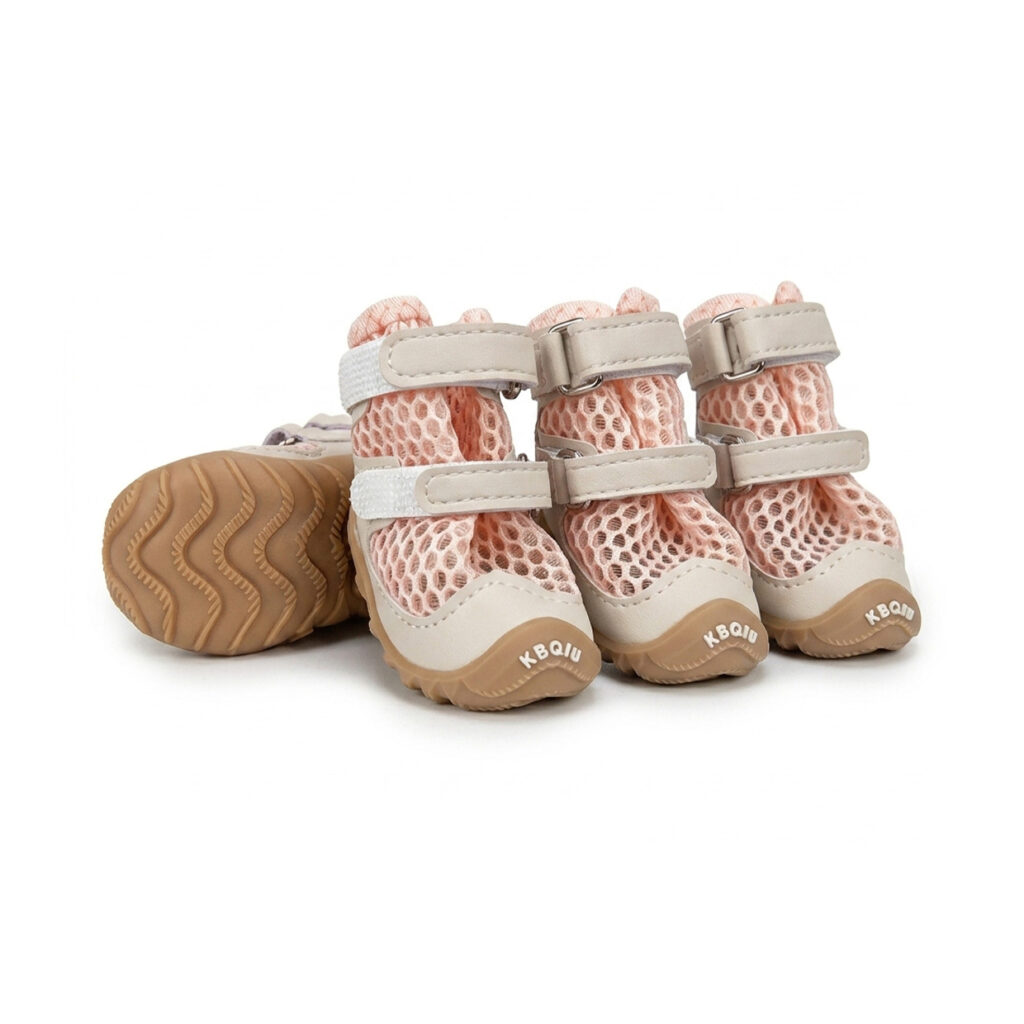
For lighter everyday use, you may prefer:
Lightweight Ergonomic Dog Shoes
The ASPCA offers broader pet-safety resources that help when you’re judging whether gear fits comfortably.
Rubber Dog Boots vs. Structured Boots: Which Design Is More Secure?
Rubber dog boots get searched constantly, and it’s easy to see why. They’re light, flexible, waterproof, easy to rinse off, and usually inexpensive. For a quick trip across wet grass, slushy sidewalks, or a muddy yard, a simple rubber boot works well.
They solve a different problem from structured outdoor boots, though.
Rubber boots
Rubber boots generally focus on:
- Flexibility
- Water resistance
- Light weight
- Quick on and off
- Easy cleaning
- Short-term protection
Their main limits are less structure around the ankle and fewer ways to fine-tune the fit. Rubber boots for small dogs are often the easiest to get on a wriggly toy breed. A small rubber boot on a slim leg can also twist, so watch for that.
Some textured rubber designs are sold as a “rubber paw” option for grip. They’re great on slick surfaces, but extra grip isn’t the same as extra retention.
Structured dog boots
Structured boots generally focus on:
- Mechanical retention
- Traction
- Abrasion resistance
- Keeping the paw positioned
- Adjustable fastening
- Longer outdoor wear
For hiking, rocky ground, or a dog who runs everywhere, those features matter more. The right choice depends on the activity. A dog crossing a wet parking lot doesn’t need what a dog covering six miles of rocky trail needs.
For a deeper look at how outsoles affect grip and stability, see dog boot soles and traction.
How to Keep Dog Shoes On Active Dogs: A Practical Fit Protocol
Even excellent dog boots that stay on can fail if they’re fitted badly. Here’s how to keep dog shoes on active dogs, in five steps for every new pair.
Step 1: Measure the weight-bearing paw
Let your dog stand naturally on a hard floor. Measure the way the manufacturer recommends, then check that boot’s own size chart. Don’t pick a size from breed or weight alone.
Step 2: Check the toe box
Gently press on the front of the boot with the paw inside. The toes shouldn’t be jammed against the front. There should be room for the paw to sit naturally, but not so much space that it slides back and forth.
Step 3: Line the boot up straight
The sole should sit squarely under the paw. Before you touch a strap, check that the boot isn’t already twisted. Fastening a crooked boot just locks in the wrong position.
Step 4: Fasten the straps one at a time
If the boot has two straps, adjust each one separately:
- Do the lower strap first to steady the base.
- Then do the upper strap to control the shaft.
Snug is enough. You shouldn’t be pulling with real force.
Step 5: Test before the trail
Let your dog walk around indoors first. Expect some of the classic high-stepping the first time, with legs lifted like a parade horse on hot sand. That’s normal, and it fades with practice.
Watch for:
- Boots twisting
- One paw lifted over and over
- An odd gait that doesn’t improve
- Chewing at a boot
- Straps creeping out of position
- Slipping at the cuff
After the first short outdoor walk, take the boots off and check every paw. If everything stays put and the skin looks normal, gradually make the outings longer. That beats strapping on new boots and heading straight out for a three-hour hike.
For step-by-step training tips on getting past the initial high-stepping phase, see our guide on how to get your dog used to shoes.
Frequently Asked Questions About Secure Dog Boot Design
Why do dog boots fall off even when they’re pulled extremely tight?
Tight and secure aren’t the same thing. A single strap can squeeze hard and still let the boot twist or slide, especially on a narrowing leg with slick fur. Cranking it down usually just makes your dog uncomfortable without fixing the movement. What works is the right size, a boot shape that matches the leg, and more than one fastening point.
What makes a secure dog boot design different from standard booties?
It looks at the whole system instead of one strap. Key features include:
1. Independent fastening straps
2. An upper shaped to the leg
3. A stable sole
4. The right cuff height
5. A shaped rear section
6. A smooth interior
7. Straps placed away from the dewclaw
No single feature guarantees a boot will stay on every dog. The design still has to suit your dog’s paw and activity.
Are dog suspender boots better than strap-on dog boots?
Not across the board. Suspenders add an outside anchor and can rescue a dog who keeps losing boots despite a good fit. They also add straps that can snag, twist, or rub. For most active dogs, a well-fitted independent boot is the simpler setup. The best choice depends on your dog, the terrain, and the activity.
How do I know if my dog’s boots are secure without making them too tight?
Follow the manufacturer’s fastening instructions first. Then gently tug the boot. It shouldn’t slide or spin, and the straps shouldn’t dig in. Being able to slip one finger under the strap is a handy quick check for many designs, but it isn’t universal. After a short walk, check for lasting redness, deep marks, swelling, or fur loss. A boot that stays on but irritates the skin isn’t a good fit.
Can adding socks help prevent boots from sliding off?
Sometimes, a little. A thin, smooth liner can give the boot a more even surface to sit against and cut down some friction. It also changes the fit slightly. Never use a sock to rescue a boot that’s too big or poorly designed, and always smooth it flat so it doesn’t bunch at the toes or ankle.
Are Velcro dog booties secure enough for hiking?
They can be. Velcro dog booties aren’t less secure by nature. What matters is how wide and adjustable the closure is, where the strap sits, how stable the opening is, and how well the boot matches your dog’s paw. On long hikes, check the straps at water breaks. Burrs, mud, and snow can clog hook-and-loop and weaken its grip.
Are rubber dog boots good for active dogs?
For short outings, yes. They’re great against water, mud, salt, and dirty pavement. Flexible rubber usually doesn’t give the structure, traction, or retention of a purpose-built hiking boot, though. For very active dogs or rough terrain, compare the whole construction, not just how waterproof the boot is.
What’s the best way to keep dog shoes on active dogs?
Stack the odds in your favor:
1. Measure the paw accurately
2. Choose the right size from that boot’s chart
3. Line the sole up under the paw
4. Pick a suitable cuff height
5. Use independent fastening points
6. Set the strap tension correctly
7. Do short test runs before long outings
If boots still fall off after all that, the boot design is probably the problem, not your dog’s gait.
The Bottom Line: Secure Dog Boot Design Starts With Engineering, Not Just Tight Straps
Good secure dog boot design doesn’t solve every problem by tightening harder. It starts with how a dog’s leg is built and how it moves.
A dog’s paw goes through several positions with every stride, turn, and scramble. The boot has to stay lined up while allowing all of that:
- Independent straps share the holding work.
- Anatomical shaping cuts down on unwanted shifting.
- A well-built cuff adds stability and keeps snow, mud, and grit out.
Comfort counts just as much. A boot that never falls off but pinches or rubs isn’t a good boot.
For everyday walks, lightweight shoes or flexible rubber boots may be all you need. For demanding trails, a structured boot with well-designed straps and solid traction is usually the better choice. The right footwear stays where it belongs, and your dog forgets it’s there.
End the “Lost Boot” Nightmare Once and for All
Stop relying on tighter and tighter straps, makeshift fixes, or complicated add-ons when the real problem is how the boot is built.
Your dog deserves outdoor footwear that balances secure retention, anatomical fit, traction, protection, and everyday comfort.
Explore Paw Clad’s collection of engineered dual-strap outdoor dog boots built for active dogs and tough conditions. Each style has its own size chart, because each one fits a little differently.
For lighter activities and everyday walks, browse our lightweight ergonomic dog shoes and indoor anti-slip dog socks.