Free Shipping on All Orders | 30-Day Easy Returns
Anti Slip Dog Socks Guide: Stop Indoor Slipping
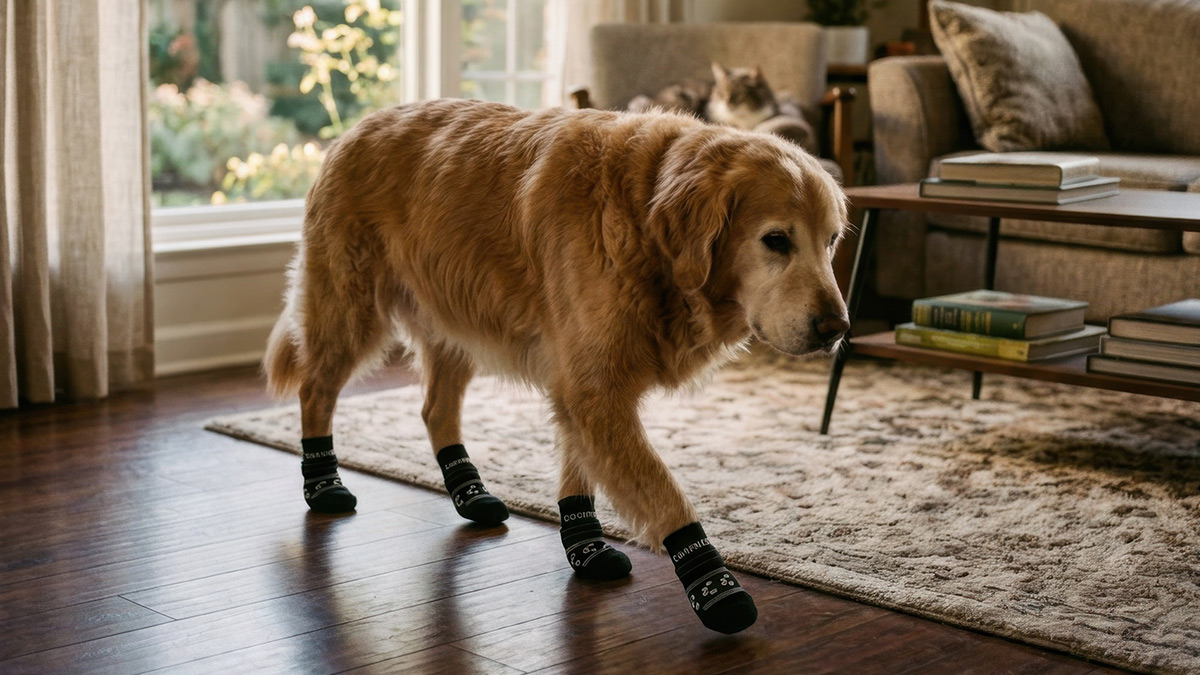
Table of Contents
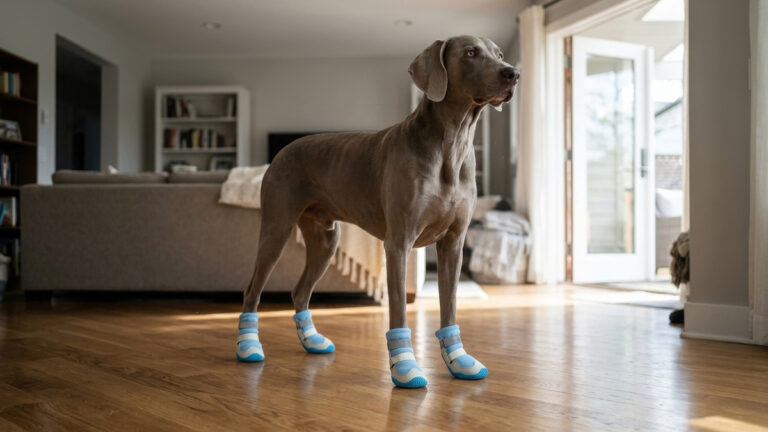
If you’ve ever watched your dog freeze at the edge of a hardwood hallway, you know how it looks. They stare at the floor and shift their weight. Then they take a few careful, stiff-legged steps, like someone crossing a frozen pond. For a lot of dogs, and especially older ones, that shiny floor you liked so much at the open house feels like an ice rink.
That’s why a good pair of anti slip dog socks is often one of the simplest, most practical changes you can make at home. Polished hardwood, laminate, vinyl, and glazed tile give paws very little to hold onto. That matters a lot for a dog dealing with weaker muscles, arthritis, or shaky balance.
Slipping over and over changes how a dog moves. Their steps get shorter. They stop going into the kitchen. They lie on the dog bed working up the nerve to stand. For senior dogs, one bad slide can also strain hips, knees, shoulders, and the lower back.
Thicker footwear isn’t the answer. Indoor grip comes from how four things work together: the paw, the floor, the sock material, and the way your dog naturally walks. A lightweight fabric with well-placed silicone grips adds friction and still lets the paw flex.
Why Natural Paws Struggle on Modern Floors
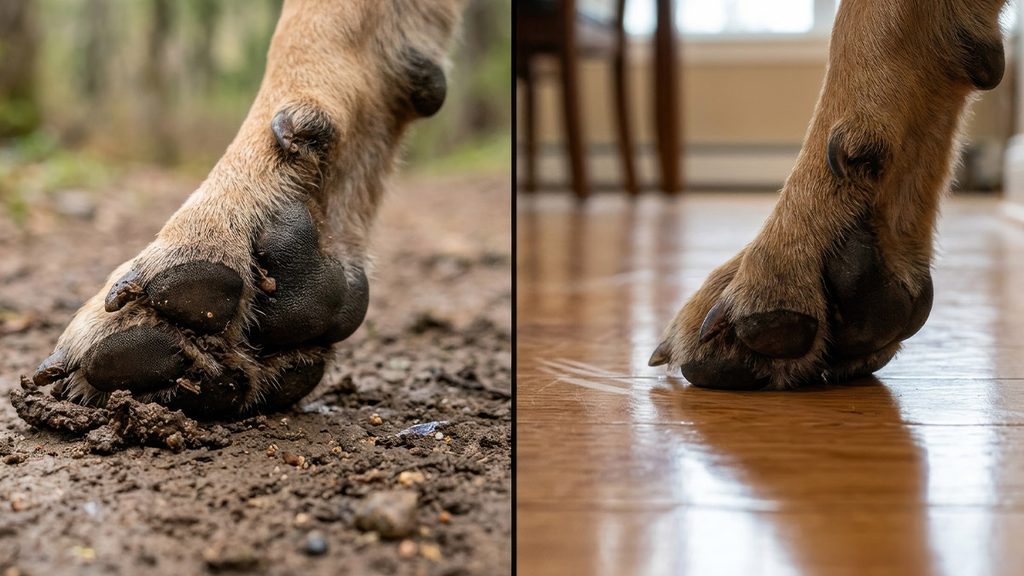
Dogs evolved on dirt, grass, packed trails, gravel, and rock. None of those surfaces is perfectly smooth. Each one has tiny bumps and grooves for claws to catch and paw pads to press into.
Nails work like little cleats. Pads squish slightly under the dog’s weight and mold to the ground. Together they let a dog push forward and brace sideways as weight shifts from leg to leg.
Then we brought dogs indoors and put them on sealed, polished floors.
Hardwood and glazed tile are hard and slick. Nails can’t dig in, and pads have nothing to mold around. When your dog pushes off, the paw often slides sideways instead of gripping. You’ll see it most when they:
- turn quickly (like the “someone’s at the door!” spin)
- get up after lying down
- step down from a doorway, a low step, or a ramp onto a smooth floor
When slipping becomes a mobility problem
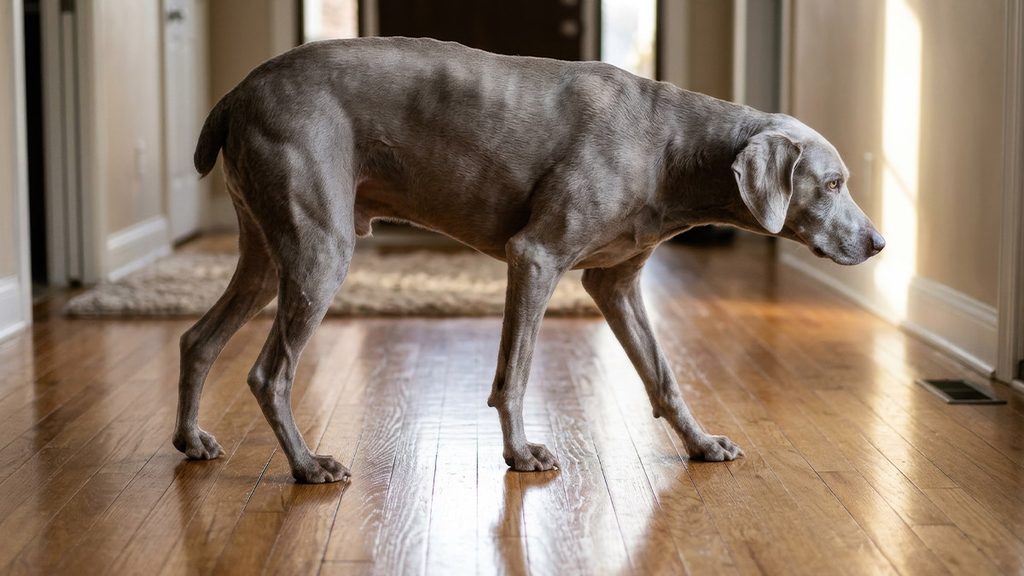
When paws slide outward, the legs spread wider than the dog intended. This is called splaying, and if it happens again and again, normal movement gets harder.
A young, strong dog usually catches itself without thinking. A senior dog has less muscle to work with and slower reflexes, so that recovery takes longer, and sometimes it doesn’t happen.
Dogs with existing joint problems have the most to lose. Osteoarthritis and hip dysplasia already make standing and walking uncomfortable. A slippery floor turns each trip to the water bowl into more work.
For vet-reviewed information on mobility and joint conditions, the American Kennel Club’s guidance on senior dog mobility and arthritis is a solid place to start. The canine osteoarthritis resources from VCA Animal Hospitals are also clear and practical.
Why dog gripper socks for hardwood floors help
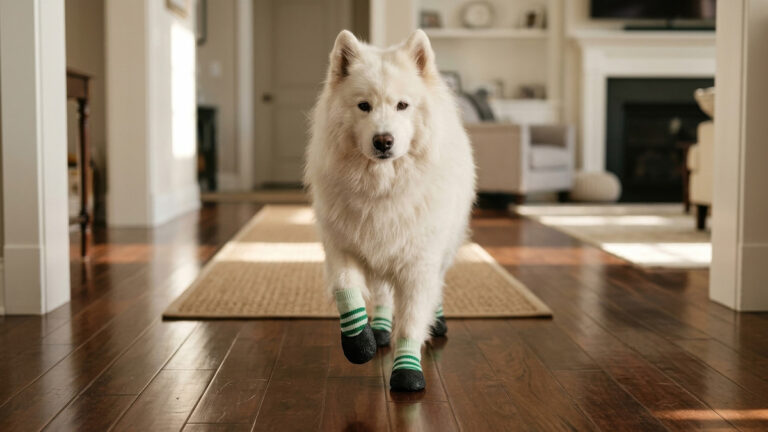
Good dog gripper socks for hardwood floors don’t make the paw stiff. They put a grippier layer between the paw and the floor.
Flexible silicone presses slightly against the floor and resists sliding, a bit like a rubber jar-opener pad. The sock itself stays light, so the paw can still bend and spread the way it’s supposed to. A rigid outdoor boot doesn’t allow that.
Indoors, the job is controlled contact with the floor. Outdoors, the job is protection from rocks, thorns, wet ground, and rough surfaces. These are different problems, and they need different gear.
To explore how flexible knits and silicone micro-dots stop slips without restricting mobility, read our complete anti-slip dog socks guide.
Senior Dogs, Arthritis & the Hesitant Walk
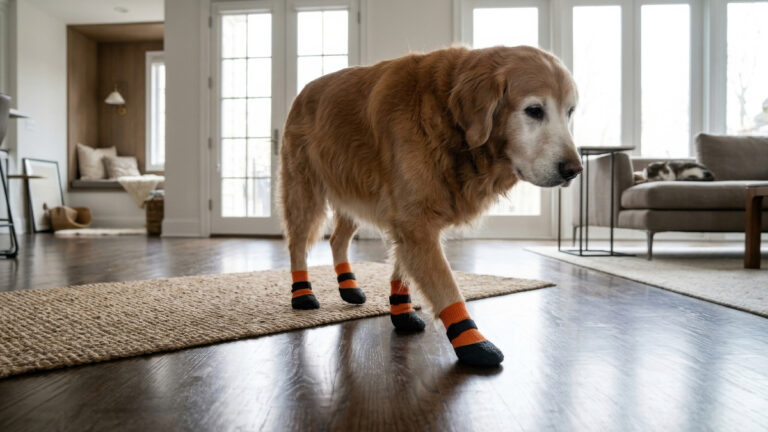
Older dogs usually have the hardest time on slick floors, and it’s hard to watch.
As dogs age, they lose muscle, so there’s less strength holding the legs steady. Their joints stiffen too, which makes those split-second corrections slower.
That’s why a senior dog can walk across the carpeted bedroom without a problem, then turn into a nervous tightrope walker at the edge of the hardwood hallway.
How slipping changes behavior
After enough slips, many dogs get cautious about certain floors, and that makes sense. Watch for:
- slow, deliberate walking
- unusually short, choppy steps
- legs set wider than normal, like they’re bracing on a boat deck
- staring at the floor before taking a step
- “island hopping” from rug to rug, or picking the long carpeted route to get somewhere
This isn’t always true fear in the behavioral sense. More often it’s learned avoidance. Your dog has worked out that one surface is unpredictable, and they’re being sensible about it.
Making the floor more stable is worth doing, as long as it goes alongside a vet check, the right kind of exercise, and a few changes around the house.
Why traction socks for senior dogs make sense
For a dog with weak back legs, getting up is often harder than walking. You’ve probably seen the struggle: front legs up, back end still working on it.
To stand, a dog has to push hard through all four legs while keeping its paws planted under its body. If the back paws slide out halfway through, the dog can end up sitting back down, or worse.
That’s where traction socks for senior dogs earn their place. Grippy socks for dogs with arthritis won’t treat the arthritis. What anti slip dog socks do is change how the paw meets the floor, so everyday movements like standing, turning, and walking to the food bowl feel steadier.
If your dog has diagnosed arthritis, hip dysplasia, ongoing lameness, or trouble standing, socks should support veterinary care, not replace it.
Look beyond the socks
Socks work best as one piece of a wider plan for keeping your dog moving comfortably:
- Lay down runners or washable rugs along your dog’s usual routes: bed to water bowl, bowl to back door, door to favorite nap spot. Picture your dog’s daily commute and pave it.
- Keep nails trimmed. Long nails hit the floor first, tip the paw back, and cut down pad contact. If you can hear nails clicking on the kitchen floor, it’s usually time for a trim.
- Don’t forget toe fur. Long hair between the pads can cover the pads and make slipping worse. A careful trim helps.
With a few strategic rugs and well-fitted senior dog socks, the house becomes a lot more predictable for an older dog.
How Indoor Grip Works: Silicone Dots vs. Outdoor Outsoles
Dog footwear doesn’t all grip the same way.
A light sock with silicone dots relies on flexibility and friction. A hiking boot uses a structured outsole with deep tread built to bite into uneven ground outside. Once you see the difference, choosing dog socks with grips for indoor use gets much easier.
Lightweight silicone micro-grips: the indoor gold standard
Silicone micro-grips create lots of small, high-friction contact points between the sock and the floor. Instead of one big tread block, the grip is spread across many dots, strips, or shapes.
Indoors, that design has real advantages:
- very light
- highly flexible
- barely restricts natural paw movement
- quiet on floors (no clomping around at 3 a.m.)
- slim and compact
- works well on hardwood and tile
- far less bulk than outdoor footwear
The silicone has to stay soft enough to flex with each step. Stiff grip might hold the floor, but it fights the paw’s natural bend.
The fabric around the grip matters just as much. Breathable cotton blends or light technical knits keep heat and moisture from building up during a normal day indoors. A quick test: after an hour of wear, slip a finger inside. It should feel slightly warm, not damp.
So judge dog socks with grippers as a complete package, not only by the dot pattern on the bottom.
Unlike heavy-duty dog boot soles designed for outdoor traction, indoor socks rely on lightweight silicone grips to add friction without the weight and stiffness that rugged outdoor protection requires.
How silicone grips work on hardwood
A smooth floor doesn’t need aggressive tread. On hardwood, you want friction, not digging in. Lots of small silicone contact points mold to tiny imperfections in the finish and resist sideways sliding.
That makes anti slip dog socks especially useful for everyday moments like:
- getting up from the dog bed
- walking down hallways
- turning around furniture
- crossing bare hardwood between rugs
- walking on sealed tile in the kitchen or bathroom
- standing still at the food and water bowls
The 360-degree double-sided grip advantage
Regular dog socks have one big weakness: they twist.
A paw doesn’t stay perfectly still inside a fabric sock. Walking, turning, sitting, and scratching all make the sock rotate a little. With grip on only one side, a few twists can leave the silicone on top of the paw while your dog skates along on plain fabric.
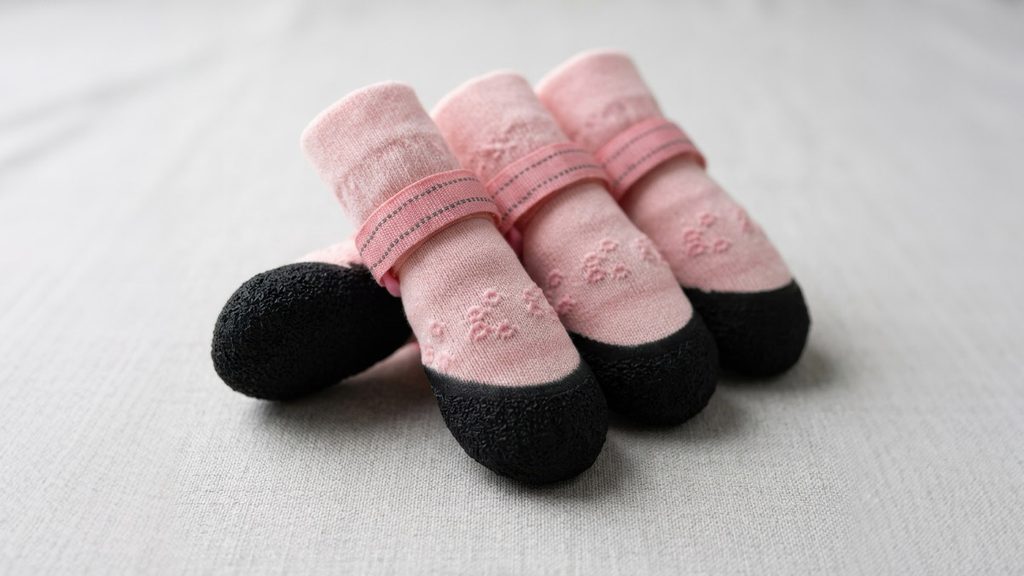
A double-sided or 360-degree grip design fixes this by putting silicone around more of the sock. If it twists, another section of grip is still under or beside the paw.
This matters a lot if you’re looking for dog socks that stay on, because staying on and gripping are closely linked. A sock that keeps twisting loses its grip and gets uncomfortable. Most dogs then decide the sock needs to go, usually with their teeth.
The Staying-On Problem: How to Keep Socks in Place
People search for “dog socks that stay on,” “dog socks with grippers,” and “grippy socks for dogs” for a reason. Grip only helps if the sock is still where it belongs.
Most dog owners have been there. You put a sock on, turn around to grab your coffee, and find it bunched at the ankle, twisted sideways, or gone. (Check under the couch. It’s usually under the couch.)
Here’s what makes the biggest difference.
1. Start with accurate sizing
The biggest factor is how the paw’s dimensions match the sock’s opening.
Don’t assume front and back paws are the same size. In many breeds the front paws are noticeably wider than the back ones, and sometimes a whole size apart.
Stand your dog on a piece of paper so their weight spreads the paw naturally, then measure width and length following the manufacturer’s guide.
Measure your dog’s paws accurately and train them.
Too big, and the sock twists and falls off. Too small, and it squeezes the toes and puts pressure on the paw.
2. Look for an adjustable strap
A soft ribbed cuff helps, but an adjustable strap gives you real control.
Elastic or hook-and-loop straps should sit on the lower leg, above the paw, not squeezing the paw itself.
The rule is simple: snug, not tight. You should be able to slide a finger under the strap without forcing it.
After fastening, check the skin under the strap for the first several wears. Look for dents in the fur, redness, or any area your dog keeps licking.
3. Consider double-sided grip
If regular socks keep twisting on your dog, a double-sided silicone design adds another layer of security.
The grip doesn’t “lock” the sock onto the paw. It cuts down movement between the sock and the floor, while the strap controls movement between the sock and the leg. You need both working together.
4. Keep socks clean and dry
Moisture, dirt, and fur all change how a sock fits. Wash according to the care label and let the socks dry completely before the next use. A damp sock stretches out, and it’s also unpleasant on the paw.
Check the silicone every so often. A sock can look fine while its grip has worn smooth. If the dots feel slick instead of tacky, it’s time for a new pair.
5. Introduce socks slowly
Some dogs accept socks right away. Many do what I call the sock dance: exaggerated high-stepping, legs flicking like they’ve stepped in something sticky, maybe a dramatic freeze in the middle of the hallway.
If your pup freezes or struggles to walk at first, follow our step-by-step tutorial on how to stop the funny high-stepping walk using positive reinforcement.
That’s normal. To get past it:
- start with just a few minutes indoors
- give treats and praise the moment your dog walks normally
- distract with a short game or a chew
- build up wearing time over several days
Go slowly, especially with dogs who’ve never worn doggy socks. A patient first week usually means a dog who barely notices the socks a month later.
Indoor Socks vs. Outdoor Boots: Choosing the Right Gear
A common mistake is thinking heavier footwear means better protection. On indoor floors, it usually doesn’t.
A rigid outdoor boot is great on a rocky trail, but on hardwood it’s clunky and loud. Deep tread also dulls the feel of the floor that dogs rely on for balance. For long stretches indoors, lightweight non skid dog socks are usually the better fit when grip, not protection, is the goal.
When socks make sense
Go with indoor socks when the main issue is:
- slipping on hardwood
- slipping on tile
- trouble standing up
- mild wobbliness indoors
- nail scratches on your floors (dog socks to prevent scratching work well here)
- needing grip without adding weight
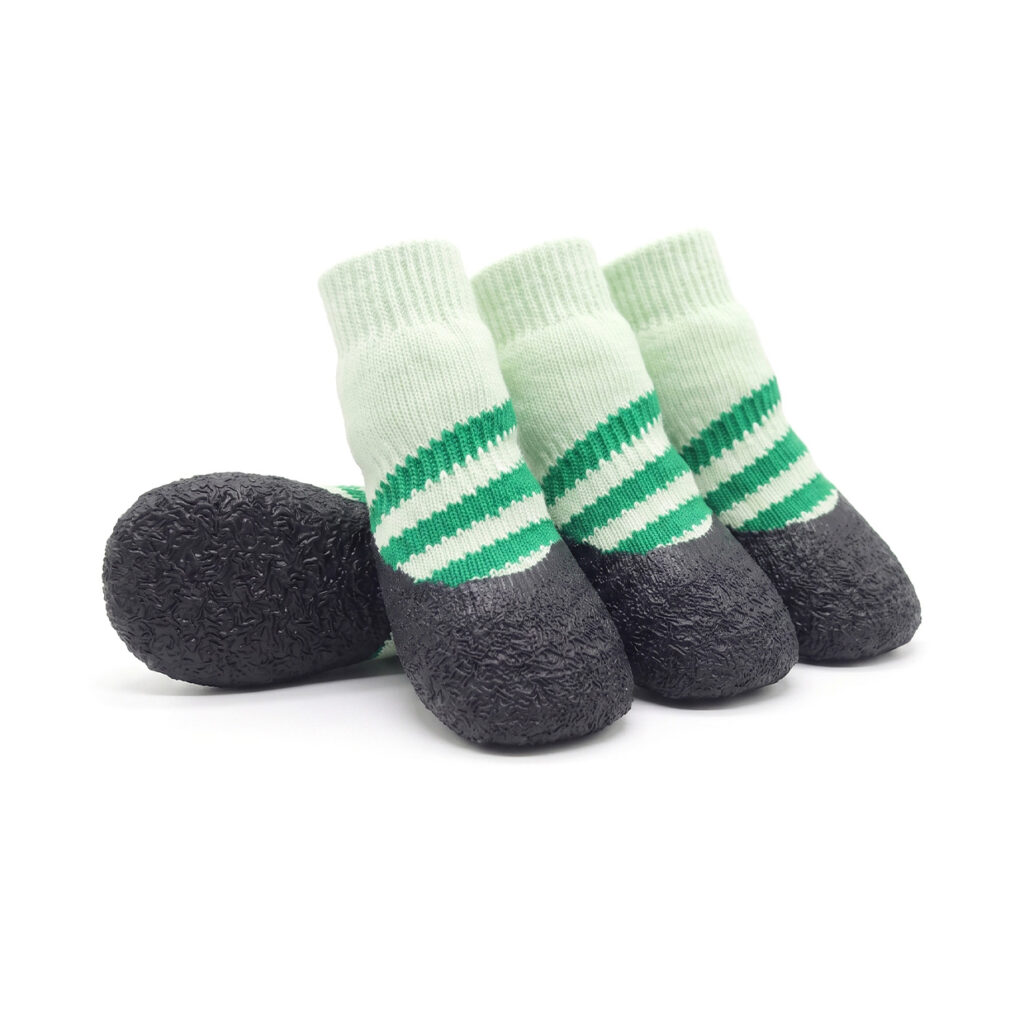
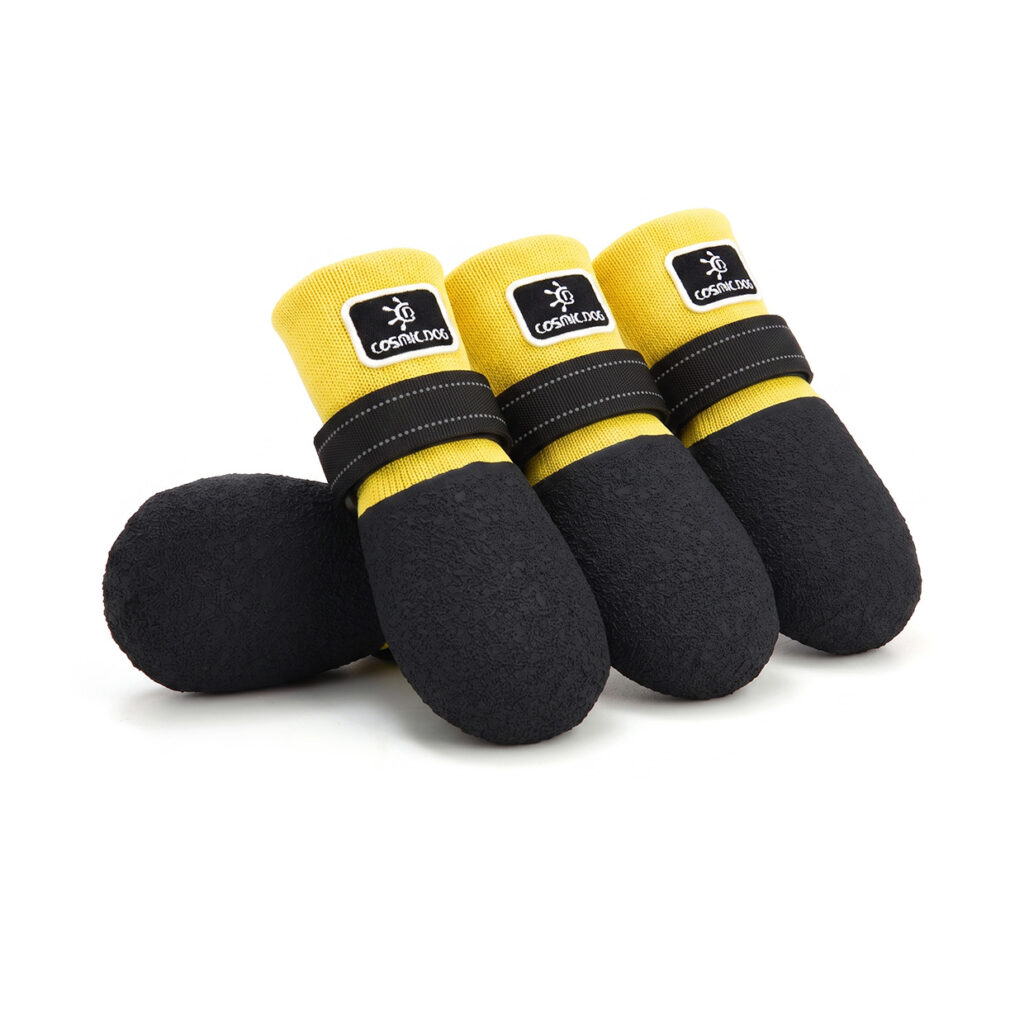
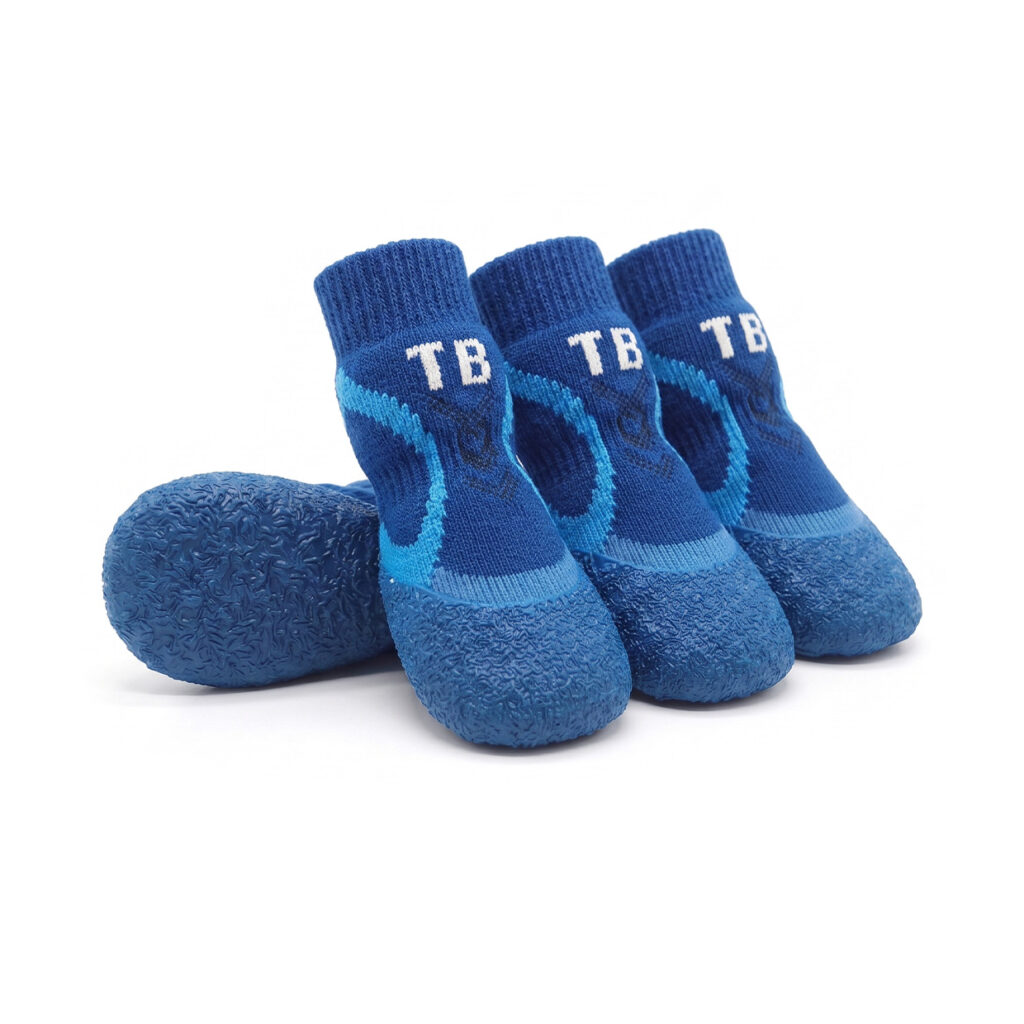
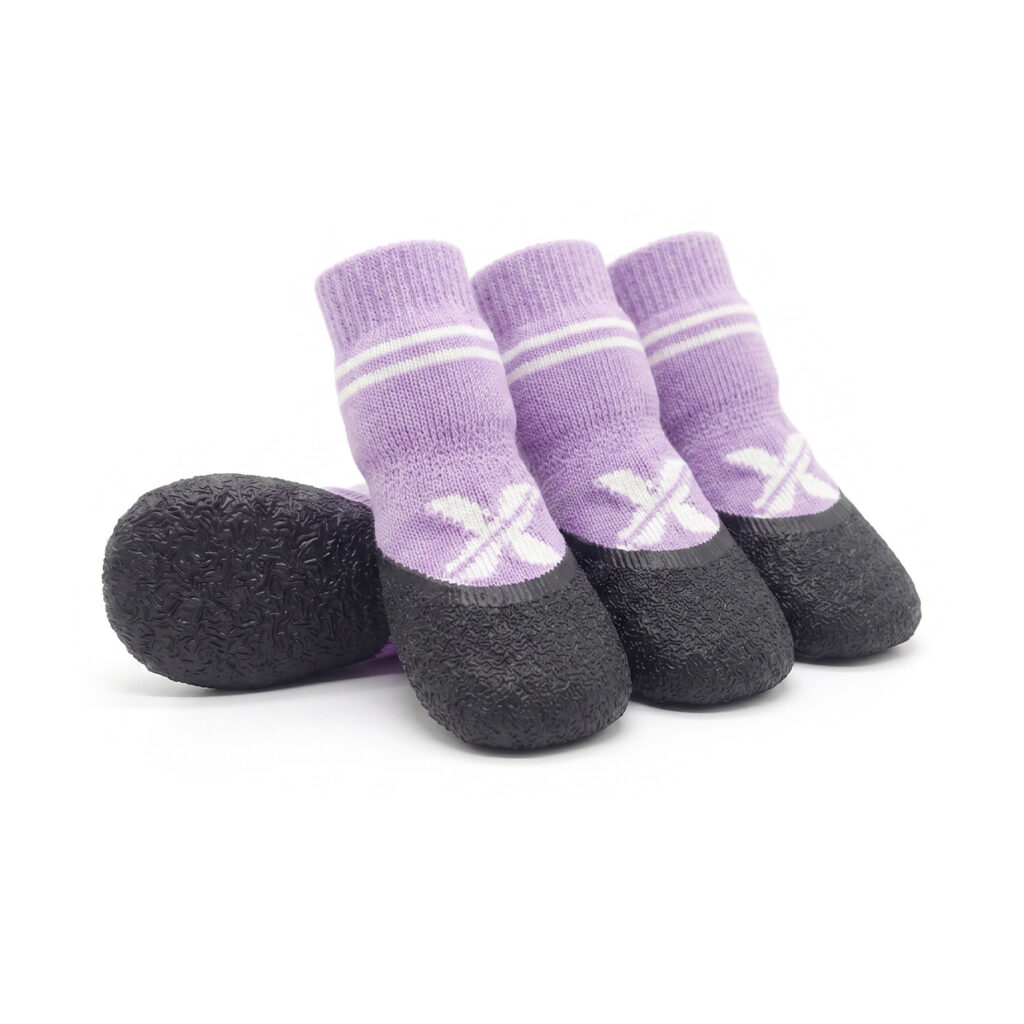
Breathable anti slip dog socks also help when your dog needs grip in several rooms throughout the day.
When shoes make sense
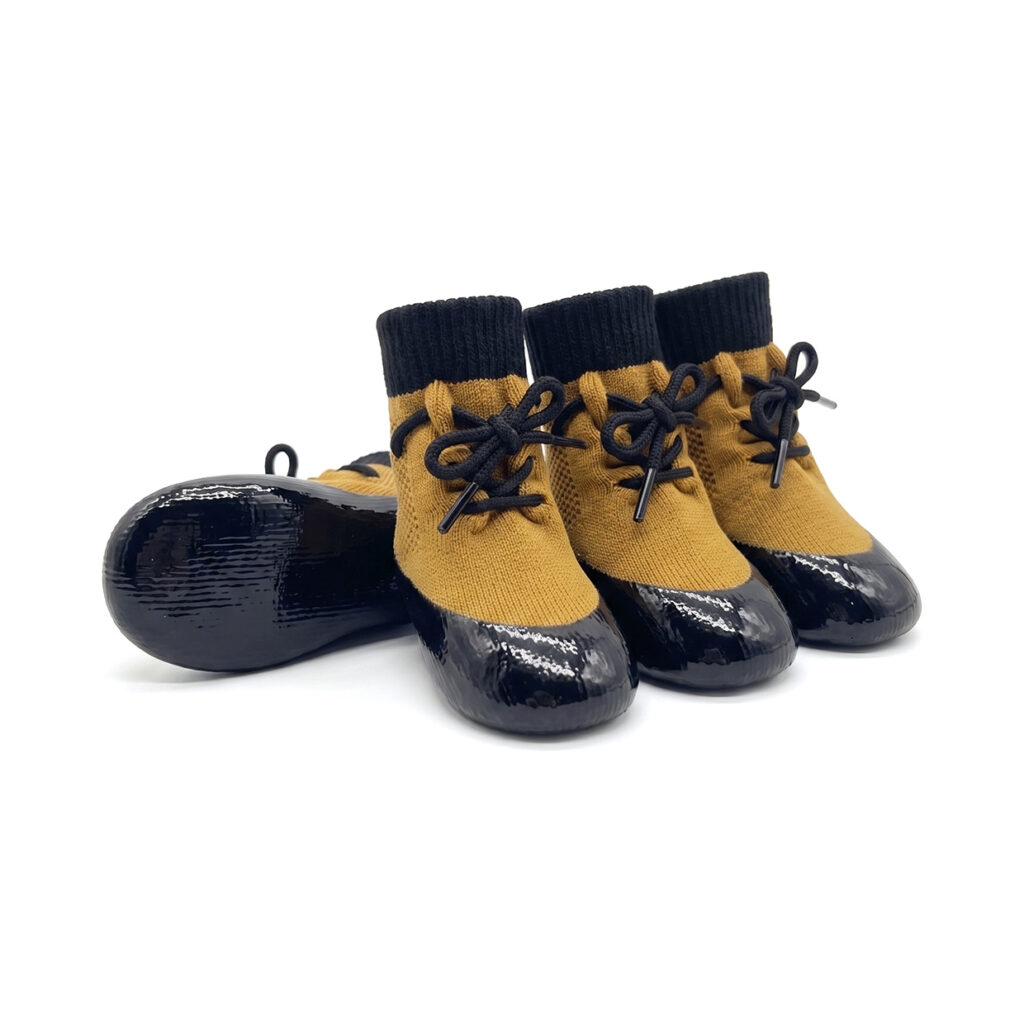
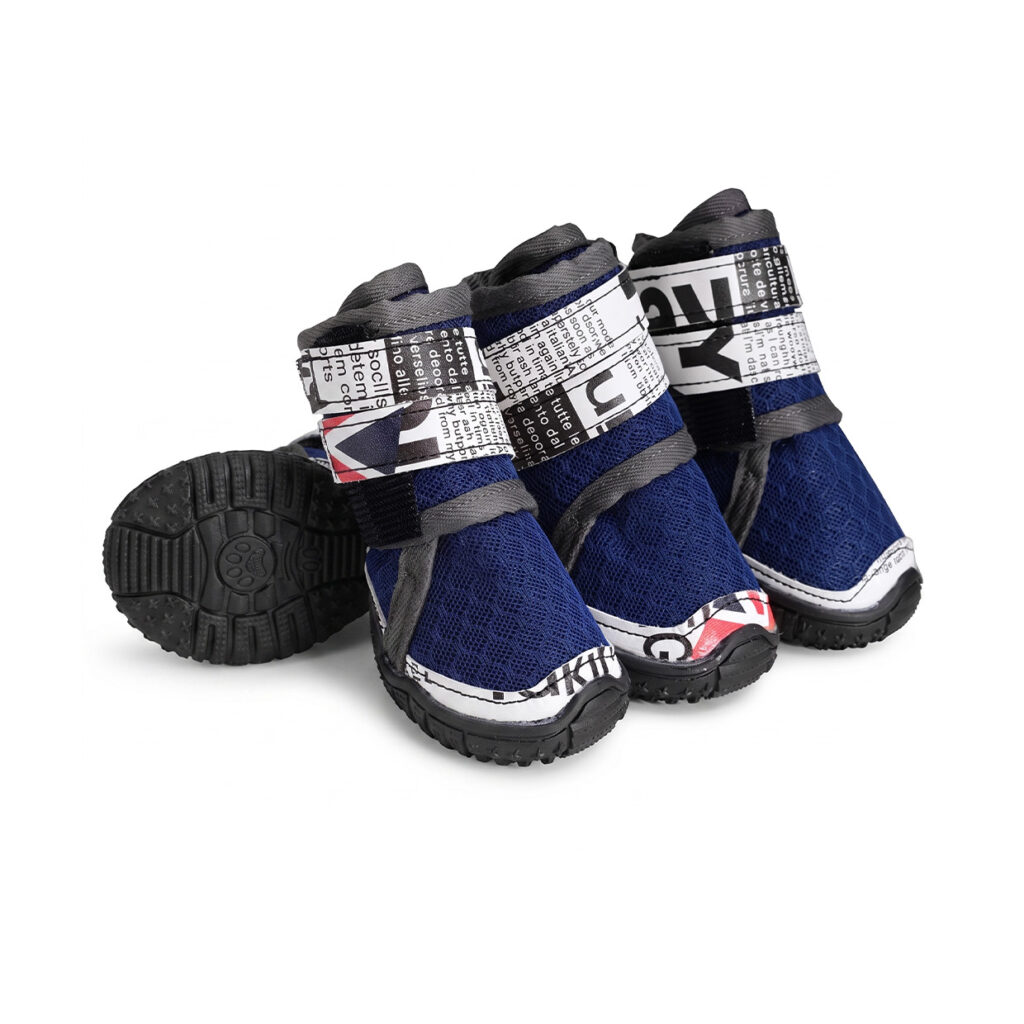
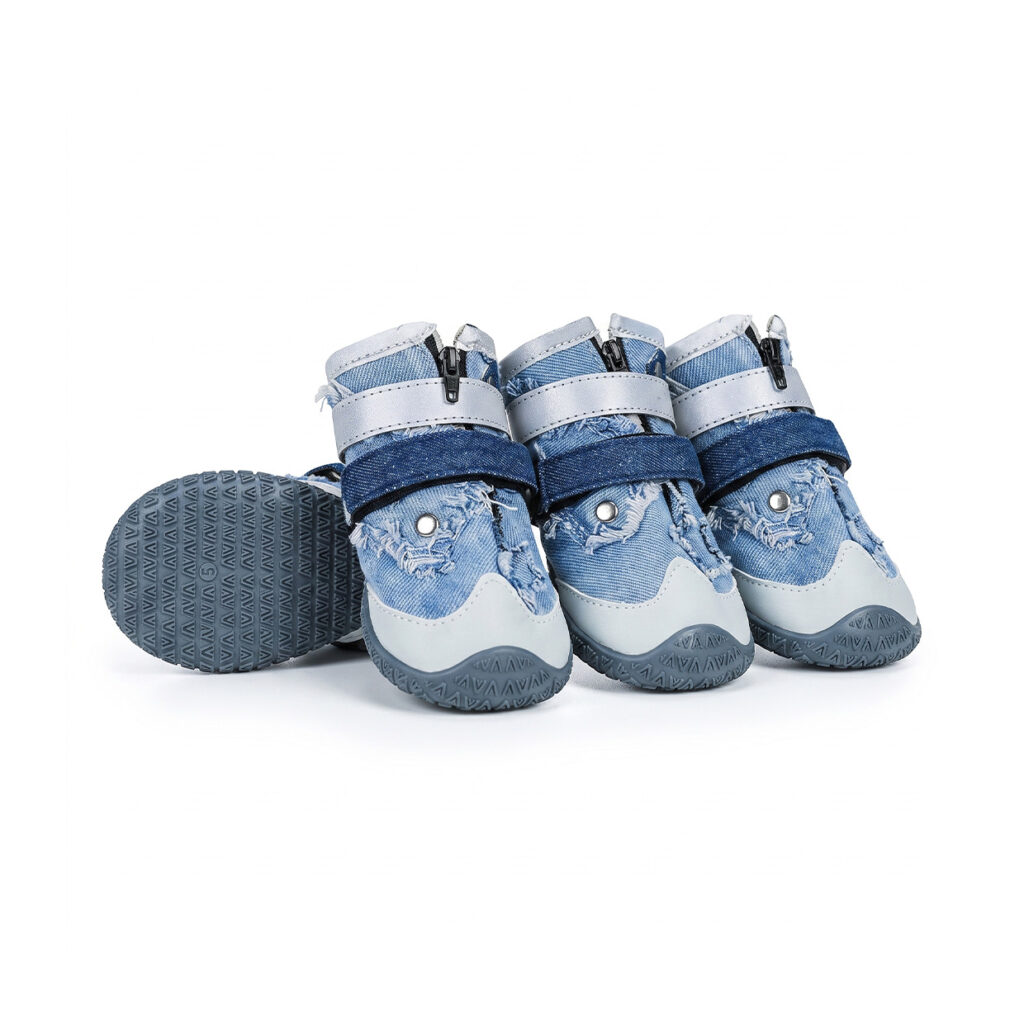
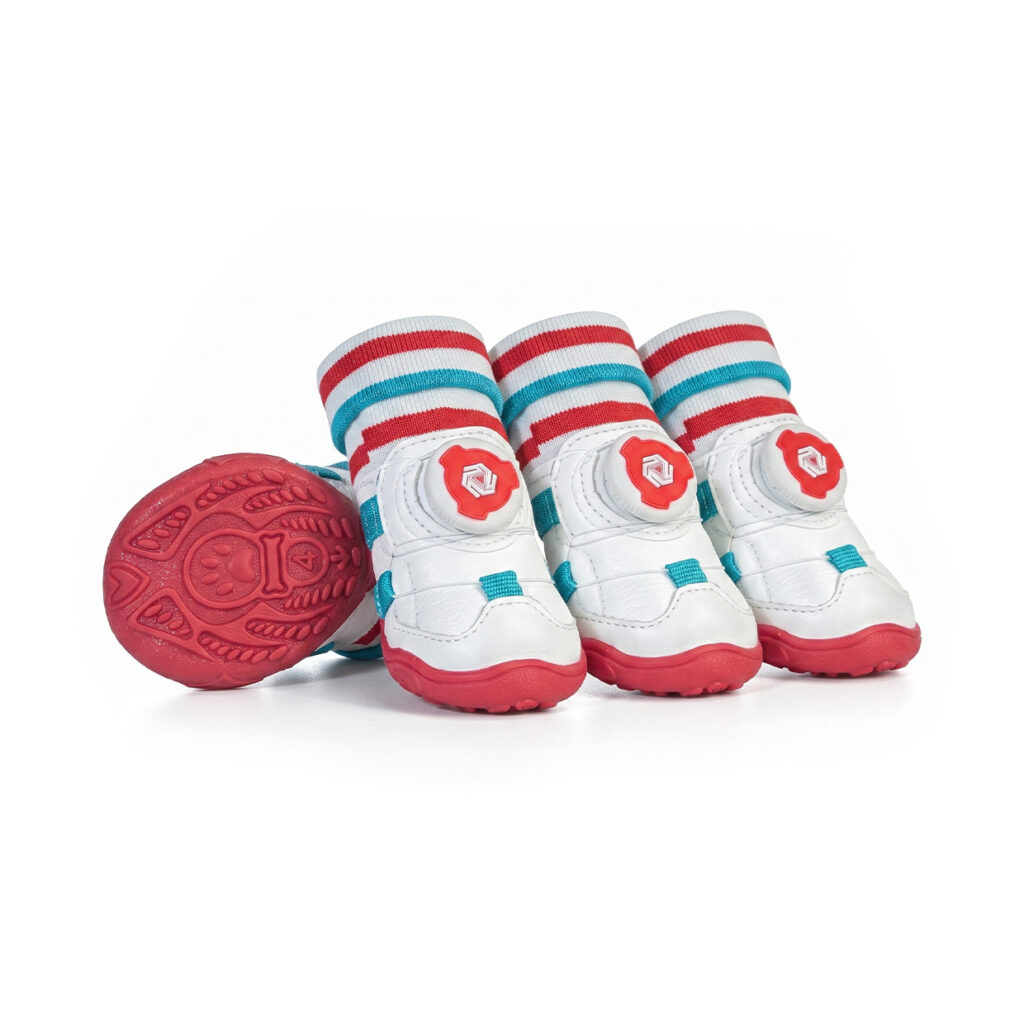
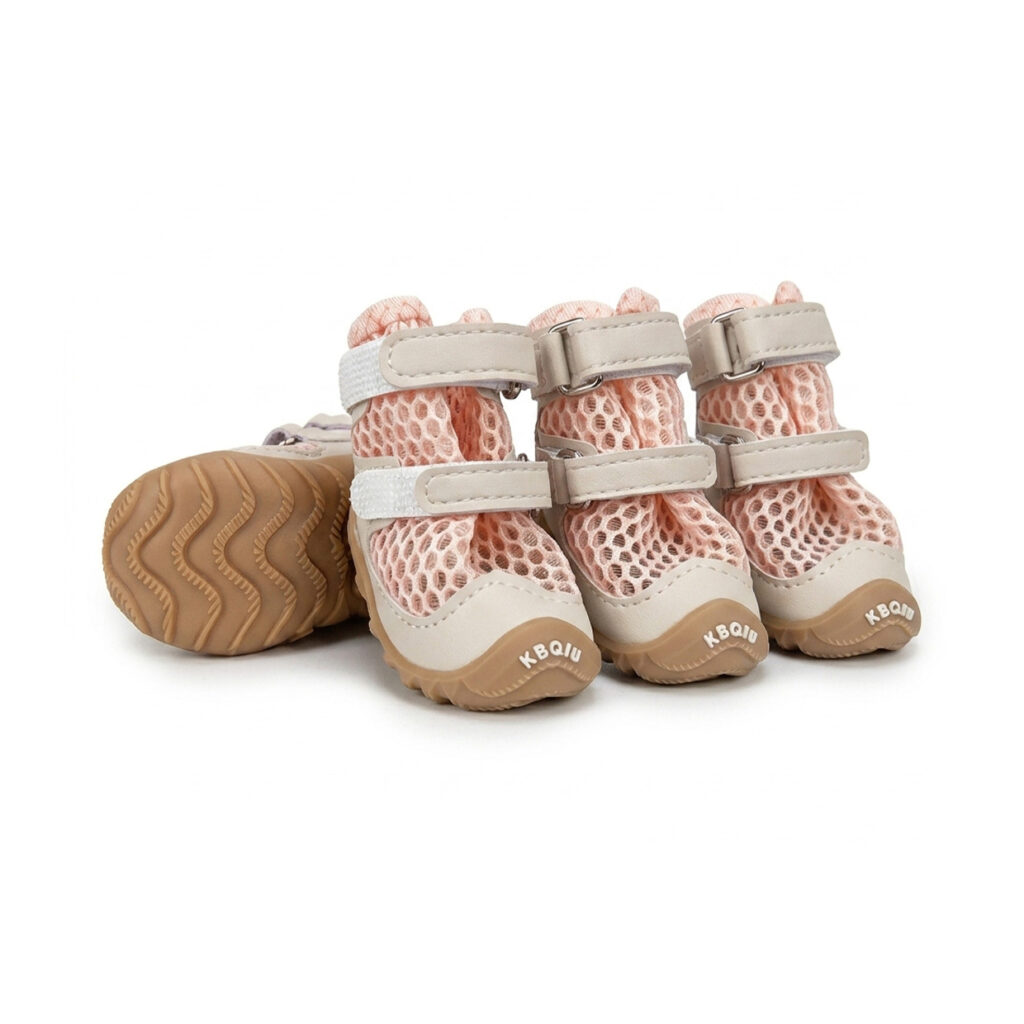
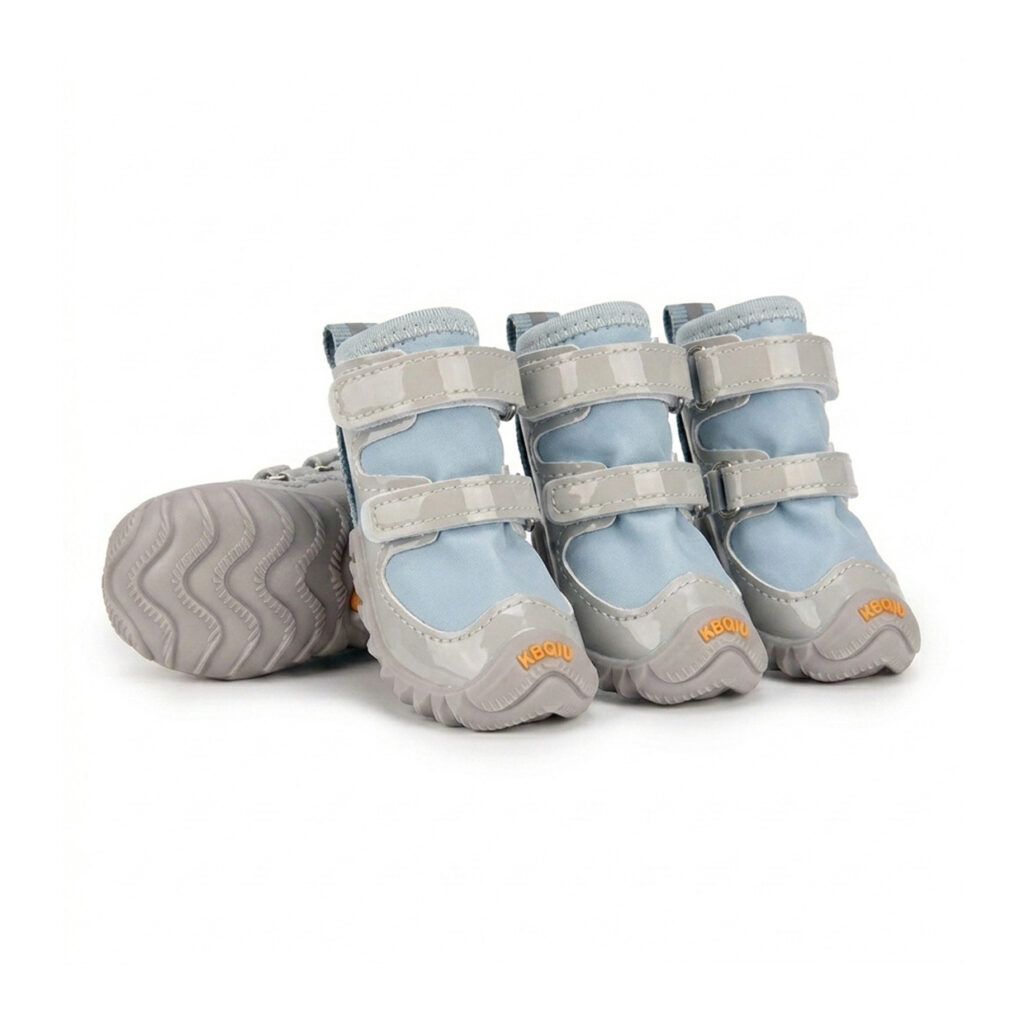
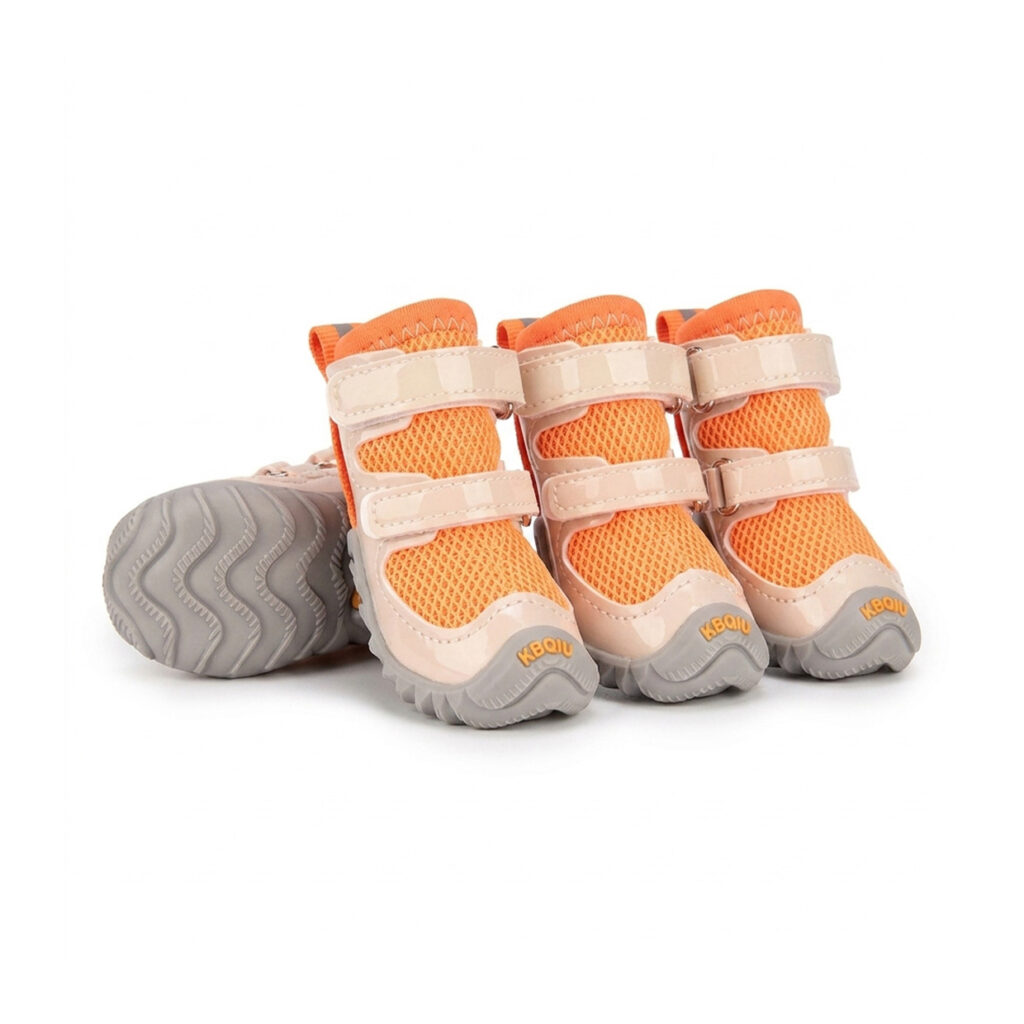
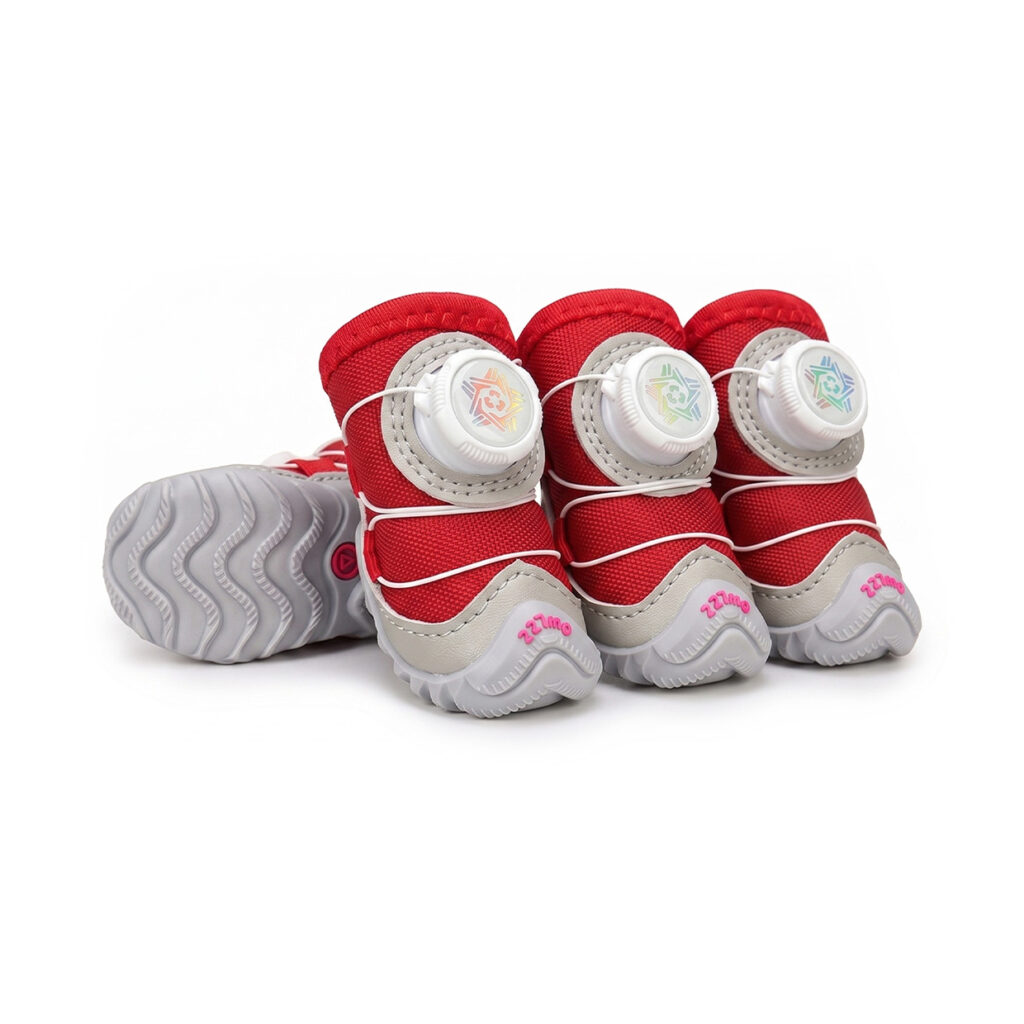
Lightweight shoes sit between socks and boots. They make sense when your dog needs some protection from heat, rough sidewalks, or light scuffs outside, but you still want flexibility.
A quick test before summer walks: press the back of your bare hand on the pavement for seven seconds. If it’s too hot for your hand, it’s too hot for paws.
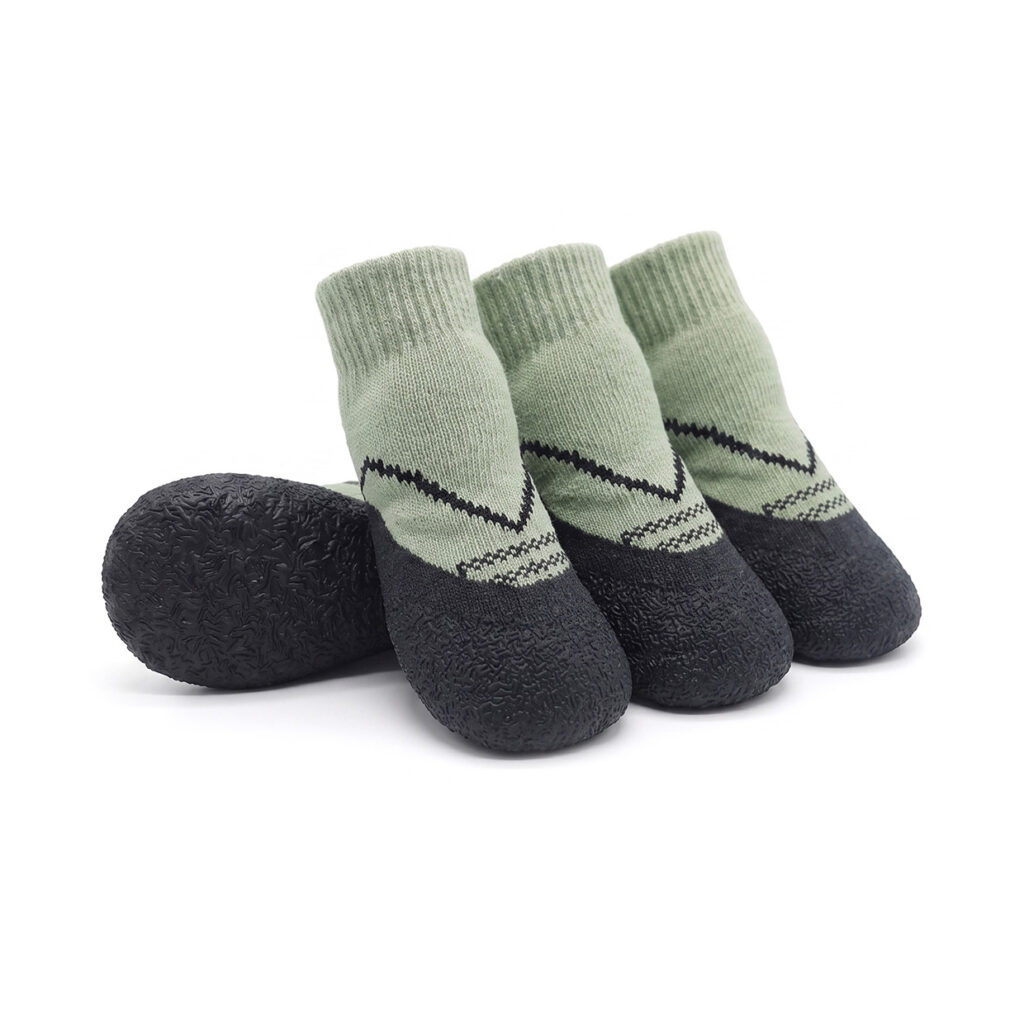
Breathable Anti Slip Dog Socks
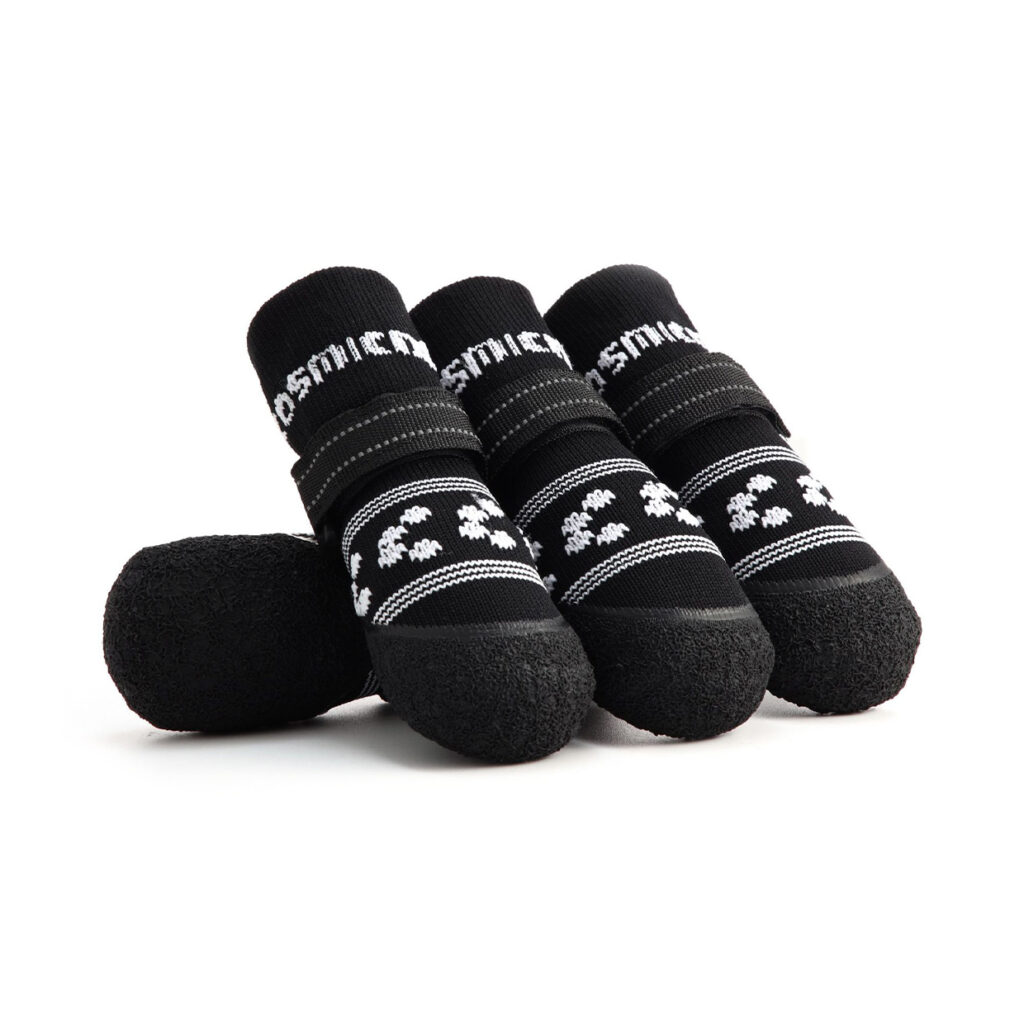
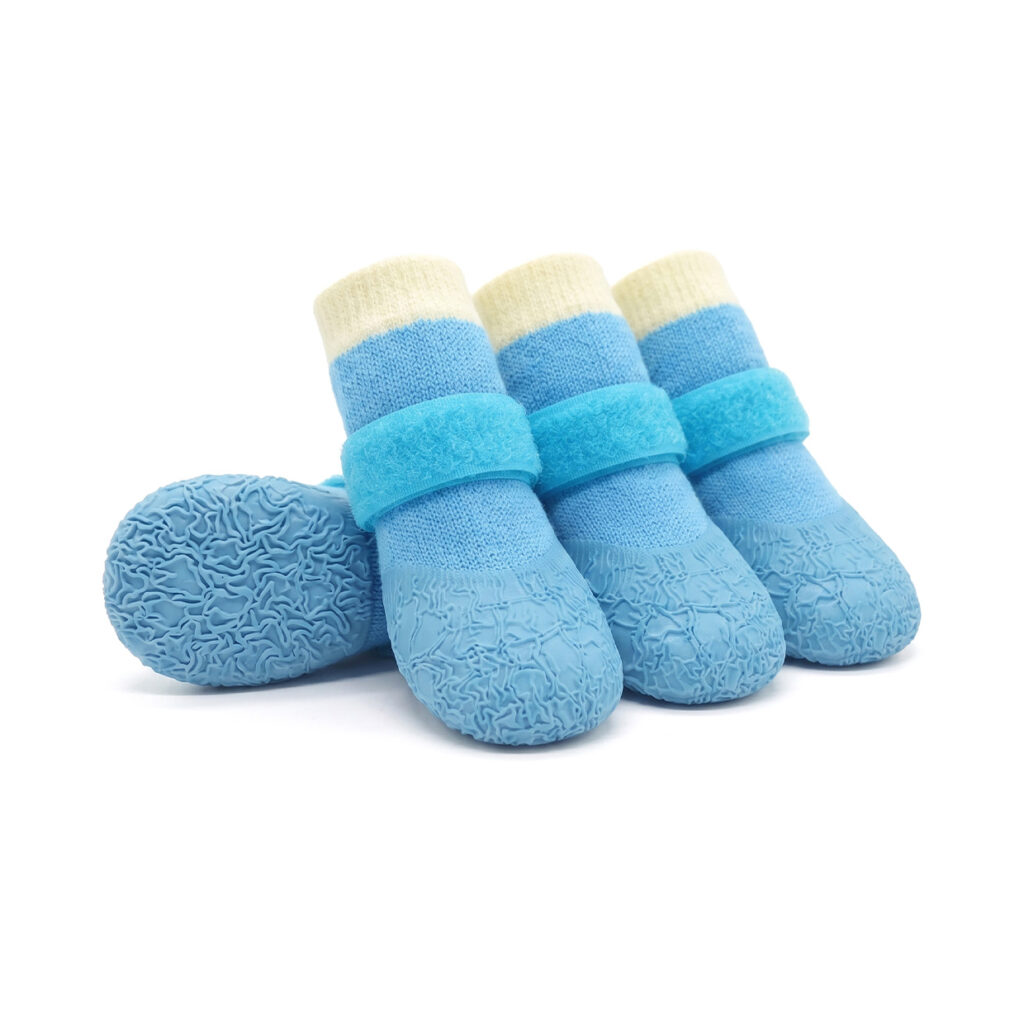
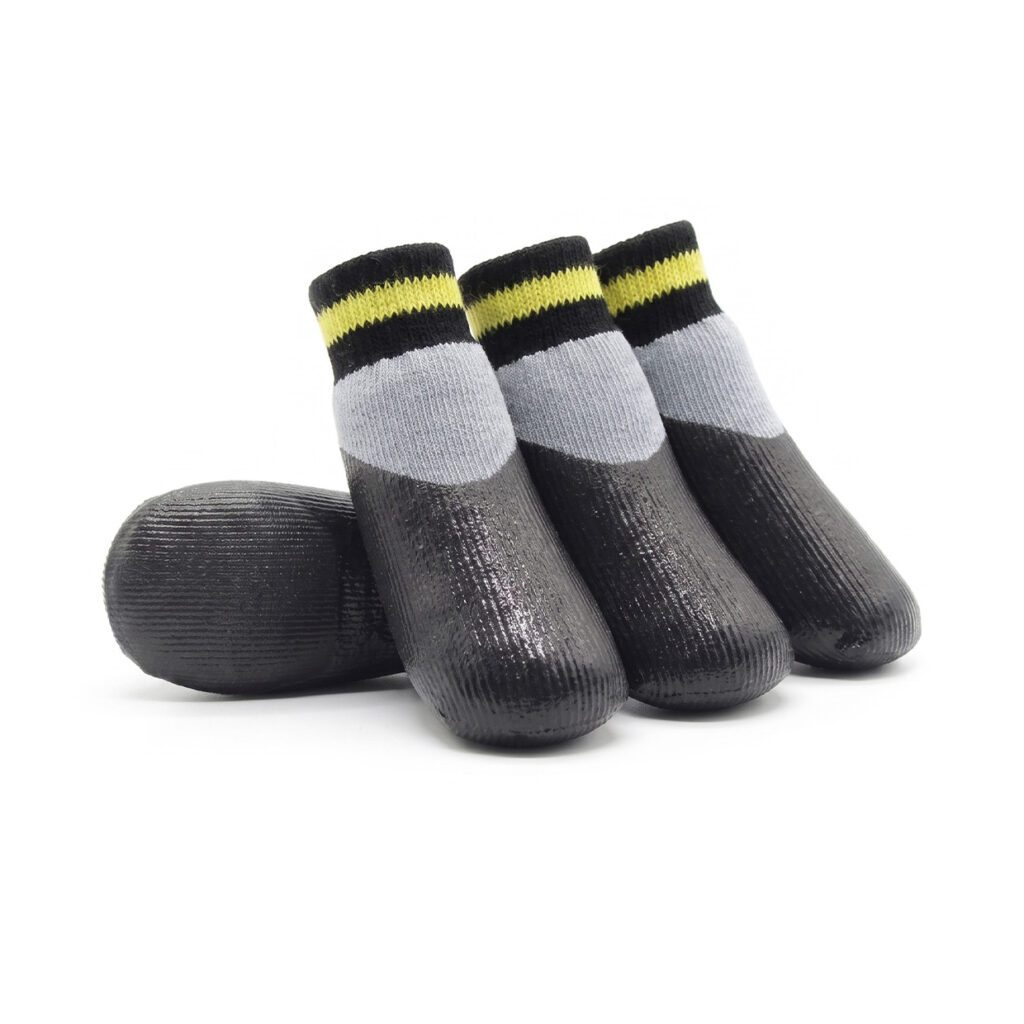
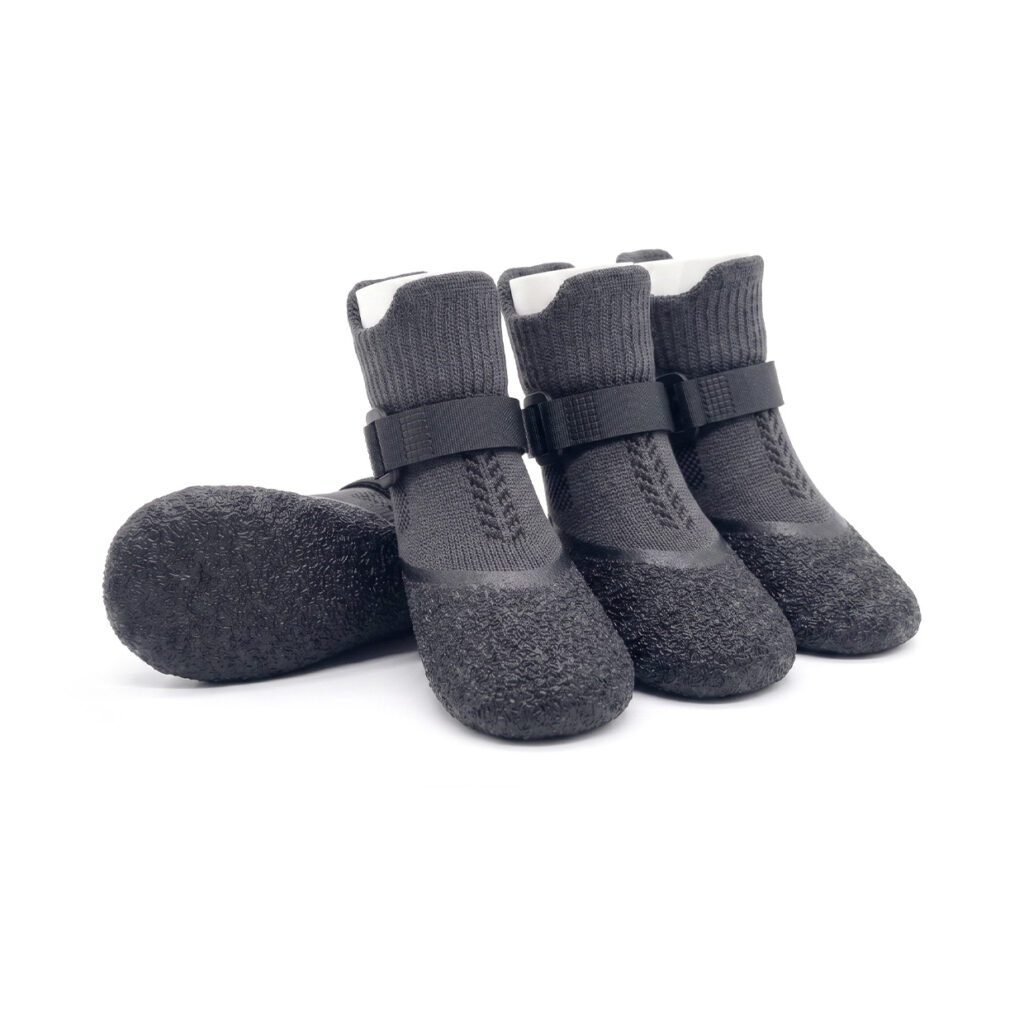
Lightweight Everyday Dog Shoes
When boots are the better choice
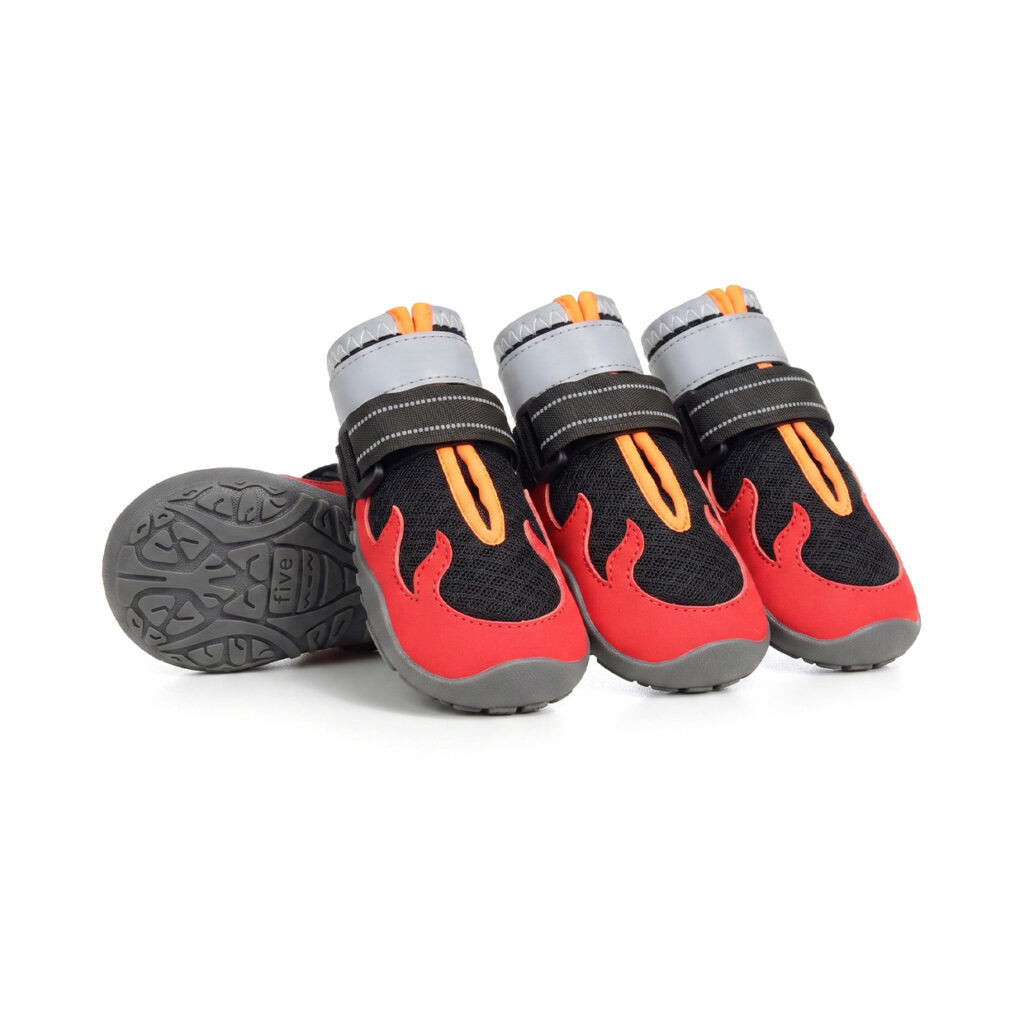
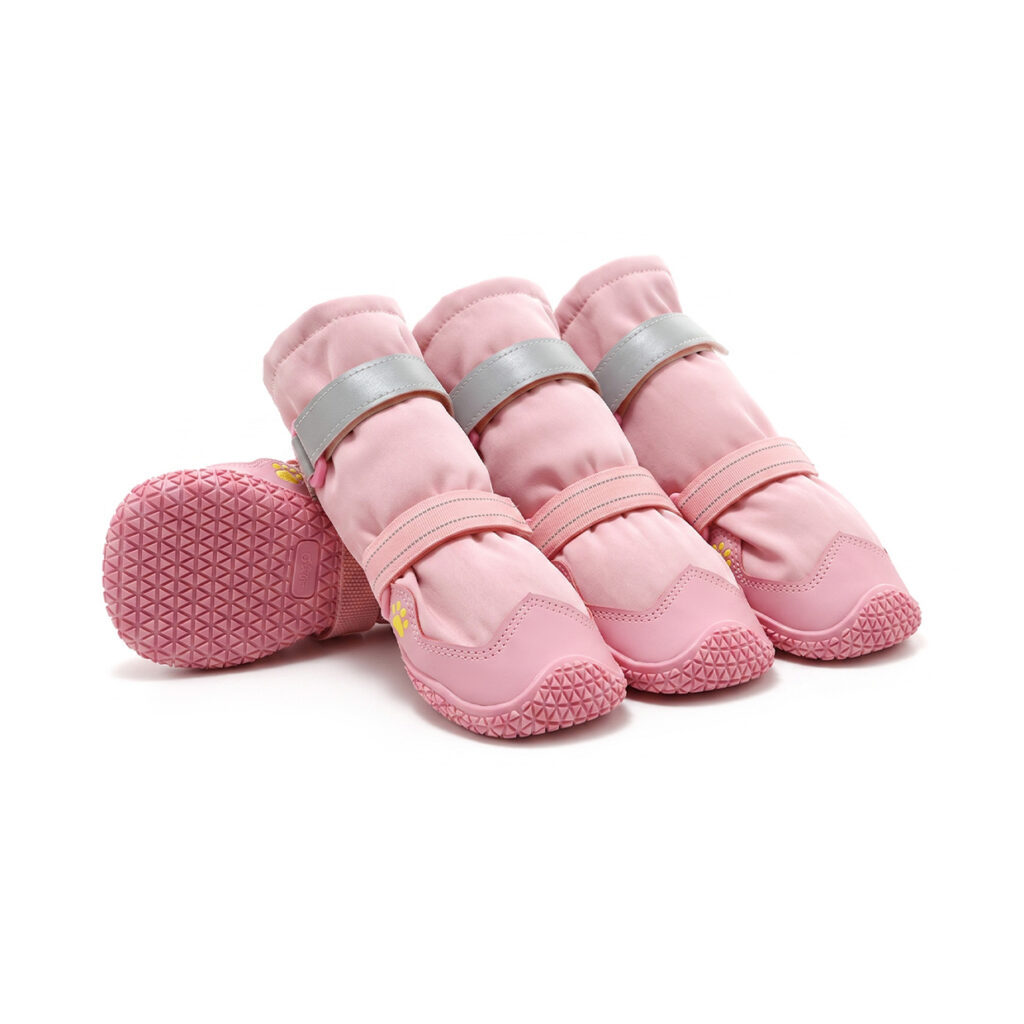
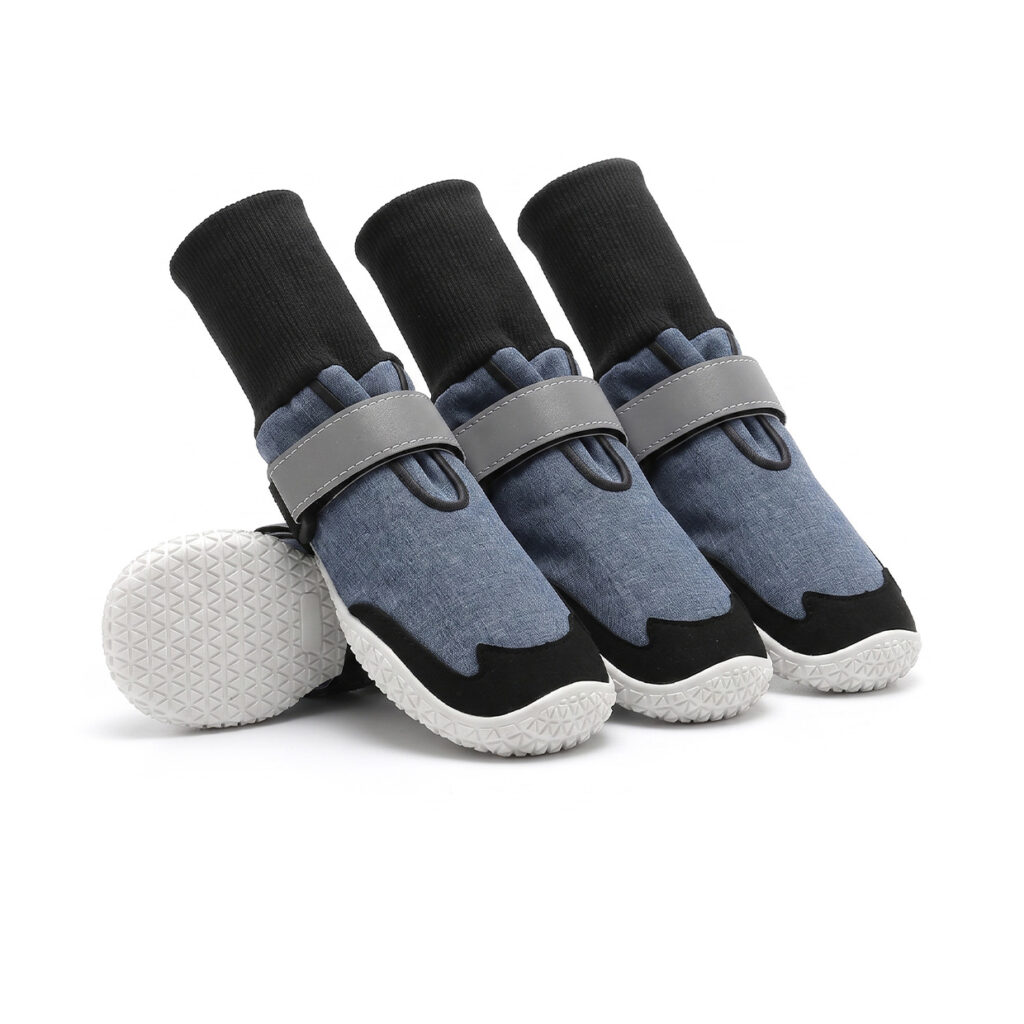
Outdoor boots are built for another job entirely. If your dog is hiking over sharp rocks, pushing through thorny brush, walking through snow and road salt, or covering rough ground, a structured sole and protective upper matter much more.
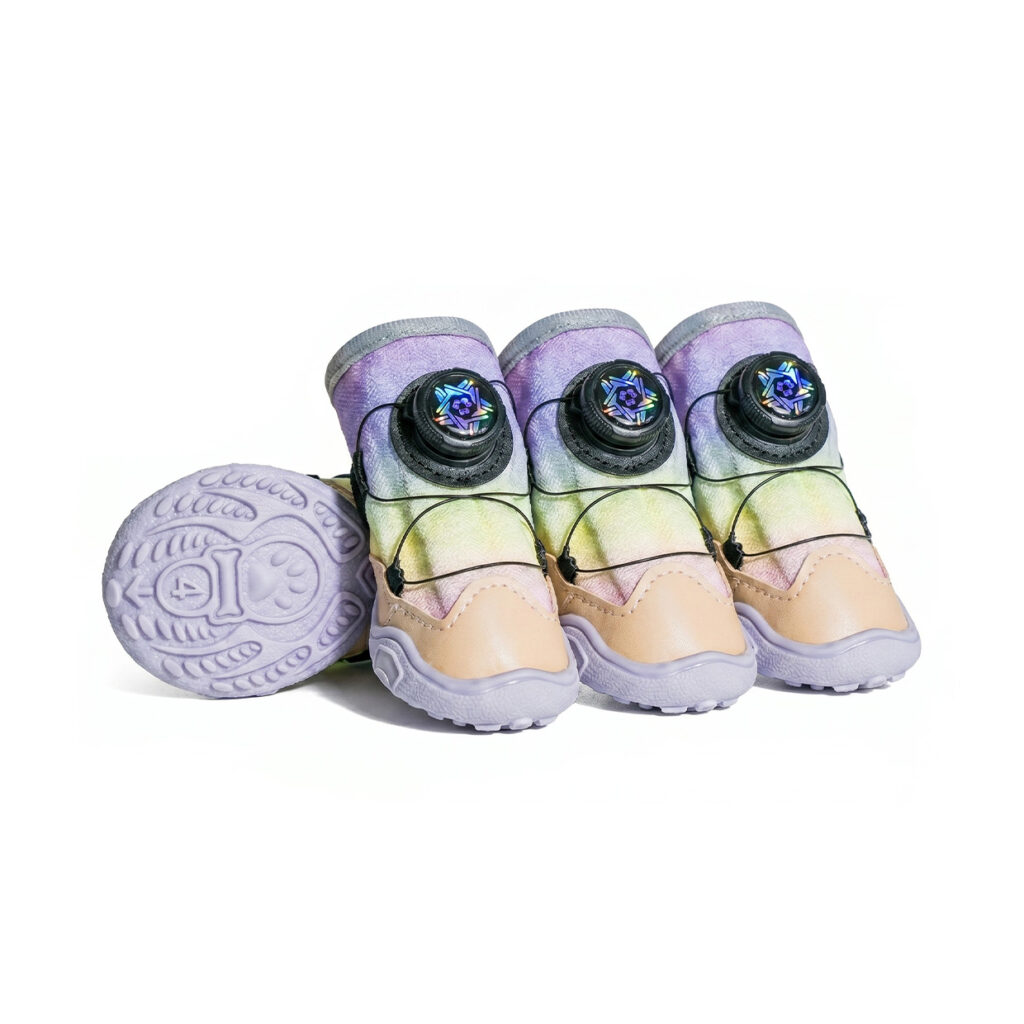
Rugged Outdoor Dog Boots
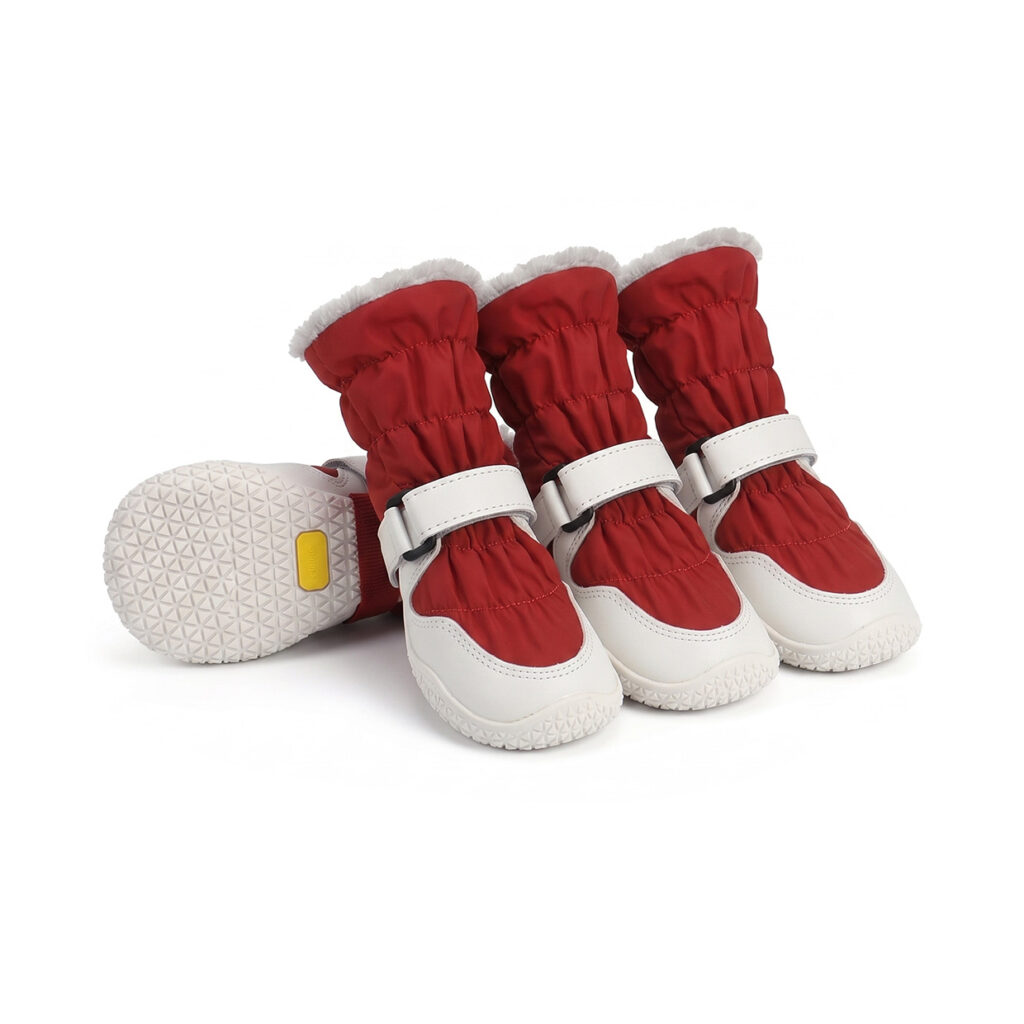
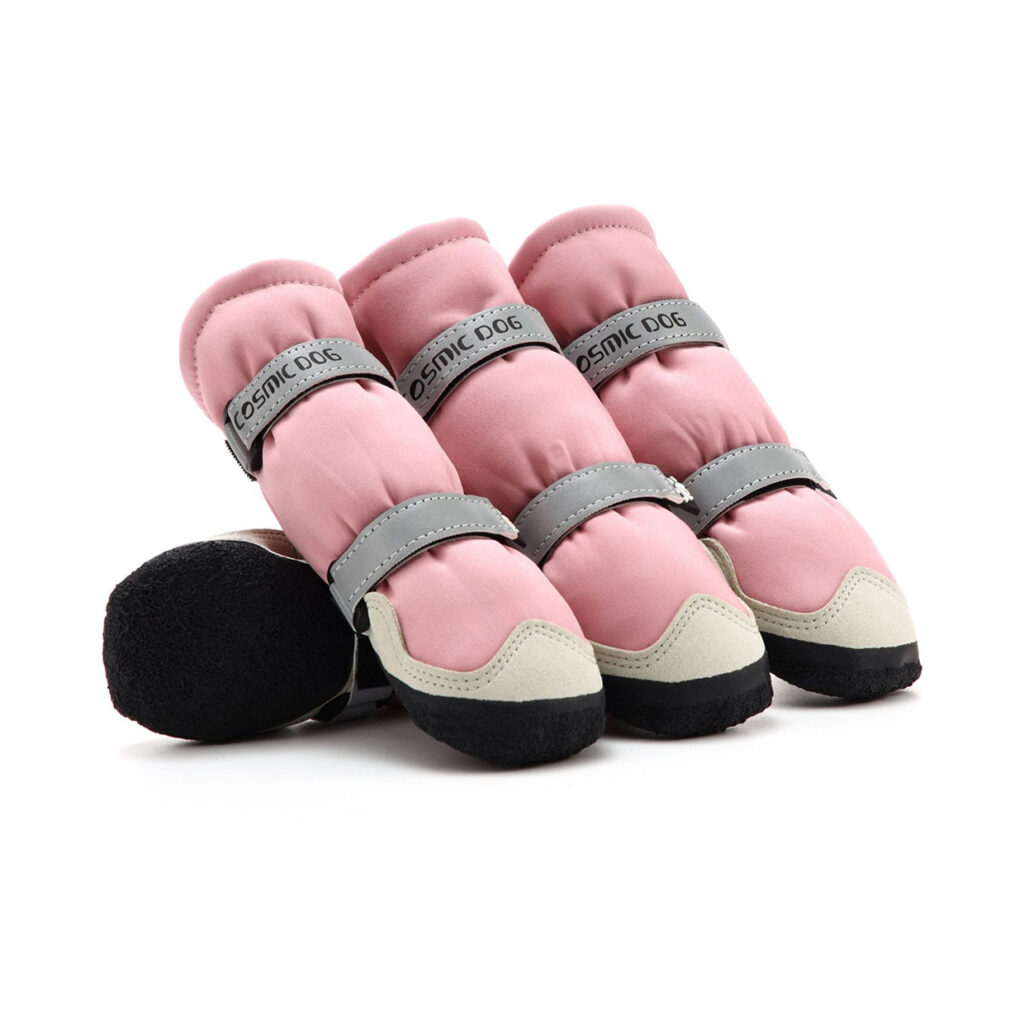
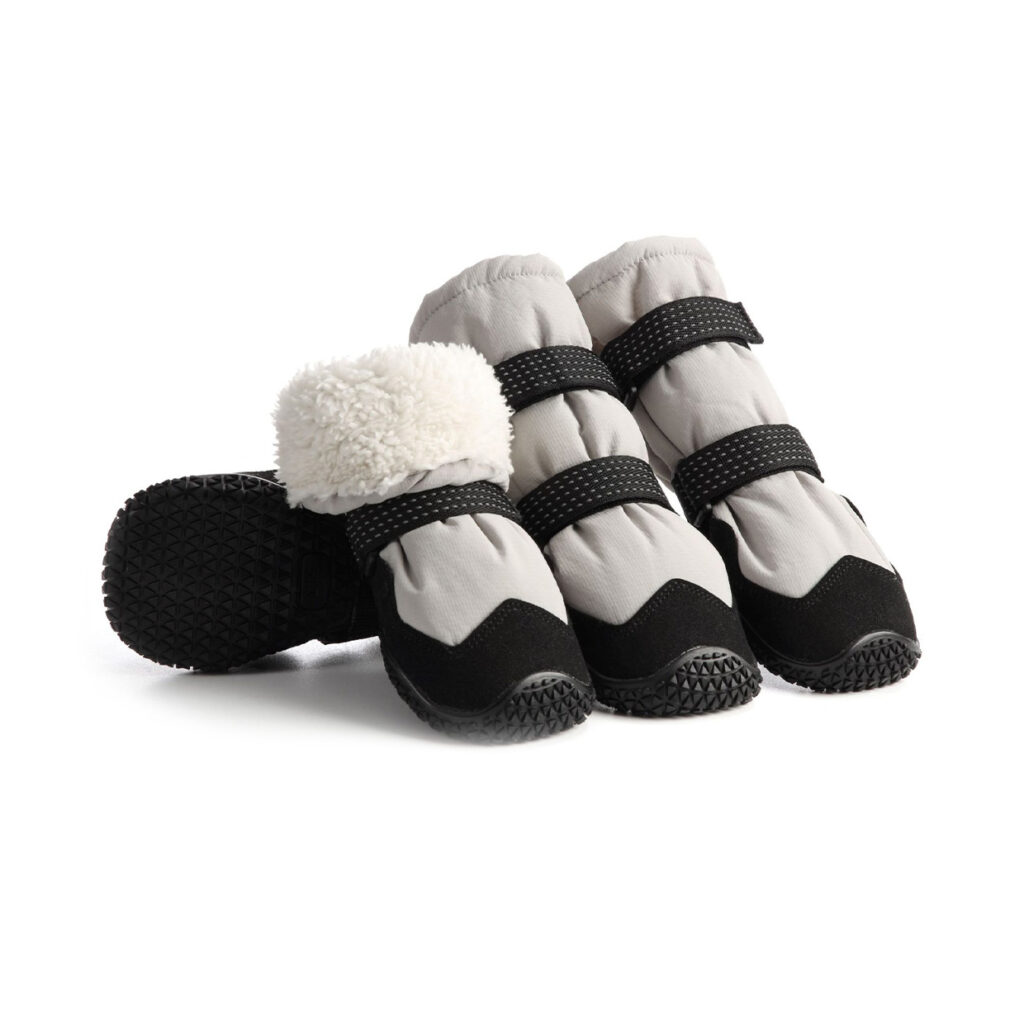
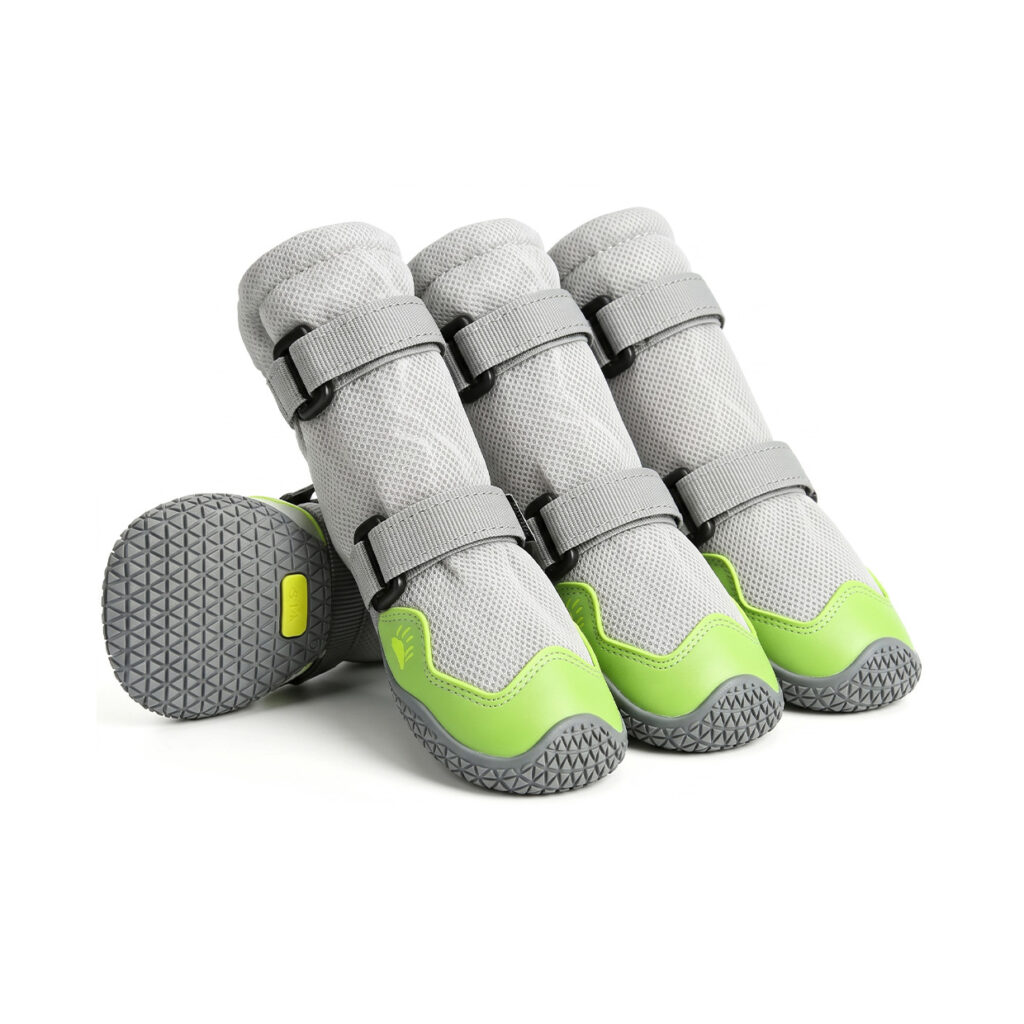
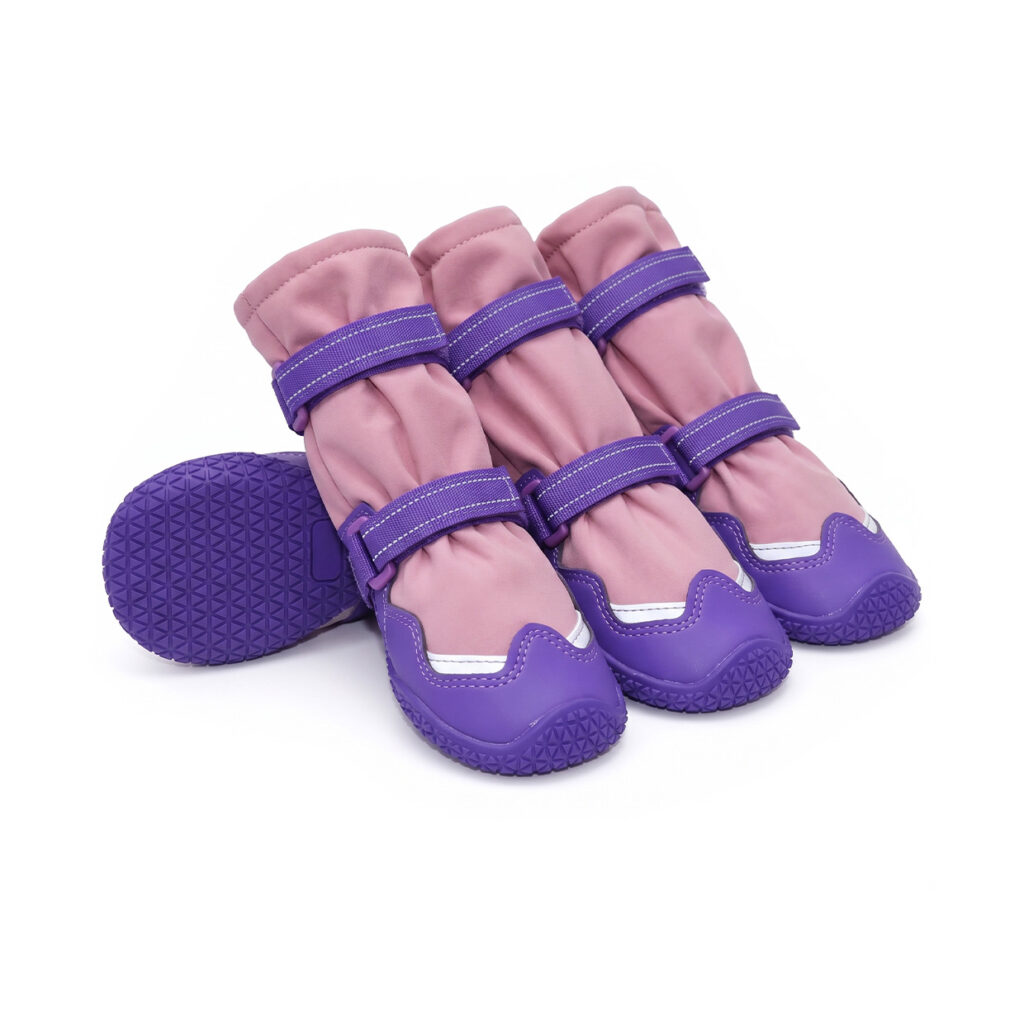
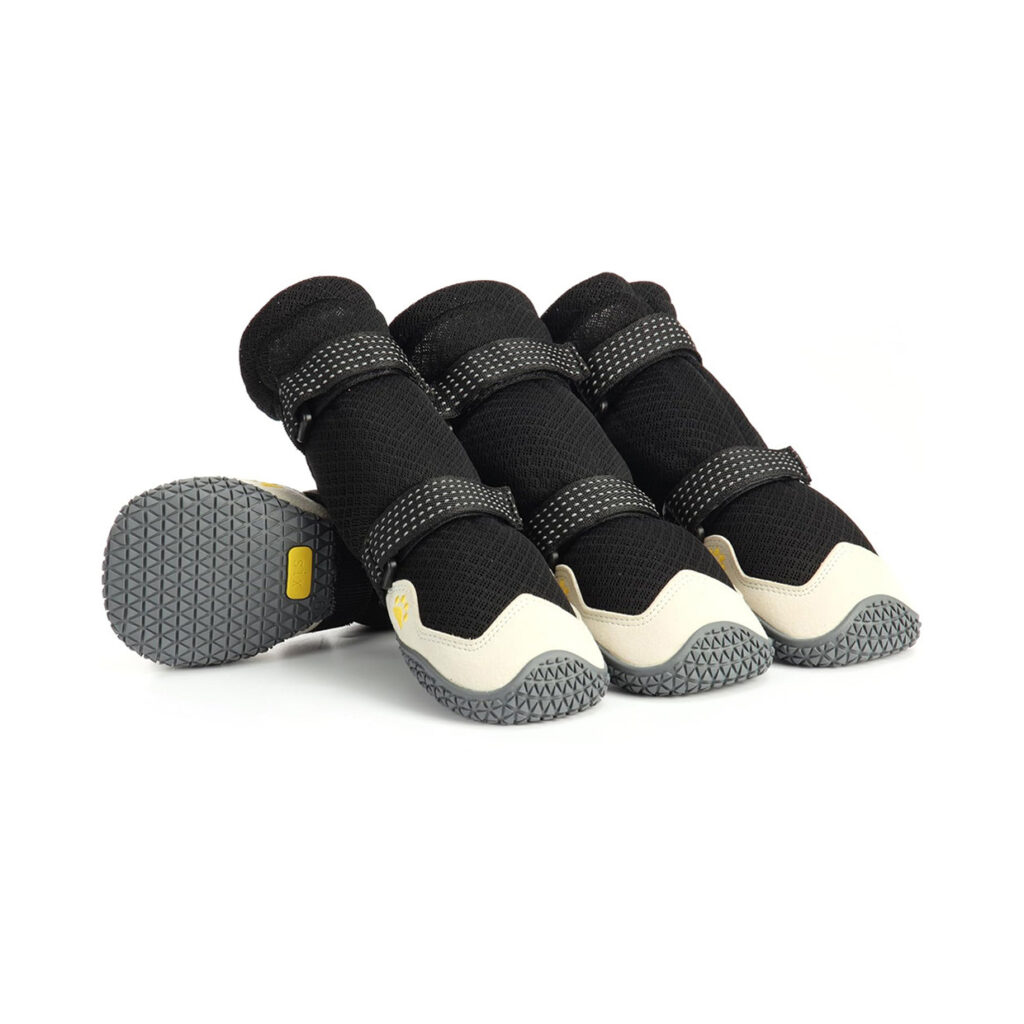
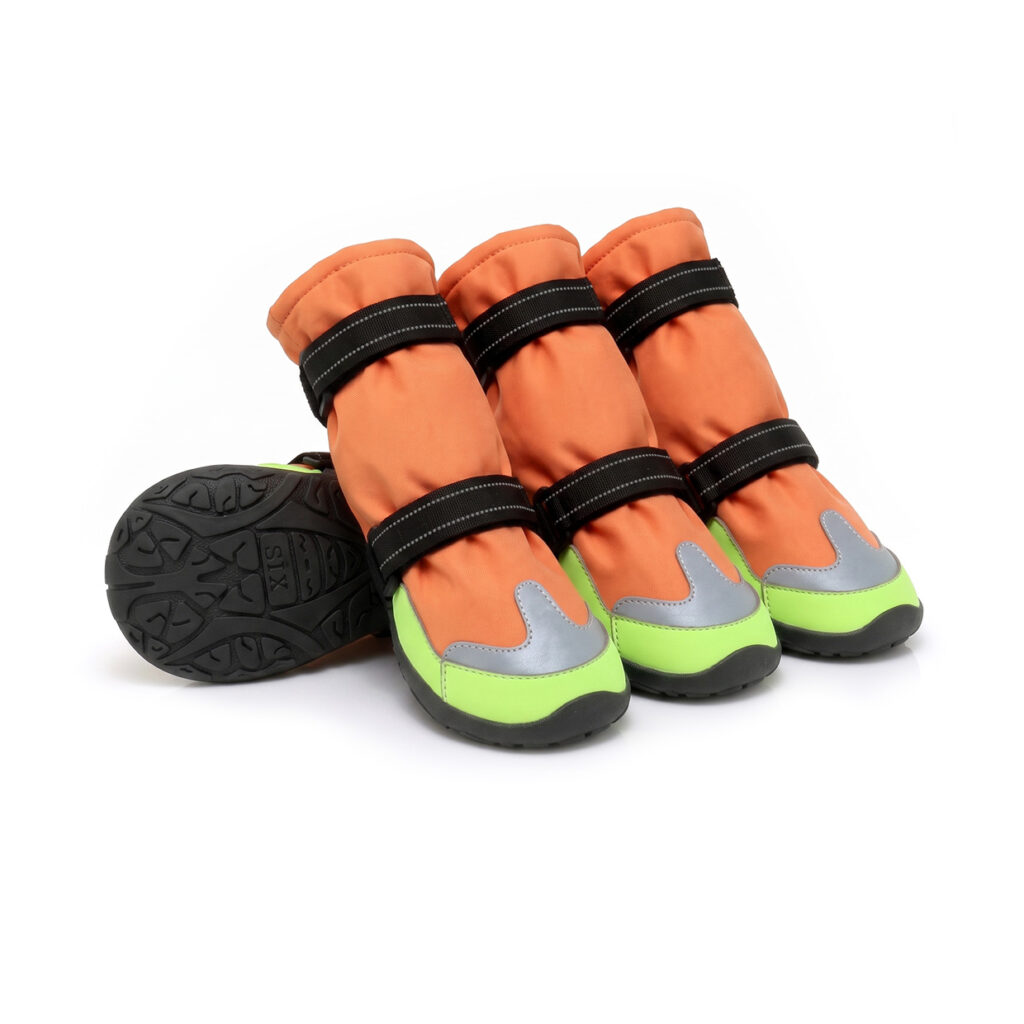
It helps to understand the differences between these three types of footwear before you buy.
Understand the distinct differences between dog shoes, boots, and socks for different environments.
For a deeper look at outsole construction and outdoor traction, see:
Heavy-duty dog boot soles designed for outdoor traction.
A simple decision framework
This table matches common situations with the right footwear:
| Situation | Recommended Footwear | Main Priority |
|---|---|---|
| Hardwood floors | Anti-slip socks | Surface traction |
| Glazed tile | Anti-slip socks | Grip and flexibility |
| Senior dog indoors | Traction socks | Stability |
| Hot pavement | Lightweight shoes/boots | Paw protection |
| Gravel trails | Outdoor boots | Abrasion resistance |
| Rocky hiking | Rugged boots | Puncture protection |
| Deep snow | High-coverage boots | Insulation and retention |
The right choice depends on surface + how long they’ll wear it + what hazards are around, not on your dog’s size.
Frequently Asked Questions (FAQ)
Can dogs wear anti slip dog socks all day inside the house?
Yes, with breaks. Well-fitted, breathable socks are fine for long stretches, but I wouldn’t leave them on 24/7.
Take them off a few times a day and look at the pads, toes, nails, and the skin between the toes. You’re checking for redness, dampness, pressure marks, or a funky smell.
Plenty of dogs only need socks during active hours or on the slickest floors. If your dog has skin problems, paw irritation, circulation issues, or keeps licking their paws, talk to your vet before long-term wear. Anti lick dog socks and socks for licking paws can help in some cases, but it’s worth finding out why your dog is licking first.
Why do dog socks keep falling off?
Usually it’s fit. Socks that are too big twist around the paw, and a loose opening lets the whole sock slide down.
Cranking the strap tighter isn’t the fix. That just puts pressure on the leg. Dog socks that stay on get there through the right size, stretchy fabric, and an adjustable strap working together. A properly fitted sock stays put through normal walking with the strap only snug.
How do anti slip dog socks help dogs with arthritis or hip dysplasia?
They add grip between the paw and a slick floor. For a dog whose mobility is already limited, that extra grip can make standing up, turning, and walking feel much more controlled.
To be clear: anti slip dog socks don’t treat arthritis or fix hip dysplasia. If your dog suddenly has trouble walking, falls repeatedly, drags a leg, or seems to be in pain, call your vet before you buy any gear.
Are double-sided grip socks really better than single-sided?
They are if twisting is your problem. On single-sided socks, rotation moves the silicone away from the floor. Double-sided designs keep grip in contact even when the sock shifts.
If a well-fitted single-sided sock already stays straight on your dog, though, you probably don’t need the upgrade. Use what works.
Will dog socks stop my dog from scratching the hardwood floors?
Mostly, yes. Socks put fabric between the nails and the floor, which cuts down on the everyday scratches from normal walking.
They don’t replace nail trims, though. Keep nails short and check paws regularly. If your dog suddenly starts scratching a lot or dragging their feet, look into the cause instead of covering it up with socks.
Choosing Anti Slip Dog Socks: A Practical Checklist
Before you buy, look at the whole sock, not just the “non-slip” label on the package. Check for:
- Correct paw dimensions. Measure front and back paws separately using the manufacturer’s sizing guide.
- Flexible fabric. The sock should let the paw and toes move naturally.
- Real silicone coverage. Make sure the grip pattern covers the part of the paw that actually touches the floor.
- Secure retention. Adjustable elastic or hook-and-loop straps stop unwanted slipping.
- Breathability. For indoor use, light fabric beats thick waterproof material.
- Easy care. The socks should wash easily and dry fully.
- The right job. Use indoor traction socks indoors, not as a substitute for rugged outdoor boots.
This checklist will serve you better than searching for the “best dog socks.” The right pair depends on your dog’s mobility, your floors, their activity level, and fit.
Bring Confidence and Safety Back to Your Dog’s Indoor Steps!
No dog should have to struggle across their own living room. Slippery hardwood and tile make everyday movement harder, especially for dogs who’ve lost some strength or mobility.
The right indoor footwear adds grip and keeps the flexibility dogs need to move naturally. Often the payoff is that your dog comes back to the kitchen when you’re cooking, not just steadier feet.
Discover our collection of Anti-Slip Dog Socks, designed around lightweight construction, breathable materials, silicone traction, and a secure everyday fit.
Shop Non-Slip Indoor Dog Socks Collection Now.
Shop Breathable Anti Slip Dog Socks