Free Shipping on All Orders | 30-Day Easy Returns
Dog Slipping on Hardwood Floors: Prevent Painful Joint Injuries
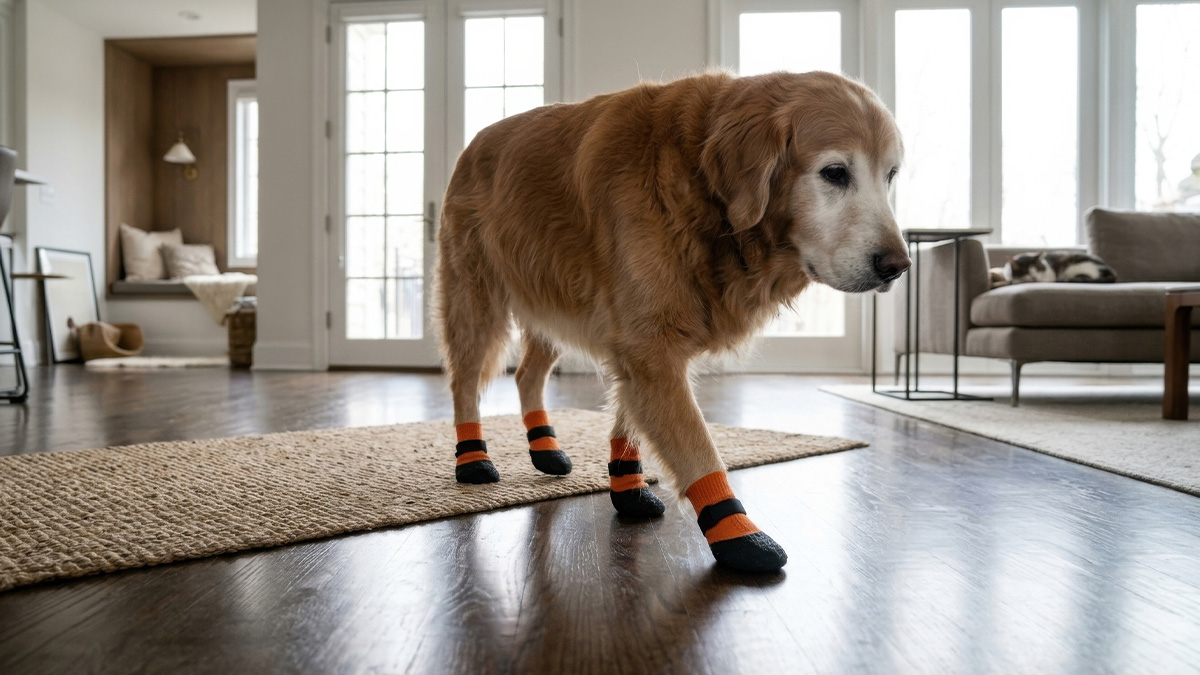
Table of Contents
You probably know the sound: claws scrabbling on hardwood as your dog races to the front door, back legs sliding every which way like Bambi on a frozen pond. Or it’s quieter. Your senior dog tries to get up after a nap, the hind feet slide out, and they pause before trying again, a little more carefully this time.
A dog slipping on hardwood floors can look almost funny at first. Then you notice your dog is changing how they live in your home. They take shorter, stiffer steps. They hop from rug to rug like the floor is lava. They start skipping the kitchen, or they wait in the hallway instead of following you into the room.
Polished hardwood, laminate, and tile are hard surfaces for a lot of dogs. That’s especially true for seniors and for dogs with arthritis, muscle weakness, or an old orthopedic injury. Veterinary guidance recommends improving traction at home as part of a broader mobility plan, and that plan usually starts with small, affordable changes.
Most of the fixes are simple, and you don’t have to rip up your floors. Below, we’ll look at why dogs struggle on smooth flooring, how to keep dog from slipping on hardwood floors, and where socks, rugs, nail care, and other traction aids fit in.
What a Slip Can Do: Micro-Trauma & CCL Tears
When a dog loses traction, the risk is bigger than an awkward stumble. The hind legs can shoot off in different directions while the body keeps moving forward. That puts unusual strain on the hips, knees, muscles, and lower back, all at once and with no warning.
The ligament everyone worries about
The canine cranial cruciate ligament (CCL) is a key stabilizer inside the knee, roughly the dog version of the human ACL. One detail surprises many owners: CCL disease in dogs is often degenerative. The ligament usually weakens over time rather than snapping in one dramatic moment. A sudden trauma can still be the final straw.
So when people ask can dog slipping on hardwood cause torn ACL, the honest answer is yes, it can, but it usually doesn’t. A bad slip can contribute to an acute knee injury, but most slips won’t tear a ligament. The outcome depends on several factors:
- Whether the ligament was already weakened
- Your dog’s build and leg conformation
- Body weight and fitness
- Past injuries
- How severe the slip was
American College of Veterinary Surgeons: Canine CCL Disease
It’s not only about the knee
Slipping can injure other areas too. VCA notes that a sudden outward splay of the hind legs can cause an acute iliopsoas injury, a strain of the deep hip-flexor muscle. VCA specifically names ice, hardwood, tile, and other slick surfaces as risk factors.
If your dog suddenly limps after a slip, refuses to put weight on a leg, yelps when moving, has swelling, or just isn’t right hours later, don’t write it off as clumsiness. Call your vet. Orthopedic injuries are easier to treat when they’re caught early.
The quieter problem: repetitive micro-trauma
A dog doesn’t need a dramatic wipeout to develop mobility problems. Small slips, repeated every day, teach a dog to brace. They tense their muscles, shorten their stride, and stop making the turns or getting up the way they naturally would.
Dogs with osteoarthritis can get stuck in a frustrating loop. Sore joints make movement harder, the slippery floor makes movement feel unsafe, and moving less often leads to more stiffness. VCA recommends non-slip surfaces at home because slick flooring makes it harder for arthritic dogs to walk, turn, stand up, and move comfortably.
Don’t wait for an injury
Treat indoor traction as risk management. It’s not a guarantee against injury, but it’s one of the easiest risks you can reduce.
The goal is simple. Give your dog’s paws a predictable surface so they can stand, turn, walk, and get up without fighting the floor on every step.
Immediate Joint Defense: Indoor Grip Footwear
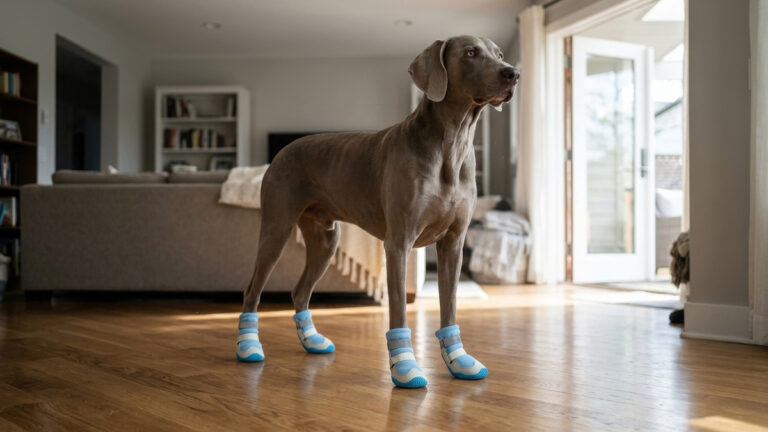
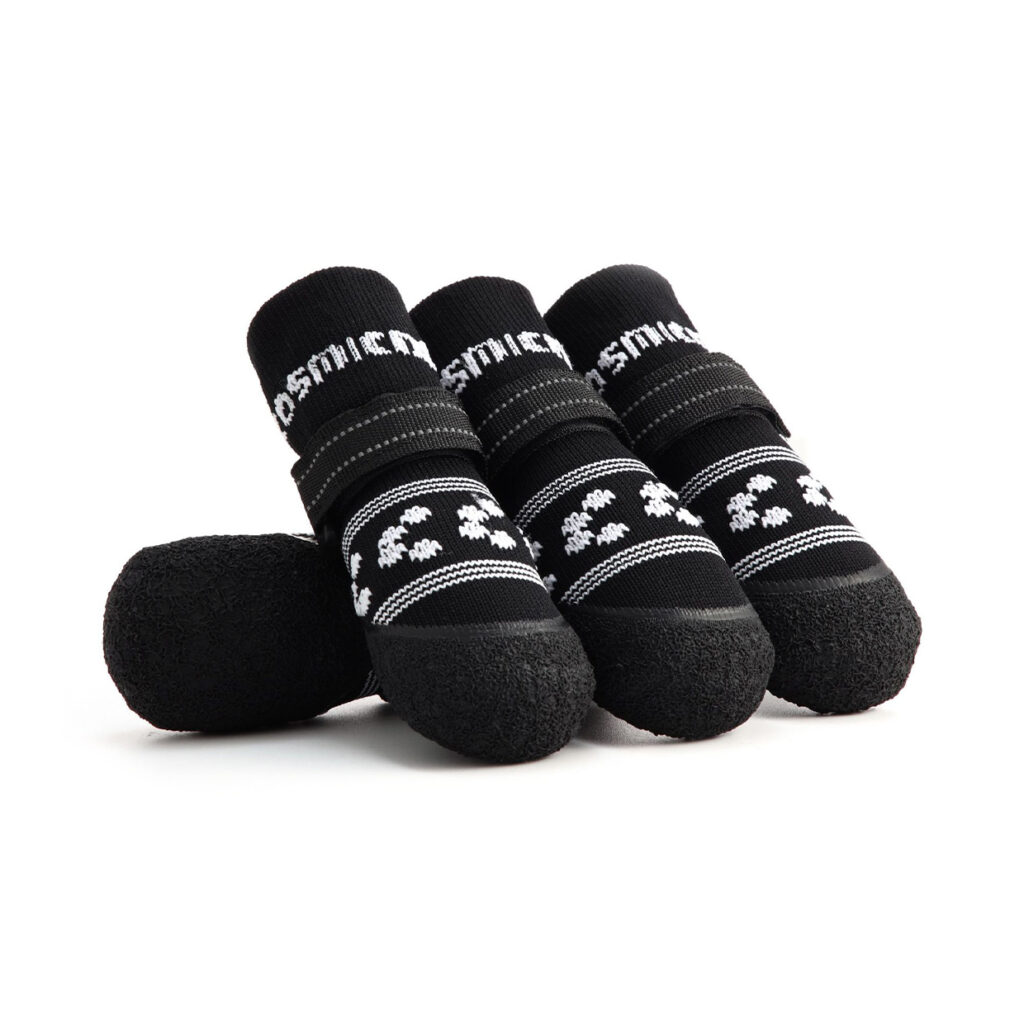
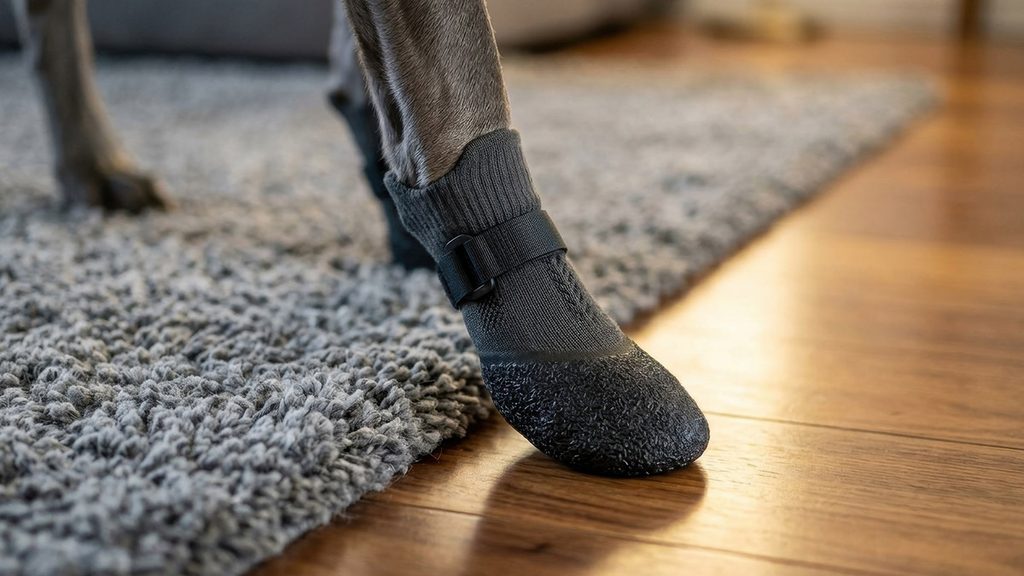
If your dog tolerates wearing something on their feet, indoor traction socks give them a grip surface that goes everywhere they go.
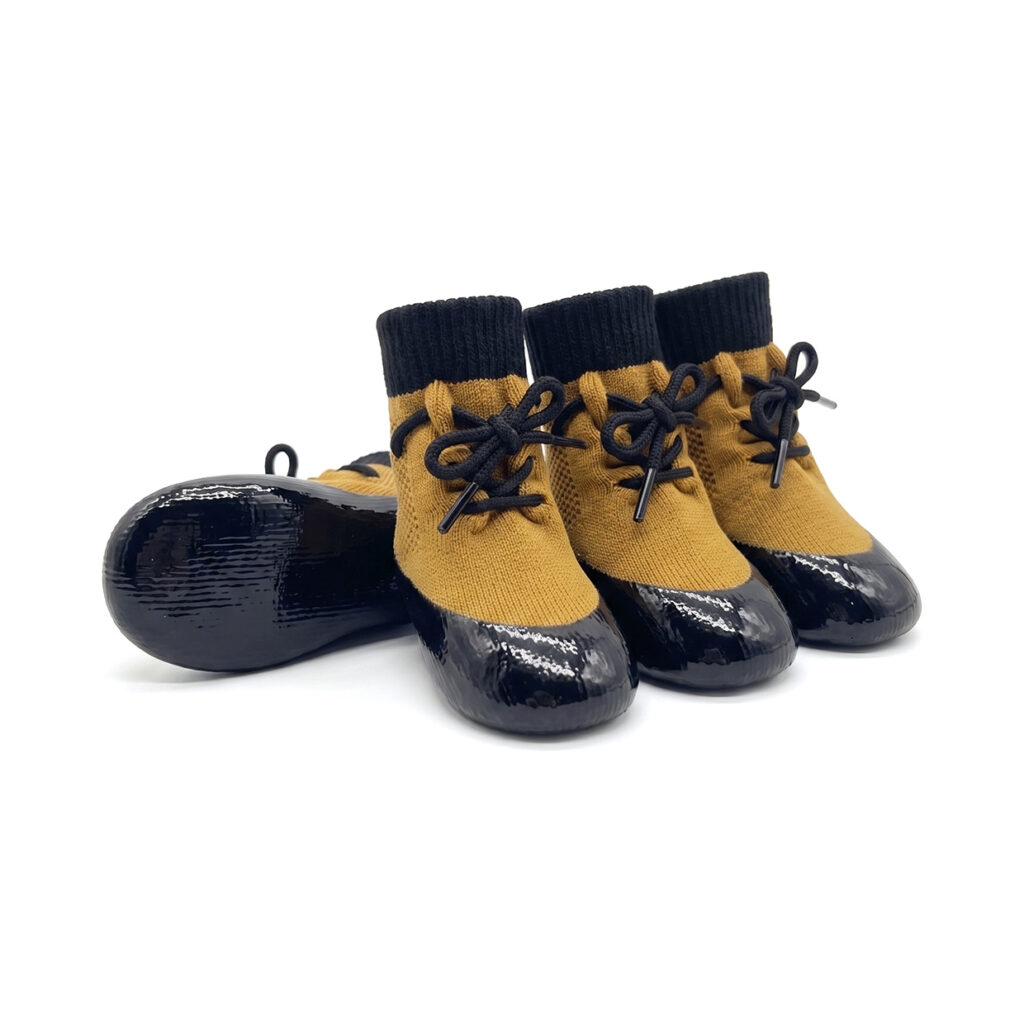
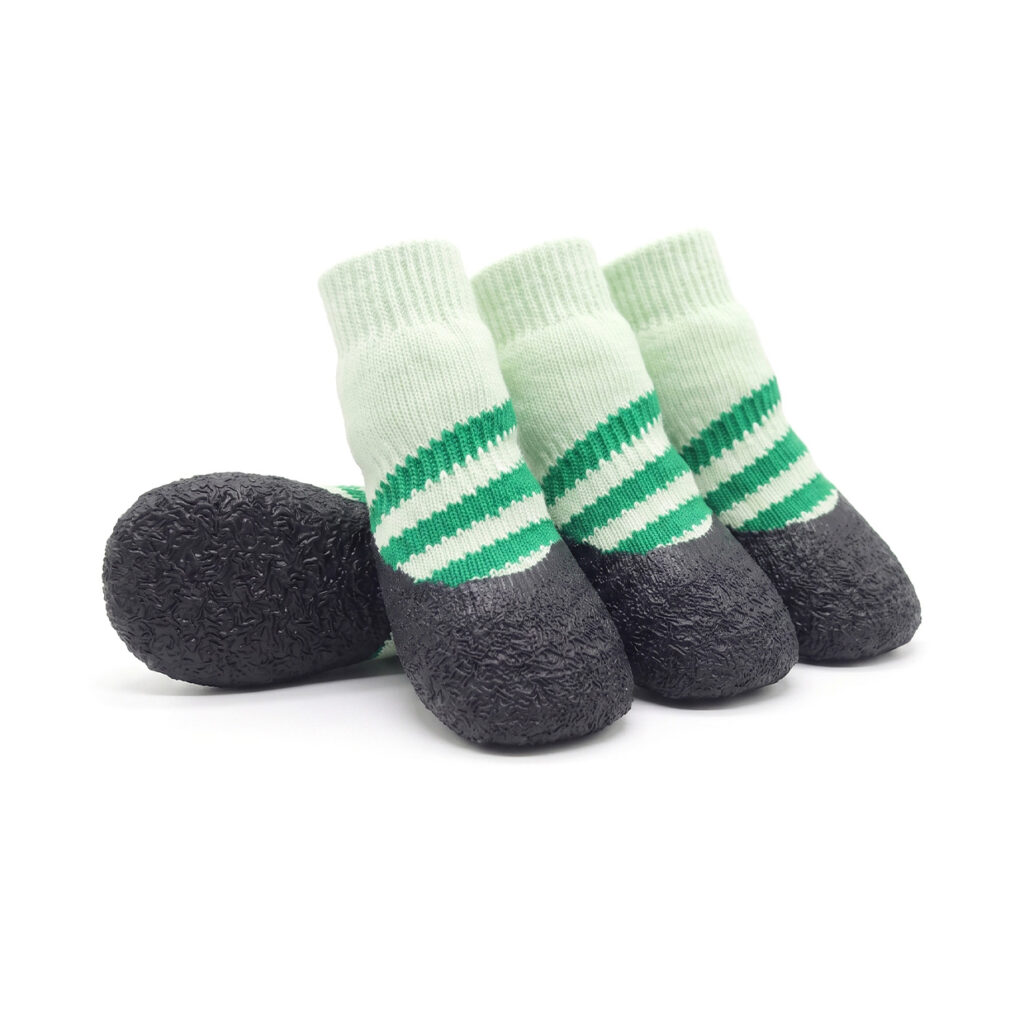
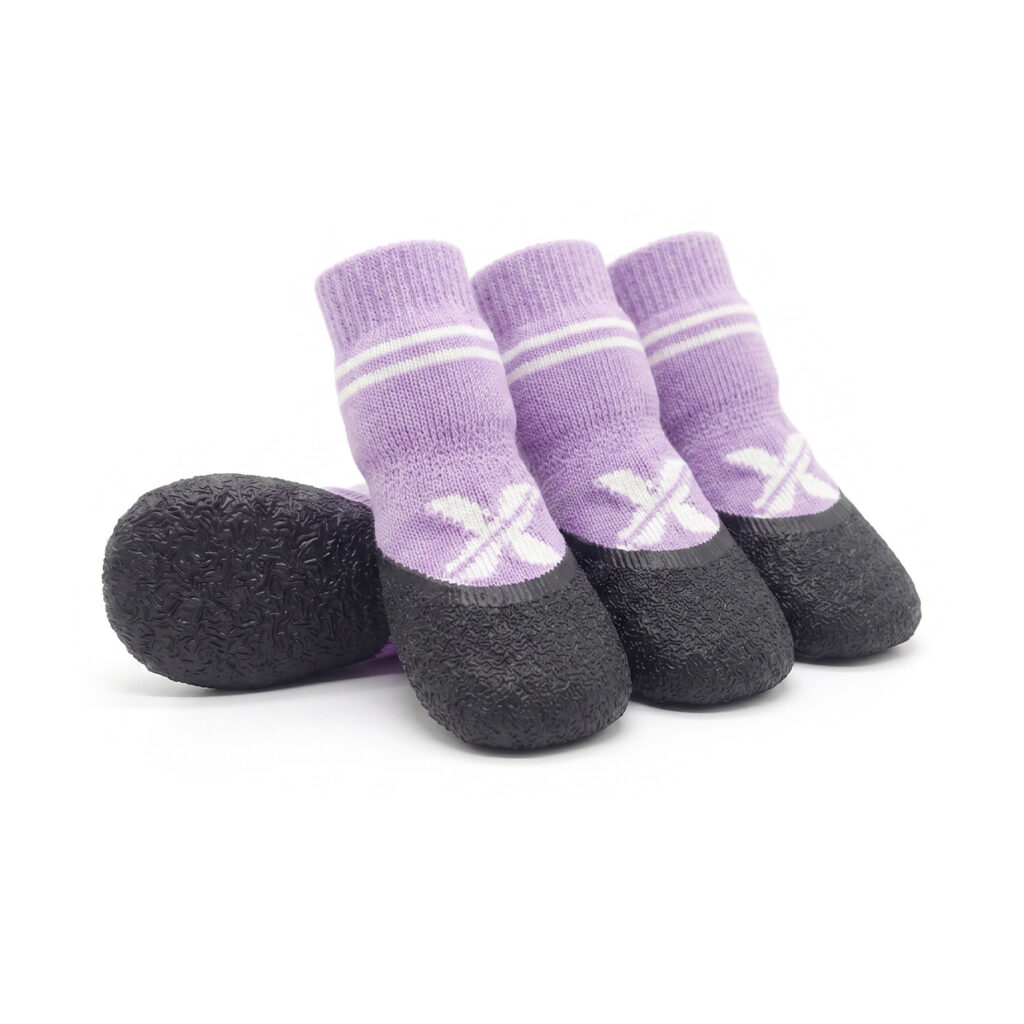
Recommended product type: Ultra-Grip 360° Non-Slip Dog Socks & Soft-Sole Indoor House Shoes
What to look for:
- Dense silicone traction patterns (more than a few scattered dots)
- Breathable, flexible fabric
- A secure closure that doesn’t pinch
- Correct paw sizing (more on that below)
- A sole designed for smooth indoor floors, not trails
Anti-slip Dog Socks for Hardwood Floors
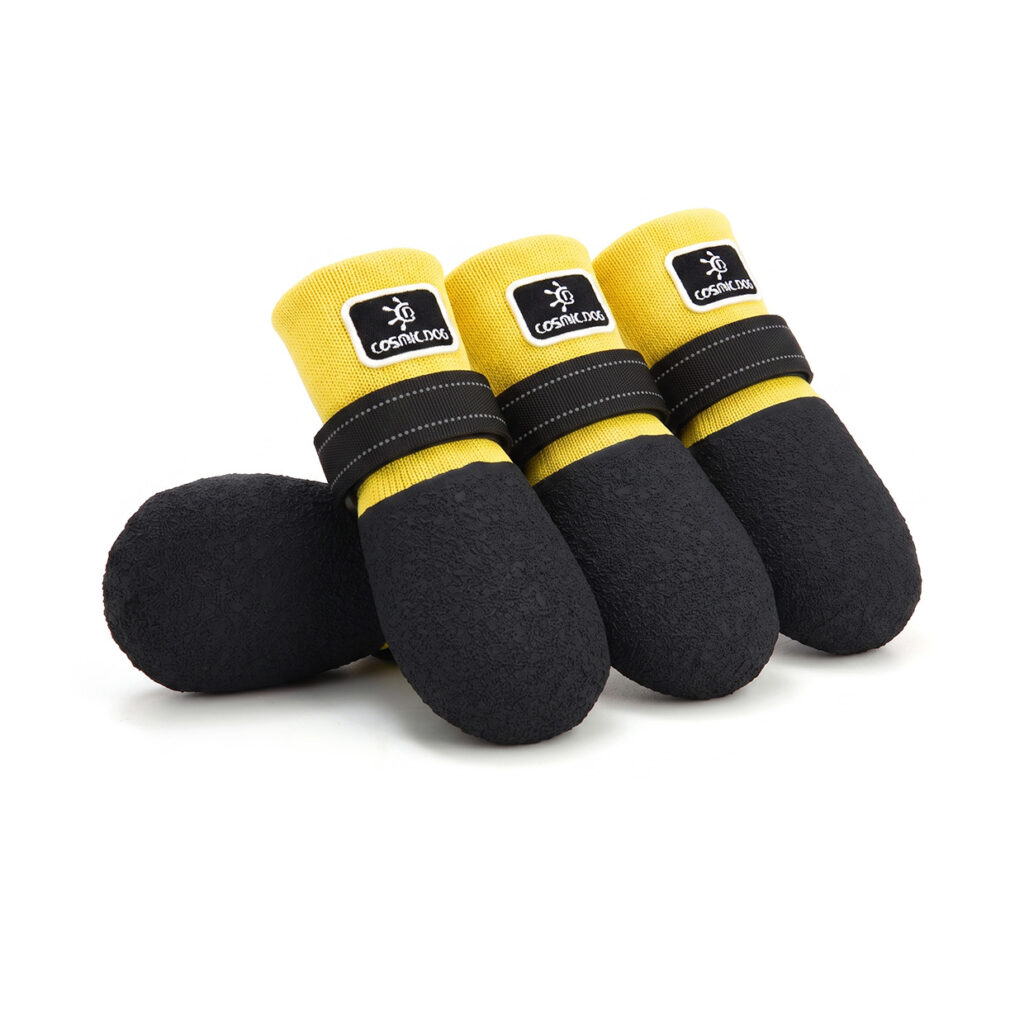
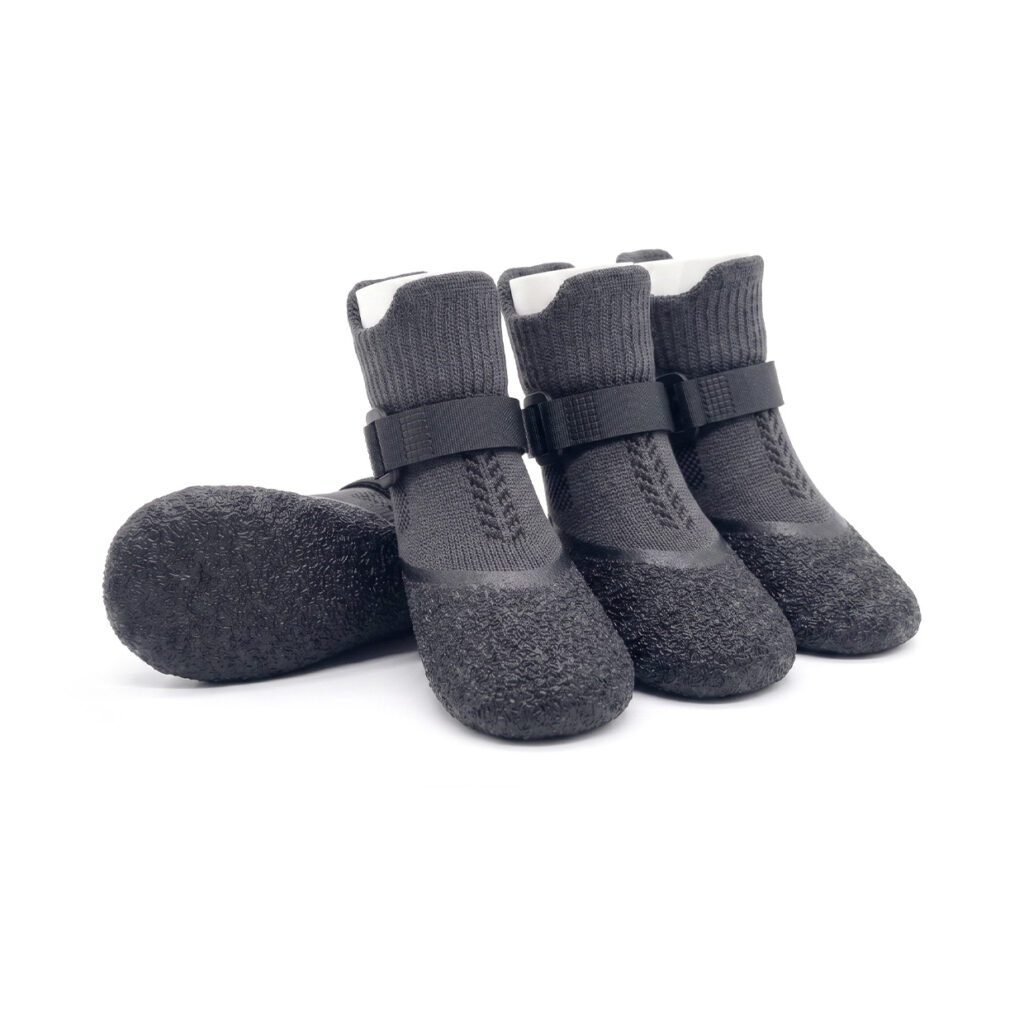
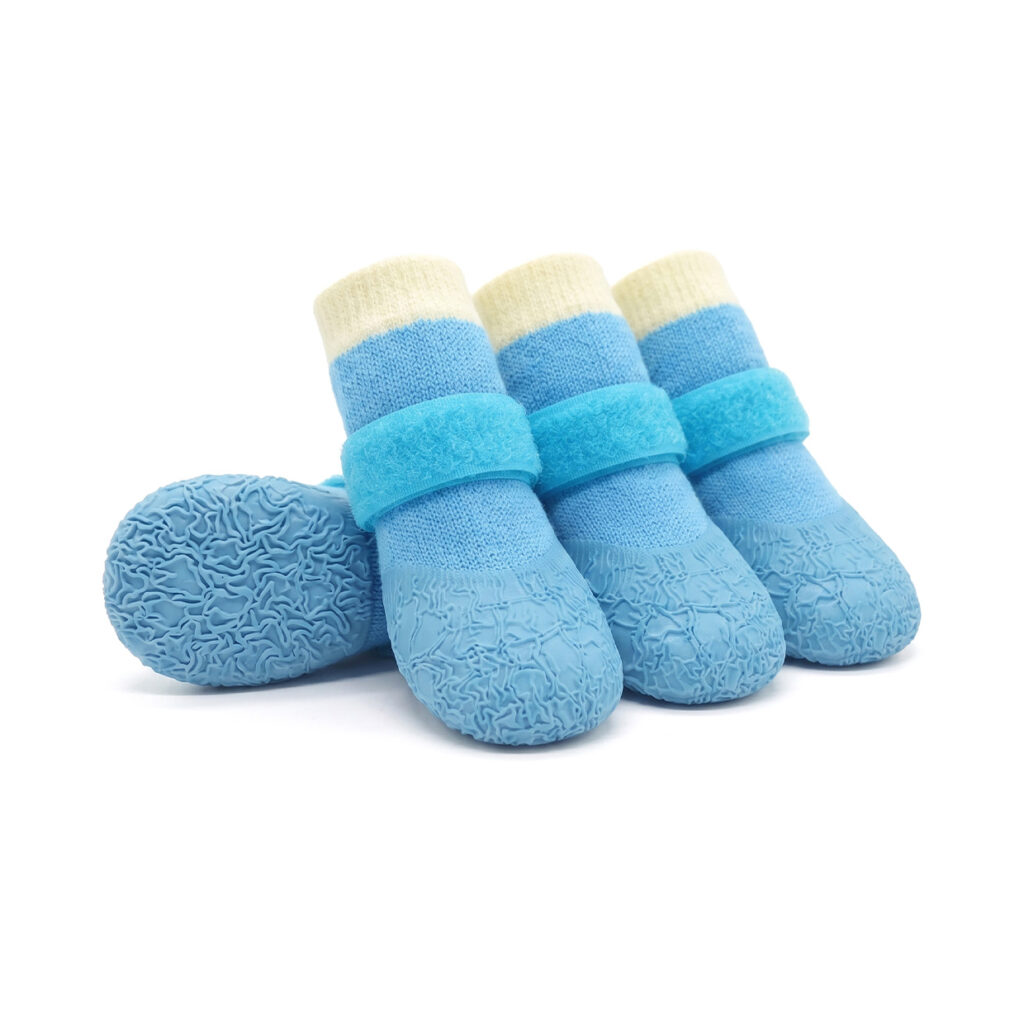
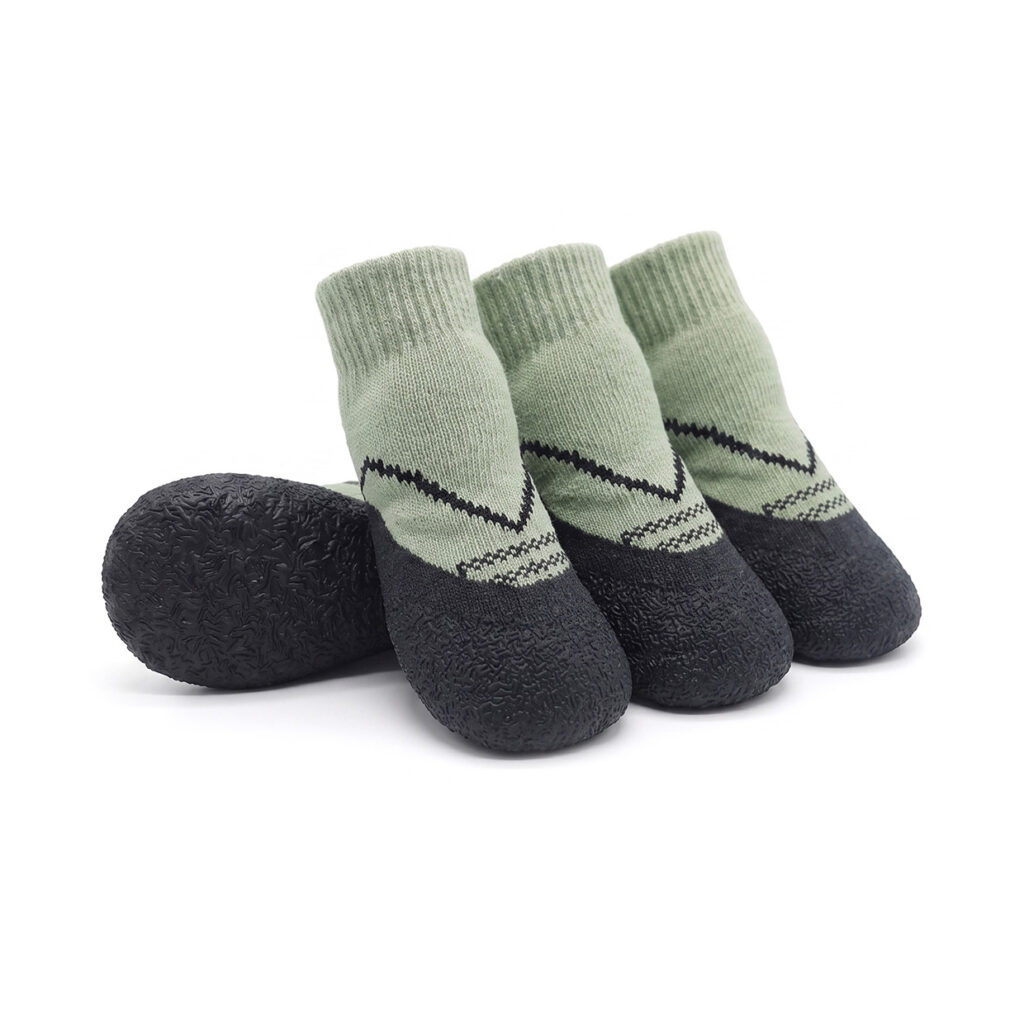
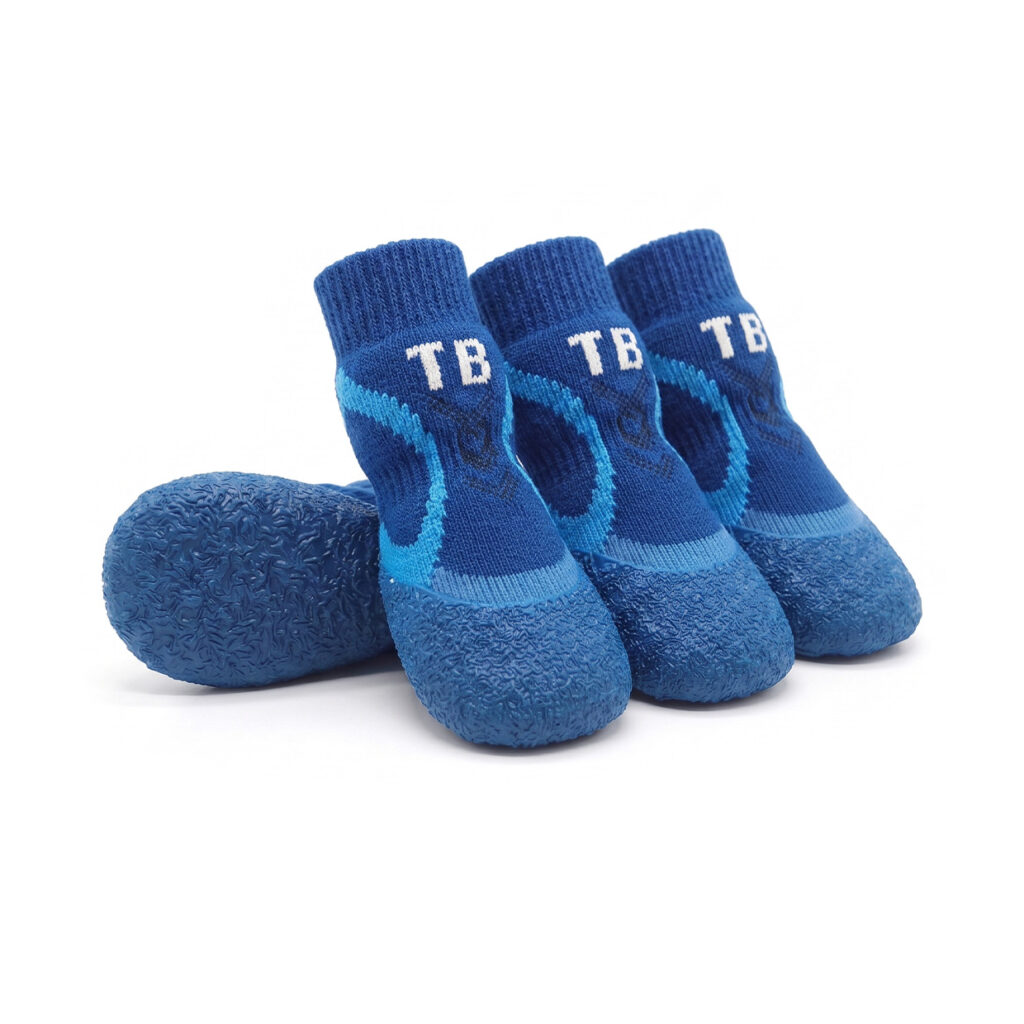
One honest caveat: if your dog has an orthopedic condition, footwear works alongside veterinary care, the right kind of exercise, weight management, and changes around the house. It doesn’t replace any of them.
Why Dog Slipping on Hardwood Floors Happens: The Friction Physics
Dogs evolved to run on dirt, grass, rock, and uneven ground. Their paws are built for that. Flexible pads, claws, tendons, and joints work together to grip and adjust to terrain that changes with every step.
A polished floor gives them almost nothing to work with.
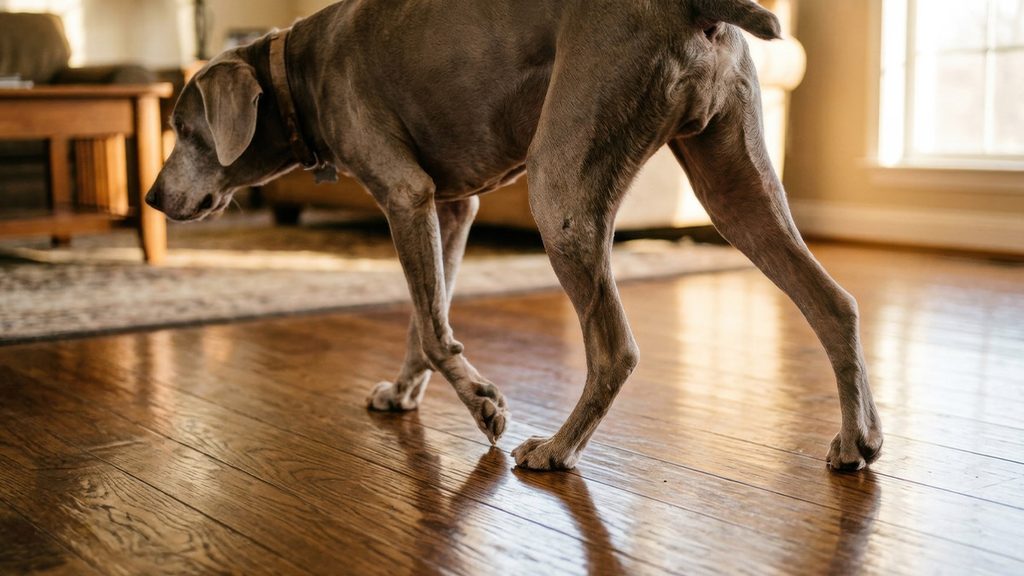
Smooth hardwood, laminate, polished stone, and glazed tile have very little texture for claws and pads to catch on. When friction is that low, the paw can start sliding before the muscles have time to react. That’s the moment you see the legs splay.
Nails can make it worse
Long nails change how a dog loads weight onto their paws. The toes get pushed up and back, so the dog ends up balancing on hard keratin tips instead of soft, grippy pads. A quick home test: if you hear clicking while your dog is simply standing still on the floor, the nails are probably touching down and are likely too long.
Why seniors struggle most
This matters most if you’re trying to work out how to stop older dogs slipping on wood floors. Senior dogs often have less muscle, stiffer joints, weaker balance, or neurological changes that affect how well they sense where their feet are. Carpet and grass hid those limits. A slick floor shows them right away.
VCA recommends keeping nails short and trimming excess fur between the toes to improve traction and mobility at home.
5 Solutions on How to Keep Dog from Slipping on Hardwood Floors
No single fix works for every dog. In our experience, the dogs who do best get a combination of footwear, changes around the house, grooming, and good veterinary care. Here’s how each piece fits, and how to keep dog from sliding on hardwood floors without turning your home into a padded room.
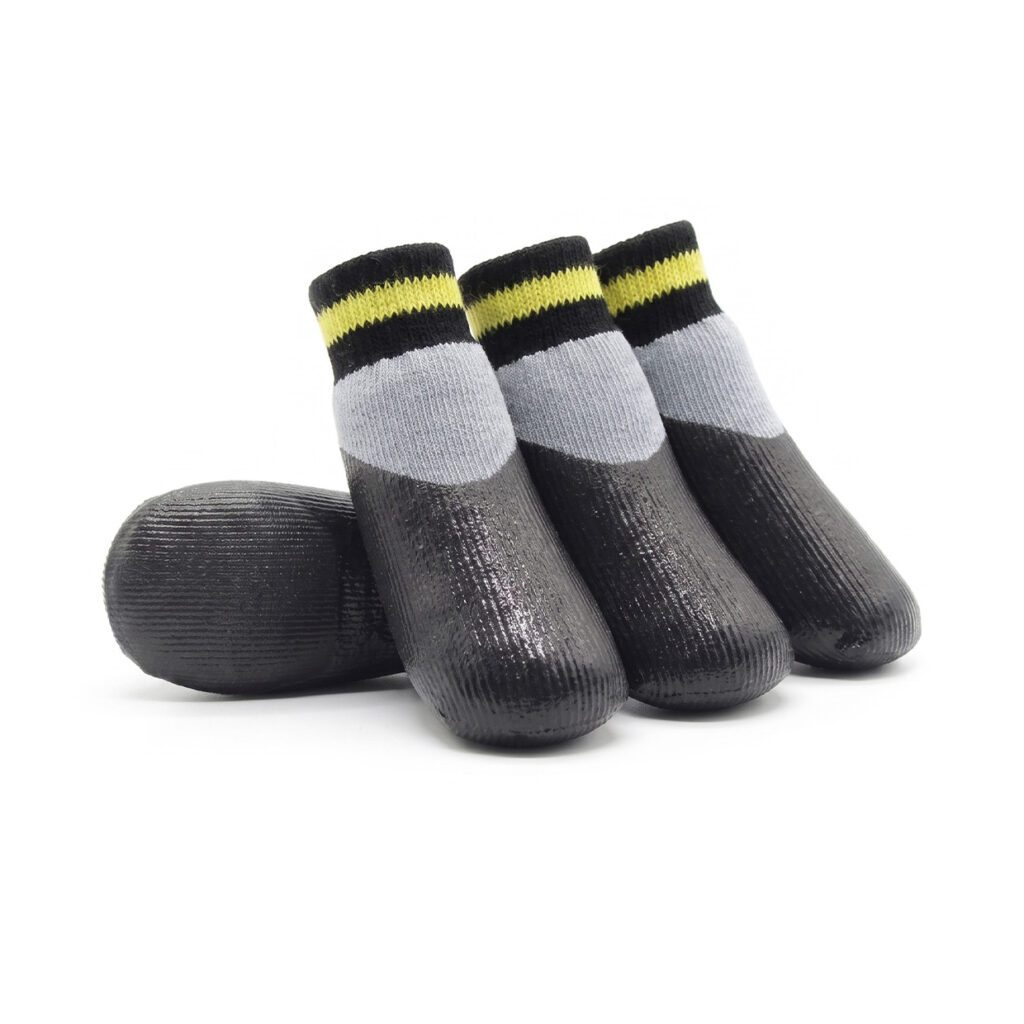
1. Specialized Indoor Non-Slip Dog Socks
For many households, dog socks for hardwood floors are the easiest portable fix.
A carpet runner stays where you put it, but socks go wherever your dog goes. A well-fitted pair adds grip in the living room, hallway, kitchen, and bedroom without covering every inch of floor.
Look for silicone or rubberized grip that covers the main weight-bearing part of the paw, not only the toes. Flexibility matters as well. An indoor sock should feel like a sock, not a stiff hiking boot.
A heads-up for the first try: most dogs do the famous high-stepping dance, lifting each foot like they’ve stepped in something sticky. That’s normal. Offer treats, keep the first sessions to a few minutes, and most dogs forget they’re wearing anything within a few days.
The same rules apply if you’re shopping for the best non slip socks for dogs on laminate floors. Look for real grip coverage, a secure fit, and a soft, flexible upper.
Anti-slip Dog Socks
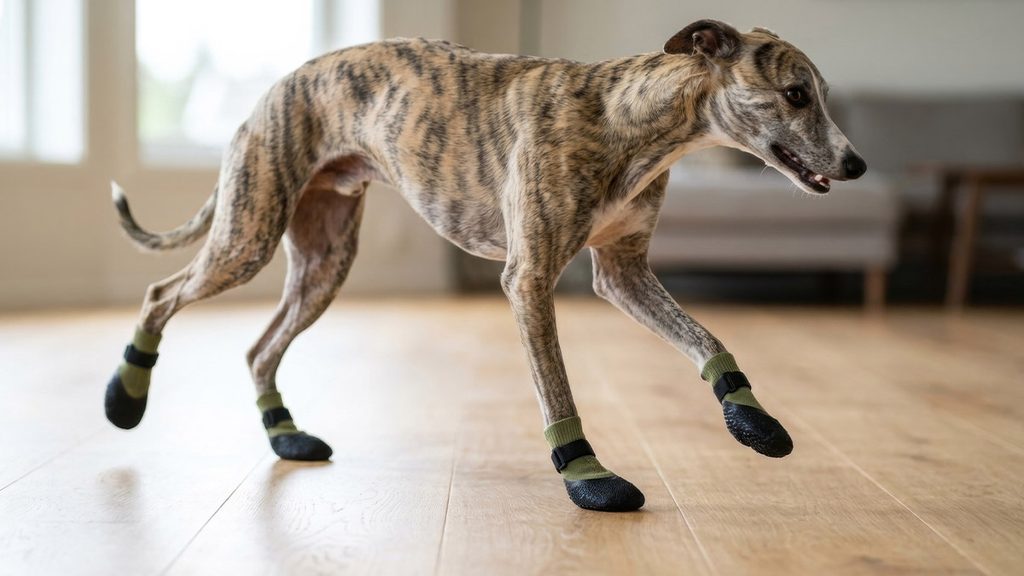
2. Sizing Accuracy: The Pre-Requisite to Safety
Even the grippiest sock becomes a slipping hazard if it’s the wrong size.
- Too big: the sock twists, and the grip ends up on the side or top of the paw instead of underneath it.
- Too small: it squeezes the paw, restricts natural movement, and can cause pressure sores.
Measure while your dog is standing with weight on the paw. Many owners skip this step, but a paw spreads when it carries weight. Put a sheet of paper under the foot, mark the widest points, and follow the brand’s sizing chart. Measure the front and back paws separately, because many dogs have noticeably bigger front feet.
Before ordering, make sure to measure your dog’s paws accurately for a snug fit.
Once the socks are on, watch your dog walk around for several minutes. Does the sock twist? Bunch up around the toes? Slowly slide down the leg? Those clues tell you whether the fit is right.
3. Strategic Area Rugs and Carpet Runners
You don’t have to carpet the whole house.
Spend a day watching the routes your dog uses most:
- Bed → water bowl
- Bed → doorway
- Living room → kitchen
- Sofa → favorite resting spot
- Hallway → back door
Put non-slip runners or rugs along those paths. It’s like building your dog a little highway system.
VCA recommends area rugs, runners with non-slip backing, and interlocking foam flooring for dogs with mobility problems. Make sure rugs lie completely flat, because a curled corner creates a new tripping hazard. It’s worth checking the backing every few weeks too, since rubber grip wears down with washing.
This is the go-to option for dogs who refuse to wear anything on their feet.
4. Regular Paw Pad Hair & Nail Maintenance
Sometimes the floor isn’t the whole problem.
Long nails change how your dog places their feet. Tufts of fur growing between the pads act like tiny skis. Many fluffy breeds, and plenty of seniors whose grooming has slipped, walk around on a layer of fur instead of on their pads.
Flip a paw over and look. If the hair covers the pads, trim it flush with the pad surface, or ask your groomer to. If you’re not sure how short the nails should be, ask your vet, groomer, or a veterinary rehabilitation professional. Dogs with overgrown nails often have a long quick, which has to be brought back gradually.
VCA specifically lists nail trimming and trimming fur between the toes as practical ways to improve traction.
For senior dogs, regular grooming does more than keep them looking tidy. It’s part of keeping them mobile.
5. Lightweight Soft-Sole Indoor Shoes
Some dogs need more than a sock.
Lightweight indoor shoes help when a dog needs extra protection or a little more structure, or when they keep kicking socks off. For indoor use, choose flexible, soft soles over heavy outdoor treads.
Still deciding between socks, soft-sole shoes, or outdoor boots? Check out our dog paw wear comparison guide to match the right footwear to your living space.
Lightweight Indoor Dog Shoes
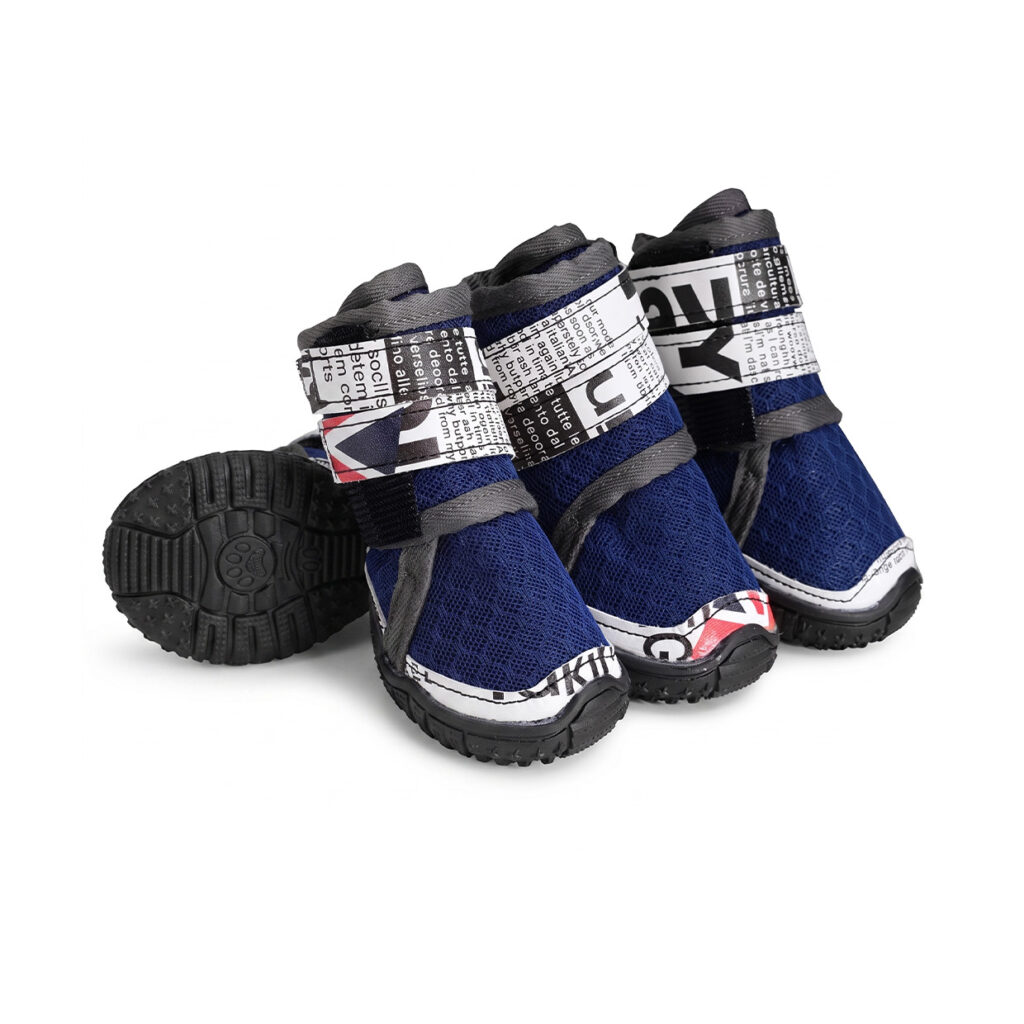
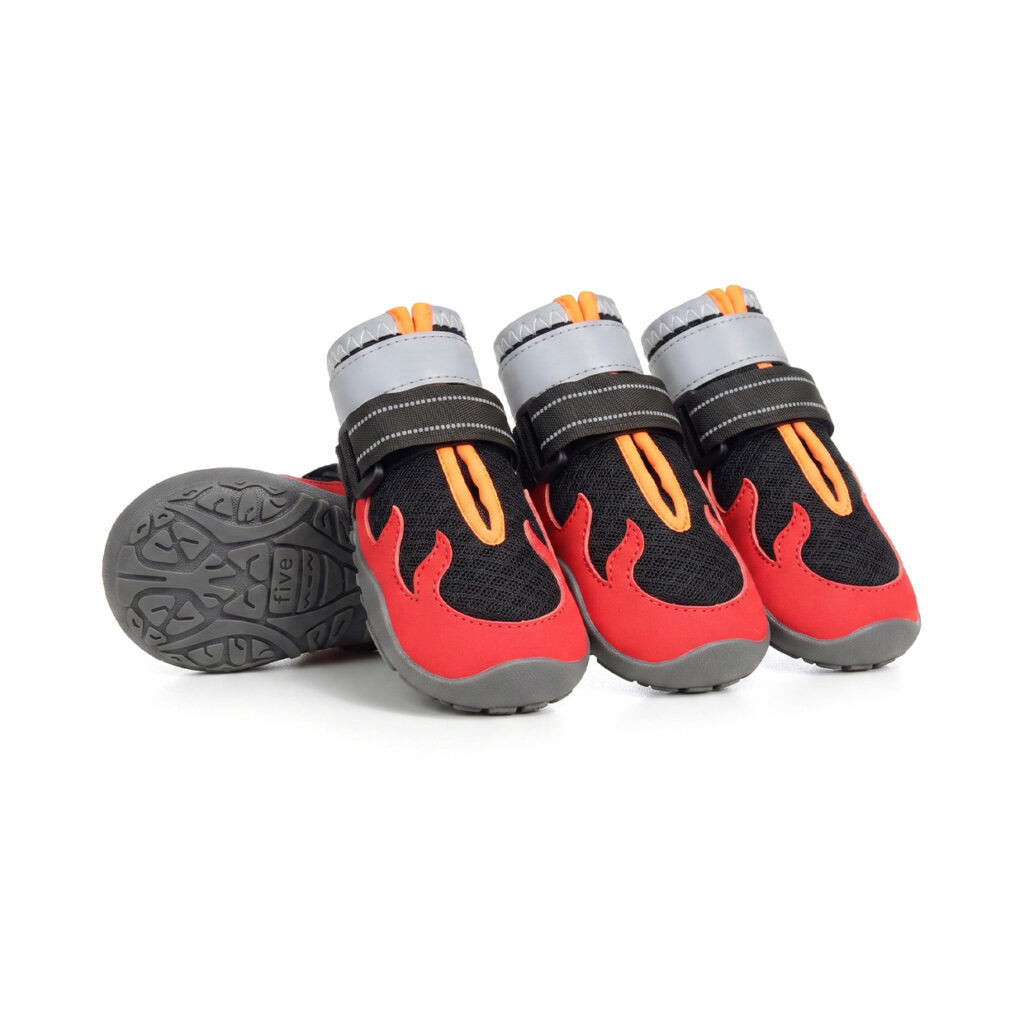
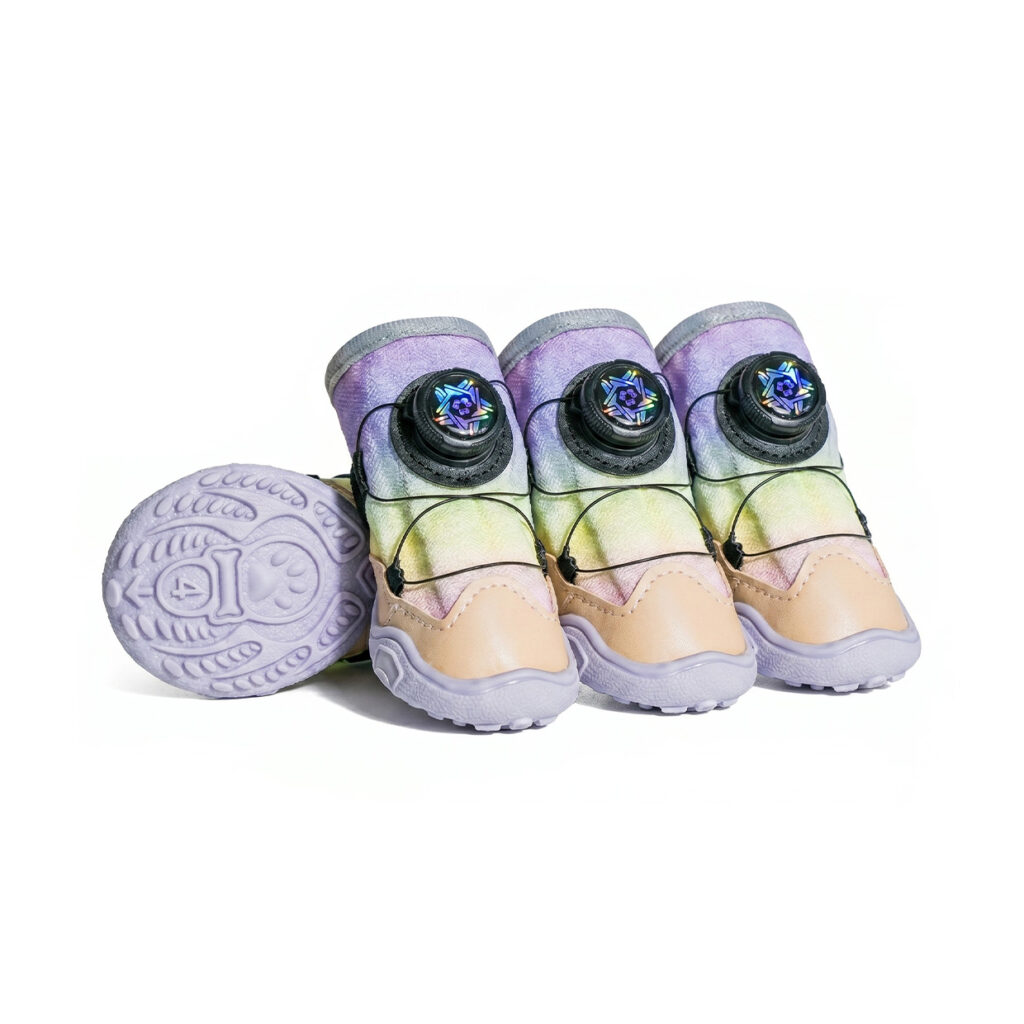
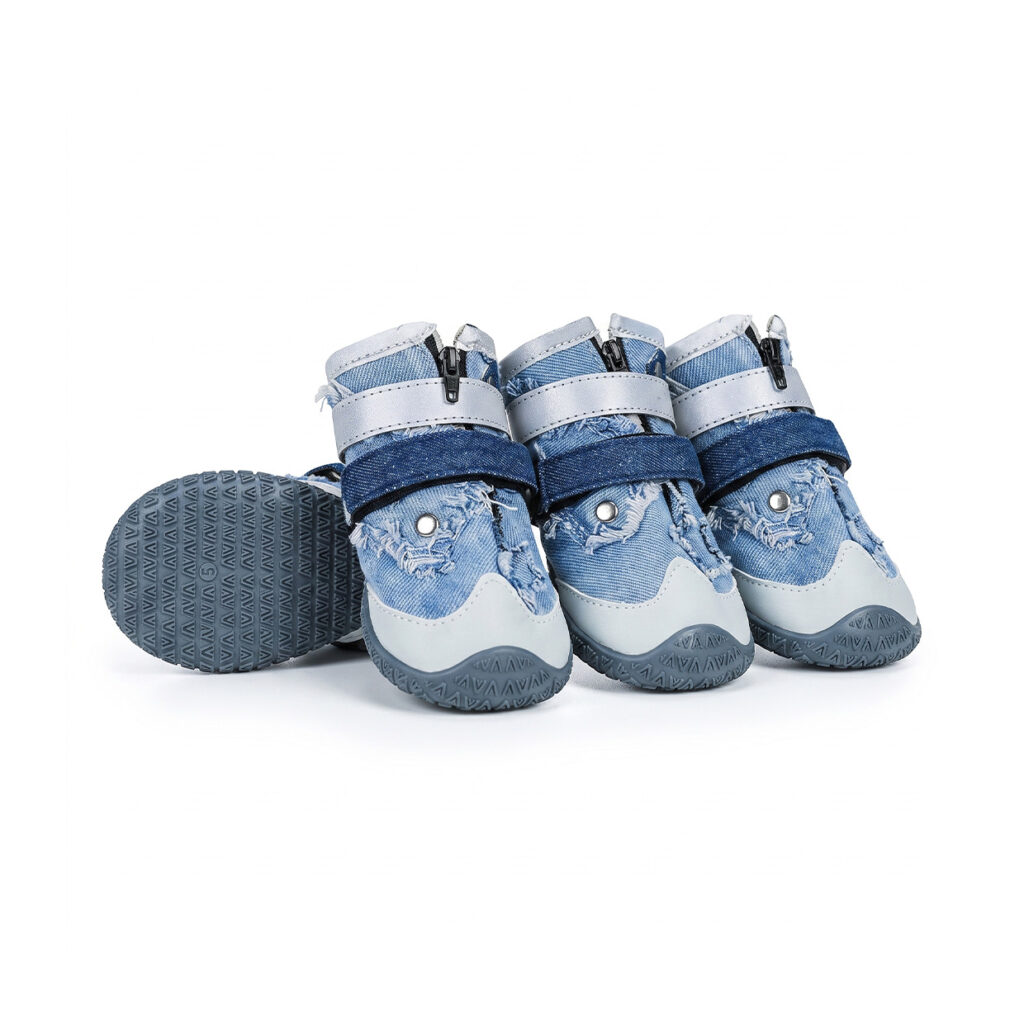
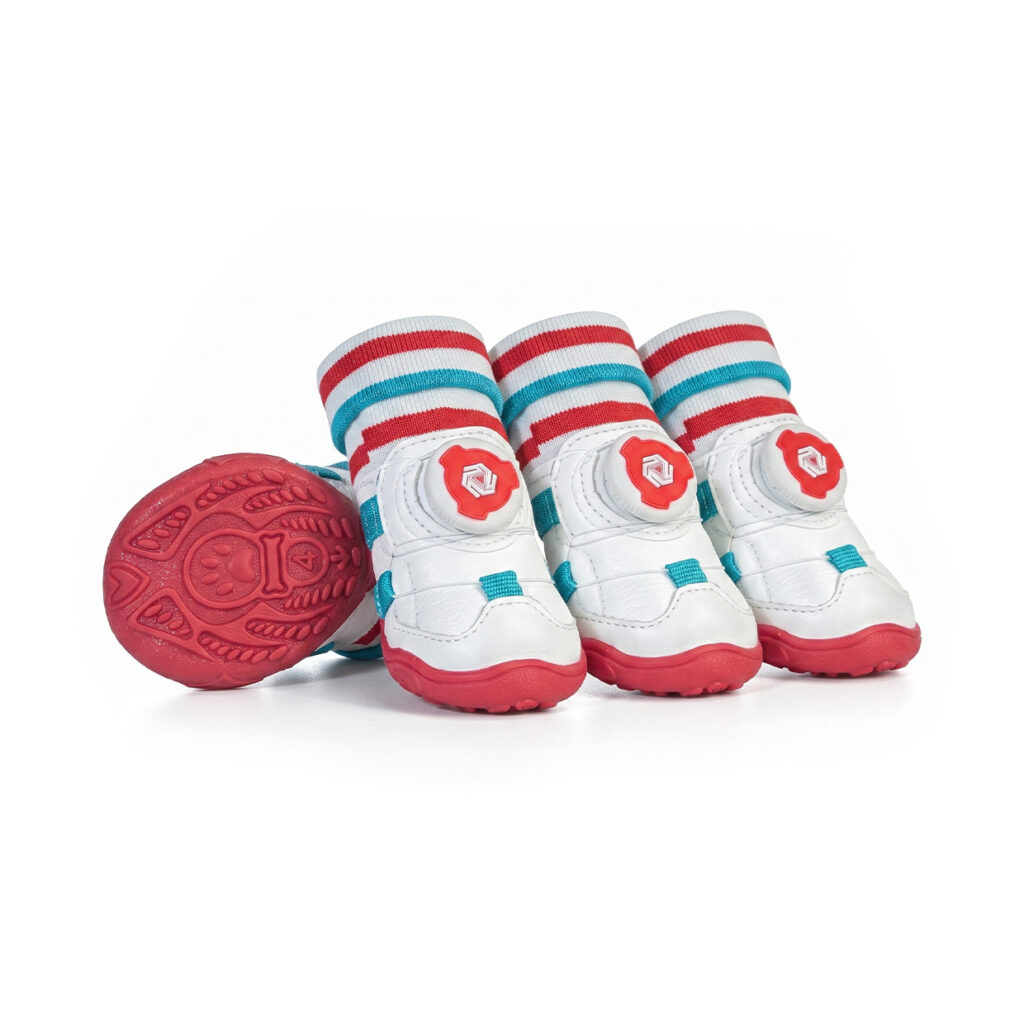
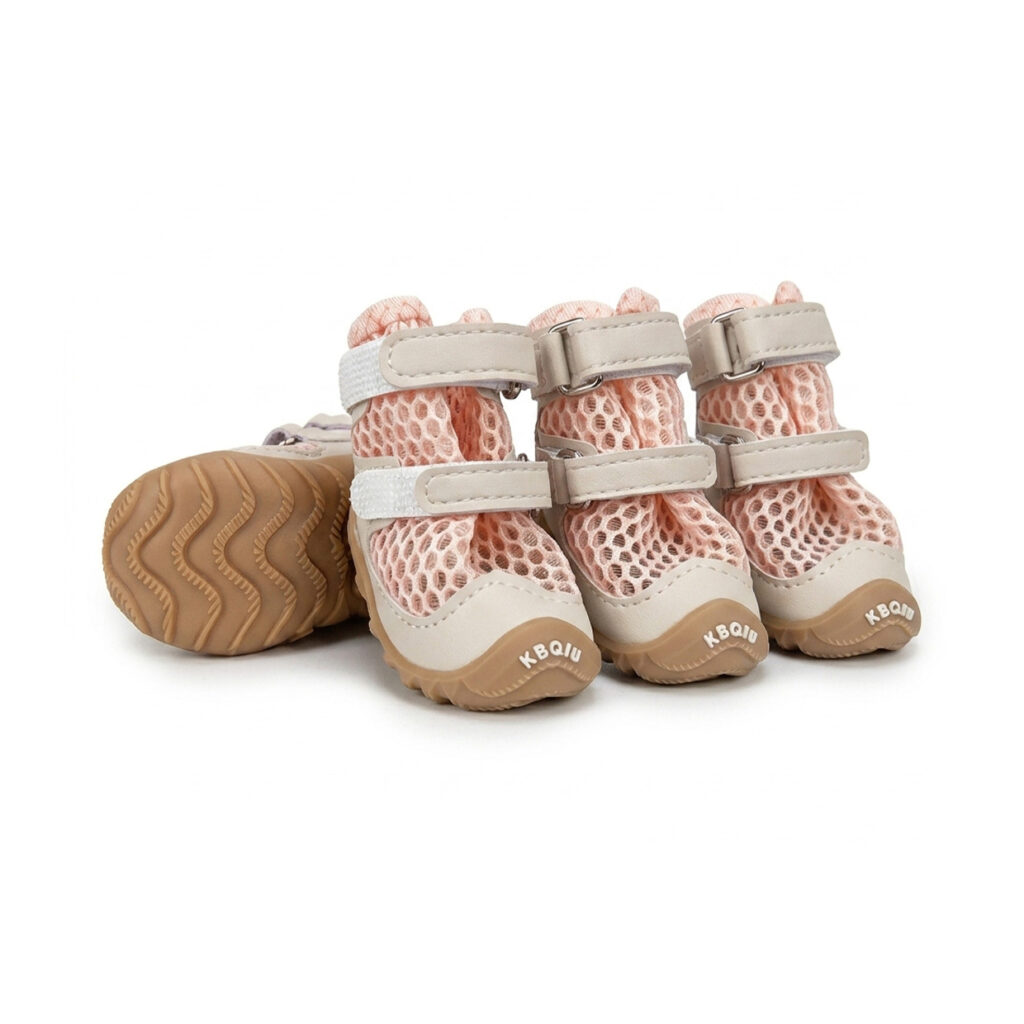
Outdoors, the needs change. A rugged sole built for rocks, mud, or snow makes sense on a trail but feels clunky and heavy on a hardwood floor.
Protective All-terrain Dog Boots
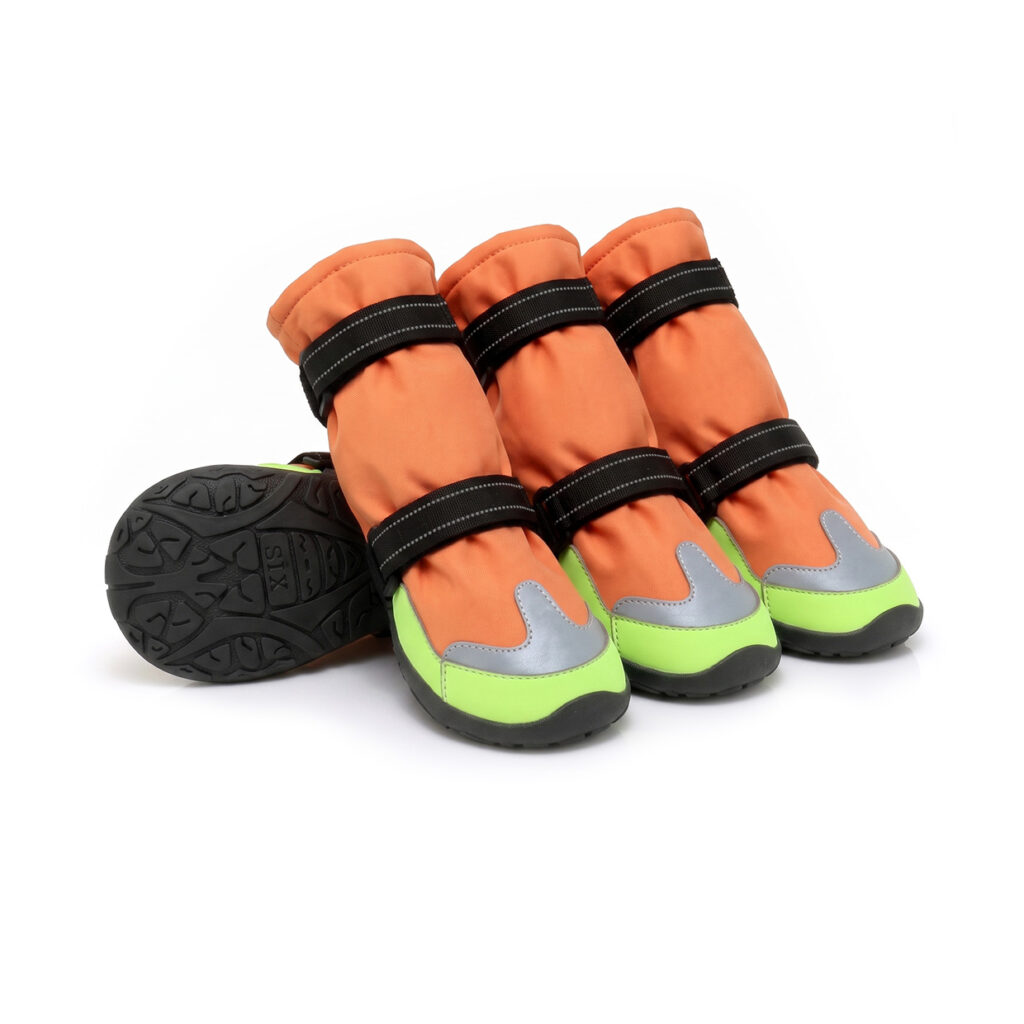
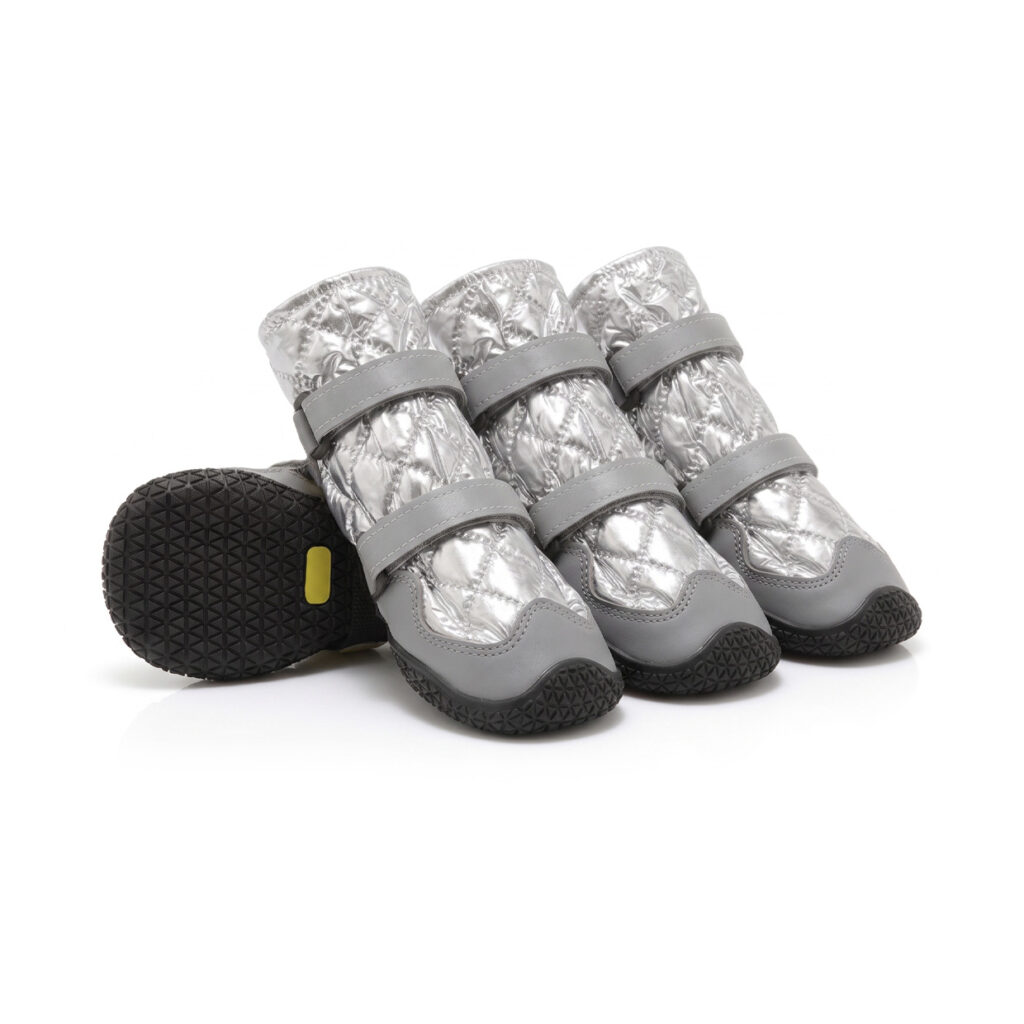
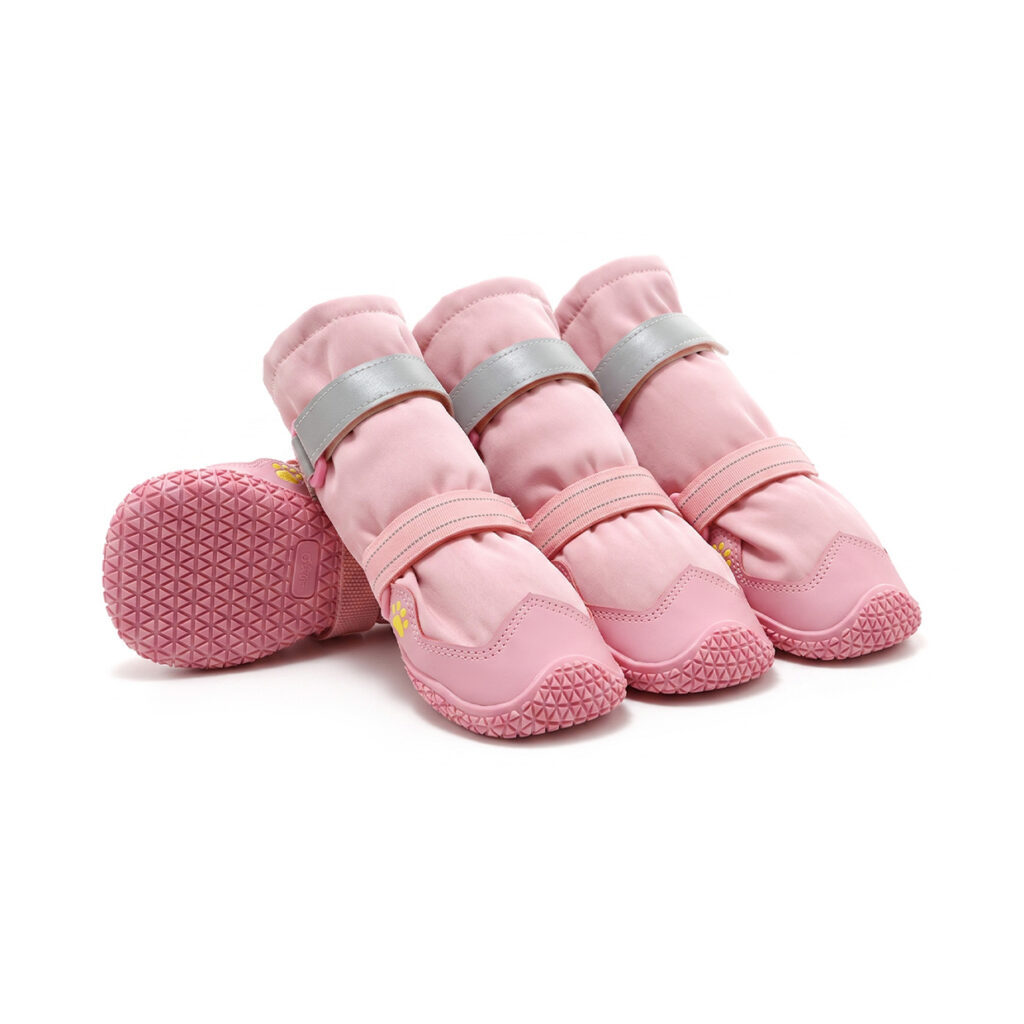
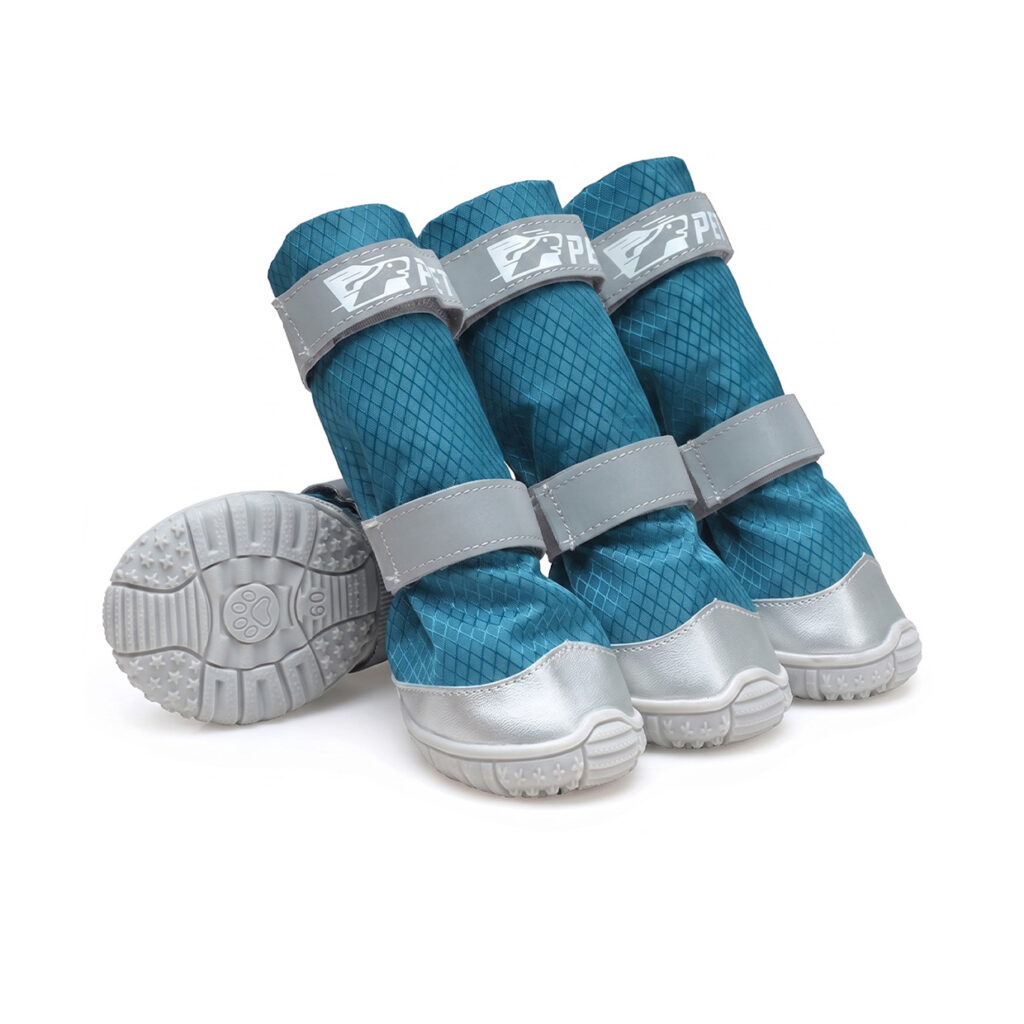
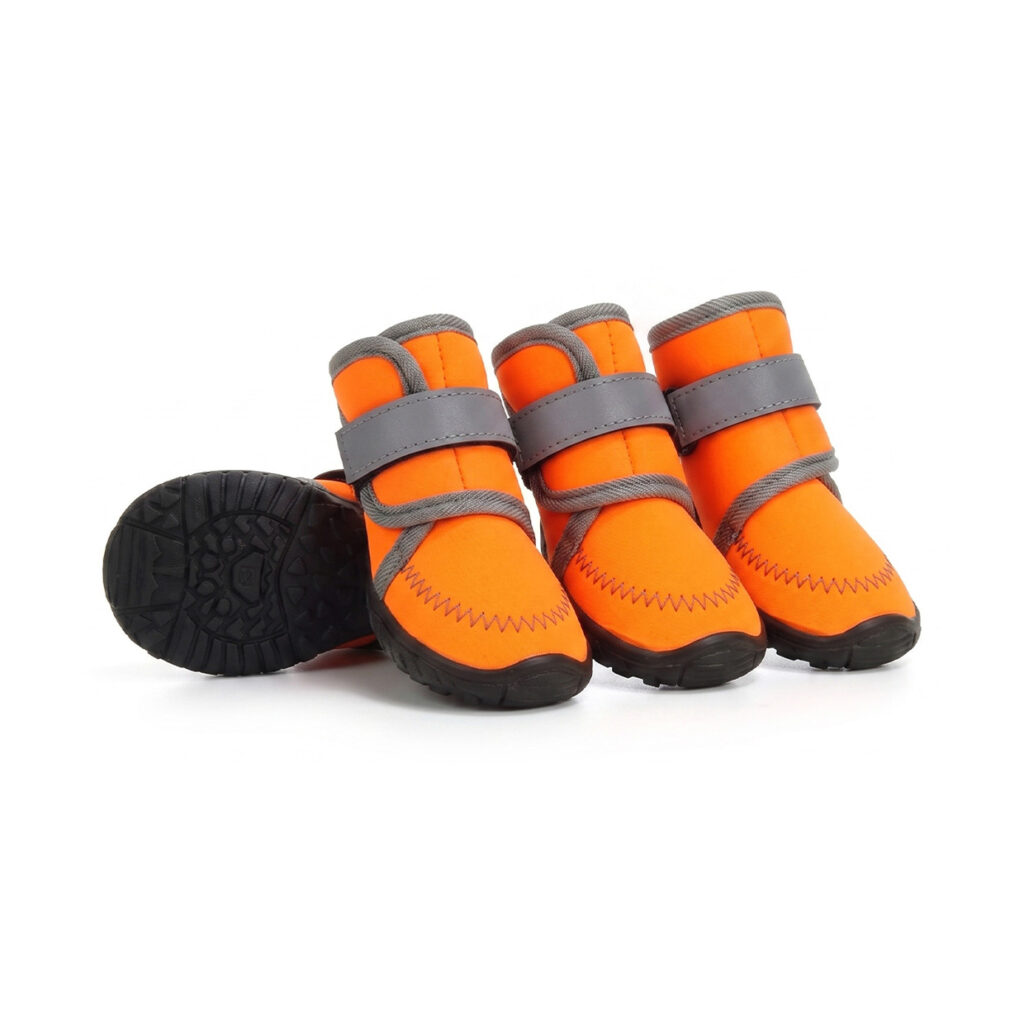
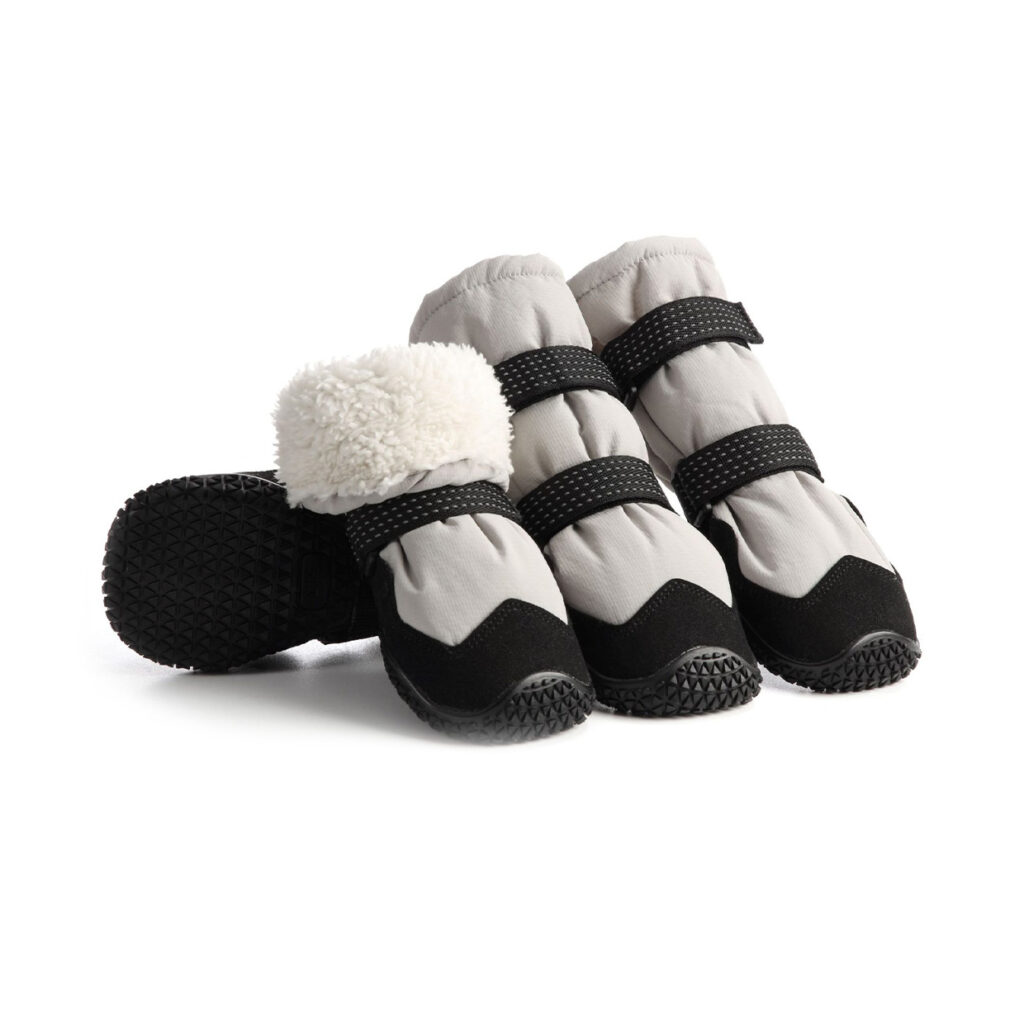
Match the footwear to the surface. One product won’t do every job.
The Staying-On Problem: Preventing Indoor Footwear Slippage
A traction sock only helps when the grip is under the paw.
If your dog’s footwear keeps rotating or falling off, check the size first. An opening that’s too big lets the sock creep. An opening that’s too tight makes your dog uncomfortable, and they’ll walk strangely or try to chew it off.
For active dogs, look for a fastening that sits above the paw, away from the weight-bearing surface. Adjustable elastic or hook-and-loop straps help keep things in place when the size is right.
The fingertip test
The strap should be snug, not tight. You should be able to slide a fingertip under it. After taking the socks off, check the skin for swelling, redness, dents, or any sign your dog is uncomfortable.
Never fix a slipping sock by cranking the strap tighter. That swaps one problem for a worse one.
If the footwear keeps sliding down even though the size is right, look at the design and fit before adding more tension.
Footwear is only half the picture. VCA Animal Hospitals also recommends limiting your dog’s exposure to slippery floors and adding non-skid surfaces when caring for dogs with mobility problems.
ASPCA: Senior Pet Mobility & Home Care
A Practical Home Traction Assessment
Before you buy anything, spend five minutes watching your dog’s normal routine. You’ll learn more from that than from any product page.
Step 1: Find the trouble spots.
Where does your dog slip most? The hallway, by the food bowl, near the sofa, or when getting out of bed? Scuffed floor finish and claw marks are good clues.
Step 2: Notice the type of movement.
A dog who slips on turns has a different problem from a dog who can’t push up from lying down. The first needs grip on the paths they run. The second needs grip where they sleep.
Step 3: Check the paws.
Look at nail length, the condition of the pads (dry, cracked pads grip worse), and fur between the toes.
Step 4: Fix the environment.
Put runners or non-slip mats in the riskiest spots first.
Step 5: Try footwear.
If your dog still struggles and will tolerate footwear, try a lightweight traction sock for short, supervised sessions.
Step 6: Watch for medical red flags.
Ongoing limping, trouble getting up, not wanting to use stairs, an odd posture, or a sudden change in how your dog walks all need a vet visit. These can be signs of pain, not only a traction problem.
Frequently Asked Questions (FAQ)
Can a dog really tear their ACL just by slipping on hardwood floors?
It can happen, but most slips don’t cause a tear.
A hard slip where the back legs splay out can put a lot of stress on the knee, and it can finish off a ligament that was already weakened. In dogs, CCL disease is often degenerative, meaning it builds up over time. VCA also points out that this kind of splaying can strain the iliopsoas muscle in the hip.
Know the ccl tear symptoms from dog slipping indoors: sudden limping on a back leg, only toe-touching with that foot, sitting with one leg stuck out to the side, or not wanting to jump. If you see any of these, go to the vet and skip the internet diagnosis.
How do non-slip dog socks work on polished hardwood floors?
They add grip between the paw and a slick floor.
Silicone or rubber treads create far more friction than fur and pads on a polished finish. They only work if the sock fits, though. If it twists, the grip ends up in the wrong place.
For dogs with serious mobility issues, socks are one tool in the kit, not the whole kit.
How do I stop my dog’s socks from twisting around their paws?
Check the size first. Nine times out of ten, that’s the problem.
The sock should match the paw’s width and length without extra fabric flapping around. Look for grip that covers the whole contact area, plus a secure strap above the paw for high-energy dogs.
Still twisting? Watch when it happens: zoomies, scratching, jumping, or getting up from a nap. Each of those pulls on the sock differently. A different design may fit your dog better than tightening the one you have.
Are area rugs better than putting socks on my dog?
Neither one wins every time. They do different jobs.
Rugs give steady footing and your dog doesn’t have to wear anything, which is perfect for dogs who hate things on their feet. But rugs only help where they’re lying.
Socks go everywhere your dog goes. VCA recommends traction improvements around the house and, for dogs who tolerate them, lightweight traction footwear.
For many senior dogs, the best setup is both: runners on the busy routes and socks for everywhere else.
Can my dog wear non-slip socks all day indoors?
Some dogs can, but don’t assume yours should.
Take the socks off a few times a day to check the paws and let them breathe. Look for redness, dampness, rub marks, swelling, or pressure lines. Warm, sweaty paws kept covered for hours can get irritated.
If your dog has a medical condition, reduced sensation in their feet, circulation problems, or a history of paw injuries, ask your vet before letting them wear socks for long stretches.
Is dog slipping on hardwood floors normal for senior dogs?
Occasional slipping is common in senior dogs due to muscle loss, stiff joints, and reduced proprioception. However, sudden or frequent slipping, trouble standing, or avoiding hard floors can signal pain, osteoarthritis, or a neurological issue and warrants a veterinary exam.
When Dog Slipping on Hardwood Floors Is a Medical Warning Sign
Sometimes the answer to how to keep dog from slipping on hardwood floors isn’t another product.
If your dog walked the same floors happily for years and has suddenly started slipping, the floor probably hasn’t changed. Your dog may have.
Watch for:
- Trouble getting up
- Limping, whether constant or on-and-off
- Reluctance to use stairs
- Avoiding hardwood or tile
- A hunched or changed posture
- Walking more slowly
- Shifting weight unusually (for example, leaning onto the front legs)
- Trouble jumping onto the couch or bed
- Pain when touched
- Back legs splaying again and again
These signs can go along with osteoarthritis, orthopedic disease, neurological problems, or other painful conditions. VCA lists trouble getting up, changes in weight distribution, reluctance to use stairs, and changes in gait among the signs of canine osteoarthritis.
If the change is sudden or significant, have your vet examine your dog before you assume better traction will fix it.
Help Protect Your Dog’s Joints from Costly Slips
Your beautiful hardwood floors shouldn’t become an obstacle course for your dog.
A well-fitted traction solution can help your dog walk, turn, play, and get up with confidence on slick floors. Pair the right footwear with non-slip runners, regular nail and paw care, and a vet’s input if mobility problems don’t go away. You’ll likely see the difference in how your dog moves around the house.
Explore our collection of Anti-Slip Indoor Dog Socks and flexible Indoor House Shoes, designed for grip, breathable comfort, and a secure fit for everyday wear.
Shop Anti-Slip Dog Socks for Hardwood Floors Now.